“Map of New Netherland, ca. 1616.” The Dutch Founding of New York, Harper & Brothers, 1903. NYC Municipal Library. This map notes… “the extent of discoveries made by Schipper Cornelis Hendricx… in a small yacht… ‘The Onrust’ which the Memorialists had caused to be built in New Netherland.” The Onrust was the first ship built in New York State, and the first fur trading vessel built in America.
New York City’s success as a colony can be traced to the Native-American trading center established here centuries prior to the Dutch West India Company’s colonization. The vast harbor does not freeze in winter. This made it a perfect place for year-round trading, bringing whale hunters from Long Island in mishoons (canoes), pirates from all over the world, merchant trade vessels from Europe, and eventually, slave ships from Africa.
In March 1662, a trading house for the Native Americans was built in front of Sarah and Hans Kierstede’s house to help facilitate the indigenous traders at the weekly market.
A trusted interpreter, Sarah collaborated with the Sachem Chief Oratam of the Hackensack Lenni Lenape to complete several treaties between the Dutch and Native Americans.
Still image, Kierstede House. Mapping Early New York, Courtesy of the New Amsterdam History Center.
LinkNYC video display. Eduard van Dijk, designer.
Indigenous people from tribes all over the eastern seaboard came to trade at Manhattan before the European settlement began, and this trade continued throughout the 17th century. Without the firewood, venison, corn, furs, and other trade goods Native Americans brought to Manhattan, the settlement would not have thrived.
Farmers and Native Americans brought their crops to town and set about hawking them, usually along the bank of the East River, known as the Strand. While references exist as early as 1648 to “market days” and an annual harvest “Free Market,” the process was unregulated. Peter Stuyvesant, the Director General and the Council recognized this and decreed:
“Whereas now and then the people from the country bring various wares, such as meat, bacon, butter, cheese, turnips, roots, straw, and other products of the farm to this City for sale, arrived with which at the strand they must often remain there with their goods for a long time to their great damage... Therefore, the Director General and Council hereby order, that henceforth Saturday shall be held and kept as Market Day in this City on the Strand near the home of Master Hans Kierstede...”
—September 12, 1656
Still image, Dock. Mapping Early New York, Courtesy of the New Amsterdam History Center.
Ordinance, Burgomasters and Schepenen regarding direct foreign trade, March 9, 1660. RNA_V1_1647-1661. Courtesy of the Municipal Archives, City of New York.
“...a foreign trade privilege has been granted to this Province as being a measure to animate the cultivation of this country, on the advancement and continuation of which depends the prosperity and rise of this Province. It is expressly stipulated however, that the ships, going from here to France, Spain, Italy, the Caribbean Islands and other countries,... must with their return freights, bought with the receipts, touch at the City of Amsterdam in Europe or here for the purpose of paying at the discharge and sale of their cargoes such duties...”
—March 9, 1660
Administrative meeting of the Burgomasters, March 24, 1662. RNA_V2_1661-1664. Courtesy of the Municipal Archives, City of New York.
“...Adolph Pieterzen is called in and asked, whether he could not work eight to ten days for the City, putting up a little house, for the Indians to offer their wares. He answers, that he has work on hand, but returning he says, if the Board would please to wait a few days, he would do it, which is accepted.”
—March 24, 1662
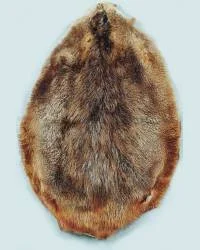
Beaver Pelt, Mapping Early New York, Courtesy of the New Amsterdam History Center.
Beaver pelts were used to create hats and fur coats in Europe, and were the foundation of the fur trade in New Amsterdam. Furs from Northern New York, New England, and Canada were brought down the Hudson River to New Amsterdam for shipment to Europe. They served as a kind of currency as many land leases were to be paid annually in beaver pelts.
Part of a Channel Whelk shell. The exterior layers may have been cut off for making white wampum or other beads. (Purple wampum was made from the Quahog Clam shell.) Wampum was used in the daily life of Indigenous people trading all along the eastern seaboard including the Lenape, Unkechaug, Shinnecock, Canarsie, Hackensack, and Algonkian speaking people, among others. It was also adopted as an established currency for the European settlers.
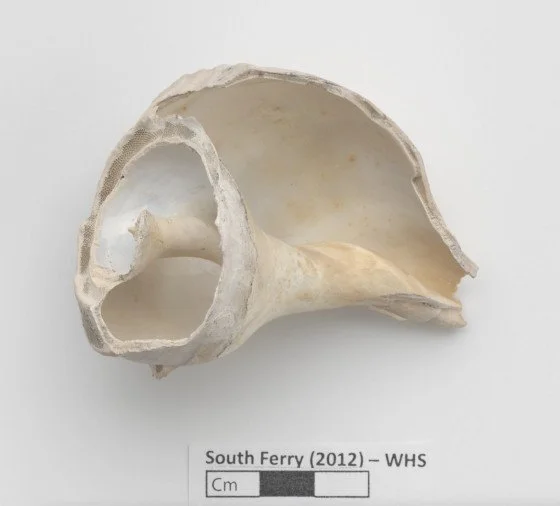
Channel Whelk shell. Excavated as part of the South Ferry Terminal Project, (2004-2006). Courtesy of the NYC Landmarks Preservation Commission and the NYC Archaeological Repository: The Nan A. Rothschild Research Center.
Tin and lead-glazed earthenware was first used in Europe in the 12th century. This is a plate base with broad, flat, circular foot ring with a floral and fruit motif.
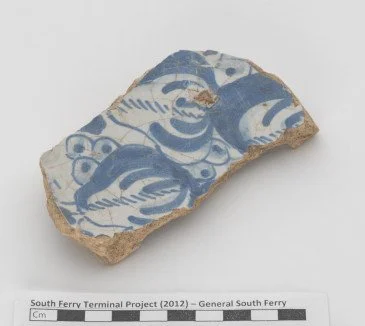
Tin and Lead Glazed Earthenware Base Sherd (1620-1675). Excavated as part of the South Ferry Terminal Project, (2004-2006). Courtesy of the NYC Landmarks Preservation Commission and the NYC Archaeological Repository: The Nan A. Rothschild Research Center.