The NYC Department of Health Celebrates 220 Years

The New York City Health Department has been keeping New Yorkers healthy for 220 years. Their anniversary provides For the Record an opportunity to discuss some of the many collections in the Municipal Archives with materials relevant to public health research topics.
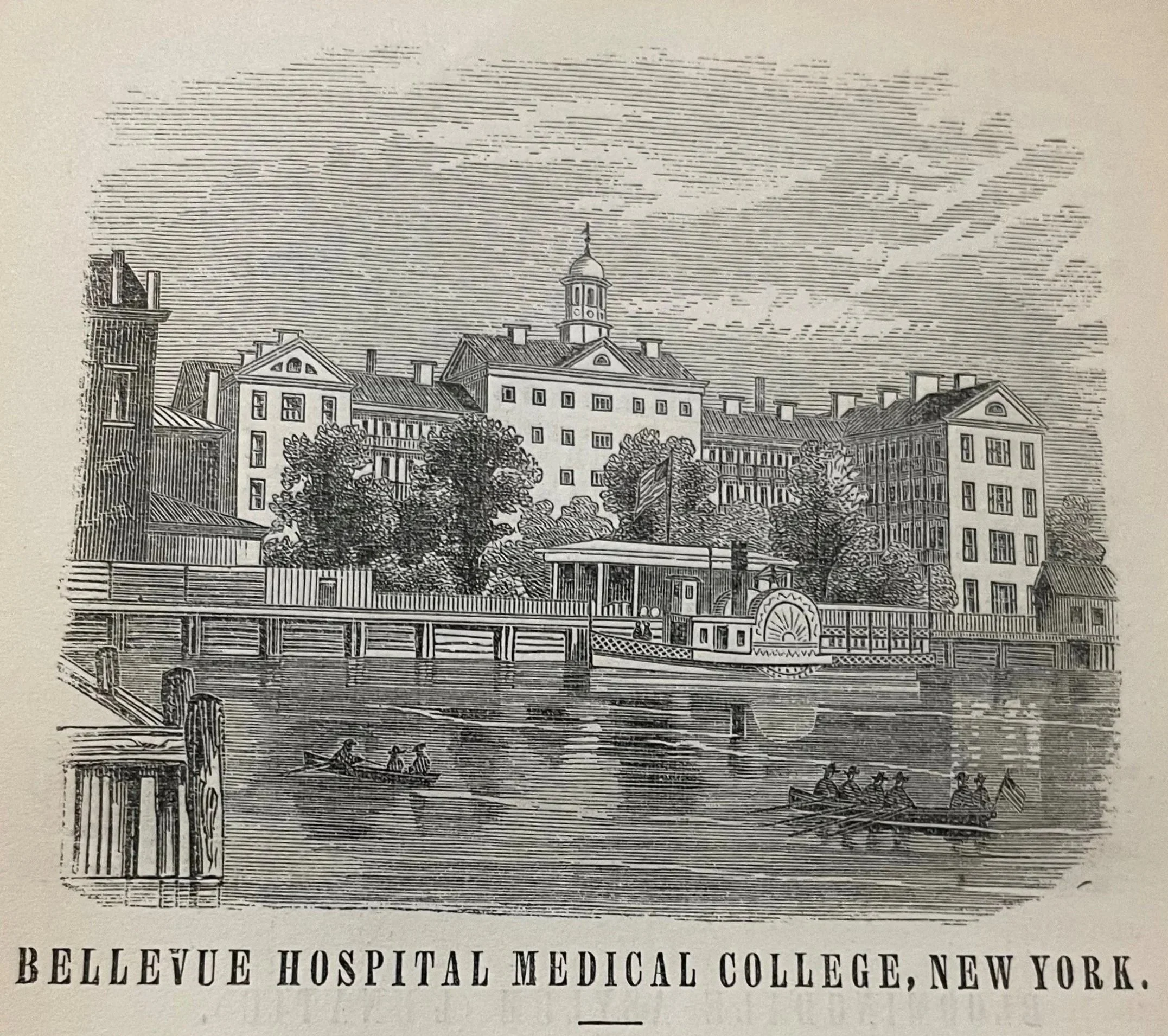
Bellevue Hospital, 1862, engraving, Valentine’s Manual, 1864. Municipal Library.

“Mrs. Baisley in Moore Street, has lost her husband and three children to the prevailing fever,…”
— Health Committee minutes, 1798

The Health Department traces its origins to January 17, 1805, when the Common Council passed a law “for the establishment of a Board of Health, and for the appointment of a City Inspector.” The legislators took this action in response to a yellow-fever epidemic then raging through the City.

However, “health” as a concern of local government officials long pre-dates this legislation. Collections in the Municipal Archives document issues related to the health of city inhabitants as far back as the first Dutch colonial settlement. The printed, published proceedings of the legislative bodies—Records of New Amsterdam, 1653-1674; Minutes of the Common Council 1675-1776; and Minutes of the Common Council 1684-1831—provide useful entry points to identify health-related references.

An entry in the New Amsterdam Records from 1664, describes how two homeowners feared a tannery “established between their houses...” will spoil their water and “...they shall also have to endure great stench from the tanning of skins.” The Burgomasters and Schepens declined to ban the tannery saying that “as others have been allowed to make a tannery behind their house and lot, such cannot be forbidden.” The indexes to the Records and Minutes provides dozens of citations to similar and continuing matters related to public health.

Resolution from the Common Council that no persons from Philadelphia shall come to this City, 1793. Common Council Records, NYC Municipal Archives.

In addition to the printed and published Minutes of the Common Council, the Municipal Archives maintains a separate collection of records created or received by the legislative bodies. The series spans 1670 to 1831. The documents, mostly petitions, resolutions, financial documents, and correspondence, are arranged chronologically. After 1800 the arrangement is further refined by the “committees” established by the Council, e.g. finance, roads, etc.

The first “Health” labeled folder dates from 1793. It comprises documents that the Council referred to a Committee they appointed to prevent the introduction and spread of infectious diseases. The eight documents in the 1793 folder all address news of a yellow-fever epidemic in Philadelphia: “The Corporation of this City having this day resolved that no person coming from Philadelphia shall come into the city. I am directed by the Committee … to inform all passengers in the stages from Philadelphia that they will not be suffered to land here.” (September 16, 1793.) It is not clear from the folder contents whether the Council ever formally lifted the ban on visitors from Philadelphia.

“September 8th, 1803: The Health Committee met pursuant to adjournment. Present his Hon. The Mayor, Chairman; the recorder; Aldermen Vanzandt, Bogert, Ritter, Barker, Minthorn.

Dr. Rodgers and Miller attended nine deaths and twenty new cases of malignant fever occurred the last 24 hours. Mr. James Hardie reported six internments in the church burial grounds inclusive of one included among the fever deaths and two were buried at Potters Field not of fever making the mortality for the last 24 hours – Seventeen. Committee adjourned to 9th Sept.” Department of Health book, 1790 -1803. NYC Municipal Archives.

“The number of persons, interred in each of the Burying Grounds of this City, from the first of August, to the tenth of November 1790.” Department of Health book, 1790 -1803. NYC Municipal Archives.

The Council-appointed Health Committee kept written minutes or proceedings of their meetings. Maintained as a separate collection in the Archives, the first extant volume of the Committee minutes is dated September 10 - December 11, 1798. The entries begin with routine business, e.g. payments for nursing services, procuring supplies, and “... a suitable carriage for the removal of the sick from this City to Bellevue [hospital].” The Committee also “Resolved that Doctors Alexander Anderson and Charles McLean be appointed to attend the sick poor in this City and report their situations from time to time to this Committee.”

“Doctor Benjamin Hicks reports Montgomery Miller, Read[e] Street two doors down from the corner of Church Street right hand side, is in the last stage of the fever, in want of necessaries….”
— Health Committee minutes, 1798

The Minutes then record dozens of reported “situations” such as, “Mrs. Waters of No. 288 Water Street is reported to [be] ill with the prevailing fever and in want of necessaries.” “Margaret Ireland of Henry Street has a family of four children in distress—gave her three dollars.” And, “Catharine and Mary Condon, orphan children, there [sic] mother died in Orange Street some twelve days ago, received into the Almshouse.” The volume includes a name index, and an appendix listing the “Burials in the different grave yards in the City, at Potter’s Field & Bellevue, from 8 August to 12 November 1798.”  The Minutes series continue through, the nineteenth century, but with significant gaps.

The Historical Vital Records Collection

One important function of the Health Department, the creation of vital records, is of particular significance to Municipal Archives patrons. Beginning in the 1950s, the Health Department began transferring their older vital records, both ledger-format and certificates, to the Municipal Archives for public access. Now totaling more than 13 million birth, death and marriage records, the collection has served generations of family historians.

“Susannah Allen represents, that she has seven small children, lost her husband about two months ago,… gave her three dollars….”
— Health Committee minutes, 1798

The oldest record in the series is a list of yellow fever victims during 1795 in Manhattan. In 1801, and again in 1804, the Common Council addressed record-keeping related to deaths. Notably, in 1804, the Council specified that the “Inspector . . .cause to be published… an accurate list of the deaths of the preceding week with the age sex disease and other particulars of each person so dying and where buried. And shall keep a register wherein he shall record the names of all persons returned as aforesaid which shall be open during office hours to the inspection and examination of any person who may or request a view.”
Among justifications in the 1804 directive for vital record-keeping, the Council said that it would be necessary “...to enable posterity to prove the decease of their ancestors, relatives and connections.” And indeed, posterity has greatly benefited from their action. In Fiscal 2025, the Municipal Archives supplied more than 15,000 copies of vital records to its patrons.

“Sarah Frygill, represents that Joseph a free Black lays ill in her cellar No. 28 Roosevelt Street, in want of medical aid….”
— Health Committee minutes, 1798

In 1866, the New York State legislature passed a public health law that established the Metropolitan Board of Health, the first municipal public health authority in the U.S.  Four years later, the State passed another law that created the Department of Health for the City of New York, with a new Board of Health operating as its overseeing body. Researchers interested in documenting the evolution of these entities as they grew to become pioneers and leaders in public health will find ample source material throughout the mayoral records. Beginning with the administration of Mayor Van Wyck in 1898, clerks maintained “Departmental Correspondence” as a separate series providing quick access to Health Department actions. The mayor’s subject files are also a gold mine of information.

“William Gardner, Hezekiah Read, and Maysey a Black woman opposite Daniel Dunscomb’s in Pearl Street in want of everything will pay for a nurse,— Doctor McLean will attend them….”
— Health Committee minutes, 1798

Researchers focused on the twentieth century will find an abundance of relevant material for health topics. The most comprehensive collection is the Health Commissioners records. Processed with support from the National Endowment for the Humanities in 2017, the collection totals 742 cubic feet and spans 1928 to 1991. The records document the Department’s wide-ranging responsibilities and actions such as regulating the milk supply, vaccinating the city against polio, tackling drug addiction and sexually-transmitted diseases, and improving maternal and child health. There is a wealth of correspondence about polio, the AIDS crisis, the administration of city health clinics, and Medicaid.

The foregoing description of health-related materials in the Archives is only the “tip of the iceberg,” to use a cliche. Researchers are invited to use the Collection Guides to learn about the dozens of Health Department-created or related collections in the Archives. 

Researchers are also encouraged to search holdings of the Municipal Library. Based on the importance of public health-related information and publications, the Municipal Library maintained a separate branch at the Health Department, located at 125 Worth Street, from 1937through the 1980s. The Library has merged contents from the Health Department branch into the collection at 31 Chambers Street. Look for future For the Record articles that highlights Library holdings.

The NYPD Aviation Unit Photograph Collection

REC0116_A_764: Statue of Liberty with Manhattan in distance, ca. 1974. NYPD Aerial Unit Collection, NYC Municipal Archives. 

In 2011, the Municipal Archives accessioned from the New York City Police Department (NYPD) a vast collection of historic photographs. The bulk of the NYPD photographs pertained to criminal investigations and dated from 1914 to 1975. This was a substantial addition to the Archives’ collection of records related to the administration of criminal justice—arguably the most comprehensive in the English-speaking world. 

When accessioning and processing the collection, City archivists discovered some images dated to the late 1880s, and that the overall significance of the photographs extended well beyond documentation of criminal activity. The collection provides a unique perspective on the workings of the NYPD and how they integrated photography into daily operations. This week, For the Record focuses attention on a separate collection of photographs created by, or for, the NYPD Aviation Unit

REC0116_S-44_063: Biplanes spraying aero insect control, n.d. NYPD Aerial Unit Collection, NYC Municipal Archives. 

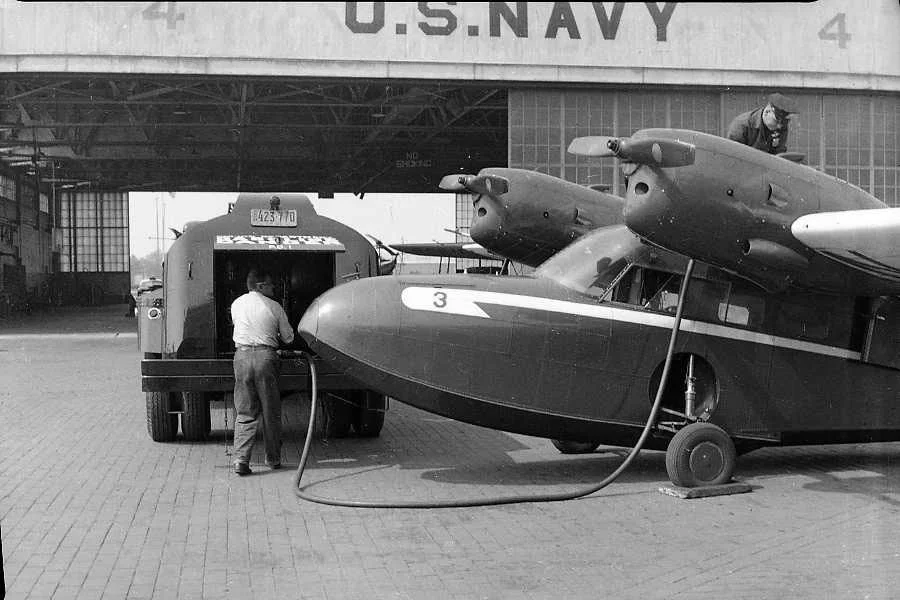
REC0116_E-8_496: View of airplane being fueled, Brielle Avenue, Staten Island, New York, n.d. NYPD Aerial Unit Collection, NYC Municipal Archives. 

REC0116_E-26_030: View of man dangling from helicopter, n.d. NYPD Aerial Unit Collection, NYC Municipal Archives. 

The NYPD established the Aviation Unit in 1929 at Floyd Bennett Airfield in Brooklyn. Originally created in response to the increase in air traffic during the 1920s, it grew to include rescue operations, firefighting, port security, and tactical support. At first, the NYPD maintained only fixed-wing planes, but in 1948, they introduced helicopters to the fleet. Some of these first Bell Helicopters were outfitted with floatation devices to make water rescues possible and today, the NYPD has created an advanced Air and Sea Rescue Unit. Since 1954, the Aviation Unit has relied solely on helicopters for air support.

The collection came to the Municipal Archives by way of an NYPD Pilot, Officer Danny J. Edling. The negatives (said to be rescued from a dumpster) were previously stored in an officer’s locker at Floyd Bennett Field and entrusted to Officer Edling, who had an interest in the Unit’s history. Hearing about the NYPD photographs accessioned by the Municipal Archives, Officer Edling reached out and transferred the items in his care to the Municipal Archives in 2014.

REC0116_D-22_403: Aerial view of City Hall area, ca. 1969. NYPD Aerial Unit Collection, NYC Municipal Archives. (Note the construction of the Twin Towers underway in the upper left.) 

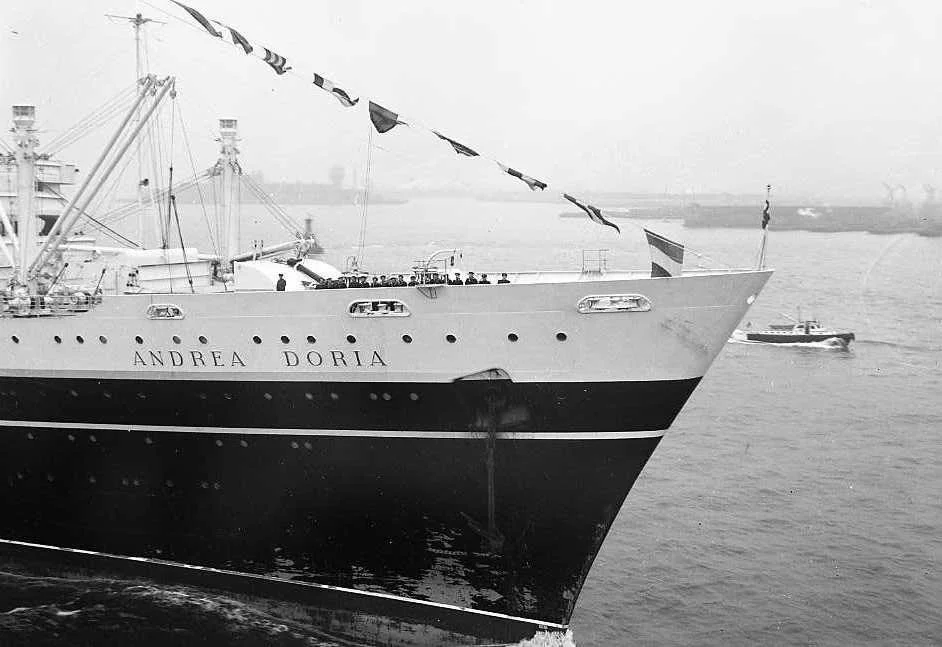
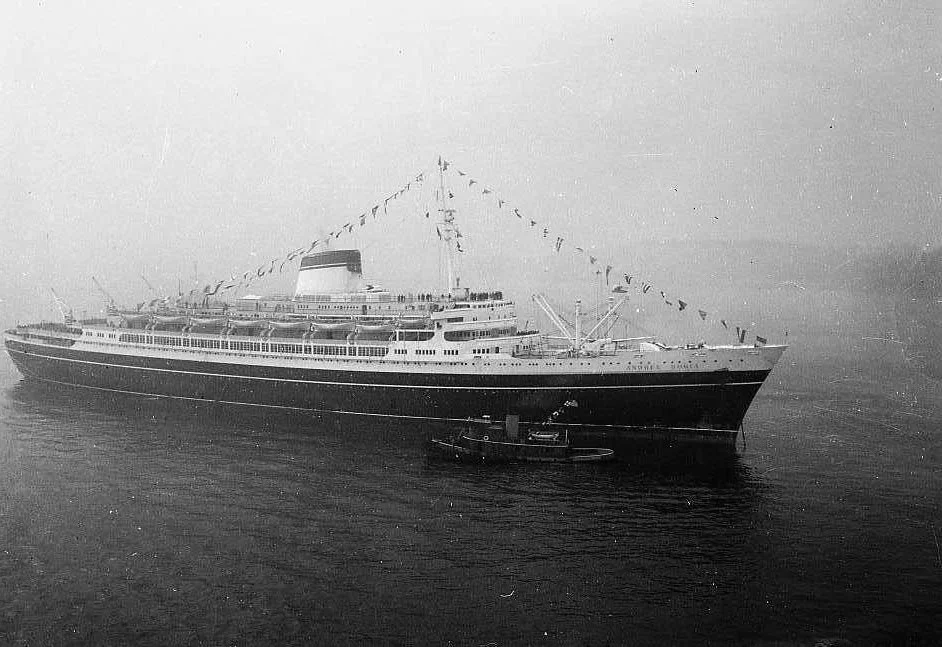
The 3,631 negatives consist mainly of aerial photographs, which are believed to have been taken by NYPD Aviation Unit officers, dating between 1935 and 1982. Also included are images of significant events related to the daily workings of the Aviation Unit including funerals, award dinners and new vehicle purchases—even a departmental family outing to Coney Island. There are also a number of stunning aerial images of ocean liners coming into New York Harbor, perhaps on their maiden voyages, including the ill-fated Italian ship, Andrea Doria ca. 1953 and the German ship, S.S. Bremen in 1935.

REC0116_S-32_019: Ship Andrea Doria in water, ca. 1953. NYPD Aerial Unit Collection, NYC Municipal Archives. 

REC0116_S-32_019: Ship Andrea Doria in water, ca. 1953. NYPD Aerial Unit Collection, NYC Municipal Archives. 

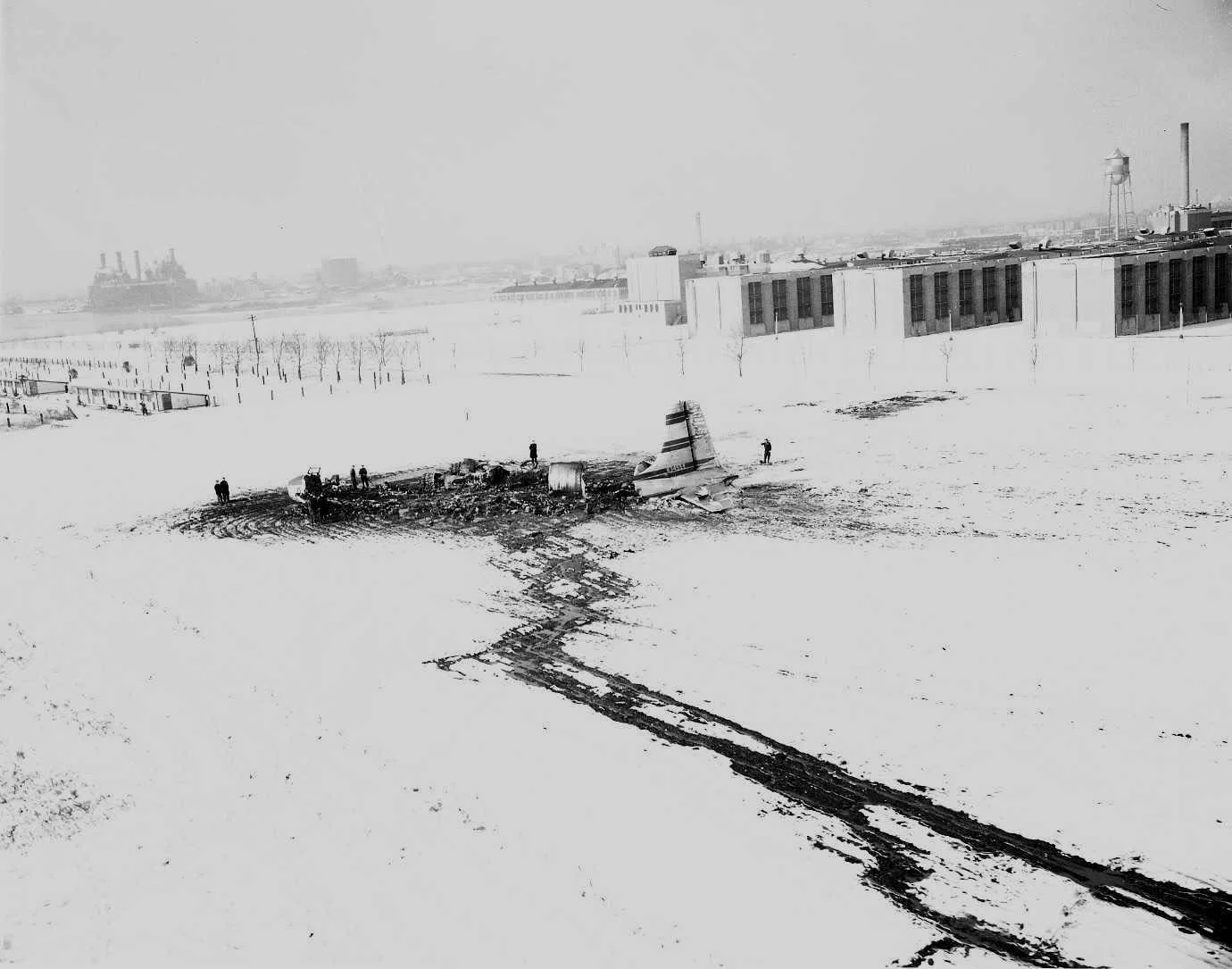
REC0116_E-45_148: View of police at scene of crash, n.d. NYPD Aerial Unit Collection, NYC Municipal Archives. 

Another significant theme is investigations of aviation disasters. The Federal Aviation Administration (FAA) was not formed until 1958, but even after its creation, the NYPD continued to investigate crashes in New York City. Notable accidents include Northeast Airlines Flight 823, which crashed shortly after take-off in snowstorm on February 1, 1957. The DC-6 clipped trees on the edge of Rikers Island and crashed outside the fences of the prison. Prison officials and inmates rushed to help the passengers and of the 101 people on board, there were 20 fatalities. Of the 57 prisoners who assisted in the rescue efforts, 30 were released and 16 were given reduced sentences by the parole board.

REC0116_C-18-1_052a: View of Northeast Airline Flight 823 crash and removal, Rikers Island, February 2, 1957. NYPD Aerial Unit Collection, NYC Municipal Archives. 

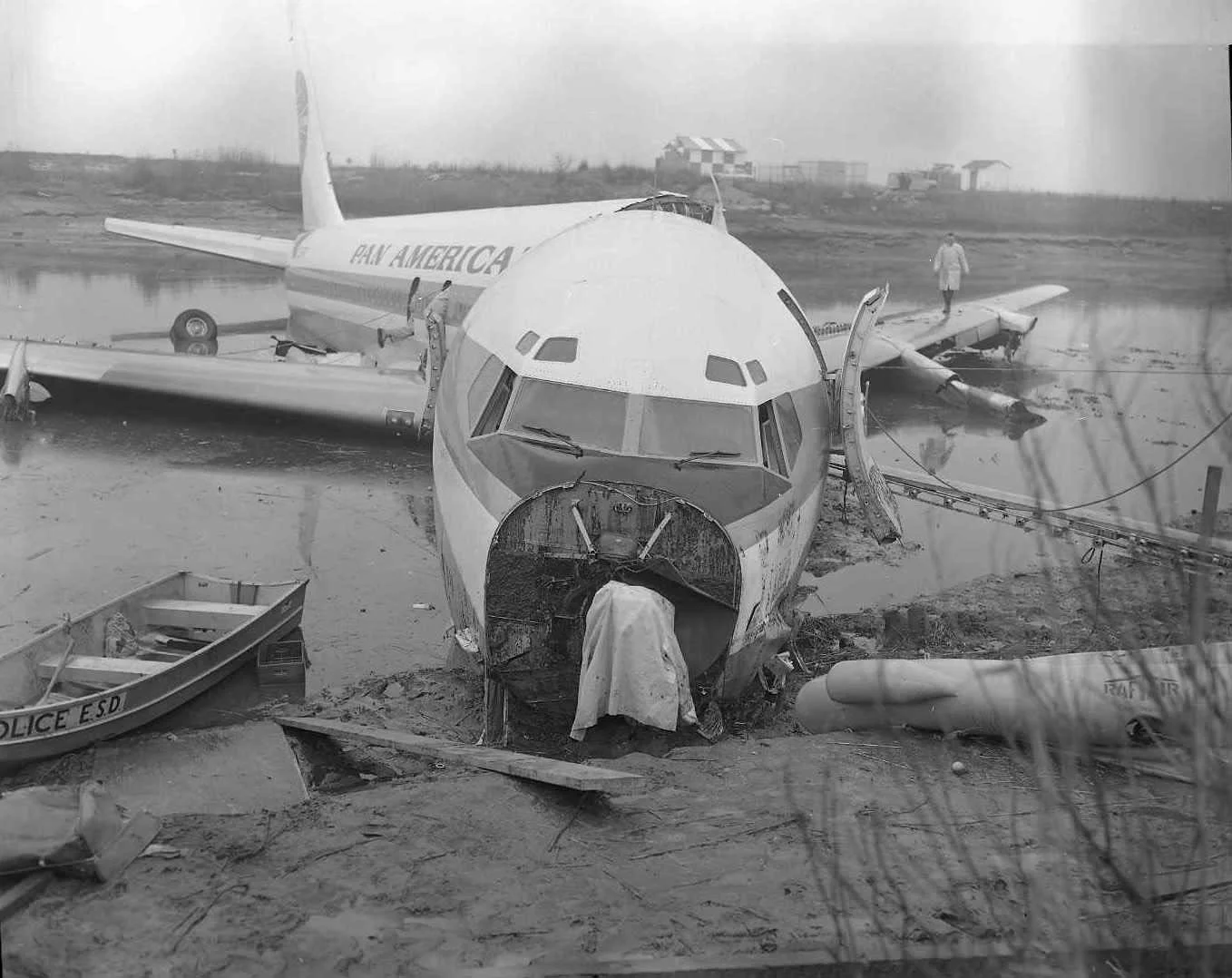
REC0116_C-43_250: Close-up view of plane crash—Pan American N779PA, John F. Kennedy International Airport, April 7, 1964. NYPD Aerial Unit Collection, NYC Municipal Archives. 

Also documented are Pan-Am flight 212 from San Juan Puerto Rico, which overshot the runway at JFK on April 7, 1964 (no fatalities); and the December 16, 1960, mid-air collision that resulted in 134 deaths. United Airlines Flight 826 bound for Idlewild (now JFK) and TWA Flight 266 traveling to LaGuardia Airport collided over Staten Island. The TWA Lockheed L-1049 Super Constellation crashed in Miller Field on Staten Island, while the UA DC-8 crashed at the intersection of Seventh Avenue and Sterling Place in Park Slope, Brooklyn. For more on this horrifying accident, see the 2019 blog: “Death from the Skies Over Brooklyn.”

REC0116_C-29_206a: View of plane crash—TWA Super Constellation, Miller Field plane crash site, Staten Island, December 16, 1960. NYPD Aerial Unit Collection, NYC Municipal Archives. 

REC0116_E-2_450: Aerial view of building fire, n.d. NYPD Aerial Unit Collection, NYC Municipal Archives. 

The Aerial Unit collection came with very minimal information about the images. Some negative sleeves included the date and other descriptions, but more research will be needed to identify significant events. A photo file index, which is partially complete, includes material information from some of the negatives between the years 1971 to 1982 and a listing guide. The collection was originally arranged with an alphabetical system that was used to identify possible subject terms. For example, “Homicides,” “Heliports,” and “Harbor” would all be filled under “H” and then subsequently assigned a chronological number under that letter. The listing guide gives some of the subject terms for the alphabetical system, but not all of the meanings are included. Due to this, the collection was kept in the original order but updated with a numerical numbering system starting at 1 and proceeding to 3,638 for ease of location within the collection.

Readers are invited to take a look at these samples from the collection.

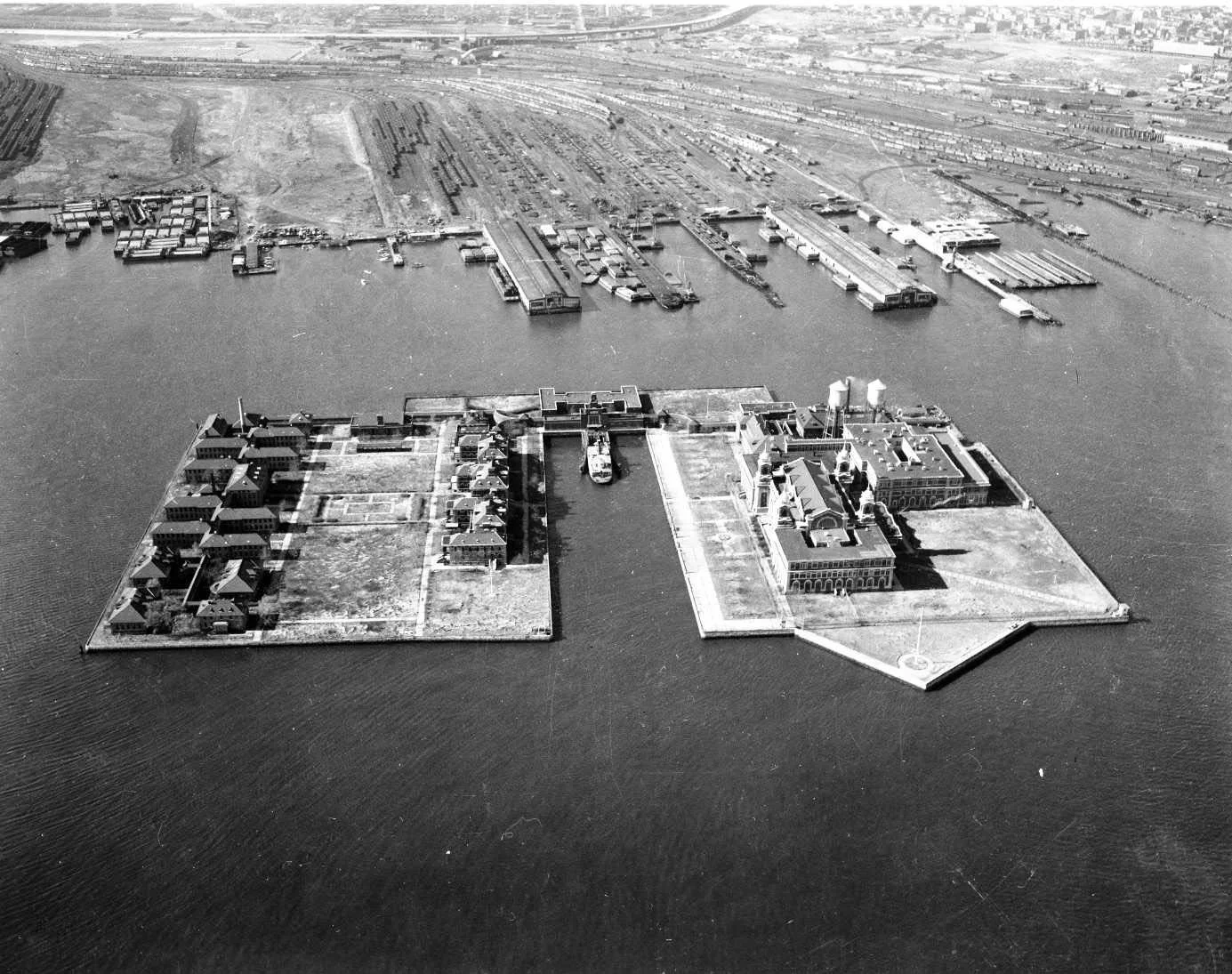
REC0116_E-53_118: Aerial view of Ellis Island, n.d. NYPD Aerial Unit Collection, NYC Municipal Archives. 

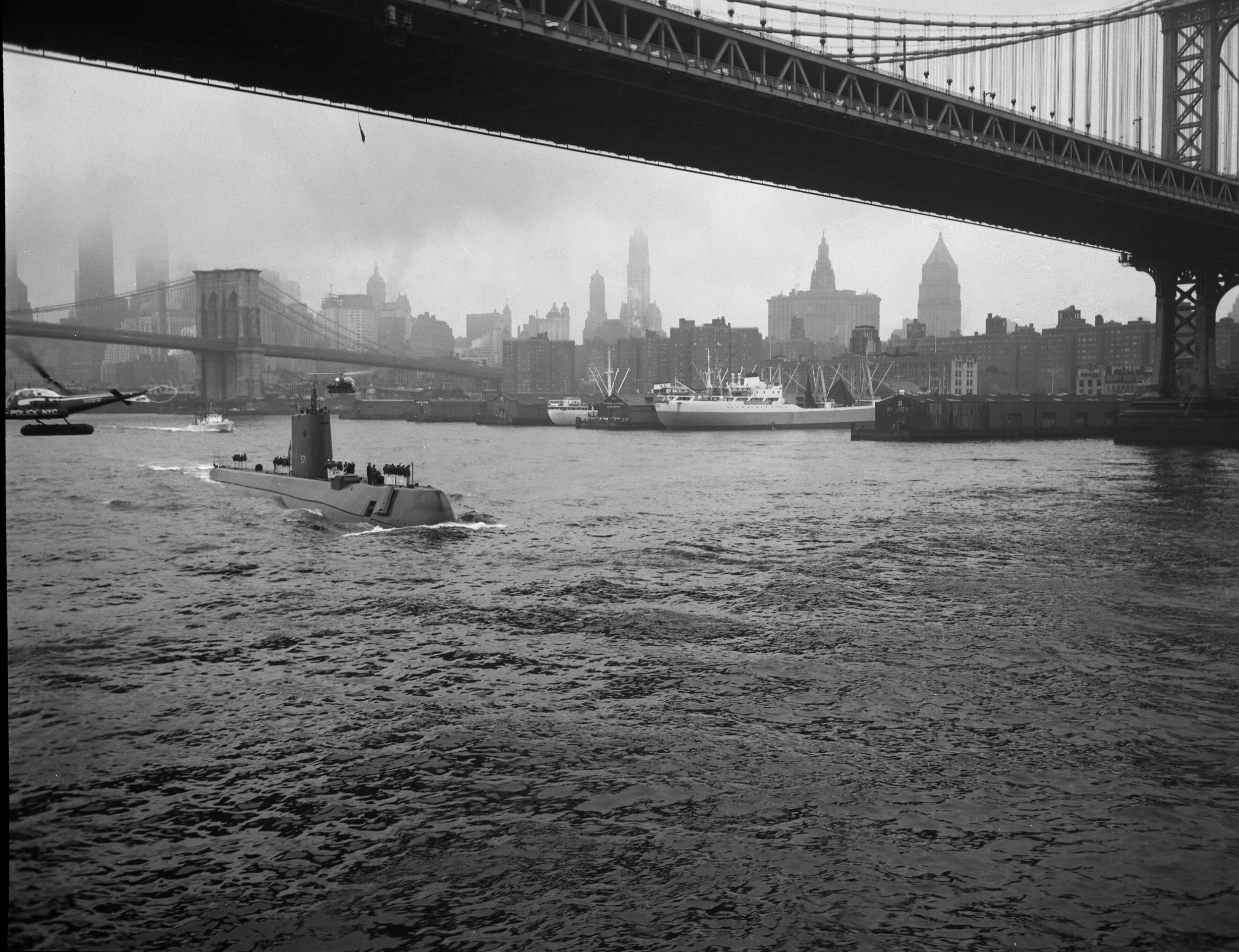
REC0116_F-20-2_012: View of United States Navy submarine 571 (USS Nautilus) under Manhattan Bridge, 1958. NYPD Aerial Unit Collection, NYC Municipal Archives. 

REC0116_F-20-2_006: View of the USS Nautilus (SSN-571) under the Manhattan Bridge, 1958. NYPD Aerial Unit Collection, NYC Municipal Archives. 

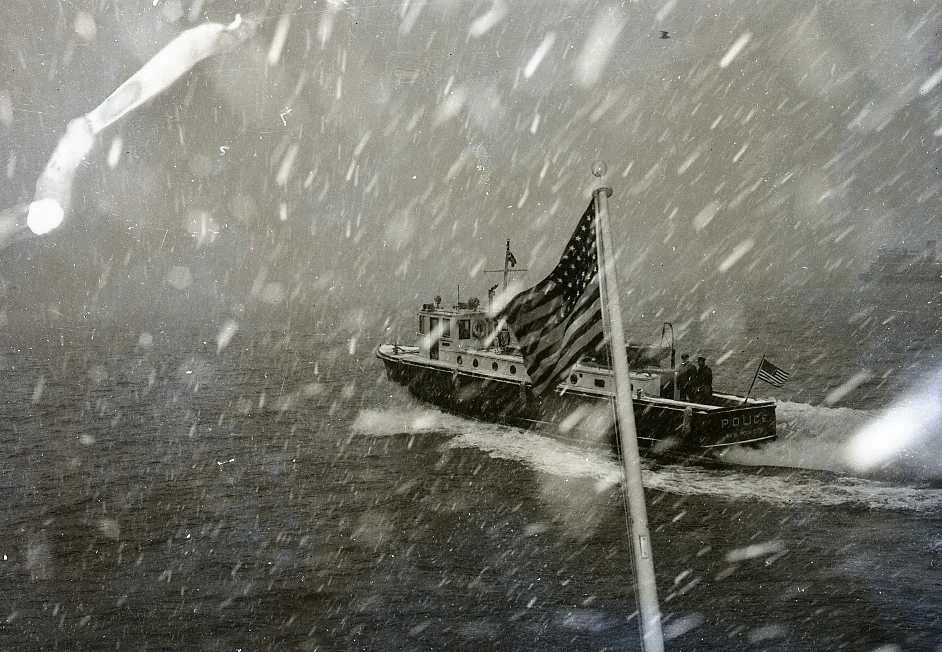
REC0116_V-3_737: Police boat on the water in the snow (Harbor event with CO's and Gus Crawford), n.d. NYPD Aerial Unit Collection, NYC Municipal Archives. 

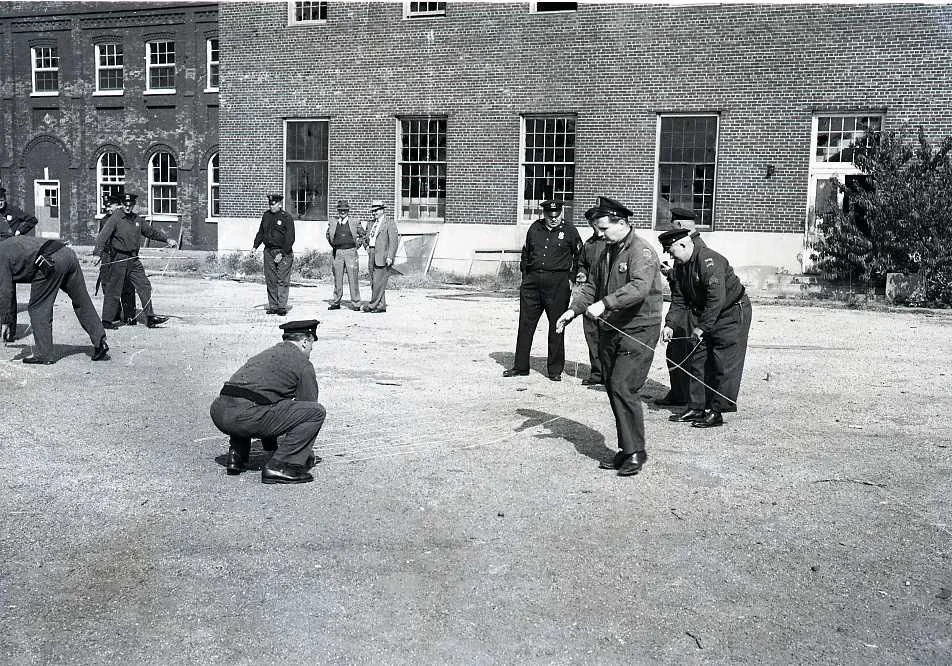
REC0116_T-2_675: Men at tear gas training, n.d. NYPD Aerial Unit Collection, NYC Municipal Archives. 

REC0116_S-58_322: View of the SS France and smaller ships in river, ca. 1960. NYPD Aerial Unit Collection, NYC Municipal Archives. 

REC0116_S-22_051: Sinking ship (unidentified), n.d. NYPD Aerial Unit Collection, NYC Municipal Archives. 

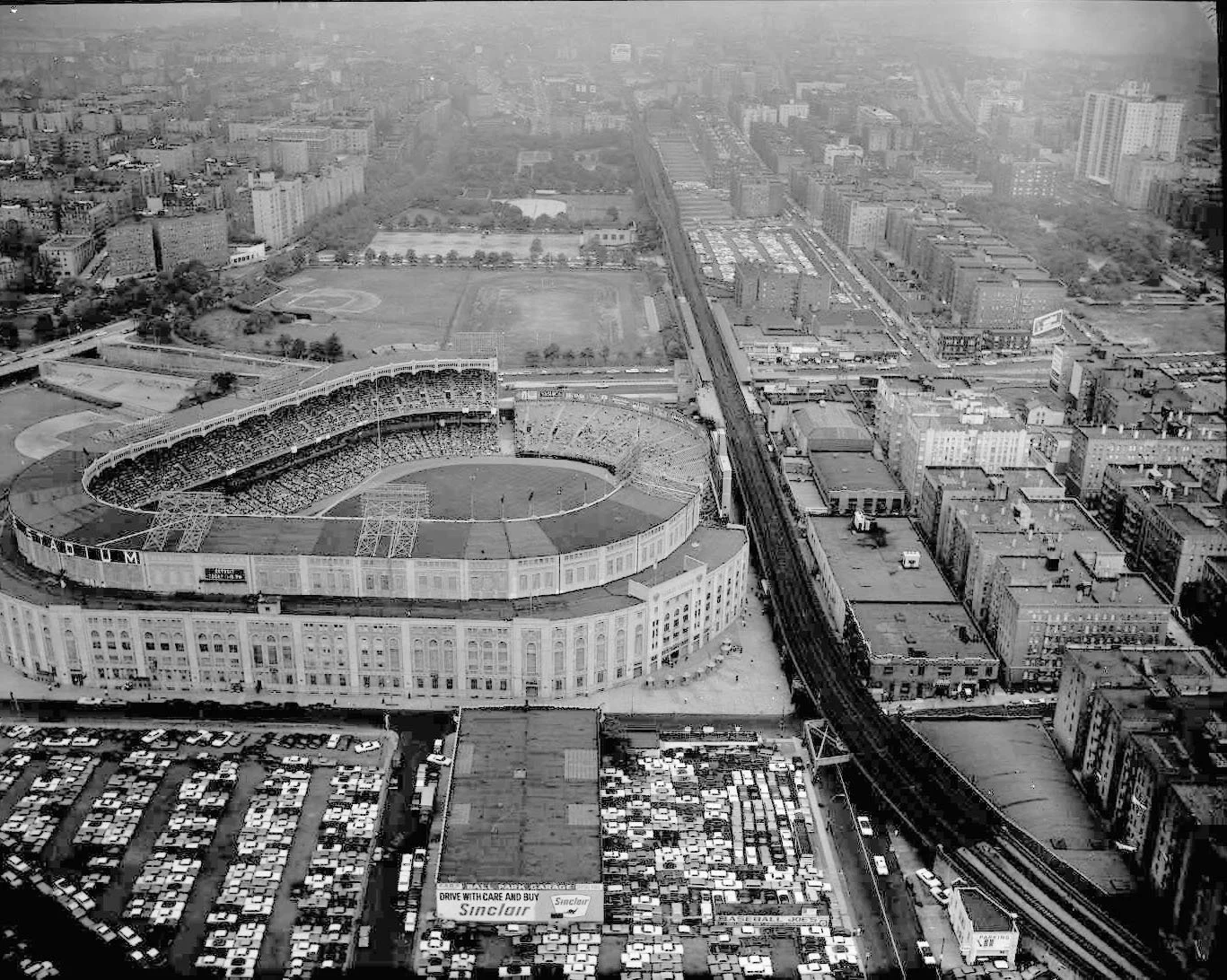
REC0116_P-58_680: Aerial view of the Bronx and Yankee Stadium, n.d. NYPD Aerial Unit Collection, NYC Municipal Archives. 

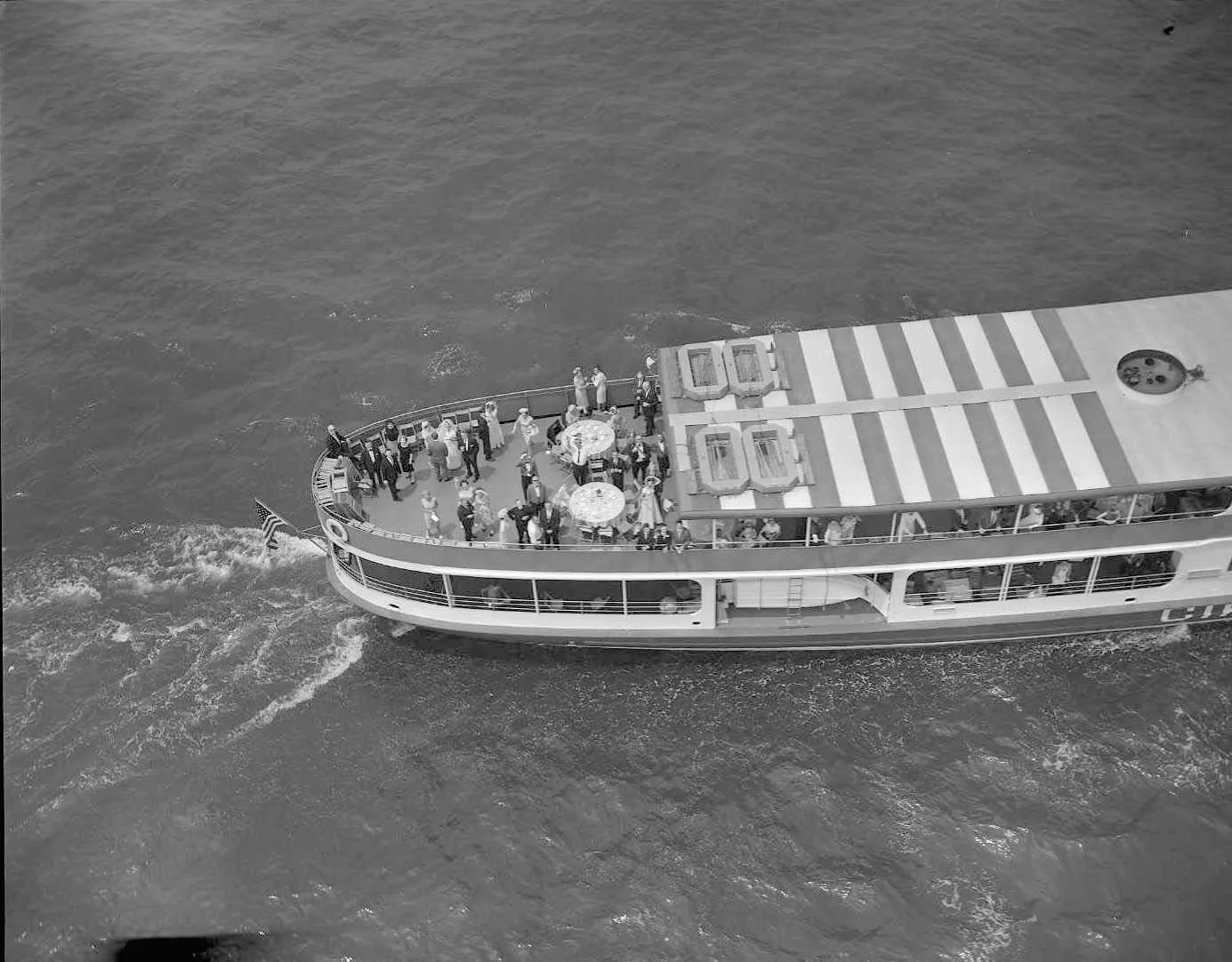
REC0116_C-48_297: View of Circle Line boat ride, n.d. NYPD Aerial Unit Collection, NYC Municipal Archives. 

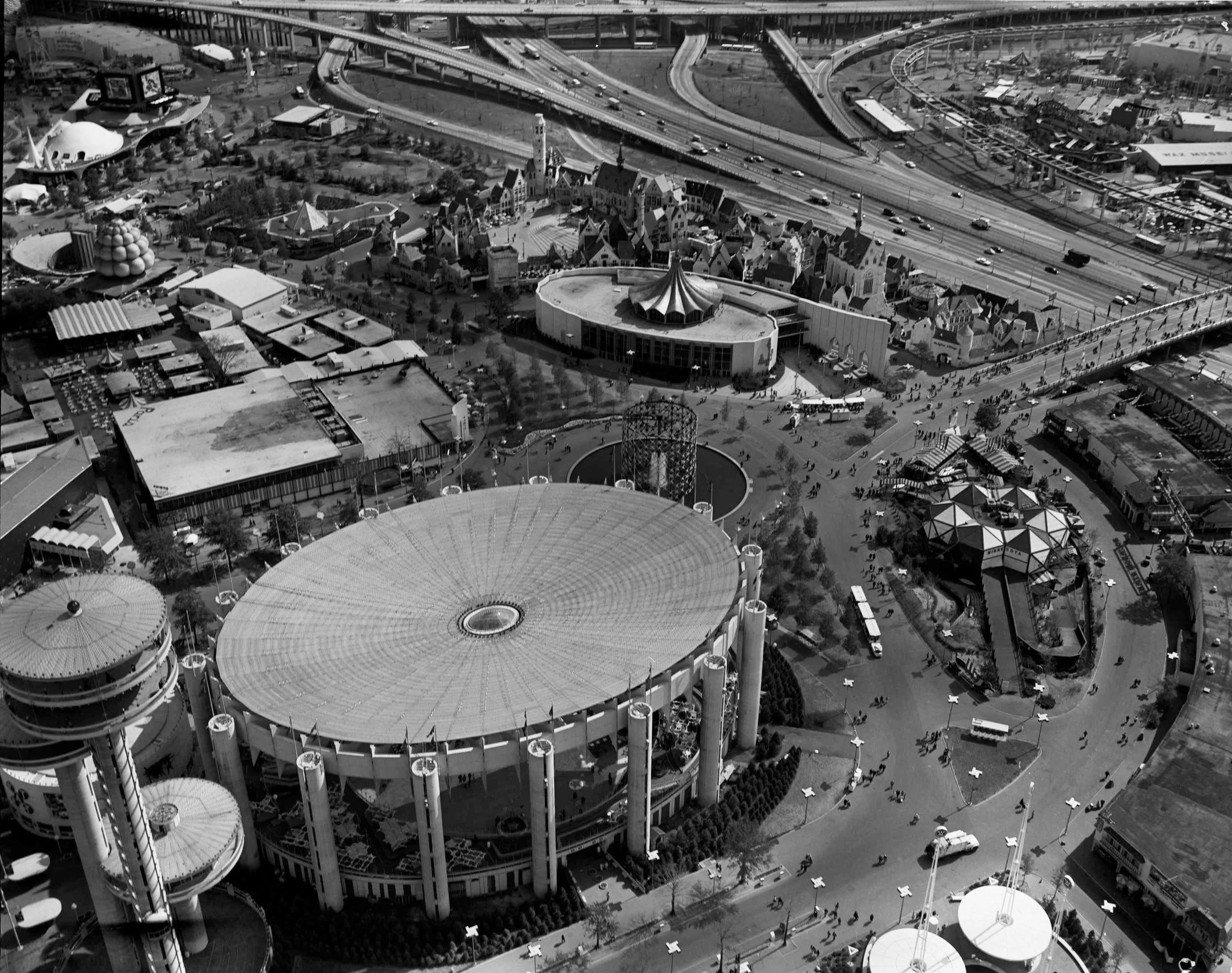
REC0116_P-59C_799: Aerial view of World’s Fair, Flushing Meadows, Queens, 1964. NYPD Aerial Unit Collection, NYC Municipal Archives. 

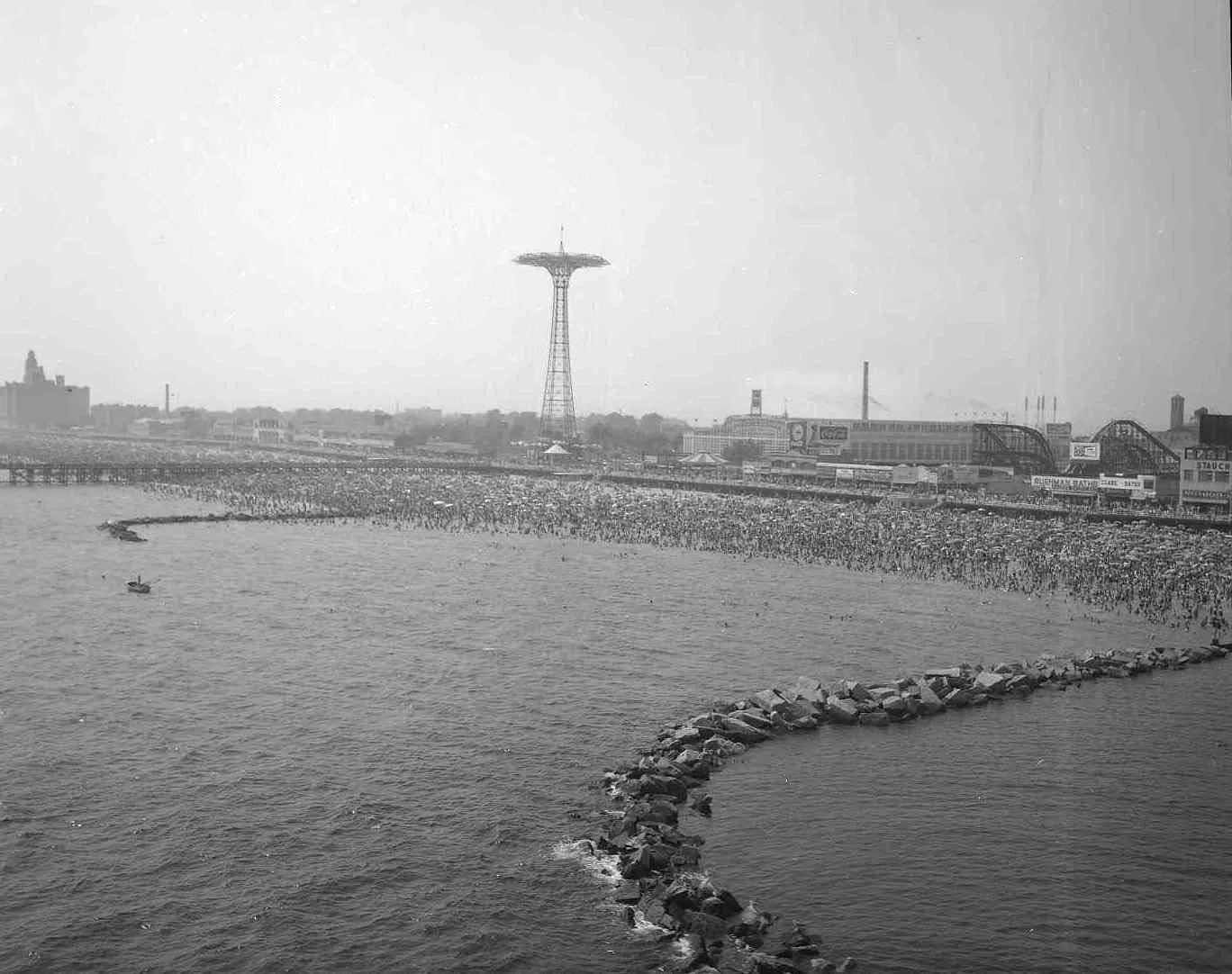
REC0116_B-4_103a: Coney Island beach with the Parachute Drop and Thunderbolt in background, ca. 1960. NYPD Aerial Unit Collection, NYC Municipal Archives. 

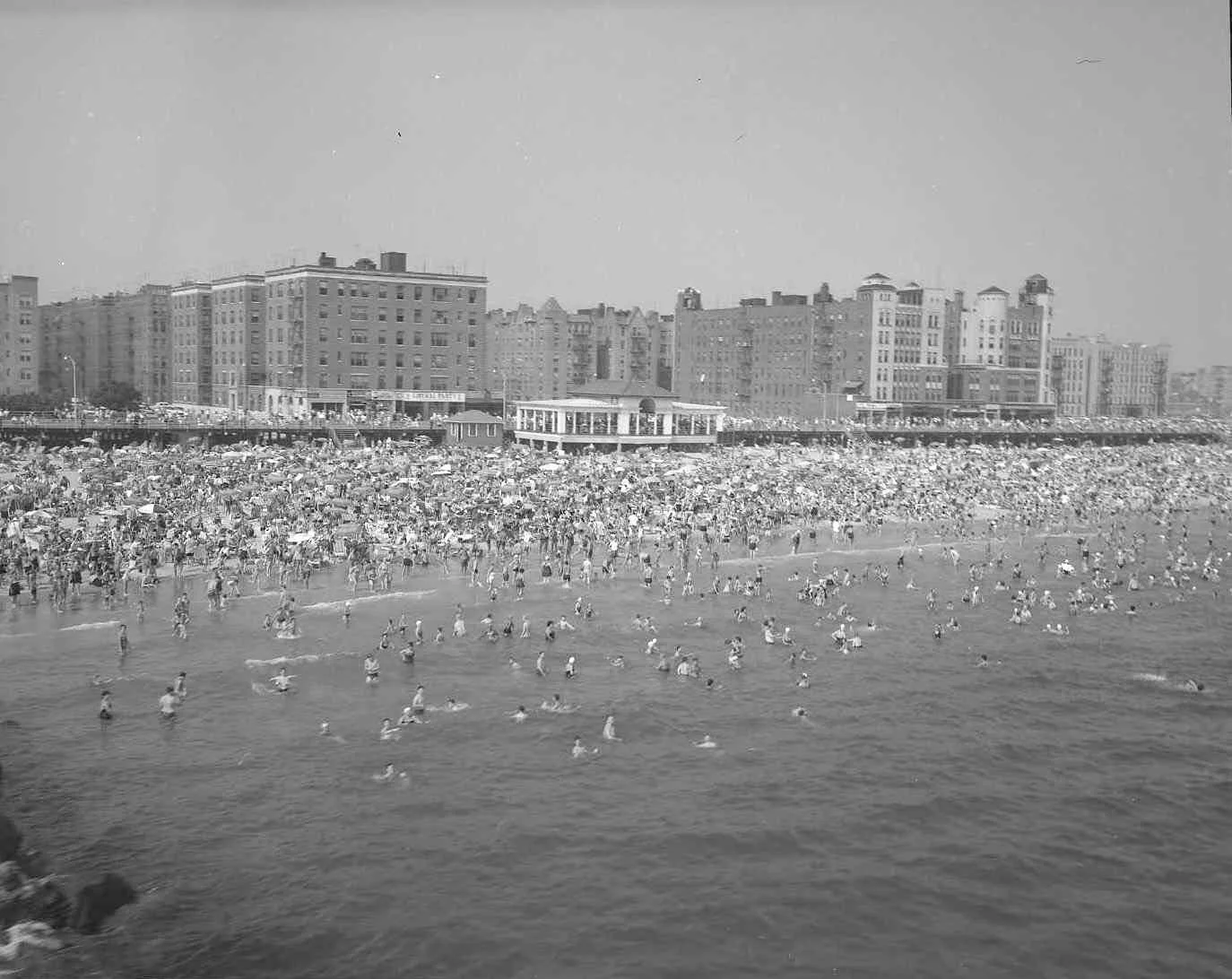
REC0116_B-4_108: View of crowded beach (Brighton Beach), ca. 1960. NYPD Aerial Unit Collection, NYC Municipal Archives. 

REC0116_O-6_481: Families at Steeplechase Park, Coney Island, ca. 1960. NYPD Aerial Unit Collection, NYC Municipal Archives. 

Stacy H. Wood, Illustrator

In a continuing series of articles highlighting unusual or unexpected items found in Municipal Archives or Library collections, this week For the Record features a delightful pictorial map created by artist Stacy H. Wood.

Hotel Governor Clinton map, by Stacy H. Wood, 1936. Mayor LaGuardia papers, NYC Municipal Archives.

Measuring 18 by 28.5 inches, the map depicts the United States decorated with clever cartoon figures and illustrations. It had been sent to Mayor Fiorello LaGuardia from the Hotel Governor Clinton, located on Seventh Avenue and 32nd Street in Manhattan. The Mayor’s mail room clerk date-stamped it received on June 9, 1936.

Hotel Governor Clinton map (detail), by Stacy H. Wood, 1936. Mayor LaGuardia papers, NYC Municipal Archives.

The purpose of the map is not entirely clear but seems to relate to the Democratic National Convention that would take place in Philadelphia on June 23, 1936. The legend on the lower left portion of the map is a message to Mayor LaGuardia: “You are invited to indulge, to your heart’s content, in all the pastimes and pleasures this great Metropolis affords, both before & after your quiet sojourn in Philadelphia.” And to that end, the map provides useful information about New York City events such as the dates for upcoming baseball games, arrival of ocean liners S.S. Normandie and Queen Mary, and the Zeppelin Hindenburg. It also helpfully notes the Hotel’s proximity to Radio City, the Hayden Planetarium, and Pennsylvania Station, as well as department stores, Macy’s, Gimbel’s, Saks, and B. Altmans.

Hotel Governor Clinton map (detail), by Stacy H. Wood, 1936. Mayor LaGuardia papers, NYC Municipal Archives.

City archivists came across the pictorial map in “Mayor LaGuardia Oversize Box #1.” In accordance with processing procedures, items that are too large to fit in half-cubic foot archival containers are “separated” from their original locations and placed in enclosures appropriate to their size. In place of the removed item, the processing archivist substitutes a “separation sheet” that provides a brief description of the item, date removed, and the new location.

The separation sheet attached to the poster indicated that it had been originally filed in LaGuardia’s subject series in a folder labeled “Favors, Requests for, 1936-37.” Examination of the folder contents, and others similarly labeled, revealed an eclectic assortment of items. As one would expect, there are numerous letters to the Mayor (and/or his assistants) asking for help in obtaining jobs or other services. For example, on October 6, 1937, G. W. Cahan, of the Greenwood Lakes Estates Co. wrote to LaGuardia’s aide Stanley Howe asking for an introduction to Sanitation Commissioner William Carey, “... as I have an interesting proposition I would like to take up with him.” But it also contained other seemingly random objects such as a birthday greeting to the Mayor in the form of a colorful Western Union telegram.

Western Union telegram, 1934. Mayor LaGuardia papers, NYC Municipal Archives.

Most of the correspondence consists of the incoming letter and a carbon copy of the Mayor’s response. For the pictorial map there was neither a cover letter, nor a response. Perhaps the LaGuardia’s clerks decided that the poster’s legend inviting him to “indulge ... in all the pastimes and pleasures of this great metropolis” constituted a request for a favor.

Hotel Governor Clinton map (detail), by Stacy H. Wood, 1936. Mayor LaGuardia papers, NYC Municipal Archives.

The serendipitous discovery of the pictorial map points out one of the limitations of archival description practices. Typically, archivists processing voluminous collections such as mayoral correspondence use the original record-creators’ identifications to describe folder contents, in this instance, “Favors, Requests For.” Item-level processing is generally not practical. It is unlikely that researchers interested in the work and career of the artist, Wood, would think of municipal government records as a possible venue for information. And even if they did, the “Favors, Request for” folder would not be an obvious source.

Brooklyn birth certificate for Stacy H. Wood, 1887. Historical Vital Records collection, NYC Municipal Archives.

Hotel Governor Clinton map (detail), by Stacy H. Wood, 1936. Mayor LaGuardia papers, NYC Municipal Archives.

Nevertheless, this work by the illustrator Stacy H. Wood is in the collection. An online search resulted in only minimal biographical information. He is described as an American children’s book illustrator and graphic artist active in New York during the first half of the 20th Century. Born in Brooklyn in 1887, he studied at Amherst, the Pratt Institute, and the Art Institute of Chicago. Among other cited works are other pictorial maps including one of the United States for the Boy Scouts of America 1935 Jamboree. Wood died on June 7, 1942, in Mt. Vernon, N.Y.

And the Hotel Governor Clinton? Renamed the Hotel Stewart at some point, it still stands today, a handsome example of Art-Deco-era construction in Manhattan. For interested researchers, the Manhattan Building Permit and Plan collections in the Archives would serve to trace its history beginning with the new building application filed on December 28, 1927, by architects Murgatroyd and Ogden. Subsequent applications document alterations and modifications through the 1970s. More recent reports indicate the building may be slated for residential conversion.

Now that we have “found” the artist Stacy H. Wood, readers are invited to take a closer look at his work. But be forewarned, you will need some time—there is a lot going on in this picture!

Hotel Governor Clinton map (detail), by Stacy H. Wood, 1936. Mayor LaGuardia papers, NYC Municipal Archives.

Hotel Governor Clinton, ca. 1939. Tax Photograph collection, NYC Municipal Archives.

Hotel Governor Clinton (Hotel Stewart), 2025. Photograph by the author.

The Municipal Library: A Progressive Ideal is Realized and Endures

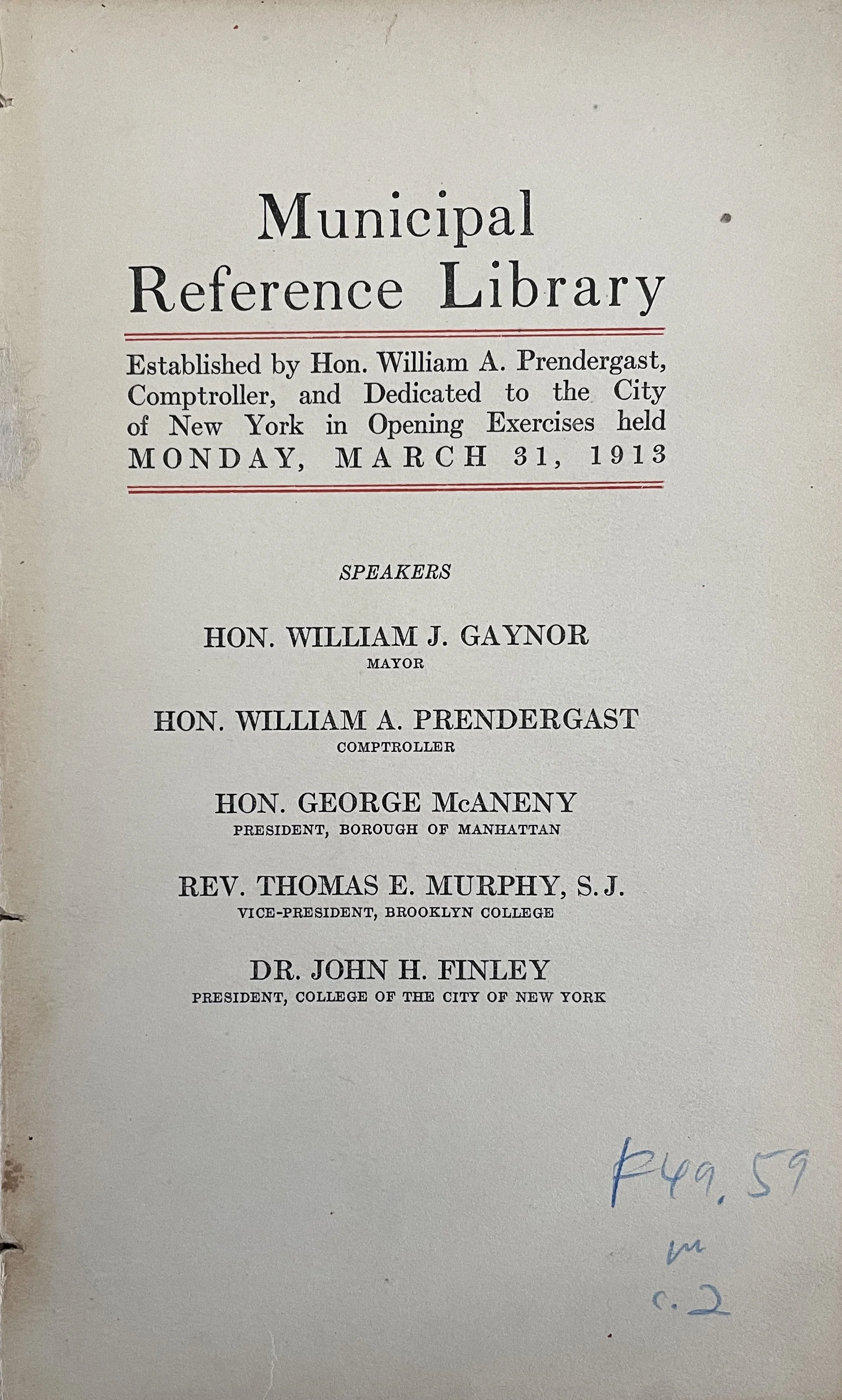
New York City’s Municipal Reference Library initially opened to the public at 280 Broadway on March 31, 1913, with a dedication ceremony attended by many municipal officials. A small booklet commemorating the event was recently located on the shelves of the current Library at 31 Chambers Street.

Cover page of Municipal Reference Library, 1913. NYC Municipal Library.

All texts from glass lantern slides, ca. 1930. Municipal Library Collection, NYC Municipal Archives.

Noting that the library contained over 5,000 books and pamphlets, “Out of the 5,000 books, only 368 were actually purchased for the library. The others were contributed by the Comptroller from the shelves of the libraries in the Department of Finance. This was possible because the department had been engaged for some time in gathering books of the kind most suitable to a municipal reference library.”

Long a goal of City Comptroller William Prendergast, the Library was one of the many new institutions proposed by reformers in the late 19th and early 20th centuries. This period, the Progressive Era, was a period of widespread activity to reform institutions, both public and private. Movements to improve conditions for workers and immigrants led to the development of labor unions and settlement houses. Efforts to reduce government corruption focused on government efficiency including the introduction of business practices into government and establishing criteria-based hiring practices to reduce patronage in employment. Municipal libraries fit into this by providing government decisionmakers with studies and statistics about government operations so decisions might be fact-based.

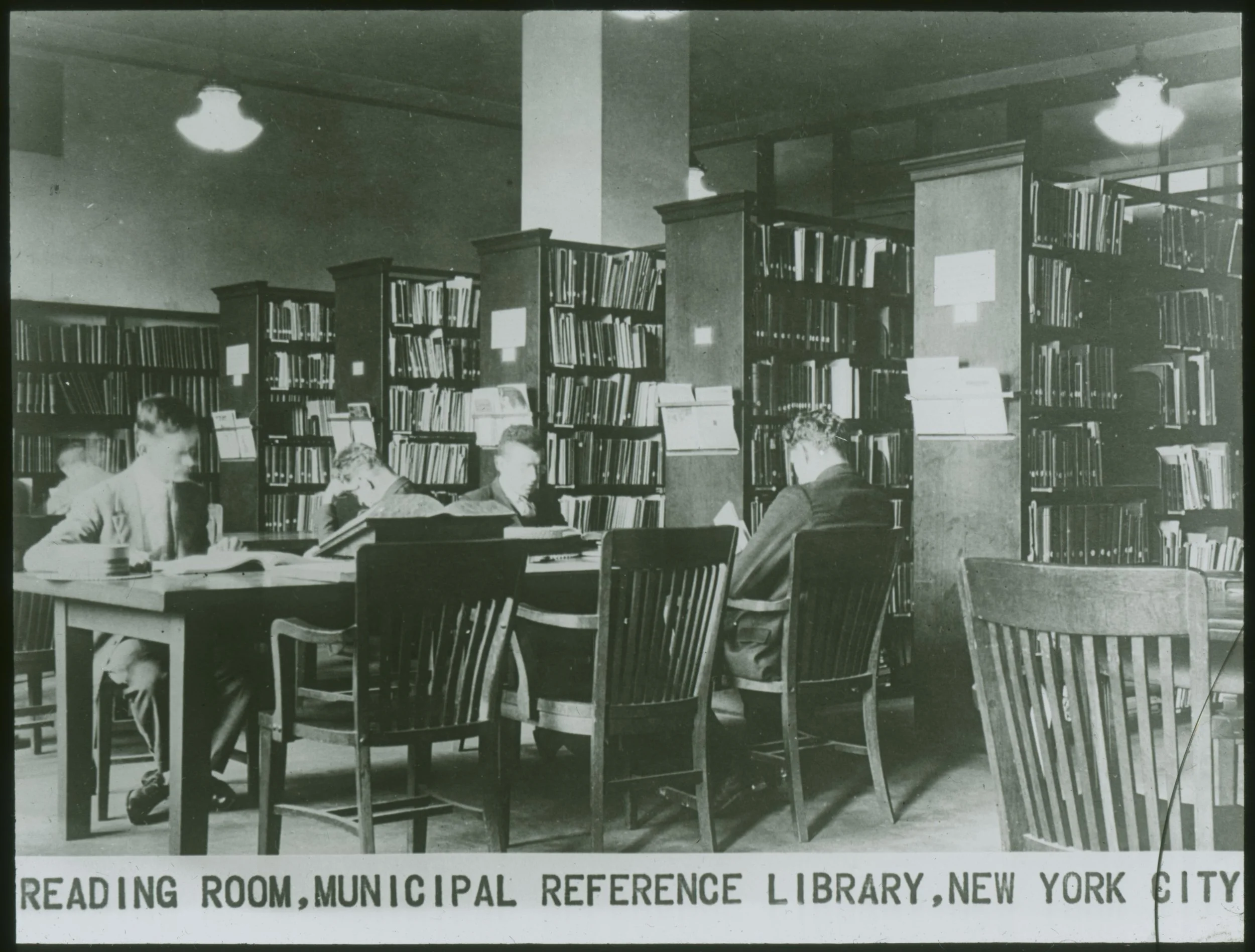
Reading Room, Municipal Reference Library, New York City, ca. 1930. Municipal Library Collection, NYC Municipal Archives.

New York was not the first municipality to open a library with a focus on government efficiency. In 1908, the National Municipal League, a reform-minded organization promoting civic engagement, proposed that local governments establish municipal libraries. Several cities took up the charge: St. Louis, Baltimore, Kansas City, Milwaukee and Minneapolis all established libraries before New York. In his opening address, Prendergast acknowledged this and said, “No city has as great municipal problems as those which confront New York, and consequently New York should be in the vanguard of those communities that are quick to recognize the utility of such an institution.”

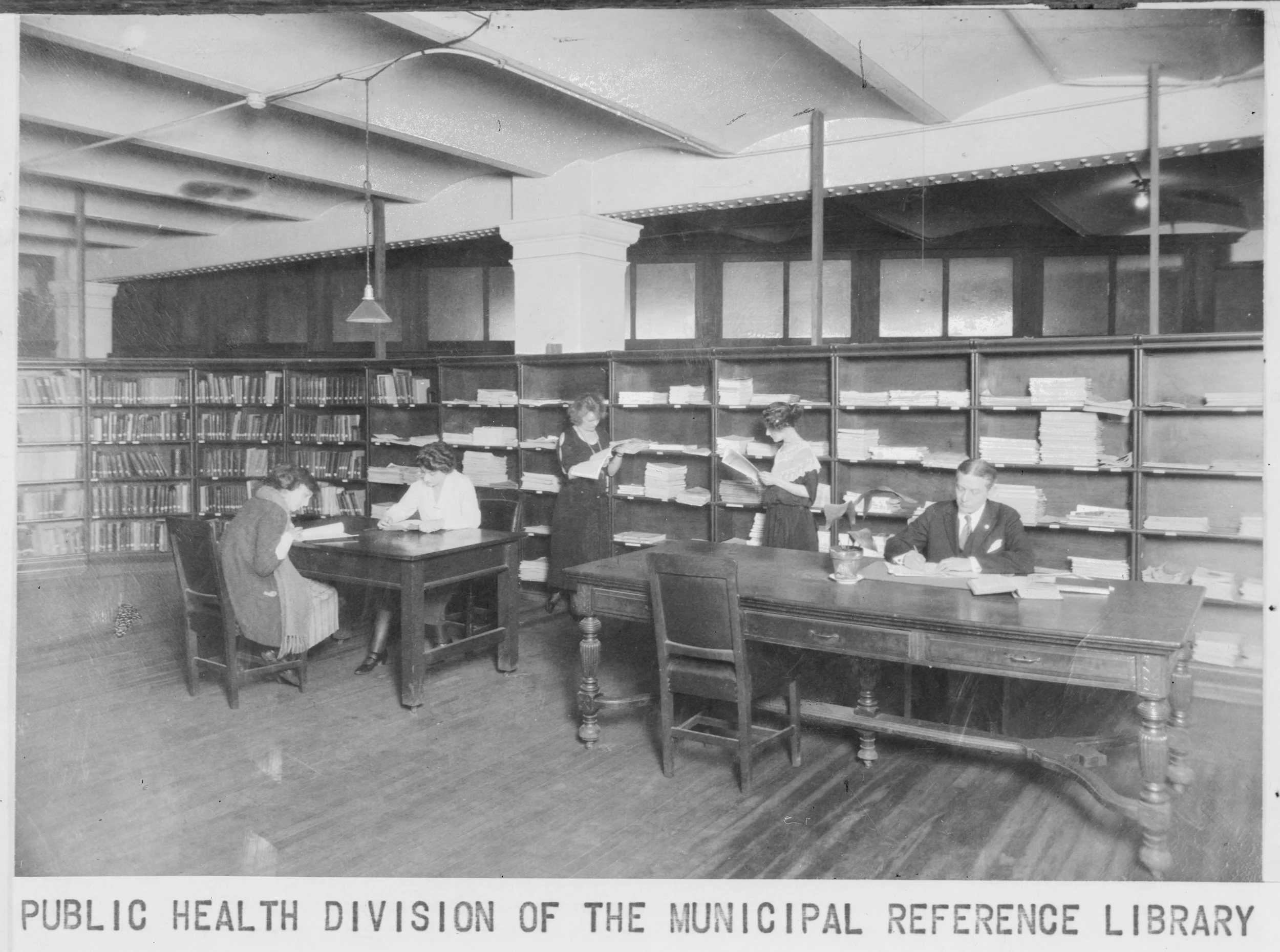
The Municipal Reference Library maintained a separate Public Health Division at the Department of Health, ca. 1930. Municipal Library Collection, NYC Municipal Archives.

Prendergast, a Republican, ran unsuccessfully for Congress before being elected as the City’s Comptroller in 1909, and re-elected in 1913. An online search shows that he authored several publications about finances including: “The business of New York City:  how the city gets its money and how it spends it” and “Report on the Tax Levies of the City of New York.” The Municipal Library Catalog includes these publications and thirty more on topics ranging from west side improvements, centralizing city purchases, street improvements and the telephone situation in municipal departments. All in all, he seems to fit the mold of a progressive-era reformer.

The library’s first home at 280 Broadway (then known as the Stewart Building and later as the home of the New York Sun newspaper) consisted of two rooms on the 4th floor. Getting that space was an achievement, described in the proceedings. Prendergast, Mayor John Purroy Mitchel and Manhattan Borough President George McAneny comprised the budget committee of the Board of Estimate in 1910 and proposed funding a Municipal Library. (Mitchel actually was the President of the Board of Aldermen but temporarily was a member of the Board of Estimate because he served as Acting Mayor for several months in 1910 when Mayor William Gaynor was recovering from an assassination attempt.) Regardless, his status did not help because the Board of Aldermen refused to appropriate the meager sum needed to fund the library.

Municipal Reference Library, New York City, ca. 1930. Municipal Library Collection, NYC Municipal Archives.

As New York prepared for a municipal election in 1913 that would pit Tammany against reformers, the three elected officials determined that the library should be established before the end of Gaynor’s term. So, Comptroller Prendergast used funds allocated to his office to set up the library—$750 to purchase new books and $500 for the furniture. The librarian was also funded through the Department of Finance (then part of the Comptroller’s Office). As stated in the introduction: “The limited appropriations for the Department of Finance were not sufficient to provide entire equipment for the library. The library cases in the Bureau of Municipal Investigation and Statistics, of the Finance Department, were used for one of the rooms, and wooden shelves were erected in the other. It was necessary to buy a desk, some chairs and tables, but except for these and the 368 books already mentioned. The library was built up with equipment already owned by the Department.”

Files and Catalogue in the Municipal Reference Library, New York City, ca. 1930. Municipal Library Collection, NYC Municipal Archives.

Despite the obstacles, Prendergast seemed optimistic in his address at the opening. “This Municipal Reference Library should be a “fact centre.” To it, public officials public employees, civic organizations and citizens generally, should be able to appeal for information on any subject that may reasonably be considered within the domain of municipal performance. If the library should not happen to have adequate data relating to a subject regarding which inquiry is made, it will be the duty of those in charge to immediately secure the necessary information.”

Library of the Public Health Division of the Municipal Reference Library, ca. 1930. Municipal Library Collection, NYC Municipal Archives.

He continued, “The functions of this library can be made very far reaching. They could include the making of investigations, the preparation of reports, the drafting of legislative bills and city ordinances, lecture courses and public discussions…. If facts are required they should be secured by the library, but the quest must be for facts. Any attempt to use it for personal or political advantage would destroy the value of the library as an element of municipal service.”

Page from the Municipal Reference Library, 1913. NYC Municipal Library.

Prendergast praised the assistance of the New York Public Library and support of the Brooklyn Public Library and envisioned a future with branches of the Municipal Reference Library in all of the boroughs, through partnerships with the library systems. This was not to be. He also recommended that the 8,000 volumes and 500 pamphlets in the Aldermanic Library be transferred to the Municipal Reference Library, which eventually did occur.

Mayor Gaynor, who would die from complications of the assassination attempt in September, paving the way for Mitchel to be elected the City’s youngest mayor on the Fusion ticket, then spoke. Praising the work of the Comptroller, and noting the modest beginning, he said, “It will grow, and grow rapidly, the object being to bring into one library all information and statistics, not only regarding our own city, but regarding all cities, and when I say all cities I mean the cities abroad as well as here. In that way much can be gathered together of the greatest value. It will be a place not only where those working in municipal government may go to get information, but it will be a place to which the writers on municipal topics may go. The future historian, Mr. Comptroller, will make use of it.”

Another speaker, the Reverend Thomas E. Murphy, Vice President of Brooklyn College, warned attendees that statistics were insufficient without people with open minds. “We have all had occasion to observe at times that figures and statistics, like presumed facts of history, may easily become an accumulation of things that are either not so or are not the expression of the whole truth. For instance, a certain class of undeniable facts and statistics about our city might give—should I not say, have given?—outsiders the false impression that this is the most immoral city in the world and that our police and other officials are a corrupt and inefficient band of public servants. Other instances might also be cited, if necessary, to convince us that no man needs breadth of view and an unbiased mind more than the student of statistics.”

By 1930, the Library had moved to the Municipal Building and its collection included more than 50,000 books. Fast forward 112 years from its founding and we see that the Municipal Library is well used. Historians, government officials, political scientists, students, city workers and more benefit from this reform. By 2025, the Library expanded to offer City agency reports online via the Government Publications Portal, official social media post and hosts the City’s centralized Freedom of Information Law (FOIL) portal.

Eugene de Salignac’s Workers

Brooklyn Bridge, showing painters on suspenders, October 7, 1914. Photo by Eugene de Salignac, Department of Bridges/Plant & Structures Collection. NYC Municipal Archives.

For Labor Day, we thought For the Record would look back on Eugene de Salignac’s photographs of workers. His most famous photograph is, of course, of workers on the Brooklyn Bridge, but many of his photographs emphasize labor. Some of de Salignac’s most intriguing photographs are his portraits, limited in number, but often stunning. Most are of City workers engaged in (or just pausing from) their daily tasks, be that welding, chiseling stone, giving radio broadcasts or filing paperwork. There is often an ease to his subjects that suggests de Salignac’s rapport with them. He frequently caught them in unguarded moments, often in the distinctive settings of their work sites and with the tools that epitomize their labor. Some, like the portrait of the worker in the subway cut, transcend time to become iconic American types. This was the great age of industrialized labor and de Salignac would have known that the City’s transformation would not be possible without the sweat of the City’s vast and varied workforce.

De Salignac himself was also a City worker, who from 1906 to 1934 was the sole photographer for the Department of Bridges/Plant & Structures. Some of the images reproduced here are from his rarely seen photo albums, which were organized around specific projects or themes.

Queensboro Bridge, motor room, Penn Steel Plant, Blackwell’s Island, April 22, 1907. Photo by Eugene de Salignac, Department of Bridges/Plant & Structures Collection. NYC Municipal Archives.

Queensboro Bridge, pin in place, upper deck, northeast, May 2, 1907. Photo by Eugene de Salignac, Department of Bridges/Plant & Structures Collection. NYC Municipal Archives.

Williamsburg Bridge, Caisson #2, general view of workers, October 14, 1911. Photo by Eugene de Salignac, Department of Bridges/Plant & Structures Collection. NYC Municipal Archives.

Williamsburg Bridge, Caisson #2, interior view at airlock, October 14, 1911. Photo by Eugene de Salignac, Department of Bridges/Plant & Structures Collection. NYC Municipal Archives.

Williamsburg Bridge, burning nut at base of column, September 10, 1915. Photo by Eugene de Salignac, Department of Bridges/Plant & Structures Collection. NYC Municipal Archives.

Department of Bridges main office, heads of department, July 20, 1922. Photo by Eugene de Salignac, Department of Bridges/Plant & Structures Collection. NYC Municipal Archives.

Department of Bridges main office, heads of department, July 20, 1922. Photo by Eugene de Salignac, Department of Bridges/Plant & Structures Collection. NYC Municipal Archives.

Pump and Hose Company, Jamaica, Queens, June 26, 1911. Photo by Eugene de Salignac, Department of Bridges/Plant & Structures Collection. NYC Municipal Archives.

Williamsburg Bridge, Brooklyn, Queens, and Richmond construction forces assembled for inspection and drill at 47th Infantry Armory, May 9, 1916. Photo by Eugene de Salignac, Department of Bridges/Plant & Structures Collection. NYC Municipal Archives.

Pelham Bay Bridge, laying concrete blocks, October 5, 1908. Photo by Eugene de Salignac, Department of Bridges/Plant & Structures Collection. NYC Municipal Archives.

Comptrollers Office sales tax division, August 19, 1938. Photo by Eugene de Salignac, Department of Bridges/Plant & Structures Collection. NYC Municipal Archives.

Brooklyn Bridge, showing front of 14-15 Rose Street, September 17, 1915. Photo by Eugene de Salignac, Department of Bridges/Plant & Structures Collection. NYC Municipal Archives.

Riveter, Brooklyn Bridge, new William Street Subway cut, November 19,1928. Photo by Eugene de Salignac, Department of Bridges/Plant & Structures Collection. NYC Municipal Archives.


A Century and a Half of Dining Out in NYC

As NYC Restaurant Week winds down, we are taking a looking back at more than 150 years of dining out in the city through the lens of guidebooks and other historic publications in the collections of the Municipal Library.

Delmonico’s, King’s Handbook of New York City, 1895. NYC Municipal Library.

In a chapter on restaurants, the 1868 Secrets of the Great City by Edward Winslow Martin cautions the reader that “the cooking, at the majority of restaurants, is unhealthy, and intoxicating liquids are sold, to an extraordinary extent.” Because entire families “live in rooms” and are thus required to dine in restaurants, the establishments are characterized by “a looseness of manners” and a “similar defect in morals.” Even worse, the uptown restaurants are largely patronized by the “disreputable classes,” and a “virtuous woman is in constant danger of being insulted should she choose to enter one of them.” 

The heavily illustrated 1895 King’s Handbook of New York City steers away from moralizing in its snapshot of the booming dining scene, praising the “abundance of restaurants and cafes.” It divides them into categories that include “cheap saloons,” “dry-goods-stores restaurants,” “table d’hote dinners,” and a “novelty” section that lists Chinese, Jewish, Russian, and Italian establishments. The guide’s top praise is reserved for Delmonico’s, “known all over the world,” especially its Beaver and William Street location. A century later, the NYC Landmarks Designation Report for that 8-story Delmonico’s building calls it “one of the finest surviving late-nineteenth-century buildings in Manhattan's financial district.”

Luchow’s, 110 East 14th Street, ca. 1939. 1940s Tax Photo Collection, NYC Municipal Archives.

In a more wistful tone, the 1925 Restaurants of New York warns the reader that a favored eatery might disappear between visits—though unlike in our own time, it might be replaced by “the yawning depths of a subway excavation.” The guide highlights local color and stories, with a notable entry on Luchow’s at 110 East 14th Street. It paints a vibrant scene, with “prosperous clientele, with many strong German faces, speaking their native tongue with Otto or Fritz, the waiter, and enjoying the robust fare of the Fatherland.” Luchow’s remained a beloved staple for over a century before closing in 1986; its 14th Street building was demolished in 1995.

55 Grove Street, ca. 1939. Romany Marie’s Tavern. 1940s Tax Photo Collection, NYC Municipal Archives.

The introduction to Dining, Wining, and Dancing in New York, published in 1938, asserts that despite the wide range of restaurants in NYC and the common practice of dining publicly, most New Yorkers are only familiar with a few favorite haunts, unlike the guide’s author Scudder Middleton, a true “eater-around.” His detailed recommendations are described in chapters that range from “10 Restaurants of the Premiere Order” and “Grand Hotels” to “All Over the Map” (international fare) and “Down in the Village,” where he finds that the bohemian atmosphere is a thing of the past, absent since realtors began “jacking up the rent.” For those seeking vestiges of the old ambiance in the now commercialized district, he recommends Romany Marie’s at 55 Grove Street, run by an old-timer who “tries nobly to keep the myth of Bohemianism going.”

In 1939, two very different guidebooks captured the culinary scene. The catchily titled Where to Dine in Thirty-Nine by Diana Ashley contains a star-based pricing system, with a warning that a 3-star “expensive” dinner “will be at least $2.” Restaurants are listed alphabetically and indexed for neighborhood and nationality. Under “R,” you’ll find the modest Café Royal on Second Avenue, “frequented by Jewish actors and writers like Paul Muni, Eddie Cantor, Fannie Hurst,” and the upscale Rainbow Room, “the highest (65 floors up) restaurant in the world in every way.” The Rainbow Room was landmarked in 2012 as “one of New York City’s most elegant—and elevated—restaurant interiors.”

The New York Exchange for Women’s Work at 541 Madison Avenue had its own restaurant and bar. 1940s Tax Photo Collection, NYC Municipal Archives.

Also in 1939, Vogue editor Marjorie Hillis published New York, Fair or No Fair: A Guide for the Woman Vacationist, with a title that references that’s year’s World’s Fair. In sections like “Breakfast to Tea” and “Cocktails and Dinner,” Hill recommends dining spots such as the New York Exchange for Women’s Work at 541 Madison Avenue for “delicious dinners as well as lunches and tea.” She advises her readers not to frequent bars “in a solitary state,” lest they look “either fast or forlorn.” For social outings to hotspots where unaccompanied women are not permitted, she recommends calling the “Guide Escort Service at 116 East Fifty-Eighth Street,” whose young men “all have college educations, perfect manners, and impeccable evening clothes.”

Where to Eat in New York, 1948. NYC Municipal Library. 

The 1948 guide Where to Eat in New York by Robert Dana, food columnist for the New York World-Telegram, embraces the city’s diversity. Its “Traveling Epicure” section includes the Holland House Taverne, Russian Kretchma, Mecca Restaurant (Syrian), Miyako (Japanese), East India Restaurant, and Semon’s, said to be “the only Brazilian restaurant in the United States.”

In 1955, Esquire’s restaurant editor Harry Botsford compiled New York’s 100 Best Restaurants. His picks range from Lee’s at 36 Pell Street, “located in romantic, colorful, and mysterious Chinatown,” to the enduring Oyster Bar in Grand Central, where “customers consume some 10,000,000 oysters in a given eight-month period.”

A 1957 Copp’s Guide to New York City for the Armed Forces features the famous Automats, celebrated for their “excellent food and coffee,” as well as the “big thrill” felt by for visitors when they “drop in their nickles [sic] and get their food out of jail.”  

New York’s 100 Best Restaurants, 1955. NYC Municipal Library. 

In 1964, a young Arthur Frommer published a Practical Guide to New York, which lists 80 of his favorite eateries. He praises the city’s “multi-racial, multi-national character” that “makes an adventure of dining out in New York.” The slim paperback still contains its discount coupons, including one for the multiple locations of Longchamps Restaurants. (It won’t be of much use though, as the coupon expired in 1965 and the upscale chain filed for bankruptcy in 1975.) 

Discount coupon for Longchamps Restaurants, New York, A Practical Guide, 1964. NYC Municipal Library. 

The compact 1966 Hackmen’s and Chauffeur’s Guide, “published annually for the convenience of the professional driver,” features 88 pages of alphabetical listings of restaurants throughout the boroughs (minus Staten Island) interspersed with occasional advertisements. There is no description or editorializing here, just a name and address along with a cross street. 

Beyond the menus and dining rooms, the NYC Department of Health (DOH) has long played a role in shaping the city’s dining scene. A 1954 training manual for Grade II Health Inspectors details the inspection protocols for the over 22,000 restaurants then under the purview of the “Retail Division” of the department’s Environmental Sanitation Services.  

In 1995, the Public Advocate’s Office published Food for Thought: An Investigation of the Accessibility of Restaurant Inspection Reports. It found that despite the occurrence of annual inspections, it was “very difficult for New York City residents and tourists to get their hands on a restaurant’s DOH inspection report,” and only 18% of restaurants produced the report upon request, as required by law. The report urged the city to create an automated restaurant telephone hotline, adding, presciently, that “DOH could also post this information on the Internet.”  

Today, diners can check inspection scores online through ABCEats, the city’s restaurant lookup tool that now includes over 29,000 establishments.