Radio

Poetry On the Air: WNYC and the Sound of Verse in New York 1950-1995

In the years after World War II, poetry programming at WNYC evolved alongside the changing literary culture of New York City. The station increasingly collaborated with cultural institutions, universities, and literary organizations, expanding its reach from studio readings to festivals, public forums, and recorded literary events. At the same time, new poetic movements—from the Beats to the avant-garde—began to appear on the municipal airwaves both AM and FM whose listenership, while still small, proceeded to expand.

In the span of only a few years, WNYC’s microphones captured three very different visions of twentieth-century poetry. Robert Frost represented the established American tradition; Dylan Thomas brought the dramatic voice of international modernism; and Jack Kerouac embodied the rebellious energy of the Beat generation. Heard together in the station’s archives, their broadcasts trace a striking shift in literary culture—one preserved not only in print but in the voices of poets speaking over New York’s municipal airwaves.


Festivals and Institutional Partnerships 
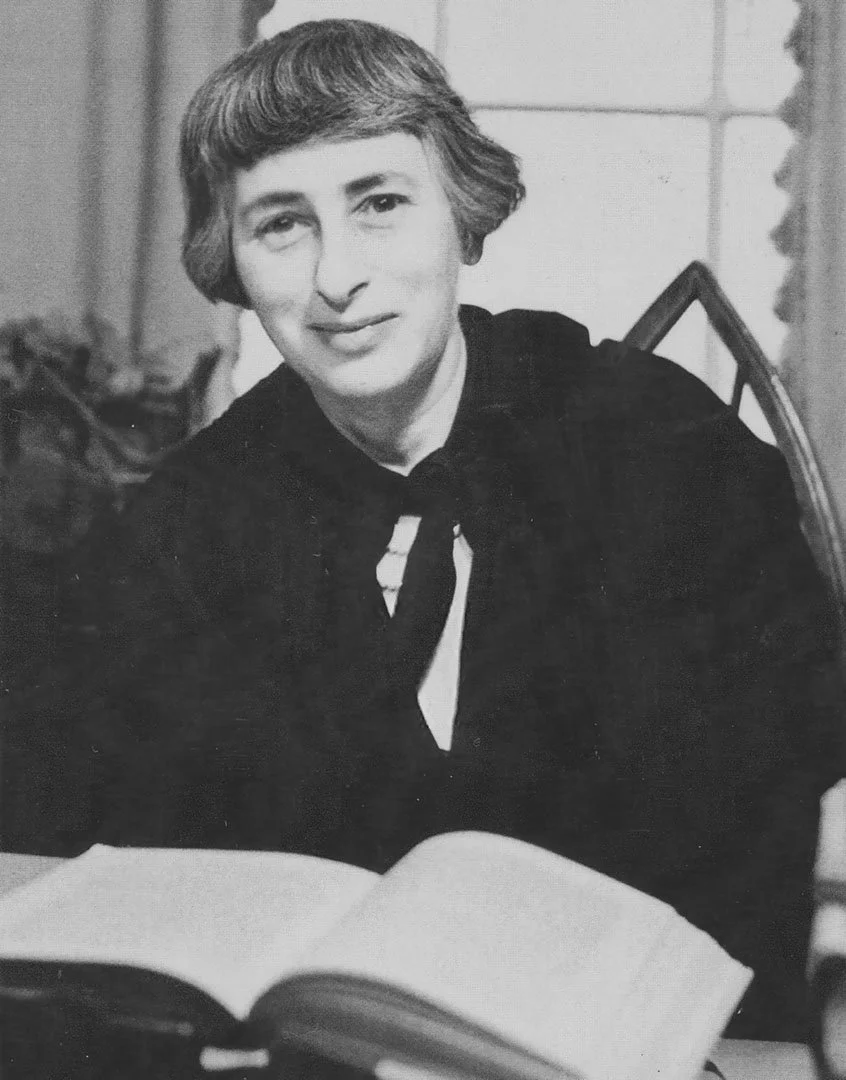
Babette Deutsch publicity photo.

Having witnessed the success of the station’s annual American Music Festival, WNYC director Seymour N. Siegel launched week-long arts, Shakespeare, and book festivals during the 1950s. These events featured numerous poetry readings and verse dramas. 

Imports of BBC transcription discs supplied much of the English verse drama heard during the station’s annual April Shakespeare festivals (1952–1959), while the March–April book festivals ran annually from 1953 to 1956. Participants included Dylan Thomas and Sean O’Casey reading their own work, along with poet and critic Babette Deutsch presenting a segment titled Poets of Tomorrow

In October 1954 WNYC aired Limited Edition, a series based on recordings from the Poetry Center at the 92nd Street Y. The program included the voices of Frederick Prokosch, Robert Frost, Archibald MacLeish, Osbert Sitwell, Joyce Cary, Arthur Miller and others.  No recording of the series appears to have survived. 
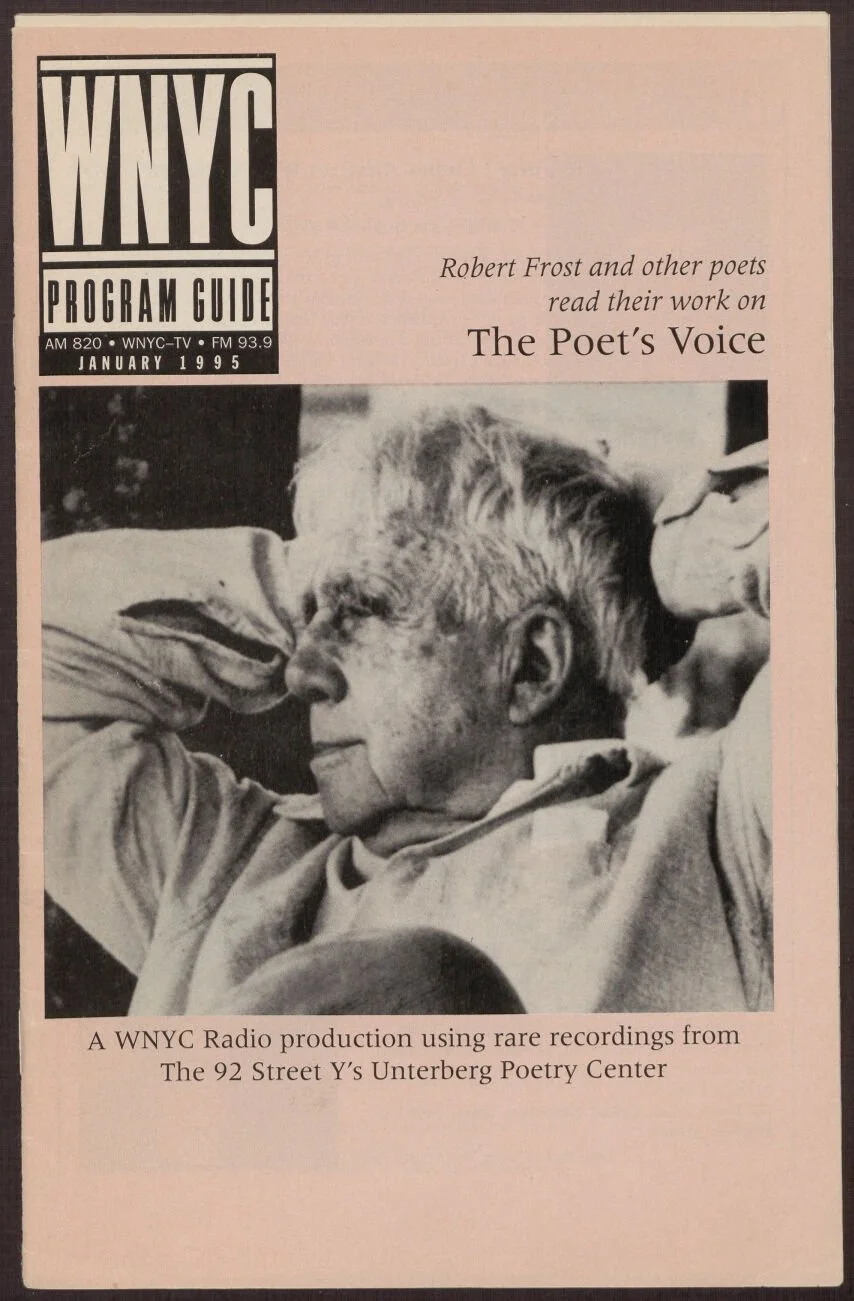
Cover of the January 1995 WNYC Program Guide/WNYC Archive Collections 

More than four decades later the station returned to the same institution to produce The Poet’s Voice (1995), an ambitious series using recordings from the Unterberg Poetry Center’s archives. Hosted by Blair Brown and distributed nationally on National Public Radio, the program profiled thirteen major twentieth-century poets, including Robert Frost, W. H. Auden, Anne Sexton, Czesław Miłosz, William Carlos Williams, Marianne Moore, Gwendolyn Brooks, Octavio Paz, Dylan Thomas, Pablo Neruda, Derek Walcott, Robert Lowell, and Adrienne Rich. 

Blending archival recordings with commentary, interviews, and music, the series aimed to make poetry accessible to radio listeners while revealing nuances of tone and emotion that only the spoken voice could convey. Unfortunately, the programs are currently unavailable because they require relicensing. 
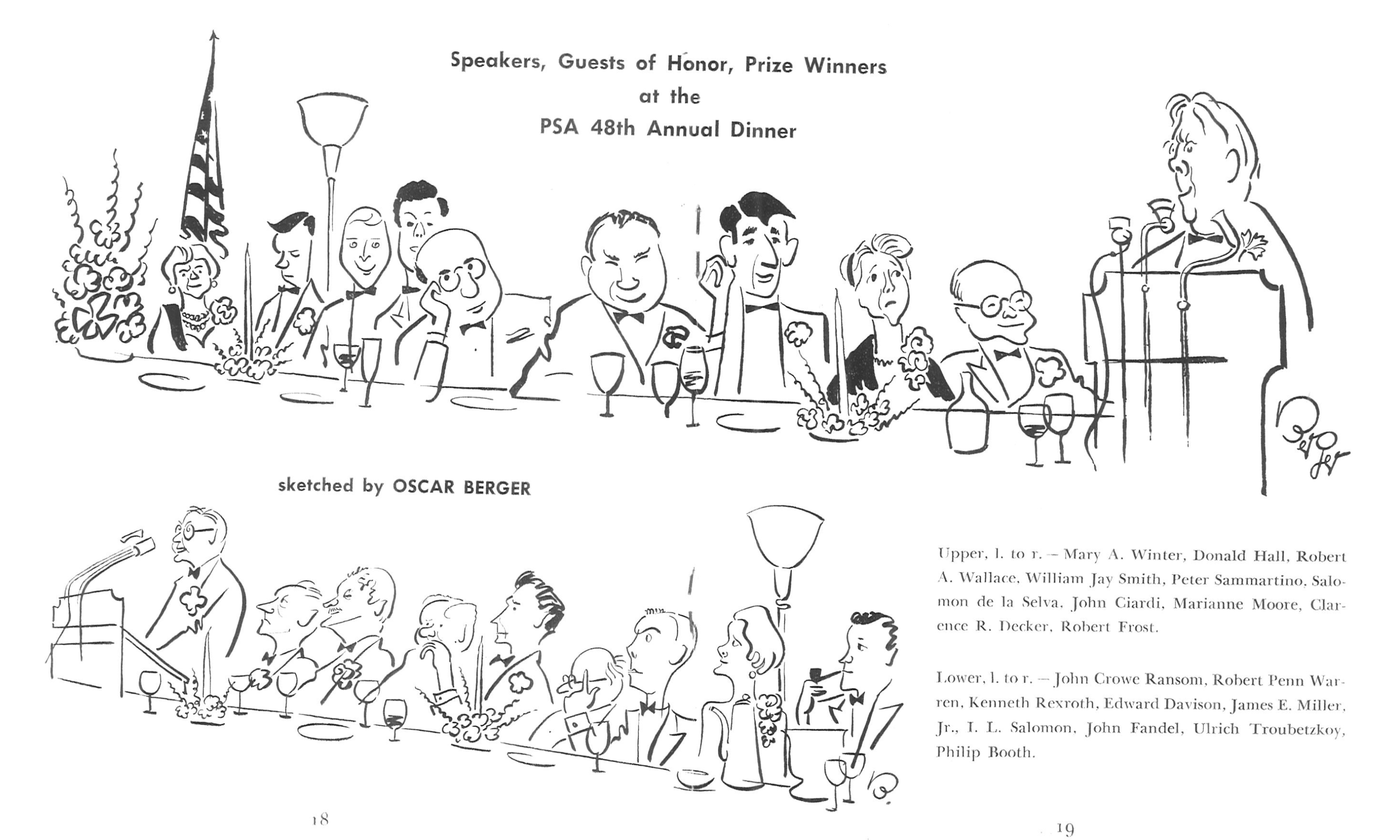
Oscar Berger drawing courtesy of the Poetry Society of America

When WNYC covered the Poetry Society of America’s forty-eighth annual dinner in 1958, the guest of honor was Robert Frost. By then widely regarded as the nation’s elder poet, Frost used the occasion to gently mock the public image that had grown around him, downplaying the notion that he possessed any special wisdom. Meanwhile, the society had the well-known caricaturist Oscar Berger draw the dais attendees for the organization’s journal.  

  (Audio from the Municipal Archives WNYC Collection.)

The station broadcast the dinner again in January 1960, when Robert Frost, Marianne Moore, and Robert Graves were among those honored. President Dwight Eisenhower sent a message congratulating the society for its fifty years of work, observing that “the poet in a free society contributes greatly to the understanding and enrichment of life.” 


Beat Poetry and Cultural Change 
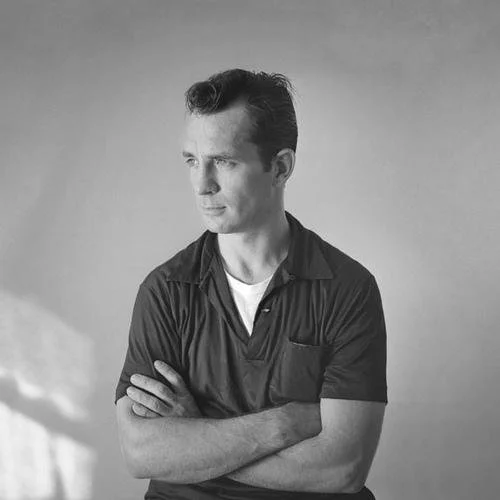
Jack Kerouac circa 1956 by Tom Palumbo/Wikimedia Commons. 

By the late 1950s another literary development demanded attention: the emergence of the Beat Generation. WNYC did not ignore the movement. In November 1958, its engineers recorded Jack Kerouac at the Brandeis University Club during a lively discussion on the question, “Is there a Beat generation? Kerouac, whose spontaneous style and unconventional views helped define the movement, was joined by British novelist Kingsley Amis, New York Post editor James Wexler, and anthropologist Ashley Montagu. 

  (Audio from the Municipal Archives WNYC Collection.)

Greenwich Village—long associated with artistic experimentation—also became the focus of a 1959 WNYC documentary on beatniks and Beat poetry. Although the narrator is not identified on the surviving recording, Variety credited the production to Harry Rasky, later a noted Canadian filmmaker. The half-hour program captured the atmosphere of Village poetry readings where, as the trade paper observed, “the language is vivid and loaded with images.” 
  (Audio courtesy of the Walter J. Brown and Peabody Archives Collection at the University of Georgia.) 

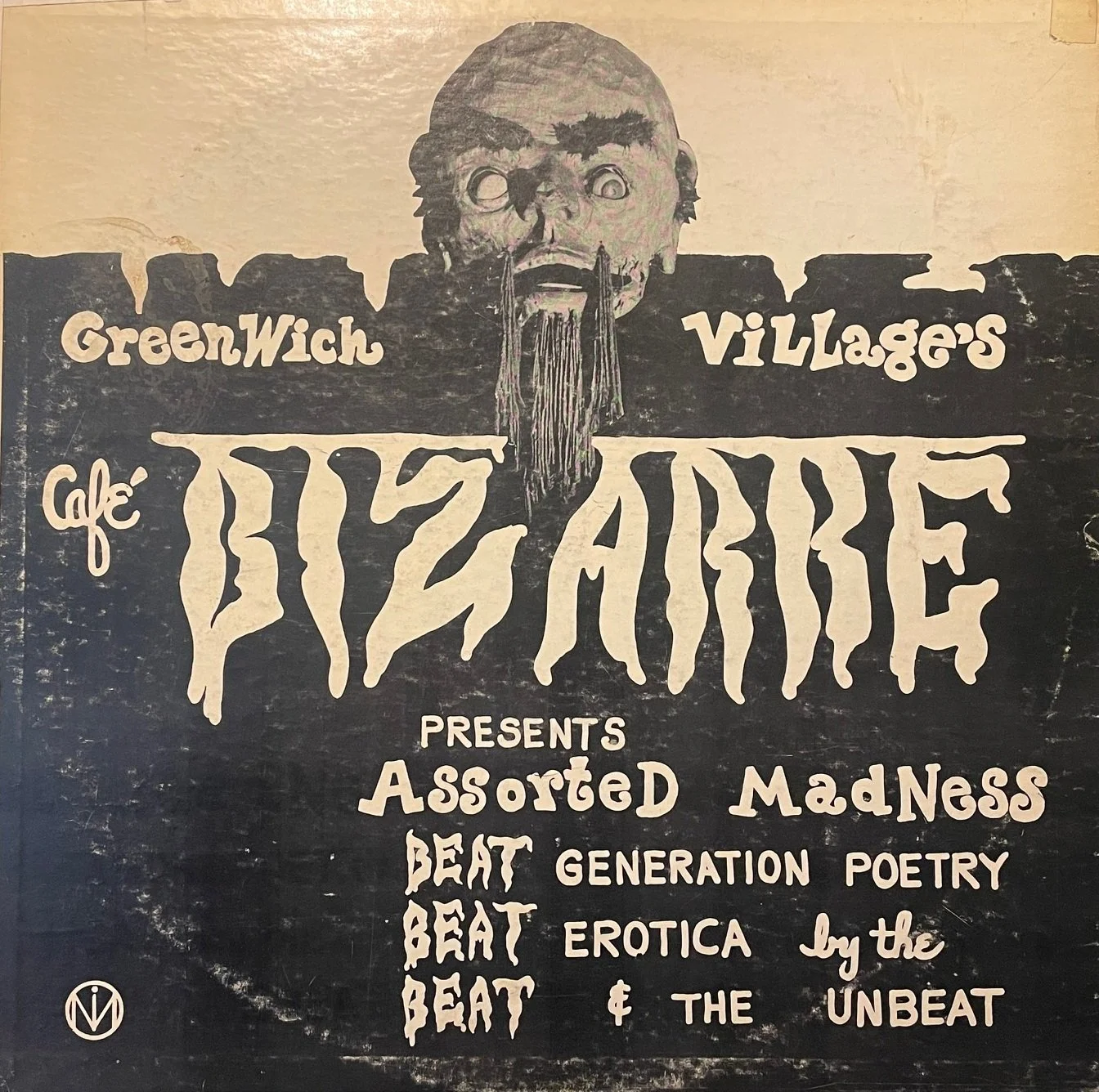
Album cover of recordings made at Greenwich Village’s Café Bizarre, a popular coffeehouse and hang-out spot for beat poets including Jack Kerouac and Allen Ginsberg in the 1950s and 60s. (Photo by Michael Simon/A. Lanset Collection).

MUNI-MISC-1956-02-08-150222.2 LT7121 National Book Awards
(Audio from the Municipal Archives WNYC Collection.)

WNYC also documented the broader literary world through its coverage of major cultural events. Between 1956 and 1966 the station broadcast at least six of the National Book Award ceremonies, which included a category for poetry. Listeners heard from Robert Penn Warren, Alan Duggan, Randall Jarrell, James Dickey and on behalf of Theodore Roethke, Stanley Kunitz. Here is W.H. Auden from February 8, 1956, accepting for The Shield of Achilles

LT7121 National Book Awards Feb. 8, 1956
NYC Municipal Archives WNYC Collection.

Over the decades, the weekly Cooper Union Forum broadcasts also featured numerous poetry related programs. Poet John Ciardi appeared on five occasions between 1958 and 1971 at the school’s Great Hall. Listeners also heard from other poets including Marianne Moore in a talk, Poetry, Soul of the People, and Barry Wallerstein as part of series called Poetry for Everyman.  
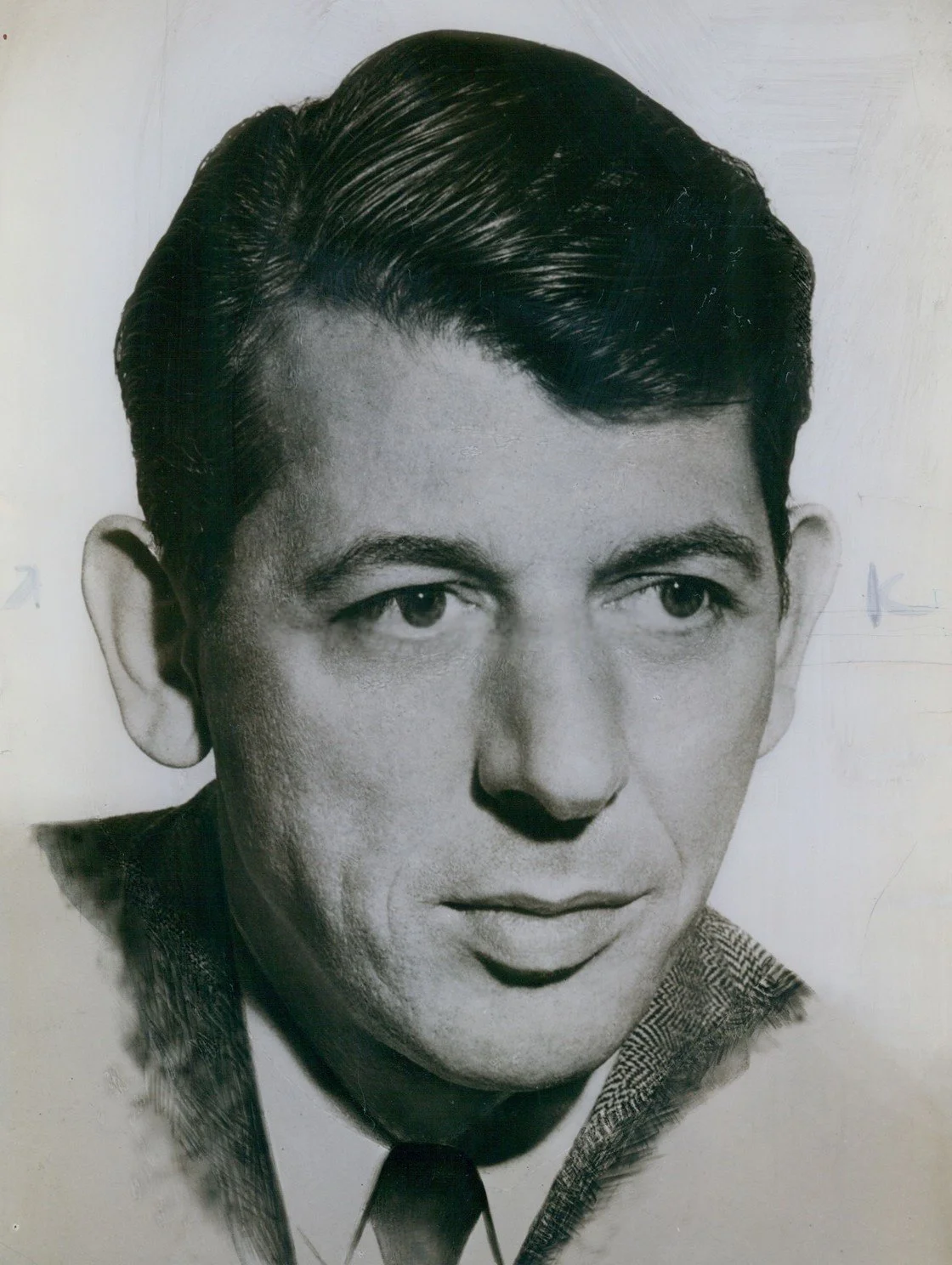
Poet John Ciardi in 1961 in a CBS publicity photo/Wikimedia Commons.

(Audio from the Municipal Archives WNYC Collection.)

Aaron Kramer and Spoken Words 

Portrait of Aaron Kramer around the time he did programming for WNYC. /Author publicity photo.

One of the most sustained poetry presences on WNYC came with poet, translator, and professor Aaron Kramer. Beginning in 1962 and continuing for twenty years, Kramer hosted Spoken Words. An English professor at Dowling College and a leading advocate of the “poetry as therapy” movement, Kramer brought a wide range of verse to listeners.

His programs included readings of major English and American poets, explorations of the poetry of the 1930s, tributes to World War II poets, and thematic broadcasts such as American protest poetry. On November 19, 1967—the eightieth anniversary of Emma Lazarus’s death—Kramer reflects on Lazarus and reads from her work, demonstrating a thoughtful and accessible approach that defined the series.

REC0078_T2205 Kramer on Lazarus
(Audio from the Municipal Archives WNYC Collection.)

Avant-Garde Voices, Geography and Applications to Life 
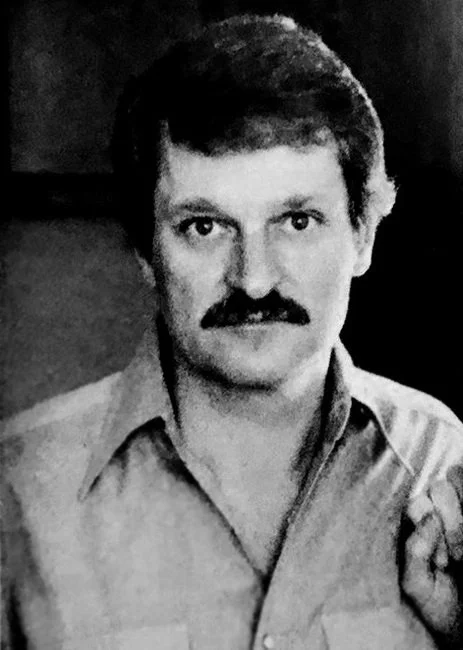
  (Audio courtesy of the Charles E. Young Research Library, UCLA.)

Portrait of poet John Ashbery circa 1974-1975/Wikimedia Commons. 

WNYC also gave airtime to emerging experimental voices. In 1966 and 1967 Michael Silverton hosted Poetry of the Avant-Garde, a series of interviews with contemporary poets including Ted Berrigan, John Ceravolo, Michael Benedikt, Jerome Rothenberg, Peter Schjeldahl, Kathy Fraser, Aram Saroyan, and Lorenzo Thomas. Here, Silverton speaks with poet John Ashbery.

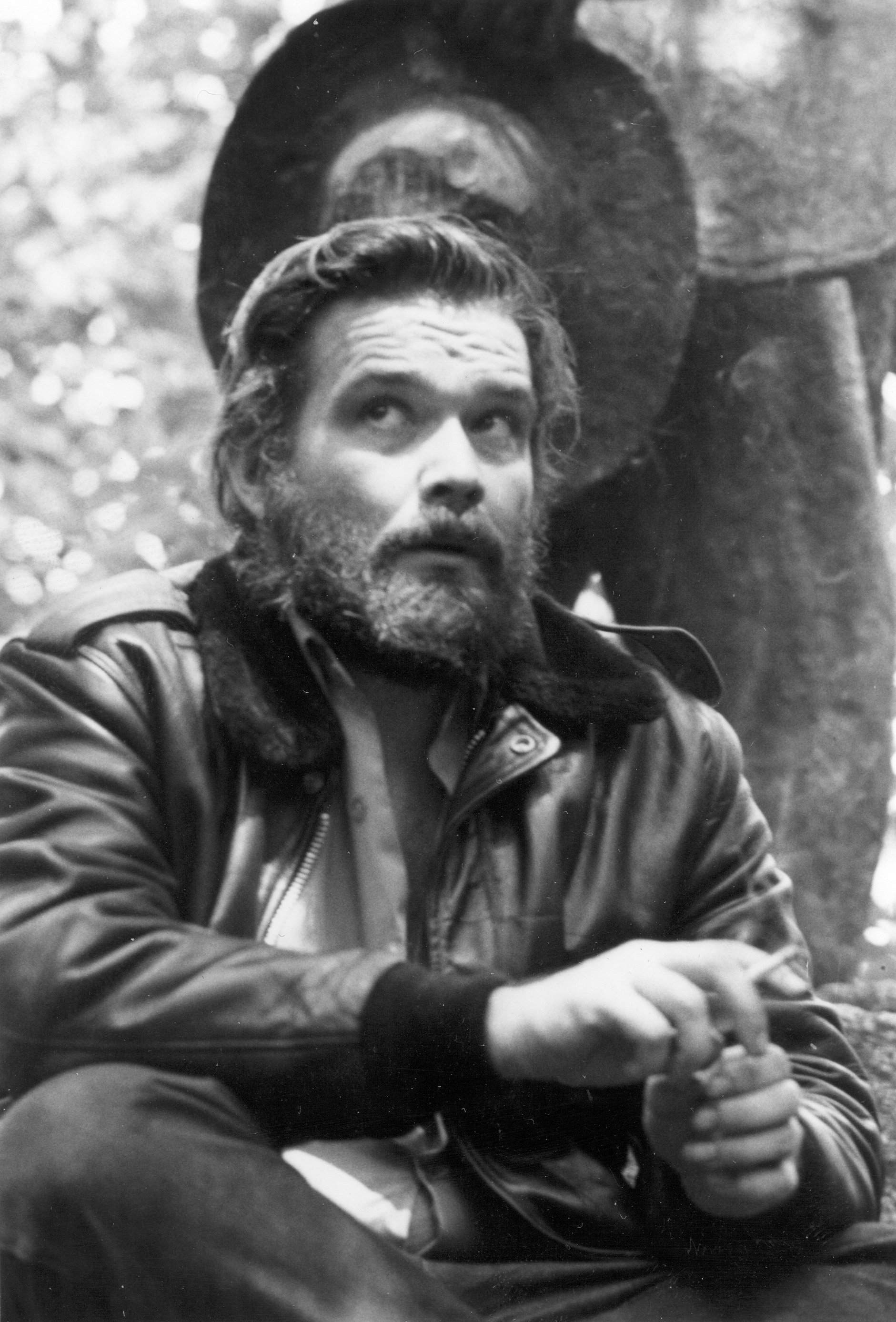
In 1968 poet and editor William Packard moderated a broadcast titled Is There a New York Poet?, examining how the city’s energy and diversity influenced contemporary verse.  Joining Packard were poets Stephen Stepanchev and Norman Rosten in a lively discussion about geography and verse.
  (Audio from the NYC Municipal Archives WNYC Collection.)

Publicity photo of poet William Packard/WNYC Archive Collections 

Poetry programming continued to evolve. In 1975, WNYC-FM partnered with The New School to launch The Logic of Poetry, a weekly series encouraging listeners to engage with poetry as a living, accessible language rather than an academic exercise. Hosts Richard Monaco and John Briggs took listeners on an extensive tour that covered poetry’s relationship to sculpture, William Blake’s The Tiger, poetry and impressionist art, Russian poet Anna Akhmatova, Japanese poetry, Wallace Steven’s The Emperor of Ice Cream, the poetry of dreams, poetry and psychoanalysis, Anne Sexton’s The Moss of His Skin and many other poems and poetry topics. Here John Briggs speaks with photographer John Fay about poetry and photography. 

And, as previously mentioned, Aaron Kramer’s Spoken Words continued into the 1980s with The Poet’s Voice as the leading poetry series on WNYC in the 1990s.  

  (Audio from the WNYC Archive Collections.)

Conclusion 

Across nearly seven decades of municipal ownership, WNYC created one of the most extensive records of poetry broadcasting in American radio. Educational lectures, studio readings, literary festivals, and interviews brought poets of many traditions to the microphone, reflecting the changing literary life of the city itself. Established figures such as Robert Frost and Marianne Moore shared the airwaves—sometimes directly, sometimes across decades—with Beat writers, experimental poets, and academic critics. The station’s microphones captured not only individual readings but also conversations about what poetry meant in different moments of American cultural life. 

In doing so, the station demonstrated something radio had always made possible: poetry heard aloud could reach audiences far beyond the page. Through its broadcasts—many now preserved at the New York City Municipal Archives and WNYC Archives—the city’s radio station carried the voices of poets across New York and beyond, reminding listeners that verse has always belonged as much to the ear as to the printed page.

Poetry On the Air: WNYC and the Sound of Verse in New York Part 1: 1927–1950

During the seven decades of municipal ownership, both celebrated and obscure poets found their way to WNYC’s microphone. Some programs introduced listeners to canonical voices such as Robert Frost, Marianne Moore, and W.H. Auden. Others opened the airwaves to aspiring writers who might otherwise never have been heard beyond their own neighborhoods. Still others explored the relationship between poetry and radio itself, asking whether the medium might reshape how verse was written, performed, and experienced.

The result was an extraordinary range of programming: educational broadcasts from the station’s early Air College lectures; dedicated poetry series and readings; experimental verse drama; tributes to major poets; and discussions linking poetry to theater, politics, therapy, and everyday life. Together these broadcasts reveal how a municipal station—often overlooked in the larger history of American radio—played a meaningful role in sustaining the oral tradition of poetry.

Socialists on the City Airwaves

The recent election and swearing-in of Zohran Mamdani a member of the Democratic Socialist Party was not the first socialist or progressive—of one persuasion or another—to run for elected office in the city. Mayor David Dinkins, for example, was also a member of the Democratic Socialist Party. Mayor Mamdani’s victory, however, offers an opportunity to look back at some of the socialist voices New Yorkers have heard over WNYC, the City’s municipal radio station, across the decades.

Before 1938, many candidates, would have found it difficult to gain access to the City’s airwaves at all. WNYC’s director at the time, Christie Bohnsack, largely followed the lead of the Tammany Hall political machine, which tended to lump progressive movements together under a broad—and pejorative—“red” label.

Quiz Shows on WNYC: A History of Civic Curiosity

The Municipal Archives’ upcoming trivia night reminds us that New York City has long used questions—and the thrill of answering them under pressure—to engage, educate, and entertain the public. Decades before televised quiz scandals or the high-stakes glitz of commercial networks, WNYC and WNYE were using the question-and-answer format, helping to define one of radio’s most popular genres during its so-called “golden age.” But unlike commercial broadcasters, the city stations used these contests of knowledge and recall as a powerful tool for civic understanding and cultural enlightenment.

WNYC celebrates

WNYC Greenpoint Radio Transmitter, ca. 1937. A.G. Lorimer artist. WNYC Archive Collections.

July 8, 2024, marked the 100th anniversary of municipal broadcasting for the City of New York. On September 9th, from 7-9pm, WNYC will celebrate with a live radio broadcast from SummerStage in Central Park. Hosted by Brian Lehrer, the event will include beloved voices from WNYC and a lineup of live music, storytelling, comedy, trivia and more.

Scheduled to appear are WNYC’s All Things Considered host Sean Carlson, Brooke Gladstone and Micah Loewinger from On the Media, Alison Stewart from All of It, Ira Glass from This American Life, John Schaefer of New Sounds, and The Moth storyteller Gabrielle Shea. Plus, performances by Nada Surf, Freestyle Love Supreme, Laurie Anderson with Sexmob, and mxmtoon; and a DJ set by Donwill.

This event is free to attend, no RSVP required, and will be broadcast live on WNYC at 93.9 FM, AM 820, wnyc.org or on the WNYC app.

https://www.wnyc.org/events/wnyc-events/2024/sep/09/central-park-summerstage/

NYC Life Specials: 100 Years of Municipal Broadcasting
Original Air Date: 07-08-2024

What began with WNYC, now the largest independent public radio station in the U.S., continues today with the city’s official broadcast network, NYC Media. They recently released a short documentary on the history of WNYC and NYC Media, which uses audio and video clips from collections now stored at the Municipal Archives.

The NYC Media documentary was inspired by the recent Municipal Archives exhibit 100 Years of WNYC, produced for Photoville 2024, which will soon be on display at the Municipal Archives headquarters at 31 Chambers Street.

Exhibit panel from 100 Years of WNYC.

Radio Row and the Fight for Lower Manhattan

It has been said that nobody loved the Twin Towers until they were gone, and that is certainly true of the residents and business owners of the Manhattan neighborhood known as Radio Row. One of many such “Radio Rows” in cities throughout America, New York City’s was the largest and one of the oldest. It was roughly bounded by Dey Street to the north, Liberty to the south, between West and Church Streets. The heart of it was Cortlandt and Greenwich Streets, but another concentration of shops lined Dey Street (also known as Telegram Square for the Western Union Building at the corner of Broadway and Dey). At its peak over 400 merchants sold radios, televisions, and associated parts in this area.

DaVega City Radio, 63 Cortlandt Street, ca. 1939. Tax Photograph Collection, NYC Municipal Archives.

North-Star Radio, 78-80 Cortlandt Street, ca. 1939. Tax Photograph Collection, NYC Municipal Archives.

From the earliest days of radio in the 1920s, dealers in radios and radio parts set up shop in the area. As car radios became more common, some shops specialized in conversion kits for autos. Other shops just sold vacuum tubes, which frequently burned out and were often non-standard parts hard to find.

By the time the New York City Department of Finance Tax Photo project got underway in the late 1930s, the area was bustling with vendors and buyers. A famous 1936 WPA Federal Writers’ Project photograph shows a crowd of men standing along Cortlandt Street in front of DaVega City Radio listening to a World Series game between the then New York Giants and the Yankees. A second photo reveals why they are all looking across the street: two men hanging out the window of Atlas Radio updating a scoreboard. The neighborhood was not just about radios, as revealed in the Tax Photos: bicycle shops, bars, coffee shops, diners, hotels, pet shops and automotive stores also were packed into the old brick buildings. A few newer buildings housed insurance companies. In the 1950s, televisions became popular, and Radio Row vendors started to sell them, and their components, as well.

Men watching World Series announcement board, Cortlandt Street (Radio Row), 1936. WPA Federal Writers' Project collection, NYC Municipal Archives.

The World Series announcement board above Atlas Radio, which the men on Cortlandt Street were watching, 1936. WPA Federal Writers' Project collection, NYC Municipal Archives.

Bell Radio, 60 Cortlandt Street, ca. 1939. Tax Photograph Collection, NYC Municipal Archives.

Weston Radio, 64 Cortlandt Street, also Times and Publix Radio, ca. 1939. Tax Photograph Collection, NYC Municipal Archives.

Vim Radio, 70 Cortlandt Street, ca. 1939. Tax Photograph Collection, NYC Municipal Archives.

Arrow Radio, 82 Cortlandt Street, ca. 1939. Tax Photograph Collection, NYC Municipal Archives.

Detail of a 1934 GW Bromley atlas of Manhattan showing the area where Radio Row existed. Everything from Liberty to Vesey Street, from Church to the river was demolished for the World Trade Center in 1966 and 1967. NYC Municipal Archives.

It was a successful business district, even if a bit unsightly, but by the 1960s Lower Manhattan was slated for a dramatic change. The waterfront businesses essential to a port city were no longer needed, as a new era of trucking and the introduction of the cargo container took hold. In addition, airplane travel reduced the number of passenger ships coming into the Manhattan docks. David Rockefeller, Chairman of Chase Manhattan Bank (and brother of Governor Nelson Rockefeller), envisioned a World Trade Center that could revitalize Lower Manhattan. He had already used political pressure and eminent domain to build One Chase Plaza in 1956 on the site of the old sail-making lofts of the Coenties Slip area near the Financial District. He thought the area just north, South Street Seaport, would be the perfect site for his World Trade Center. He created the Downtown-Lower Manhattan Association (DLMA) to remake Lower Manhattan. To bring in more financing, he approached the Port Authority of New York and New Jersey, an interstate compact created in 1921. However, New Jersey Governor Robert Meyner saw nothing in the project for New Jersey. Eventually, New York Governor Nelson Rockefeller struck a deal that would move the project to the west side if the Port Authority would take over the bankrupt Hudson & Manhattan Railroad and build the new World Trade Center on top of its southern terminal, creating the PATH train system. The plan also called for the Port Authority to destroy the freight piers along West Street and build container ports at the Port of Newark-Elizabeth, New Jersey.

Letter from the Downtown-Lower Manhattan Association to Mayor Lindsey, February 1966. Mayor Lindsey Collection, NYC Municipal Archives.

Letter from Mayor Lindsey to David Rockefeller, August 1966. Mayor Lindsey Collection, NYC Municipal Archives.

Emergency Committee to Oppose the World Trade Center letter, November 1966. Mayor Lindsey Collection, NYC Municipal Archives. The Committee was made up of prominent journalists, historians, and architectural critics, including Jane Jacobs, fresh from her fight against Robert Moses’ Lower Manhattan Expressway.

Telegram from Thomas Maguire, Vice President International Union of Operating Engineers to Mayor Lindsey, urging him to press forward with the Trade Center, March 1967. Mayor Lindsey Collection, NYC Municipal Archives.

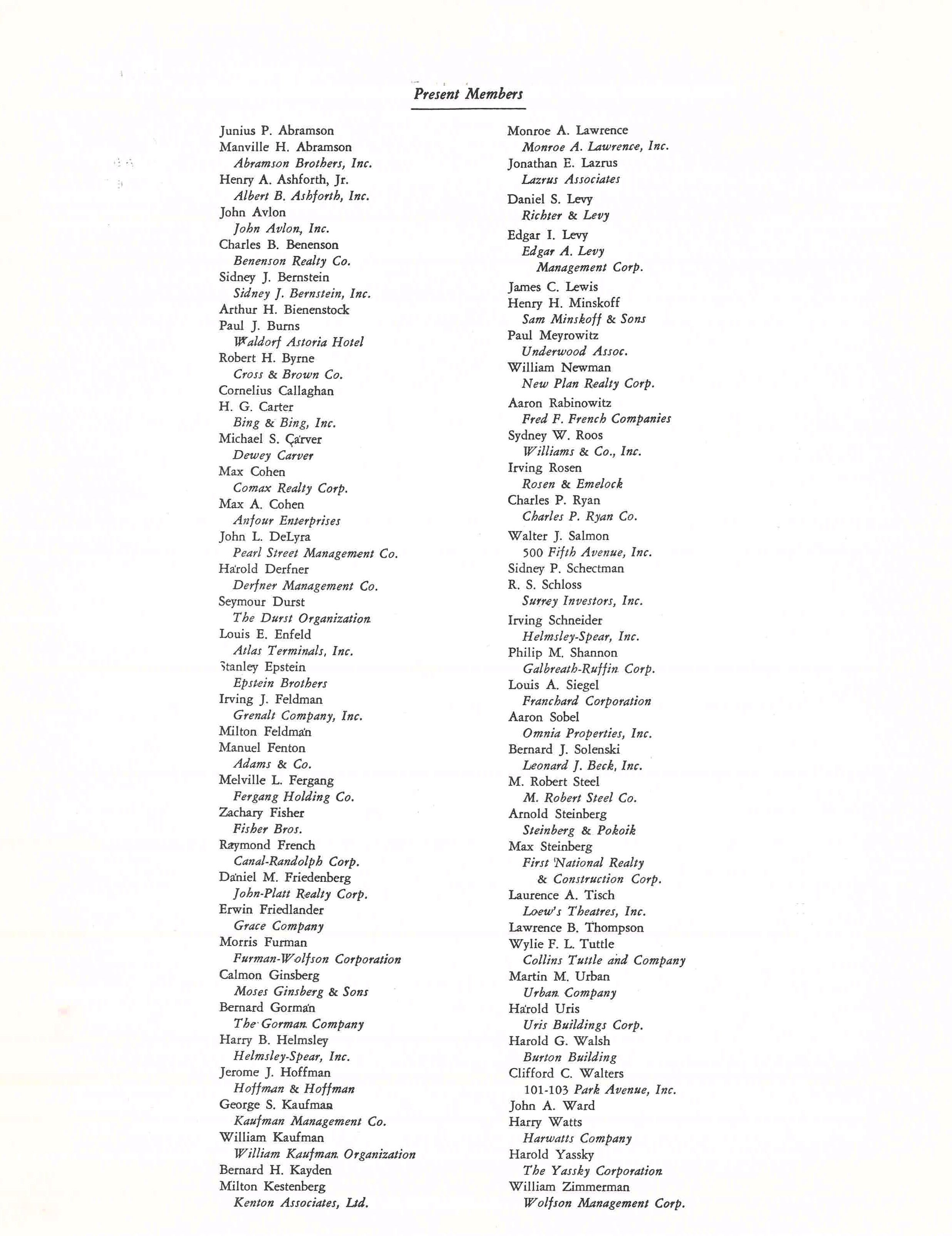
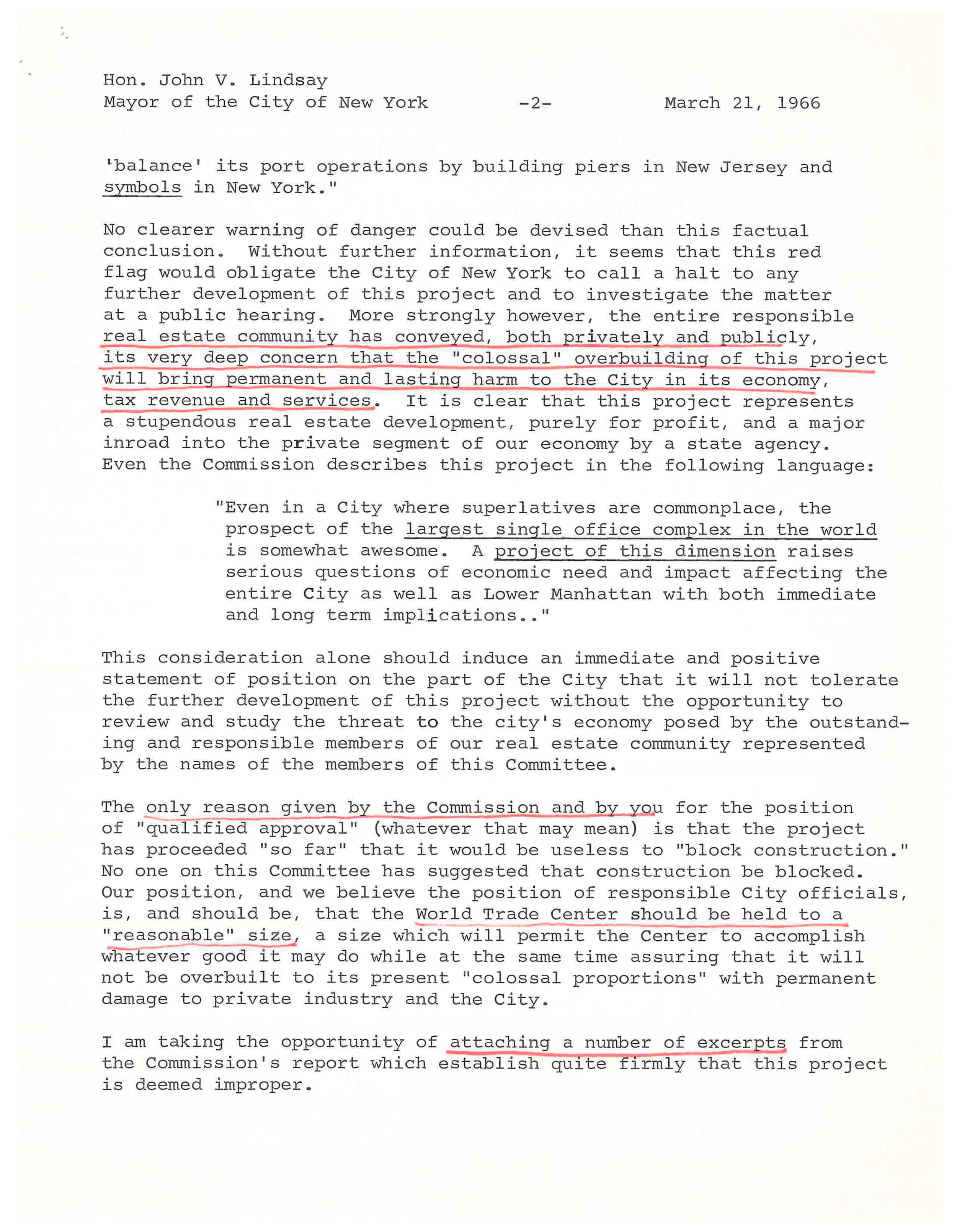
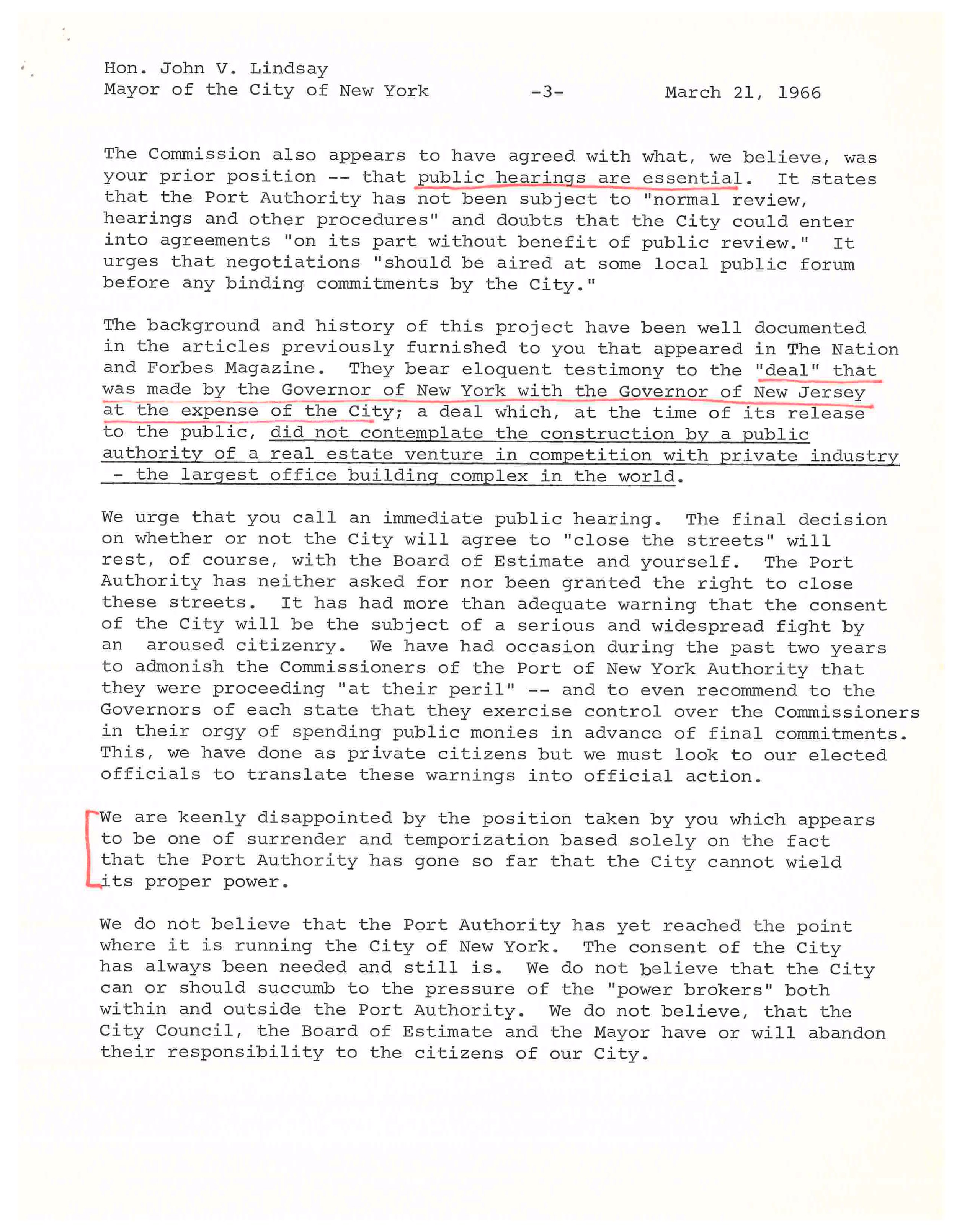
The radio-shop owners had initially been fans of the proposed east-side trade center, which they thought would bring in new business. However, when they saw plans for the west side and realized the proposed site would completely wipe out their business district, they formed the Downtown West Businessmen’s Association and started to advocate against the project. Headquartered at Oscar’s [Nadel] Radio Shop at 63 Cortlandt Street (formerly DaVega City Radio) they fought the plan through protests, legal challenges, and street theater. They were joined by other groups, including the Committee for A Reasonable World Trade Center (made up of prominent real-estate families), and the Emergency Committee to Oppose the World Trade Center, a more literary and artsy group, which had amongst its members Jane Jacobs. Mayor Lindsey’s subject files contain a thick folder from 1966-1967 with correspondence on the World Trade Center from and to these groups. Also represented are commerce and labor groups that strongly advocated for the project to fight the economic slump in the building trades.

Letter from the Downtown West Businessman’s Association, February 1966. Mayor Lindsey Collection, NYC Municipal Archives.

Letter from the Downtown West Businessman’s Association, February 1966. Mayor Lindsey Collection, NYC Municipal Archives.

Letter from the Committee for a Reasonable World Trade Center, March 1966. Mayor Lindsey Collection, NYC Municipal Archives. This committee represented prominent real-estate interests, who feared the new trade center would devalue commercial real estate in the City.

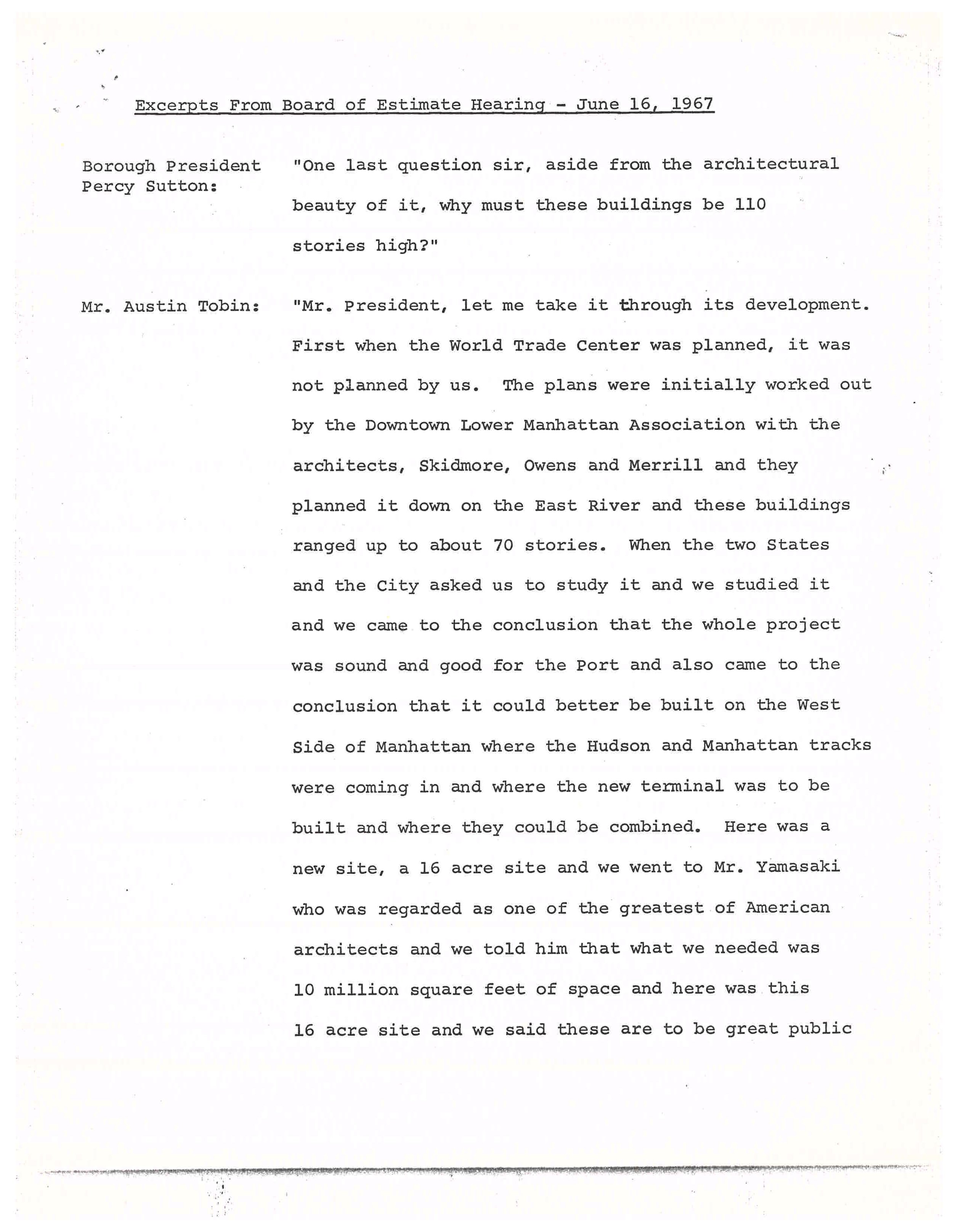
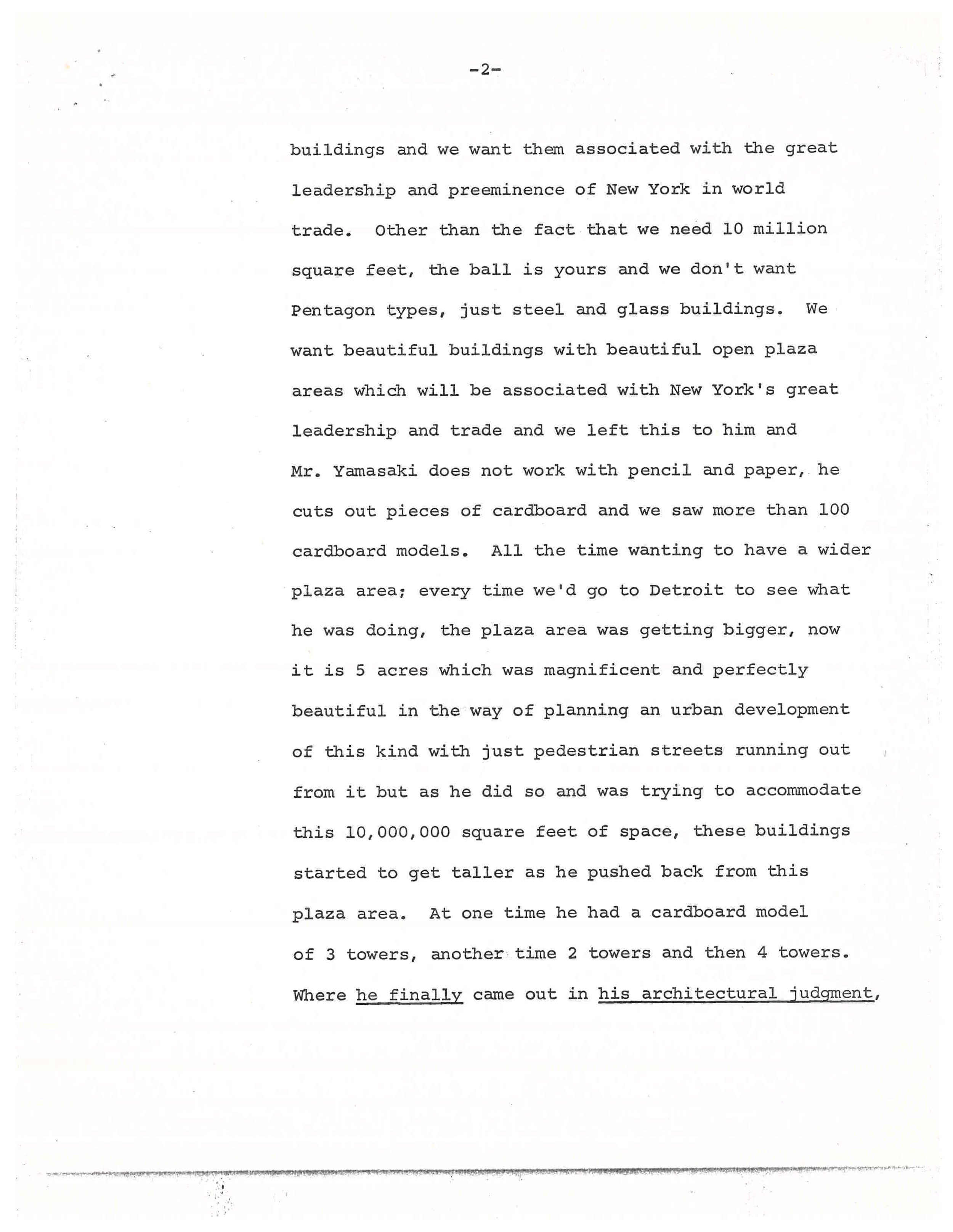
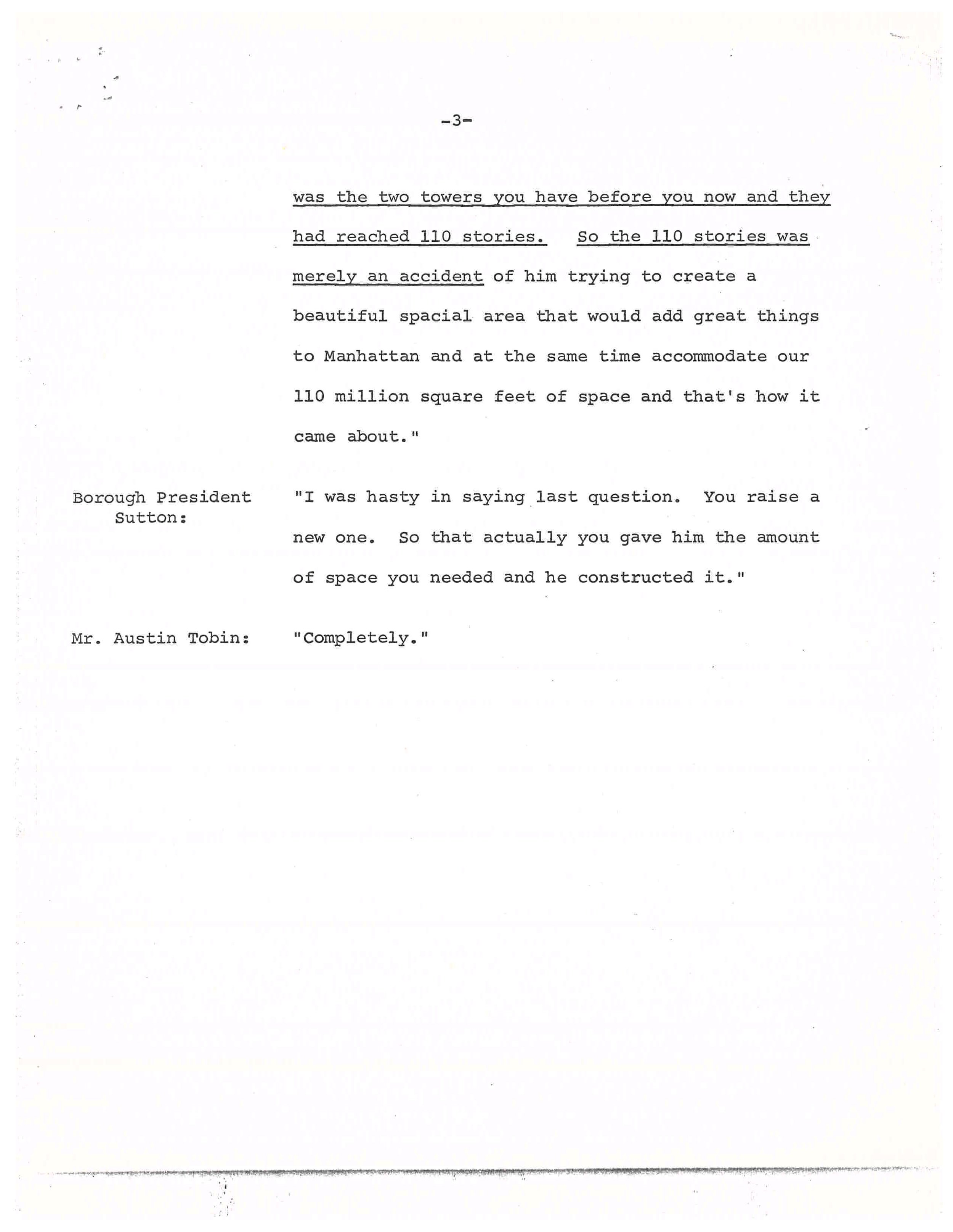
Excerpt from Manhattan Borough President Percy Sutton questioning Port Authority director Austin Tobin, Board of Estimate Hearing, June 16, 1967. Mayor Lindsey Collection, NYC Municipal Archives.

Harper’s Magazine, “New York’s Trade Center: World’s Tallest Fiasco,” advance proof of May 1966 edition. Mayor Lindsey Collection, NYC Municipal Archives.

Destruction of Radio Row, looking south along Greenwich Street from number 189, ca. April 1966. Jean M. Brown photographer, NYC Municipal Archives Collection.

The Port Authority offered Radio Row merchants $3,000 to relocate, and some did move—dispersing to Canal Street, Union Square and west of Times Square—but many refused the payments and simply went out of business. Eventually the project was pushed through, and by May of 1966 the architecture critic for Harper’s Magazine, Wolf von Eckardt, lamented “It’s ready to go up right now. How did the plans get this far?” He said the proposed “instrument of urbicide… not only the tallest, but unquestionably one of the ugliest buildings in the world,” would displace “thirteen historic, living and breathing square blocks of the city.”[1]

One resident of those thirteen blocks was Jean M. Brown, a young woman living at 189 Greenwich Street and working as a typist. She had a front row seat to the destruction of Radio Row and, using an amateur camera, she documented it from her 3rd floor window. Brown also took a photo of her own building before she too was evicted by the Port Authority in November of 1966, while seven-months pregnant. Brown just passed away in August 2023, but her son William recently recalled that she sent eleven photos to the Municipal Archives in 2005 because she wanted someone to remember what had once been a thriving neighborhood. In her donation letter she wrote, “I hope that this will be of help to future individuals who are interested in what that part of Manhattan looked like before the Trade Center was erected.”

Jean M. Brown lived on the 3rd floor of 189 Greenwich Street, above Adson Radio, until she was evicted in November 1966. Jean M. Brown photographer, NYC Municipal Archives Collection.

Super Radio Outlet, 65-67 Dey Street, ca. 1939. This address would later betaken over by Leotone Radio (see photo below). Tax Photograph Collection, NYC Municipal Archives.

61 Dey Street (far left) to 71 Dey Street with Washington Street and Pier 13 beyond, looking west from 189 Greenwich Street, June 1964. Jean M. Brown photographer, NYC Municipal Archives Collection.

Dismantling of Pier 13, Dey Street, looking west from 189 Greenwich Street, ca. April 1966. Jean M. Brown photographer, NYC Municipal Archives Collection.

Workers demolishing 65-67 Dey Street, looking west from 189 Greenwich Street, late summer or fall of 1966. Jean M. Brown photographer, NYC Municipal Archives Collection.

Destruction of Radio Row, Dey Street, looking west from 189 Greenwich Street, ca. November 1966. The West Side Elevated Highway is clearly visible in the background. A section of it collapsed in December 1973 and it was eventually removed in 1989. Jean M. Brown photographer, NYC Municipal Archives Collection.


[1] “New York’s Trade Center World’s Tallest Fiasco,” Harper’s Magazine, May 1966.

Further reading:

http://tribecatrib.com/content/world-trade-center-long-lost-world-radio-row

http://www.antiqueradio.com/Radio_Row_09-98.html

https://www.qcwa.org/radio-row.htm