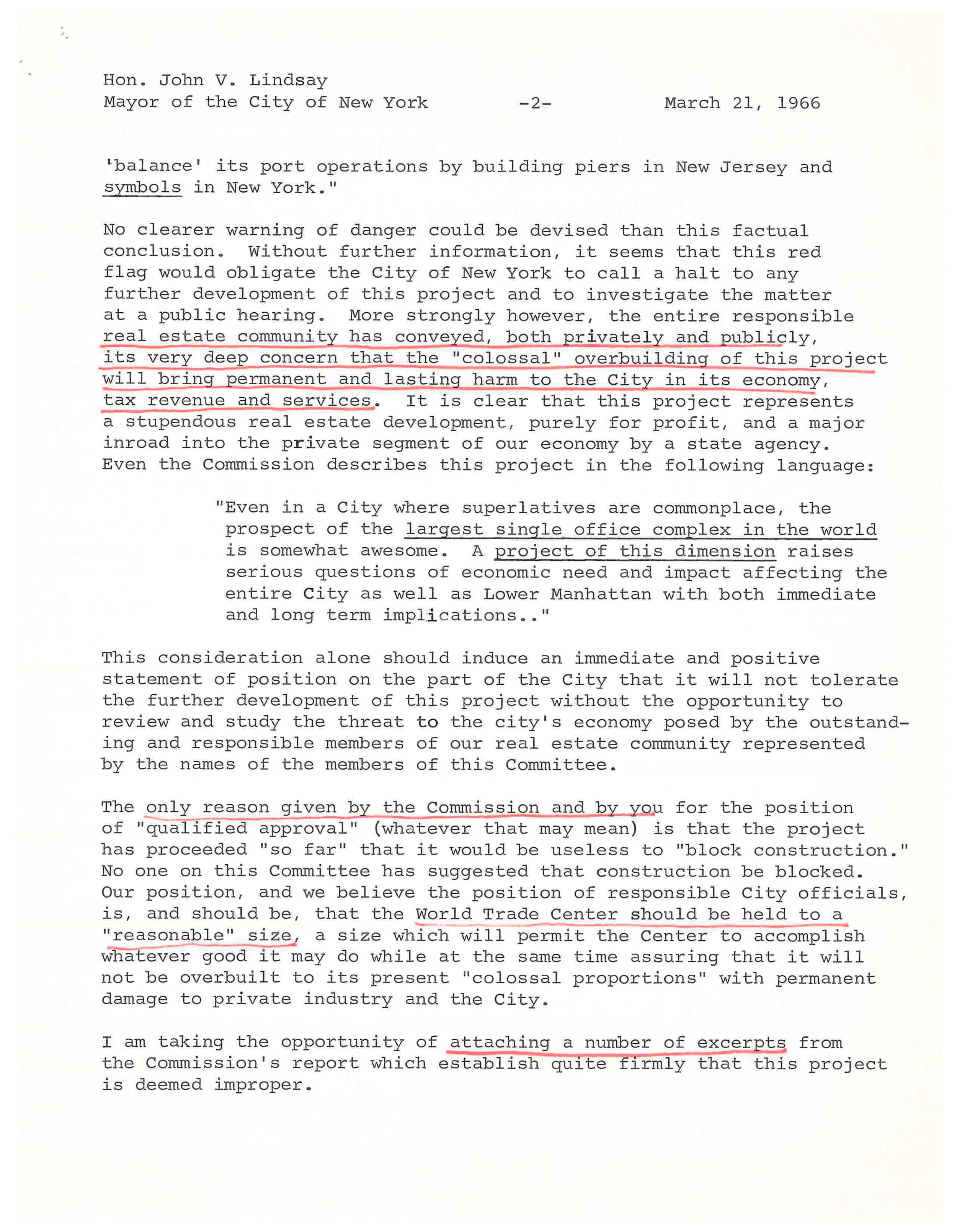
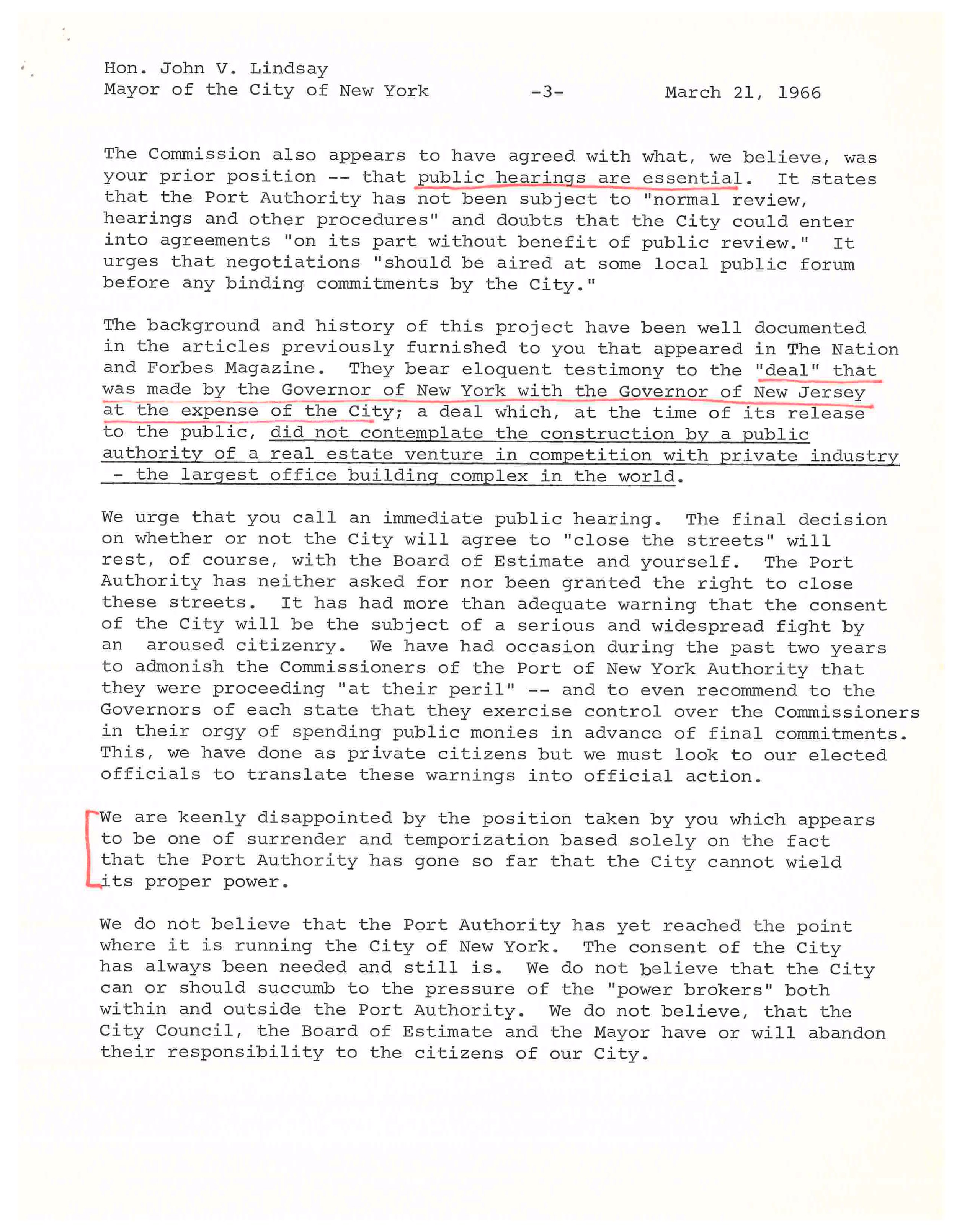
The Port Authority offered Radio Row merchants $3,000 to relocate, and some did move—dispersing to Canal Street, Union Square and west of Times Square—but many refused the payments and simply went out of business. Eventually the project was pushed through, and by May of 1966 the architecture critic for Harper’s Magazine, Wolf von Eckardt, lamented “It’s ready to go up right now. How did the plans get this far?” He said the proposed “instrument of urbicide… not only the tallest, but unquestionably one of the ugliest buildings in the world,” would displace “thirteen historic, living and breathing square blocks of the city.”[1]
One resident of those thirteen blocks was Jean M. Brown, a young woman living at 189 Greenwich Street and working as a typist. She had a front row seat to the destruction of Radio Row and, using an amateur camera, she documented it from her 3rd floor window. Brown also took a photo of her own building before she too was evicted by the Port Authority in November of 1966, while seven-months pregnant. Brown just passed away in August 2023, but her son William recently recalled that she sent eleven photos to the Municipal Archives in 2005 because she wanted someone to remember what had once been a thriving neighborhood. In her donation letter she wrote, “I hope that this will be of help to future individuals who are interested in what that part of Manhattan looked like before the Trade Center was erected.”