The recent election and swearing-in of Zohran Mamdani a member of the Democratic Socialist Party was not the first socialist or progressive—of one persuasion or another—to run for elected office in the city. Mayor David Dinkins, for example, was also a member of the Democratic Socialist Party. Mayor Mamdani’s victory, however, offers an opportunity to look back at some of the socialist voices New Yorkers have heard over WNYC, the City’s municipal radio station, across the decades.
Before 1938, many candidates, would have found it difficult to gain access to the City’s airwaves at all. WNYC’s director at the time, Christie Bohnsack, largely followed the lead of the Tammany Hall political machine, which tended to lump progressive movements together under a broad—and pejorative—“red” label.
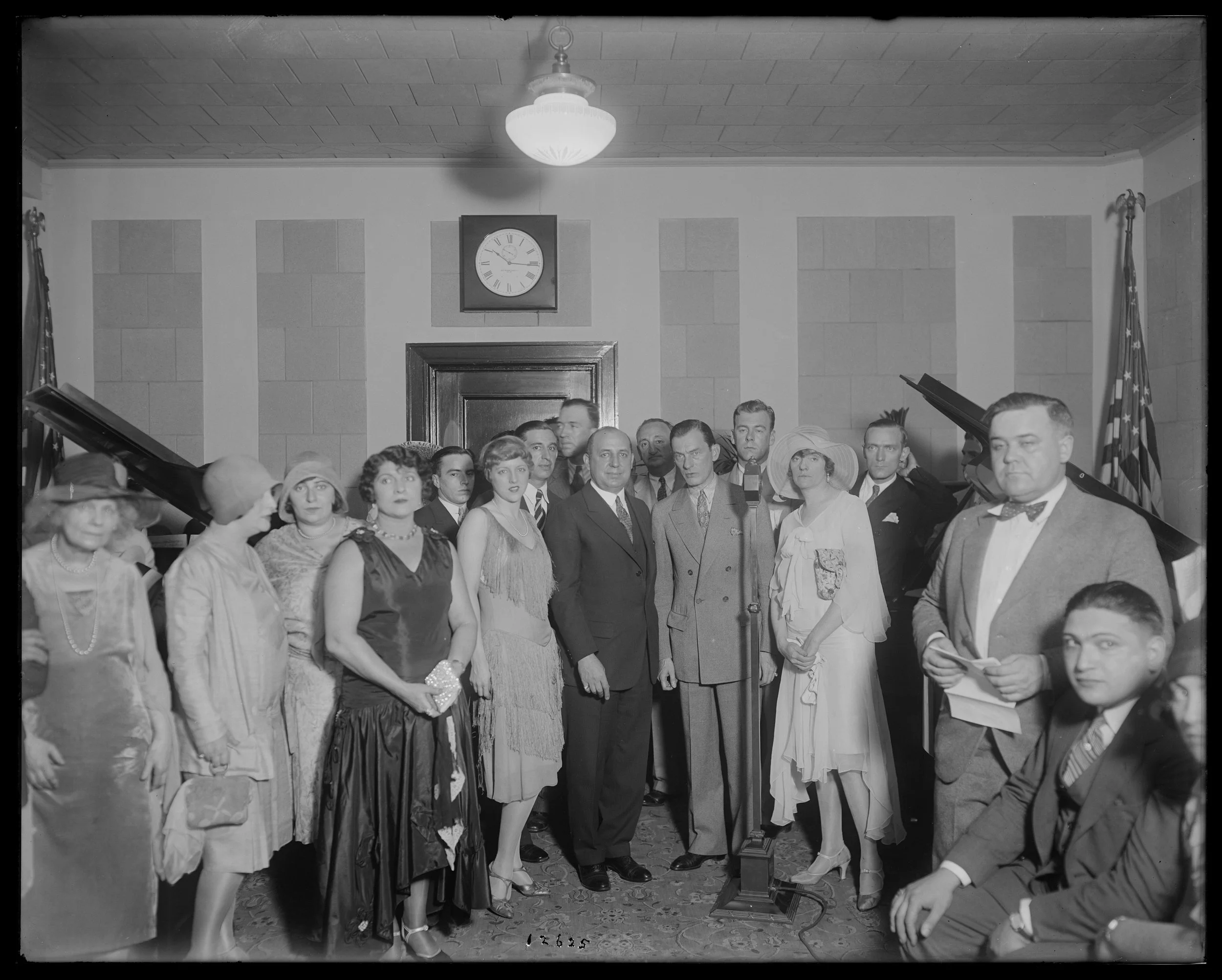
BPS 12625: WNYC Director Christie Bohnsack (in bowtie, far right) at a reception at the WNYC studio in the Municipal Building, July 31, 1929. Mayor Jimmy Walker is at the microphone. Photograph by Eugene de Salignac, Department o Bridges/Plant & Structures Collection, NYC Municipal Archives.
Change began with Mayor Fiorello H. La Guardia’s second term in 1938. La Guardia had run with the support of the relatively new American Labor Party (1936-1956), a nexus of labor leaders and former Socialist Party members who rebranded themselves as the Social Democratic Federation.
La Guardia appointed Morris S. Novik as director of WNYC. Novik arrived from WEVD, a station owned and operated by the progressive Jewish Forward and founded by the Socialist Party as a memorial to its late leader, Eugene Victor Debs. The connection was unambiguous—and not lost on La Guardia’s opponents.
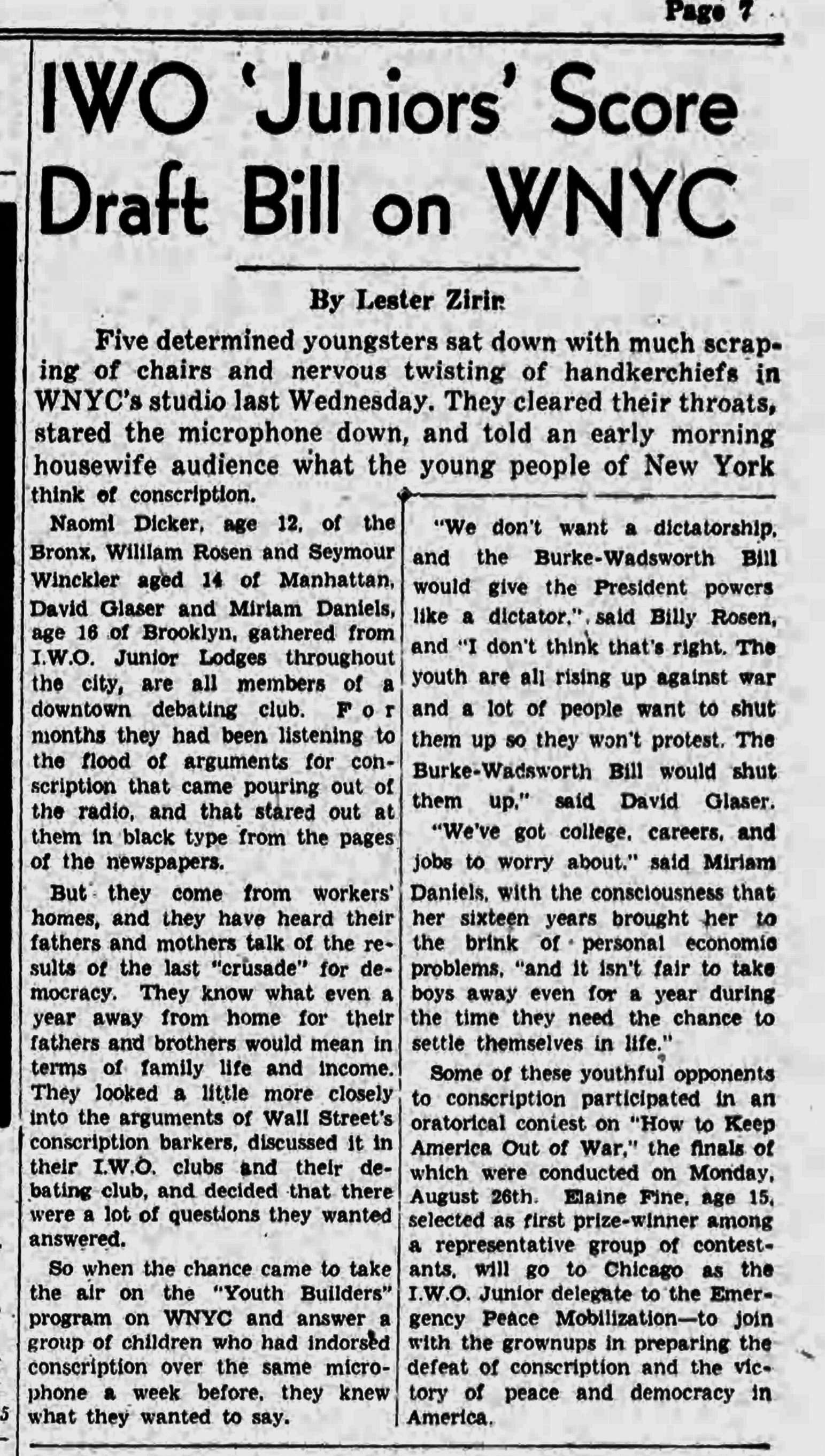
Daily Worker article about lefty teens on WNYC, from August 29, 1940.
Within weeks, critics seized on a WNYC travelogue that painted an unusually rosy picture of the Soviet Union while avoiding criticism of Joseph Stalin’s dictatorship. The broadcast touched off a political storm, complete with calls to shut down the station and a formal investigation. The controversy eventually collapsed when it was revealed that the program had been produced by a subsidiary of the American Express Company as a piece of travel promotion. Still, the episode appears to have had a chilling effect.
Left-leaning voices were not barred from WNYC after that, but Novik seems to have been cautious about offering airtime to overt socialists or communists. One notable exception came in August 1940, when the station aired a program featuring five young members of junior lodges affiliated with the Communist Party-influenced International Workers Organization (IWO). The Daily Worker reported the teenagers spoke out against a proposal for a military draft, responding to a group of youths who had endorsed a national call-up on Youth Builders a week earlier.
No recordings of explicitly socialist programming from this period survive in the Municipal Archives’ WNYC lacquer disc collection. Newspaper radio listings from late October 1944 and 1945, however, do note a couple of broadcasts titled “Socialist Labor Talk” and “Socialist Party.” These election-season talks include an appearance by Joseph G. Glass, the Socialist Party candidate for mayor.
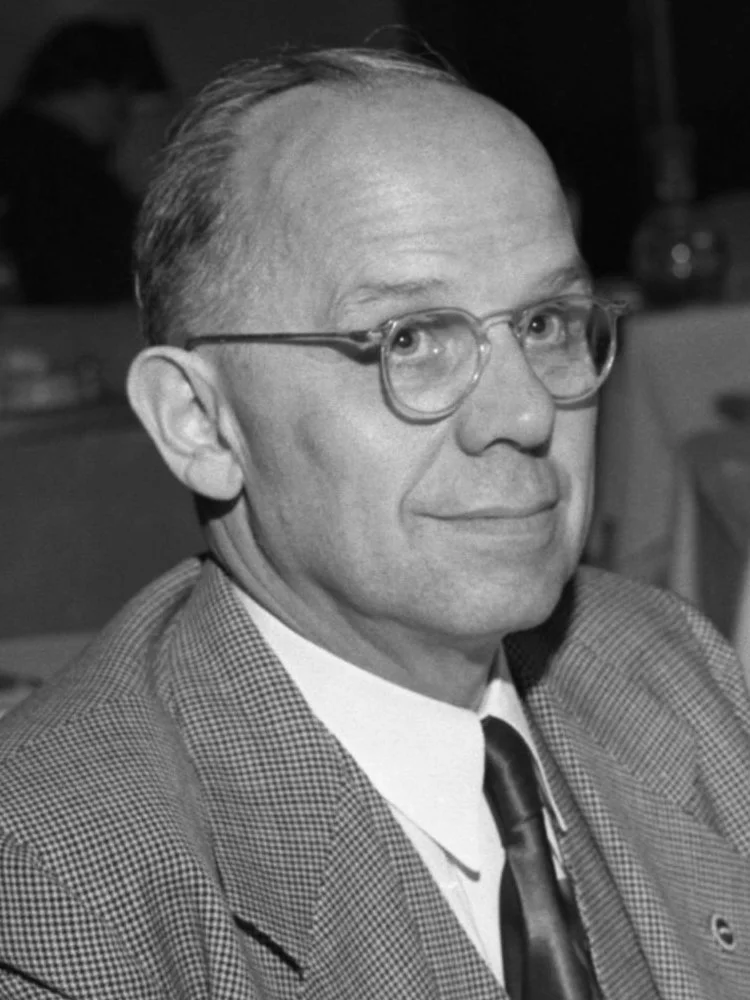
Darlington Hoopes in 1952. Courtesy Wikimedia Commons.
Running for Mayor In 1949, and in his earlier campaigns, Congressman Vito Marcantonio campaigned on the progressive American Labor Party line. As such he was included among equal time broadcasts. While such broadcasts were not uncommon because of the FCC provision and leased time, Socialist and Communist Party officials were also heard occasionally in 1930s and 1940s on the major national commercial networks CBS, NBC, and the Mutual Broadcasting System.
The earliest surviving WNYC recordings featuring socialist speakers date well after Novik’s tenure and continued to air under the FCC’s equal-time provision. In October 1952, Darlington Hoopes, the Socialist Party’s candidate for president, addressed issues of affordability and economic insecurity, criticizing both Franklin Roosevelt’s New Deal and Harry Truman’s Fair Deal. Hoopes argued that the socialist model pursued by Britain’s Labor Party offered a path seriously worth considering.
That same year, WNYC listeners also heard from the leading socialist candidates running for U.S. Senate in New York. Socialist Party candidate Joseph Glass used one broadcast to distinguish his views from those of Nathan Karp of the Socialist Labor Party (SLP) and Michael Bartell of the Socialist Workers Party (SWP). All three contenders appeared on Campus Press Conference, where newsmakers faced questions from a panel of local college newspaper editors and reporters.
In the November 5th program, moderated by a young Gabe Pressman, Glass argued for cost-of-living adjustments to Social Security and maintained—reluctantly—that communist aggression in Korea needed to be resisted.
Karp of the SLP appeared two days earlier, focusing primarily on party doctrine rather than specific policy proposals. While a bit strident here, he reportedly mellowed in later years and did stand-up comedy at SLP conventions and meetings.
Bartell of the SWP, the Trotskyist candidate, appeared on October 28, 1952. He began by laying out a basic definition of his party as a revolutionary socialist one achieving its goals through democratic means. The balance of time was spent responding to questions about the Korean conflict, the Soviet Union, China and the Berlin blockade. In his last few minutes Bartell called for an end to an economy based on military armament, a withdrawal of U.S. troops from Korea, and the abolition of the Smith Act. This law imposed criminal penalties for advocating the overthrow of the U.S. government by force or violence and required all foreigners over the age of 14 to register with the federal government.
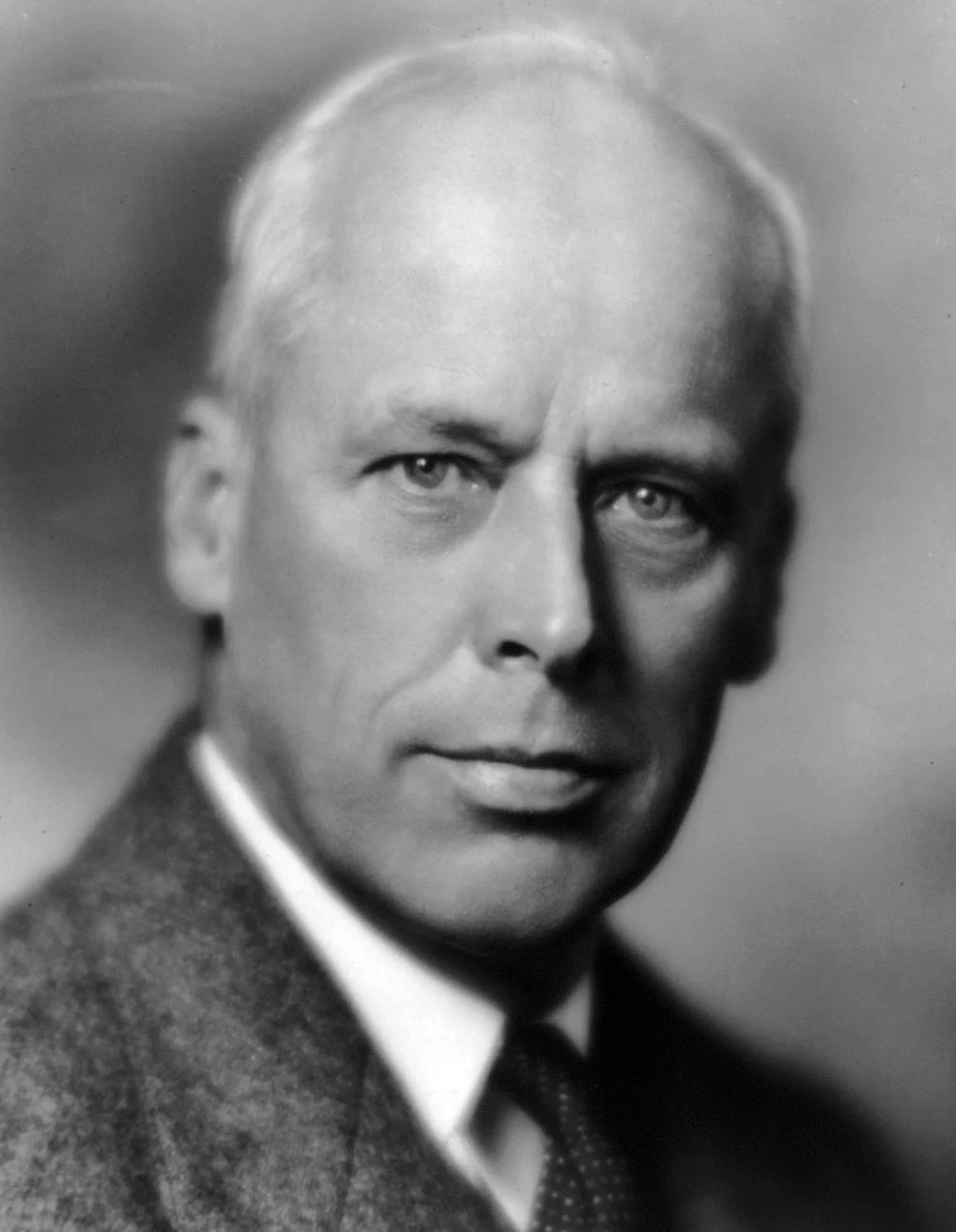
Norman Thomas, 1937. Courtesy Wikimedia Commons
In January 1953, prominent American Socialist Norman Thomas delivered the address “What Are We Voting For?” at the Cooper Union Forum. The talk was distributed nationwide through the National Association of Educational Broadcasters’ tape network—the first non-commercial radio syndication system, initiated by WNYC.
In this talk Thomas decried our vote for electors over the popular vote, and the role played by southern white supremacist Democrats blocking civil rights legislation. He argued that on average, there are not large differences between Republicans and Democrats. His answer, in part, is what he called a “democratic socialist party.” Thomas also called for international control over atomic weapons, campaign finance reform, and transparency over “the fog of words.”
Thomas, a serial Socialist Party candidate for President (1928-1948), would be heard over the municipal station another six times as part of the Cooper Union’s Great Hall series of talks between 1953 and 1964. He also appeared on WNYC’s broadcast of The New York Herald Tribune Book and Author Luncheon in 1964, where he addressed civil rights, nuclear disarmament, and poverty, while warning progressive listeners against political fatalism.
In 1957 “Mrs.” Joyce Cowley, a rare woman candidate with the anti-Stalinist Socialist Workers Party, ran for New York City Mayor. A year earlier she had been a candidate for the New York State Senate. She echoed much of what had been said by Bartell but did emphasize the need for civil rights. She also demanded the removal of the SWP from the Attorney General’s list of subversive organizations. Cowley called for an end to nuclear weapons tests, production for peace, not war and charged that the Democratic Party had conspired to keep the SWP off the ballot.
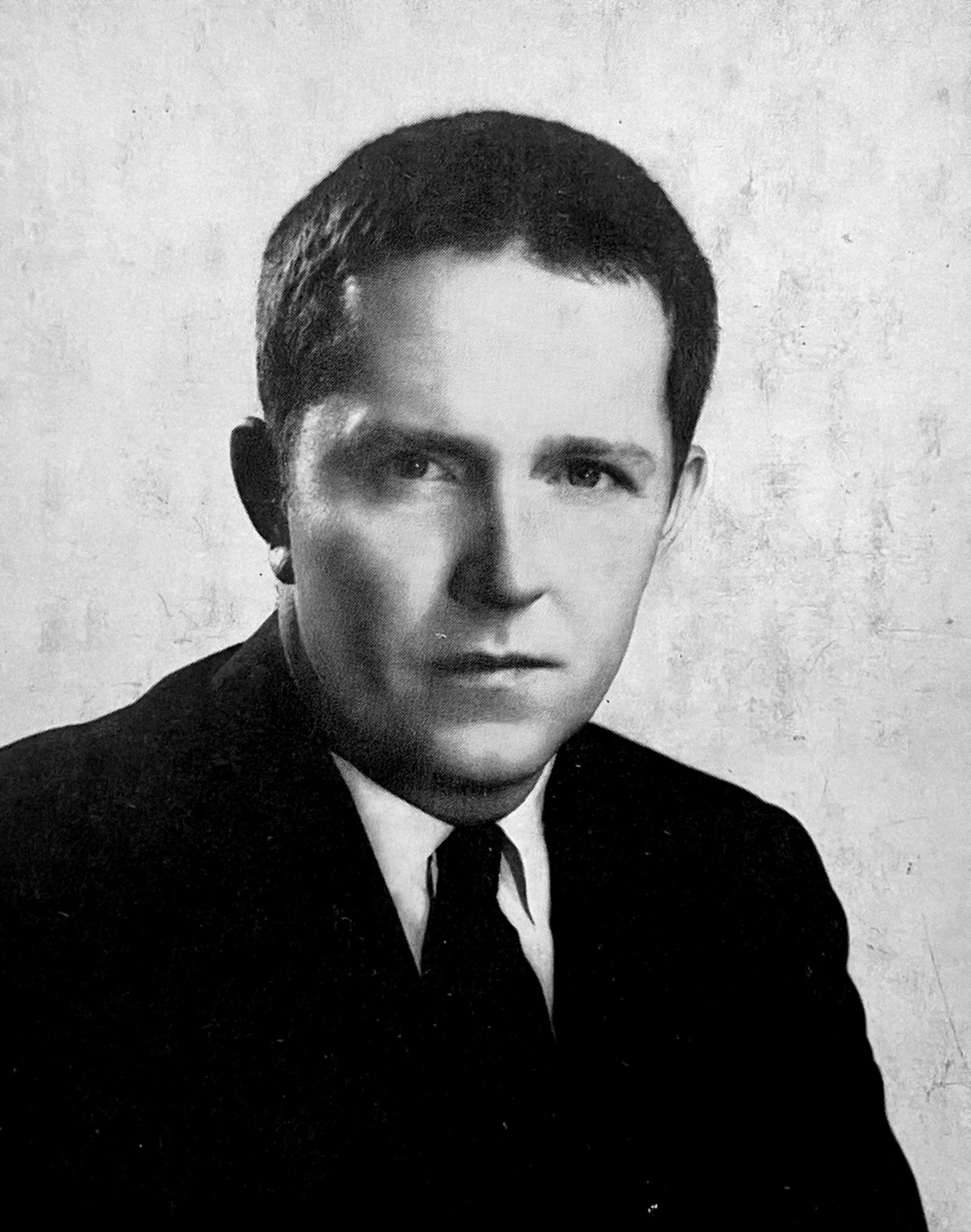
Michael Harrington portrait photograph from the dust jacket of The Other America. Courtesy Wikimedia Commons.
Although the Democratic Socialists of America would not be founded until 1982, the phrase “democratic socialist” appeared sporadically in 1920s and ‘30s news reports, particularly in reference to Europe, but slowly came into more frequent use during the Cold War. In the 1960s and ‘70s, Norman Thomas and writer and activist Michael Harrington often self-identified as democratic socialists to signal a clear rejection of Soviet communism while maintaining a socialist critique of capitalism. Harrington’s usage of the phrase in the 1960s and ‘70s helped cement “democratic socialism” as a recognizable label in U.S. political discourse.
Michael Harrington, a member of the American Socialist Party and head of the League for Industrial Democracy, appeared on the city’s station in 1968. In an interview with Patricia Marx he discussed his influential book The Other America, which exposed the persistence of poverty and inequality in postwar America.
Many socialist ideas—variously labeled, constrained, and contested—have surfaced repeatedly in New York City’s political life and on its municipal airwaves, even during the Cold War period of intense suspicion and retrenchment. The evolution of those voices over WNYC reflects not only shifts in the political climate but also broader debates about democracy, economic justice, and legitimacy in public discourse. Mamdani’s victory suggests that many arguments on behalf of the poor, working class, and disenfranchised, once relegated to the margins, have reentered the civic mainstream, carrying with them a history that is longer, and more complex, than current headlines may suggest.
Andy Lanset (retired) was the Founding Director of the New York Public Radio Archives.