The Mayflower II

What do the musical comedy star Ethel Merman, a troupe of young people dressed in “native” American garb, one live turkey, and a black and white cat named Felix have in common? They all played a role in the festivities celebrating arrival of the replica ship, Mayflower II, in New York City on July 2, 1957. 
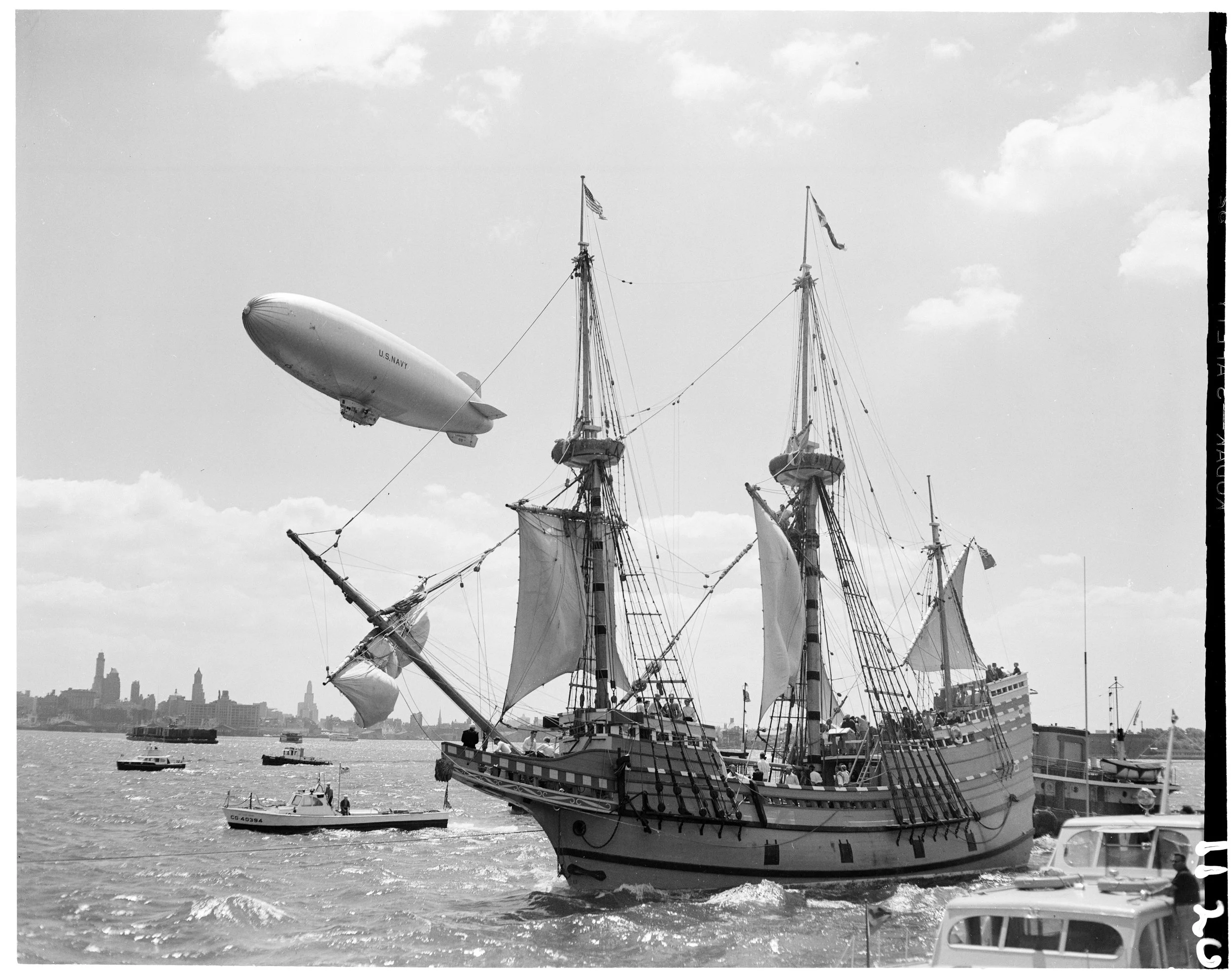
The Mayflower II sailing into New York Harbor, July 1, 1957. Department of Marine and Aviation Photograph Collection, NYC Municipal Archives.

The sea voyage of the original ship Mayflower, in 1620, transporting religious dissenters, the “Pilgrims,” from England to New England has been a foundational legend in American history. The journey of the replica ship, Mayflower II, in 1957, is perhaps less well known.  

The idea for the new ship developed on both sides of the Atlantic in the years following World War II. In England, a journalist and public relations man, Warwick Charlton, established Project Mayflower Ltd. in 1951. At the same time, officials at the Plimoth Plantation in Massachusetts (now known as Plimoth Patuxet) had a similar idea to research and design a ship the size and type of the original Mayflower. The two organizations eventually joined together to build the sailing vessel that became known as the Mayflower II. 
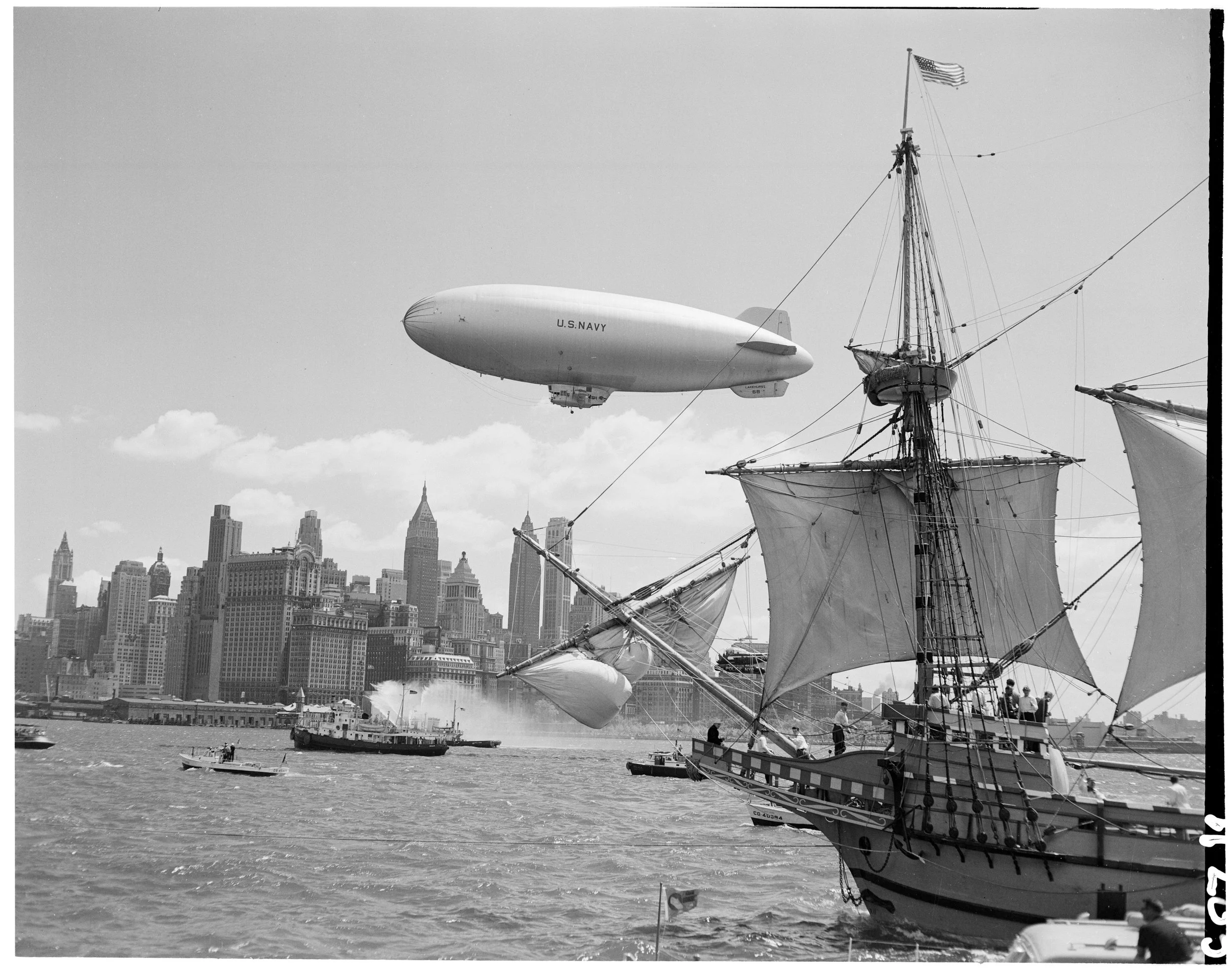
The Mayflower II sailing into New York Harbor, July 1, 1957. Department of Marine and Aviation Photograph Collection, NYC Municipal Archives.

In 1956, when New York City Mayor Robert F. Wagner learned of the project, he wrote Warwick Charlton and suggested that the new ship should make a stop in New York City before it berthed permanently at the Plimoth Plantation. “It is needless for me to remind you that there is no place in the world like the facilities of the seaport of New York City ... and in the summer receives millions of tourists and visitors.”   

A carbon copy of Wagner’s letter can be found in the correspondence files of his Commerce and Public Events office. Grover Whelan, the City’s long-time official “Greeter,” had retired in 1953, but his work had been continued under the able leadership of Richard C. Patterson. Appointed by Mayor Wagner as Commissioner of the Department of Commerce and Public Events in 1954, “Ambassador” Patterson and his staff organized the festivities, including a ticker-tape parade, to welcome the Mayflower II and her crew.  

On April 20, 1957, the Mayflower II set sail from Plymouth, England, bound for Massachusetts. Captain Alan J. Villiers, and his crew of thirty-three men, and one black and white cat, “Felix,” arrived at Plymouth, Massachusetts, on June 13, 1957. 

Two weeks later, on July 2, 1957, the vessel sailed into New York Harbor. The front page of the New York Times the following day described the scene. “A salty-looking crew of adventurers received a cheering ticker-tape reception on lower Broadway at noon yesterday. They were the deeply tanned crew of the Mayflower II and, in their Pilgrim garb, they looked as if they might have just stepped off a Hollywood movie set.”  

Costumed “native” Americans on the dock awaiting arrival of the Mayflower II, July 1, 1957. Department of Marine and Aviation Photograph Collection, NYC Municipal Archives.

The Times story failed to mention that not only did the Mayflower II crew dress in colonial-era garb, but a small troupe of young people, wearing “native” costumes greeted arrival of the vessel. The Times reporter also apparently missed the ceremonial presentation of a live turkey by the “native” group to ship’s Captain Villiers. The New York City Department of Marine and Aviation (DMA) photographer captured the scene. There is no documentation regarding the ultimate disposition of the gift-turkey. 

Captain Alan J. Villiers, of the Mayflower II, wearing “Pilgrim” clothing, accepting gift of a live turkey from costumed “native” American, July 1, 1957. Department of Marine and Aviation Photograph Collection, NYC Municipal Archives.

However, the Times did report on Mayor Wagner’s brief remarks on the steps of City Hall upon arrival of Captain Villiers and his crew after they paraded up Broadway from the Battery. “Of all the ships that have ever brought people to our shores, no one of them has meant more to America than the pilgrim ship Mayflower. For us, the Mayflower is at once the vehicle and the symbol of American freedom.” Wagner continued, “There were human beings aboard the first Mayflower . . . who were inspired by a dream of political and religious liberty.” And, he added, “In the centuries that followed, our nation’s destiny and greatness was shaped by millions of immigrants and refugees from oppression who displayed the same courage and determination.” The Public Events folder in the Wagner collection contains a complete transcript of the remarks, along with additional correspondence and event planning documents. 

At the conclusion of the day’s ceremonies, the Mayflower II sailed up the Hudson River to Pier 81 at West Forty-first street. According to the Times, the Mayflower II and exhibits, “will be opened to the public today at 10:30 A.M. by Ethel Merman, the musical comedy star. Tickets will be sold for 95 cents for adults and 42 cents for children.” 

Mayor Robert Wagner shakes hands with Mayflower II Captain Alan J. Villiers, City Hall, July 2, 1957. Crewman Andrew Anderson-Bell holds ship’s cat, “Felix,” the only feline known to have participated in a ticker-tape parade. Department of Marine and Aviation Photograph Collection, NYC Municipal Archives.

The Mayflower remained berthed at Pier 81 and open to the public until November 18, 1957. An estimated 500,000 visitors explored the vessel during its stay in New York City. Two weeks later, on Thanksgiving Day, November 27, the ship was officially turned over to Plimoth Plantation where it became part of a permanent restoration of the earliest Pilgrim settlement in America. More recently, after a three-year restoration, in October 2020, the Mayflower II once again welcomed visitors. 
Celebrating Disability Pride Month: A Century of Progress Toward Access and Inclusion in NYC

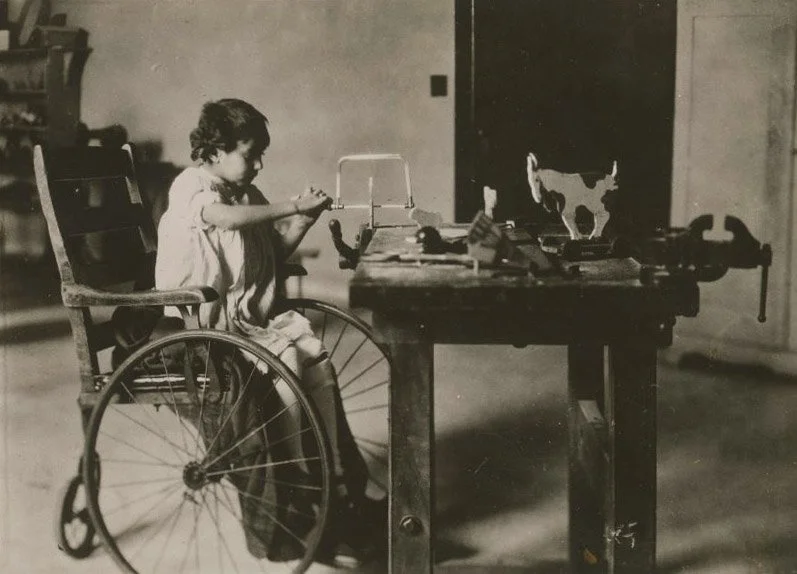
Department of Public Charities and Hospitals, Roosevelt Island (New York, N.Y.), 1942. New York City Municipal Archives.

This July, in celebration of Disability Pride Month and the anniversary of the landmark Americans with Disabilities Act (ADA), we’re showcasing selections from the Municipal Library that trace New York City’s evolving journey toward accessibility, inclusion, and justice for people with disabilities.

The story begins nearly a century ago, with a 1932 issue of the University of the State of New York Bulletin titled “The Organization of Special Classes for Crippled Children.” While the outdated language is jarring today, the article also reflects flawed assumptions—that children with disabilities were inherently unable to thrive in standard classrooms.

By 1941, the tone had shifted. In Physically Handicapped Children in New York City, the NYC Board of Education highlighted the city’s pioneering work in disability education. Despite still drawing lines between “normal” and “handicapped” children, the publication promoted a more forward-thinking vision: rather than isolating students with disabilities, it advocated adapting existing programs to support their success alongside their peers.

It’s the Law: Rights of People with Disabilities. New York City Mayor’s Office for the Handicapped, Spring 1989. NYC Municipal Library.

Momentum built in the 1970s following the passage of federal legislation like Section 504 of the Rehabilitation Act and the Education for All Handicapped Children Act. These transformative laws outlawed discrimination in federally funded educational settings and demanded sweeping changes. In response, the Mayor’s Office for the Handicapped (now the Mayor’s Office for People with Disabilities) released The New Federal Education Laws for Handicapped Children: Promises, Programs, Problems in 1978. The introduction called the implications “so vast… they will alter the lives of every one of us.”

One year later, the same office published A Right and Not a Privilege, a bold declaration of empowerment and advocacy for what it called the “emerging handicapped minority.” In 1989, just before the ADA became law, the city issued It’s the Law: Rights of People with Disabilities, a guide to federal, state, and local protections that armed New Yorkers with tools to fight discrimination in jobs, housing, education, and beyond.

New York City wasn’t waiting for federal mandates. With Local Law 58 in 1987, the city required accessible design in all new construction and major renovations. A 1991 guide from the Department of Buildings, How to Work with Local Law 58/87, laid out the blueprint for barrier-free design, work that would later be integrated into the 2014 Construction Code.

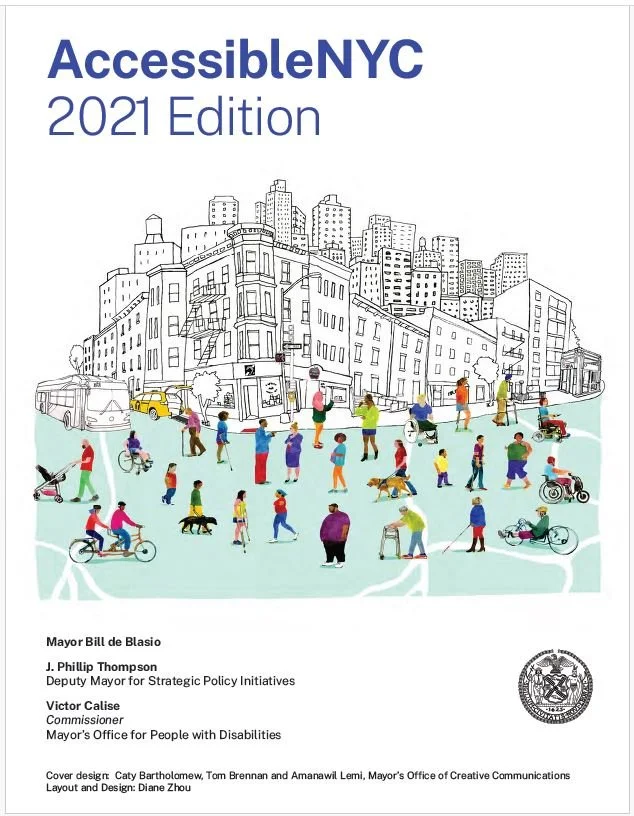
AccessibleNYC. New York City Mayor’s Office for People with Disabilities, 2021.

Following the passage of the ADA in 1990, the city continued to push forward. In 1992, the MTA and NYC Transit released their “Key Station Plan,” outlining steps to make subway stations accessible. That same year, the Landmarks Preservation Commission published Access to Preservation, a thoughtful approach to making historic buildings ADA-compliant without compromising their architectural integrity.

Today, progress continues. Since 2016, the Mayor’s Office for People with Disabilities has issued AccessibleNYC, an annual report tracking efforts to build a more inclusive city. The 2021 edition captured the evolving mindset: “While there is still so much more work to be done… there is a greater recognition that making the city more accessible for people with disabilities benefits everyone—with disabilities and without.”

From exclusion to empowerment, these documents tell a powerful story of transformation—of a city moving ever closer to equality not just in law, but in practice and spirit.

Records About Records: Discovering the History of DORIS Records Management

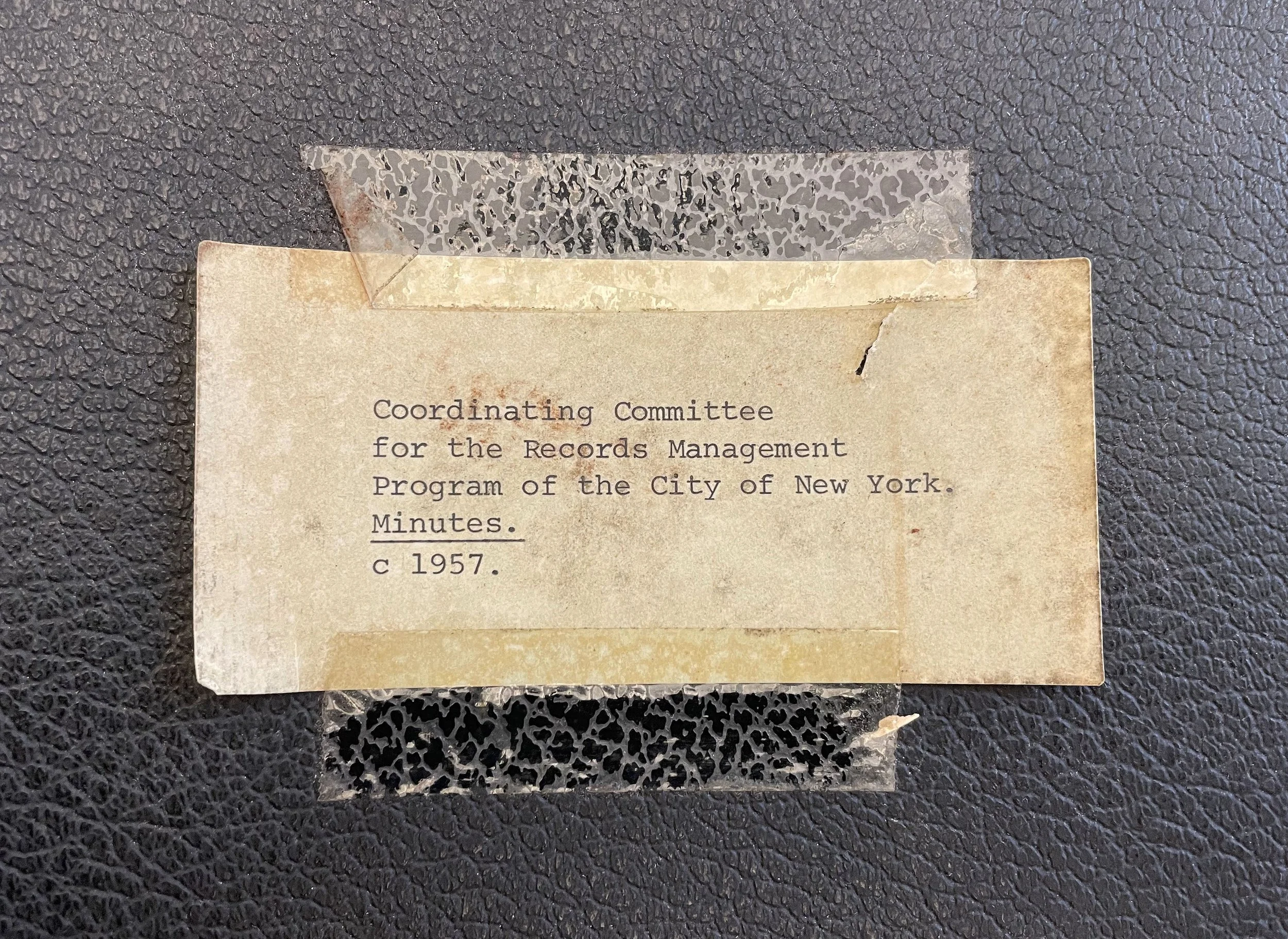
Recently, during an ongoing effort in the Municipal Library to reorganize the collection, librarians turned up a set of records that attest to New York City’s long history of responsible and innovative records management. A binder collecting the 1957 minutes of the Coordinating Committee for the Records Management Program of the City of New York shows how the work we do today at DORIS is remarkably similar to the efforts of the past—both in its challenges and its success.

Coordinating Committee for the Records Management Program of the City of New York, Minutes, 1957. NYC Municipal Library.

Records management is the practice of maintaining control of records throughout their lifecycle—ensuring that that records are accessible to the people who need to use them, as well as determining when it is appropriate to destroy the material or to permanently store it for historical preservation and public access. When researchers today examine their family history, examine photographs that document the evolution of a neighborhood, or review the correspondence of elected officials from the past to understand the policies of today, these materials are available because someone took care to ensure they were properly managed during their active life. Today, the Records Management division of DORIS oversees citywide records management policy and practices, training Records Management Officers at each agency to comply with city standards to ensure the records born today (many of which are digital) remain available for future researchers.  

Coordinating Committee for the Records Management Program of the City of New York, Minutes, 1957, page 1. NYC Municipal Library.

The committee records we discovered begin on October 23, 1957. At that time, NYC Records Management history followed on the foundational efforts of Rebecca Rankin, who served as Director of the Municipal Library from 1920–1952. Rankin championed the development of the Municipal Archives and Records Center, as well as the creation of a records management manual and records manager training course. The 1957 Committee was chaired by James Katsaros, then Director of the Municipal Archives, who had worked under Rankin for many years. And as the records clearly show, Katsaros carried on her legacy of high standards for records management training and citywide coordination.

Mayor Vincent Impellitteri presents Chief Librarian Rebecca Rankin with the scroll of merit upon her retirement, City Hall, June 25, 1952. Official Mayor Photograph Collection, NYC Municipal Archives.

The minutes convey that a main concern of the committee was what information to share with records management officers at their regular citywide meetings:

“Mr. Brady thought that we should ask specific questions from the Records Officers, as for instance, when was the last time an agency disposed records; has a records inventory been prepared as yet by the agency,… The Chairman brought up to date the procedure of disposal of obsolete and useless records as contained in the manual, and had copies prepared for distribution to all the Records Officers. Copies of the Corporation Council’s opinion on the disposal of duplicate copies of records were made for distribution to the Records Officers.”

When reading through these minutes, it is striking how extremely similar the practices and concerns of the Committee are to DORIS Records Management today. We hold regular quarterly meetings for records officers and share updated information on the exact same topics of disposal, records scheduling, and how to handle duplicates or obsolete records. Even though our records may now be emails and CAD files instead of typed memoranda or hand drawn plans, the work of safeguarding city records remains the same.

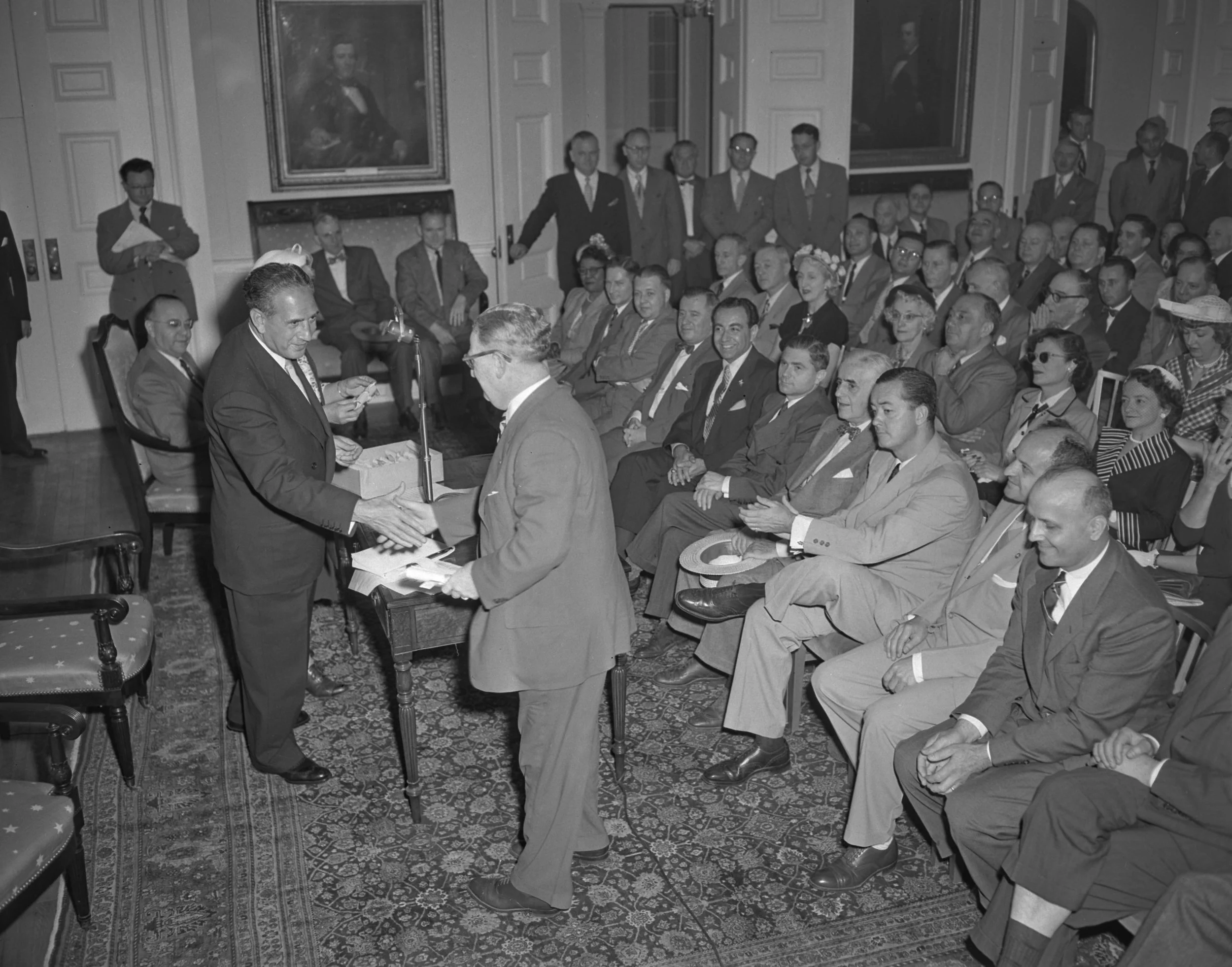
Mayor Vincent Impellitteri bestows merit awards to City agency Record Officers, City Hall, June 24, 1952. Official Mayor Photograph Collection, NYC Municipal Archives.

The minutes even reveal a similarity in remote attendance, a common occurrence with today’s virtual meetings on Teams and Zoom. At the start of the October 23, 1957 meeting, a committee member telephones in that he is ill. The committee assured him “we would take care of his suggestions and he was kept informed of the progress of the committee’s work by phone during and after the meeting.” It may not be the real-time video call of today, but this instance attests to the dedication and ingenuity of this committee to get the work done even when a member of the group is not physically present, something city employees experienced en-masse during the COVID-19 pandemic. 

Coordinating Committee for the Records Management Program of the City of New York, Minutes, 1957. NYC Municipal Library.

The 1957 binder of the Coordinating Committee for the Records Management Program also demonstrates the extent of their coordination efforts. In addition to general meetings for records managers, they also convened record officer sub-committees focused on specific government functions such as Court and Arrest Records, Education and Cultural Records, Engineering Records, General Government Records, Health and Social Services Records and Property Records. The committee also collaborated with the Office of Civil Defense to identify and secure the City’s vital records and was especially motivated to do so because the Civil Defense was providing funding for this effort.

DORIS Records Management is proud to carry on the legacy that began with Rebecca Rankin—meeting the complex and fascinating challenge of managing the records of New York City government. It is clear there is a direct throughline from the efforts of the past to our work today. We hope to discover more documents like these 1957 committee minutes and trace the history of NYC Records Management in more detail.

It Happened Here: 400 Years of NYC Government Records, 1636-2025

On Friday, July 3, 2025, the Department of Records and Information Services hosted an exhibit of unique items from four centuries of NYC history. Selected from the vast collections of the Municipal Archives and Library, the display kicks-off the It Happened Here weekend. Dating from 1636 to the present, the exhibit featured iconic documents, photographs, and ephemera that illustrated how the City evolved civil rights and made a new home for a population from around the world.

Petition, John Peter Zenger to Common Council, 1735. Common Council Records, NYC Municipal Archives.

From the 17th century, the display exhibited the first official edict of the colonial Director-General, Peter Stuyvesant, dated 1647. The edict banned the sale of alcohol every day after 8 p.m. and before 2 p.m. on Sundays, and enforced strict penalties for drawing a knife or sword in anger. The exhibit curators also included the original 1654 purchase of “Conyne Eylandt” (Coney Island) as a representative example of the many interactions between colonists and native peoples.

The 1734 trial of Peter Zenger is a signature event of the 18th century featured in the show. The exhibit displayed Zenger’s petition to the Common Council requesting repairs to his jail cell at the City Hall in 1735. He had been imprisoned for publishing articles critical of the colonial government. His acquittal by the jury established a powerful early precedent for freedom of the press in America.

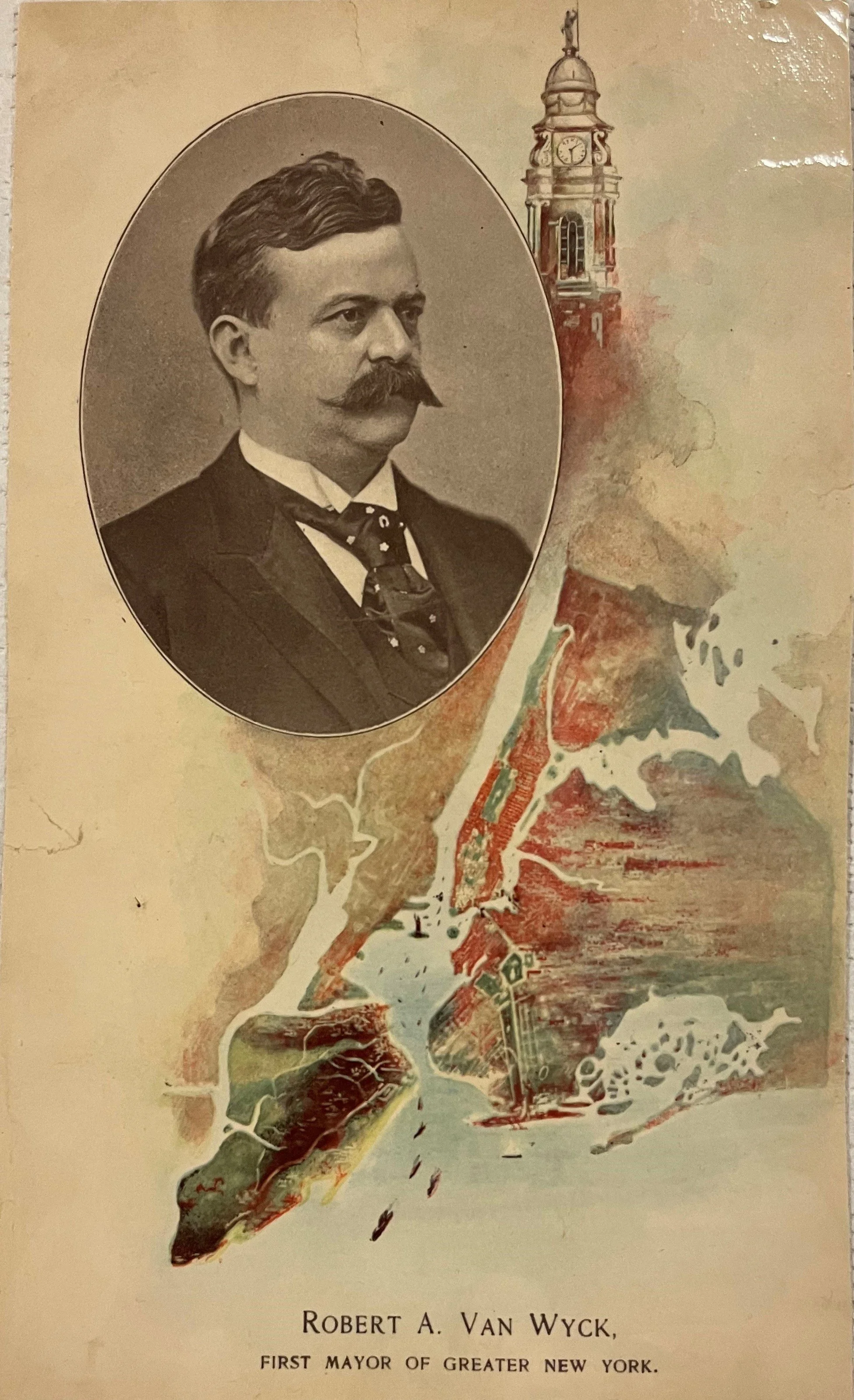
Pamphlet, 1898, Mayor Robert A. Van Wyck Records, NYC Municipal Archives.

Another highlight of the exhibit representing the 17th century was the “List of Schollars in the African Free Schooll,” from 1795-1796. Founded in 1787 by the New York Manumission Society, the African Free School educated the children of enslaved and formerly enslaved people.

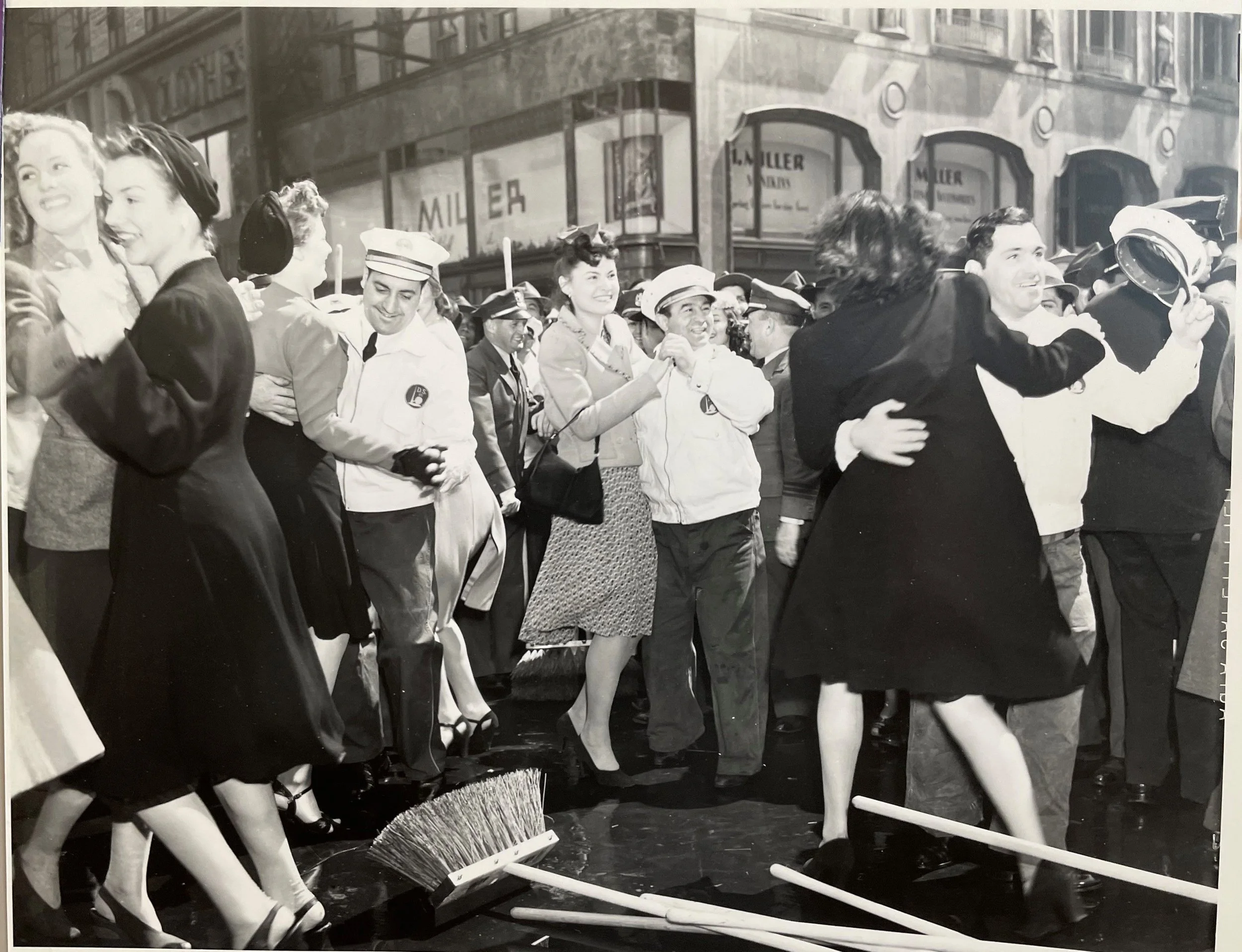
VJ Day, Times Square, August 14, 1945. Department of Street Cleaning Photograph Collection, NYC Municipal Archives.

For the 19th century, the exhibit highlighted items from three of the greatest public works achievements of the era—the Croton Aqueduct, Central Park, and the Brooklyn Bridge. An iconic photograph of workers on the Aqueduct in 1889 showed the scale of the project that brought abundant fresh water to the growing city. The display included an original drawing of the Central Park, designed as a democratic space offering all New Yorkers access to nature and recreation. The Brooklyn Bridge drawing in the exhibit illustrated how the suspension bridge—the longest in the world at that time—connected the two growing cities of Manhattan and Brooklyn. 

AIDS Pamphlet, Vertical Files, NYC Municipal Library.

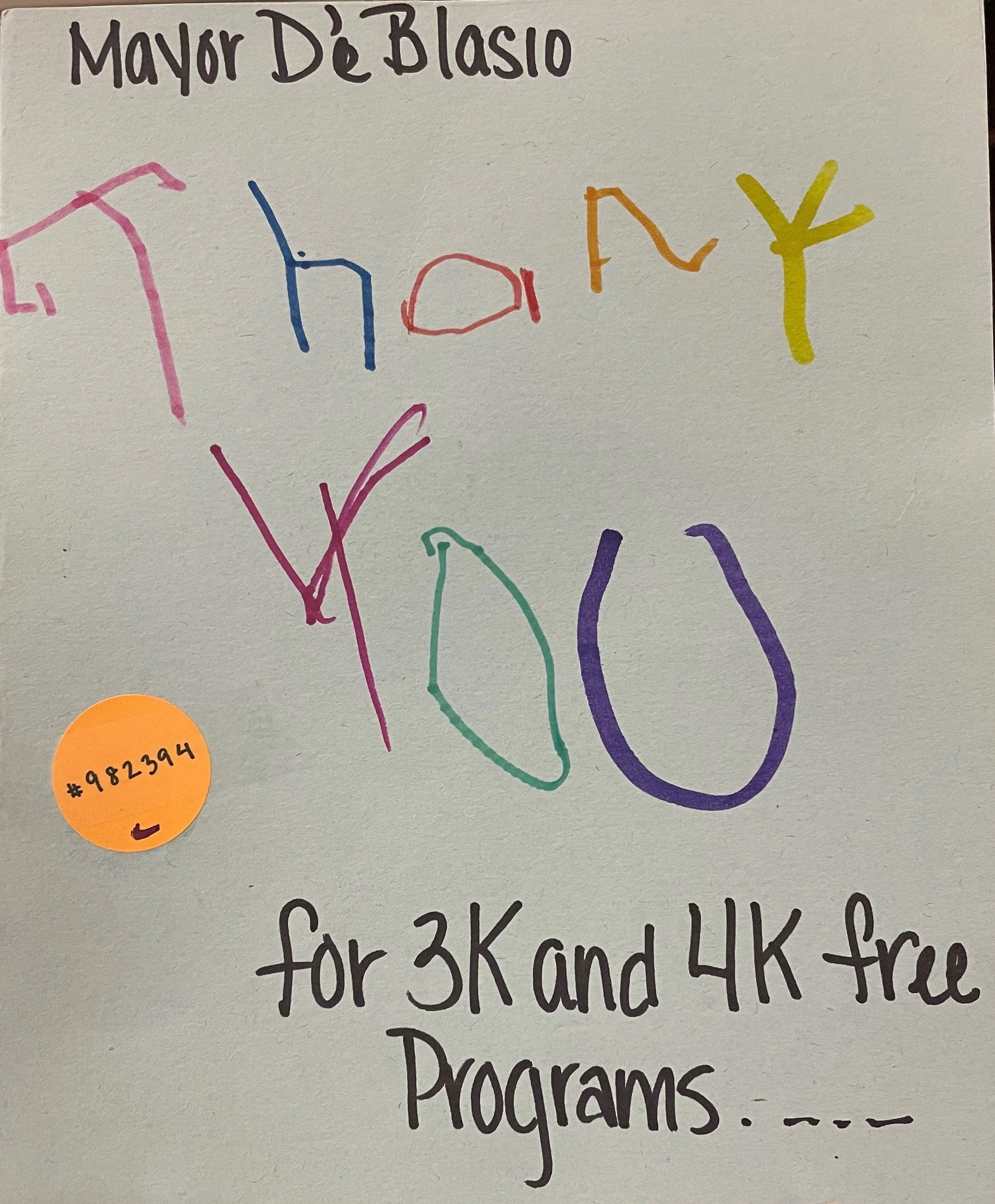
Thank you card, Mayor Bill de Blasio Records, NYC Municipal Archives.

The exhibit curators had an abundance of material to represent NYC municipal government in the 20th Century. Selected documents and photographs illustrated how the City welcomed waves of newcomers from Europe and the South, successfully consolidated Brooklyn, Queens, Staten Island and the Bronx into the Greater City of New York, revolutionized transportation with construction of the subway system, and coped with public health emergencies, the Great Depression, two World Wars, and a fiscal crisis.

Moving to the 21st Century, the exhibit reminded visitors of more recent events such as the attack on the World Trade Center on September 11, 2001, Hurricane Sandy in 2012, implementation of Universal Pre-K by Mayor de Blasio in 2014, the inaugural NYC Women’s March in 2017, and the parade for the Women’s World Cup in 2019, and finally, the COVID-19 pandemic in 2021.

What’s this? Discovered in the Municipal Archives, the origin of this document, its subject, or purpose is not known. If can help us identify this item, please do!

The Case Against Bruno Richard Hauptmann

On April 3, 1936, Bruno Richard Hauptmann was put to death in the New Jersey State Prison at Trenton for the kidnapping and murder of Charles Augustus Lindbergh, Jr., the 20-month-old son of Col. Charles Lindbergh and his wife Anne Morrow Lindbergh. It was the end of one of the most sensational investigations in American history, except the case never really ended. Like other famous murders, such as the JFK assassination, it birthed a whole industry of conspiracy theorists who think that the police and FBI got it wrong. Even today, they are working to reopen the case and test evidence for DNA samples, and they have been the subject of credulous articles in publications as diverse as The New York Times and The Free Press.

Love Counts: NYC LGBTQ History in the Municipal Library

This Pride Month, For the Record showcases selected publications in the NYC Municipal Library that illuminate the powerful and complex history of the City’s LGBTQ population in recent decades.  

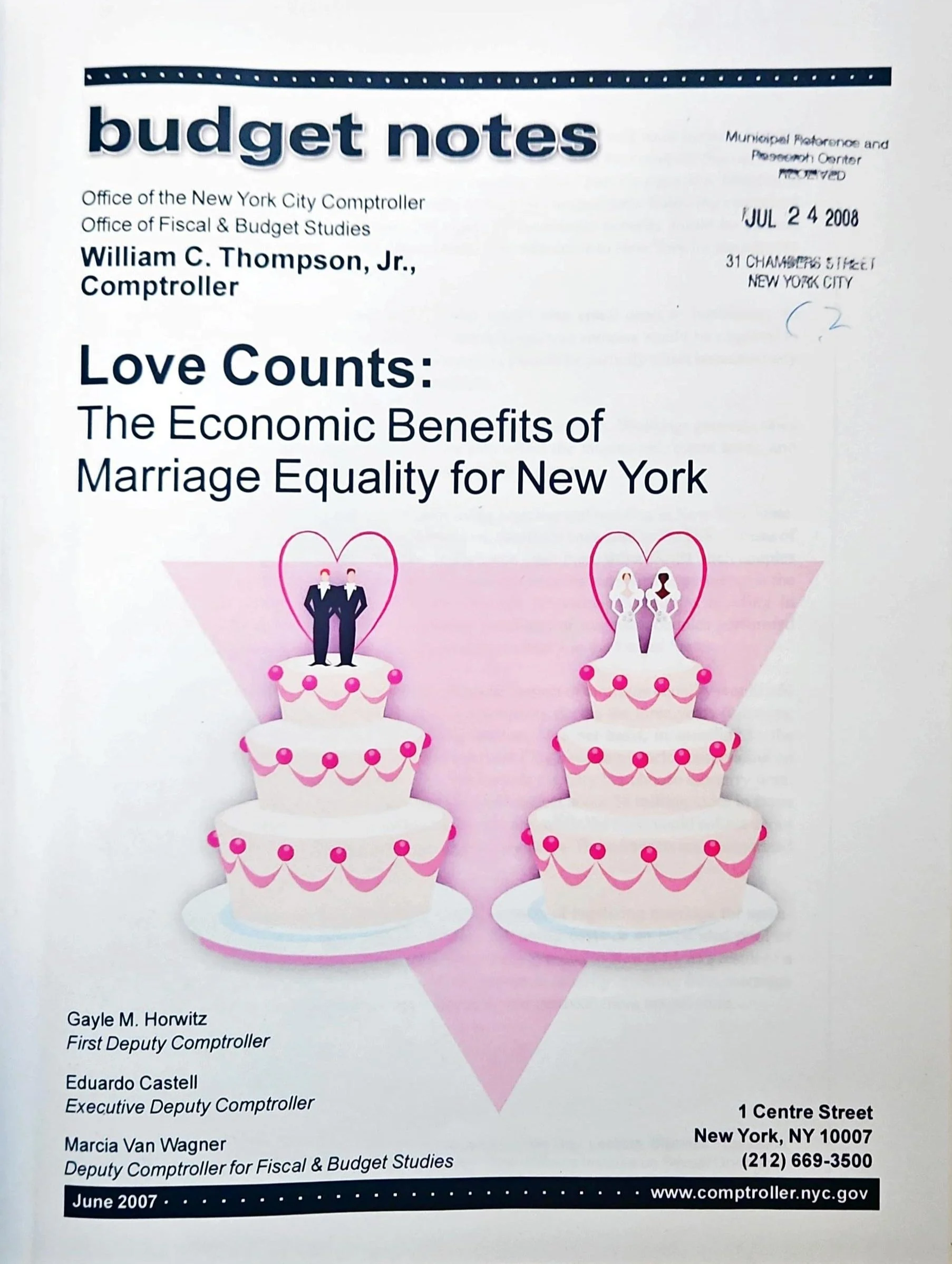
Love Counts: The Economic Benefits of Marriage Equality for New York. New York City Comptroller, June 2007. NYC Municipal Library.

Human Services and the Gay and Lesbian Population of New York City: Emerging Services, Emerging Issues. Community Council of Greater New York, 1986. NYC Municipal Library.

In the throes of the AIDS epidemic in 1986, the Community Council of New York prepared a report for the New York City Human Resources Administration entitled Human Services and the Gay and Lesbian Population of New York City: Emerging Services, Emerging Issues. The authors note that “the gay and lesbian population is primarily a hidden population, with many individuals afraid of disclosing their identity,” and acknowledge that despite NYC’s tolerance for different lifestyles, “homosexuality remains a subject of controversy and a target of prejudice.” 

End the Hate: A Report on Violence against Gay Men and Lesbians in New York City, a 1991 publication from the New York City Commission on Human Rights, was created at the request of Mayor David Dinkins “to provide a context for New York State legislators considering the passage of the Hate Crimes Bill and to illustrate the experiences which have led gays and lesbians to press for protections under it.” A questionnaire about bias incidents was returned by 508 respondents, largely people who had “never before contacted the police or other organizations about the attack.” The completed questionnaires “reveal a disturbing array of hate crimes which range from verbal abuse to vicious gang attacks.” (The Hate Crimes Act was eventually signed into law in New York State in 2000.)  

End the Hate: A Report on Violence against Gay Men and Lesbians in New York City, 1991. New York City Commission on Human Rights. NYC Municipal Library.

Love Counts (see above), a 2007 report from the Comptroller’s office, takes a decidedly practical approach to shoring up support for marriage equality in NYC. Subtitled “The Economic Benefits of Marriage Equality for New York,” it calculates that “New York City would receive a boost of nearly $175 million to its economy during the first three years after legislative approval of marriage for same-sex couples in the State.” (The Marriage Equality Act was signed into law in New York State in 2011.)

51 Christopher Street, ca. 1939. Tax Department photographs, NYC Municipal Archives.  

The June 2015 NYC Landmarks Designation Report for the Stonewall Inn, seen above in a 1940s tax photo before it became a gay bar, names it “one of the most important sites associated with Lesbian, Gay, Bisexual, Transgender history in New York City and the nation.” The narrative describes the events of June 28, 1969, when the bar's patrons fought back against a police crackdown, chanting “gay pride” and “gay power,” and sparking the nationwide struggle for LGBTQ civil rights.  

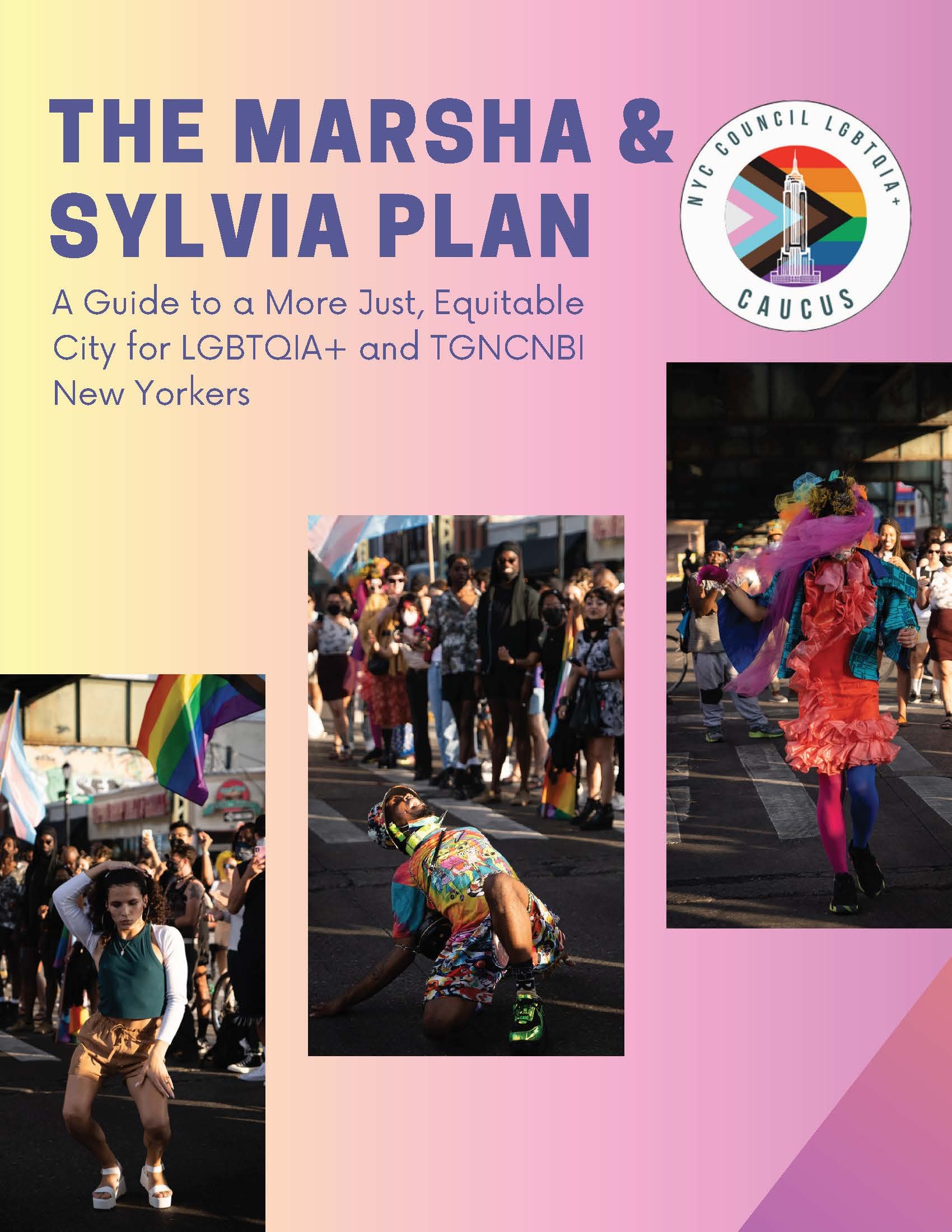
The Marsha & Sylvia Plan, City Council of New York, 2023. NYC Municipal Library.

The Marsha & Sylvia Plan, a 2023 submission to the Municipal Library’s Government Publications Portal, was issued by the City Council’s LGBTQIA+ Caucus. Acknowledging that “our work to secure and affirm the lives of our LGBTQIA+ (lesbian, gay, bisexual, transgender, queer, intersex, asexual, and more) neighbors is far from over,” it details initiatives in multiple fields that “empower us to deliver policies that affirm our place in the city we call home.”