In the years after World War II, poetry programming at WNYC evolved alongside the changing literary culture of New York City. The station increasingly collaborated with cultural institutions, universities, and literary organizations, expanding its reach from studio readings to festivals, public forums, and recorded literary events. At the same time, new poetic movements—from the Beats to the avant-garde—began to appear on the municipal airwaves both AM and FM whose listenership, while still small, proceeded to expand.
In the span of only a few years, WNYC’s microphones captured three very different visions of twentieth-century poetry. Robert Frost represented the established American tradition; Dylan Thomas brought the dramatic voice of international modernism; and Jack Kerouac embodied the rebellious energy of the Beat generation. Heard together in the station’s archives, their broadcasts trace a striking shift in literary culture—one preserved not only in print but in the voices of poets speaking over New York’s municipal airwaves.
Festivals and Institutional Partnerships
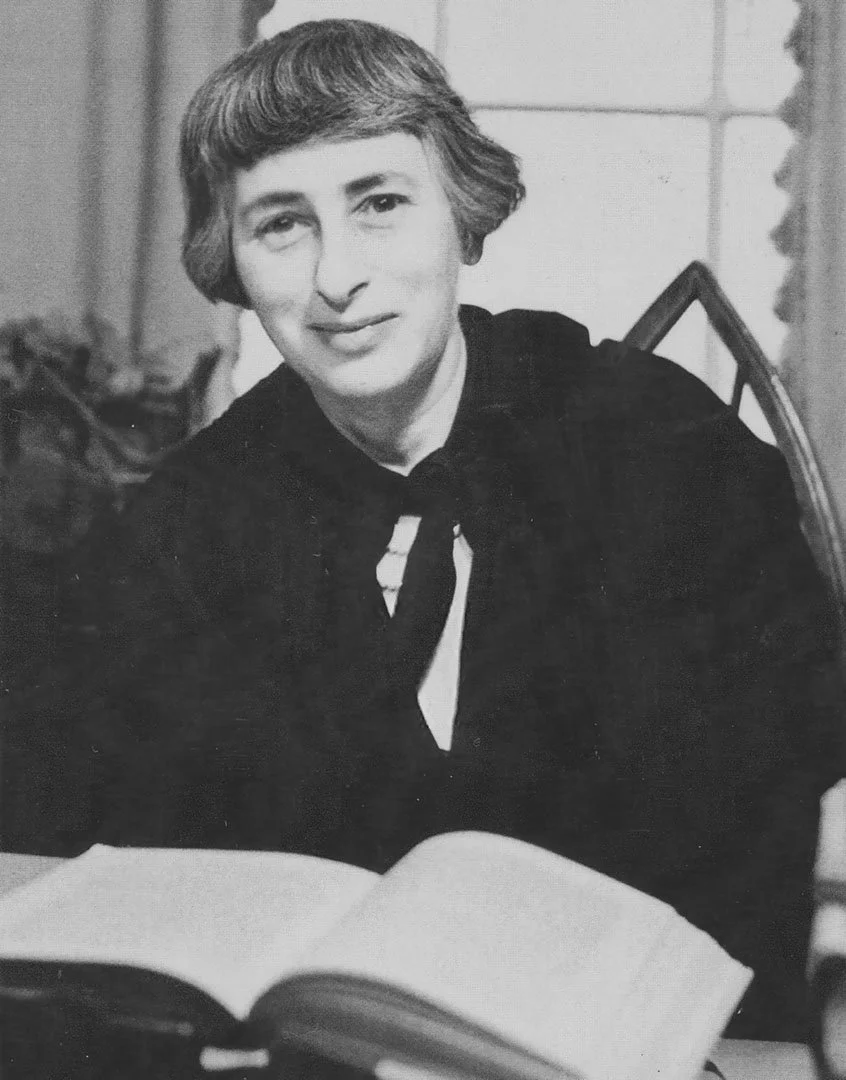
Babette Deutsch publicity photo.
Having witnessed the success of the station’s annual American Music Festival, WNYC director Seymour N. Siegel launched week-long arts, Shakespeare, and book festivals during the 1950s. These events featured numerous poetry readings and verse dramas.
Imports of BBC transcription discs supplied much of the English verse drama heard during the station’s annual April Shakespeare festivals (1952–1959), while the March–April book festivals ran annually from 1953 to 1956. Participants included Dylan Thomas and Sean O’Casey reading their own work, along with poet and critic Babette Deutsch presenting a segment titled Poets of Tomorrow.
In October 1954 WNYC aired Limited Edition, a series based on recordings from the Poetry Center at the 92nd Street Y. The program included the voices of Frederick Prokosch, Robert Frost, Archibald MacLeish, Osbert Sitwell, Joyce Cary, Arthur Miller and others. No recording of the series appears to have survived.
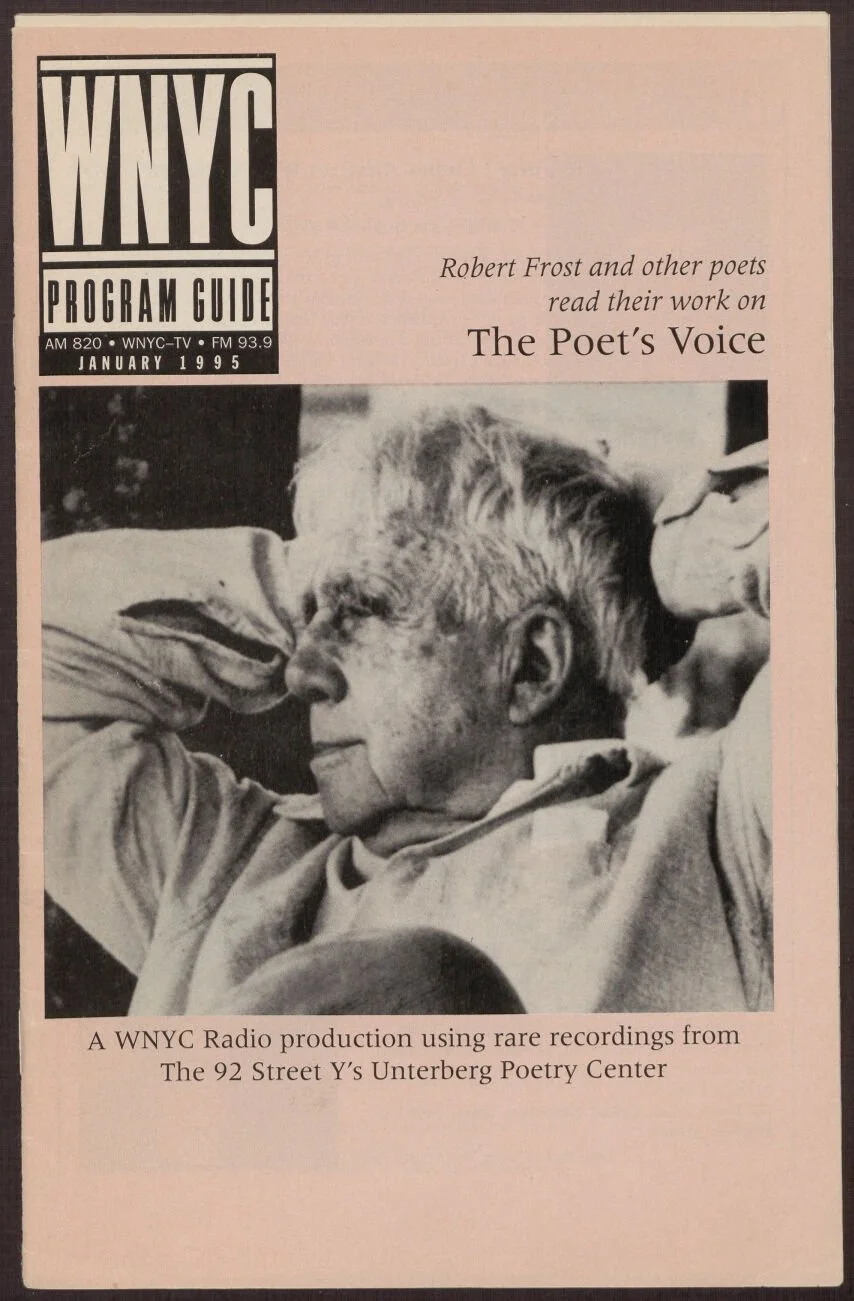
Cover of the January 1995 WNYC Program Guide/WNYC Archive Collections
More than four decades later the station returned to the same institution to produce The Poet’s Voice (1995), an ambitious series using recordings from the Unterberg Poetry Center’s archives. Hosted by Blair Brown and distributed nationally on National Public Radio, the program profiled thirteen major twentieth-century poets, including Robert Frost, W. H. Auden, Anne Sexton, Czesław Miłosz, William Carlos Williams, Marianne Moore, Gwendolyn Brooks, Octavio Paz, Dylan Thomas, Pablo Neruda, Derek Walcott, Robert Lowell, and Adrienne Rich.
Blending archival recordings with commentary, interviews, and music, the series aimed to make poetry accessible to radio listeners while revealing nuances of tone and emotion that only the spoken voice could convey. Unfortunately, the programs are currently unavailable because they require relicensing.
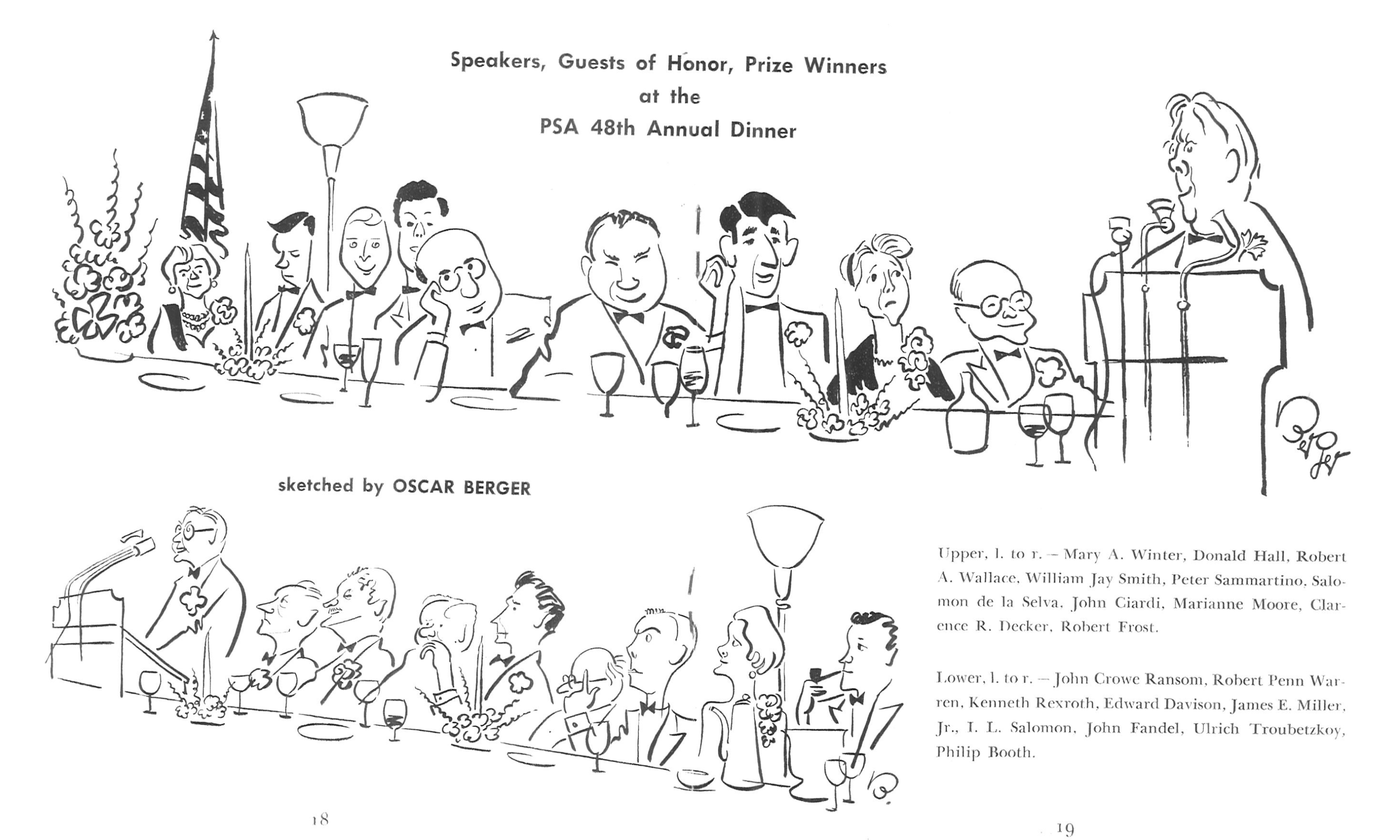
Oscar Berger drawing courtesy of the Poetry Society of America
When WNYC covered the Poetry Society of America’s forty-eighth annual dinner in 1958, the guest of honor was Robert Frost. By then widely regarded as the nation’s elder poet, Frost used the occasion to gently mock the public image that had grown around him, downplaying the notion that he possessed any special wisdom. Meanwhile, the society had the well-known caricaturist Oscar Berger draw the dais attendees for the organization’s journal.
The station broadcast the dinner again in January 1960, when Robert Frost, Marianne Moore, and Robert Graves were among those honored. President Dwight Eisenhower sent a message congratulating the society for its fifty years of work, observing that “the poet in a free society contributes greatly to the understanding and enrichment of life.”
Beat Poetry and Cultural Change
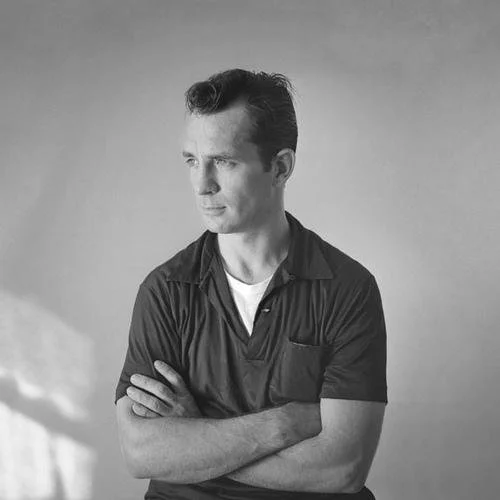
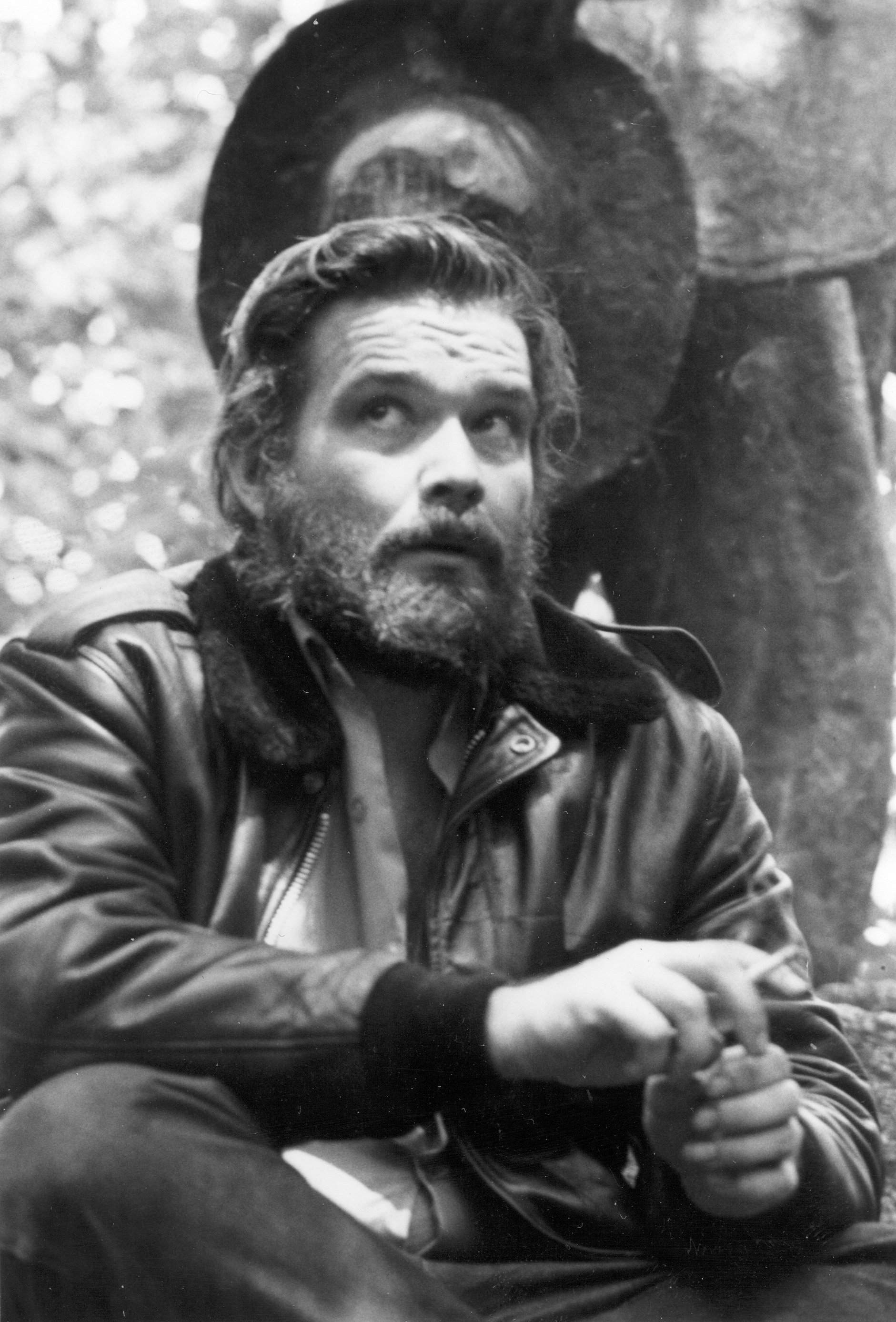
Jack Kerouac circa 1956 by Tom Palumbo/Wikimedia Commons.
By the late 1950s another literary development demanded attention: the emergence of the Beat Generation. WNYC did not ignore the movement. In November 1958, its engineers recorded Jack Kerouac at the Brandeis University Club during a lively discussion on the question, “Is there a Beat generation?” Kerouac, whose spontaneous style and unconventional views helped define the movement, was joined by British novelist Kingsley Amis, New York Post editor James Wexler, and anthropologist Ashley Montagu.
Greenwich Village—long associated with artistic experimentation—also became the focus of a 1959 WNYC documentary on beatniks and Beat poetry. Although the narrator is not identified on the surviving recording, Variety credited the production to Harry Rasky, later a noted Canadian filmmaker. The half-hour program captured the atmosphere of Village poetry readings where, as the trade paper observed, “the language is vivid and loaded with images.”
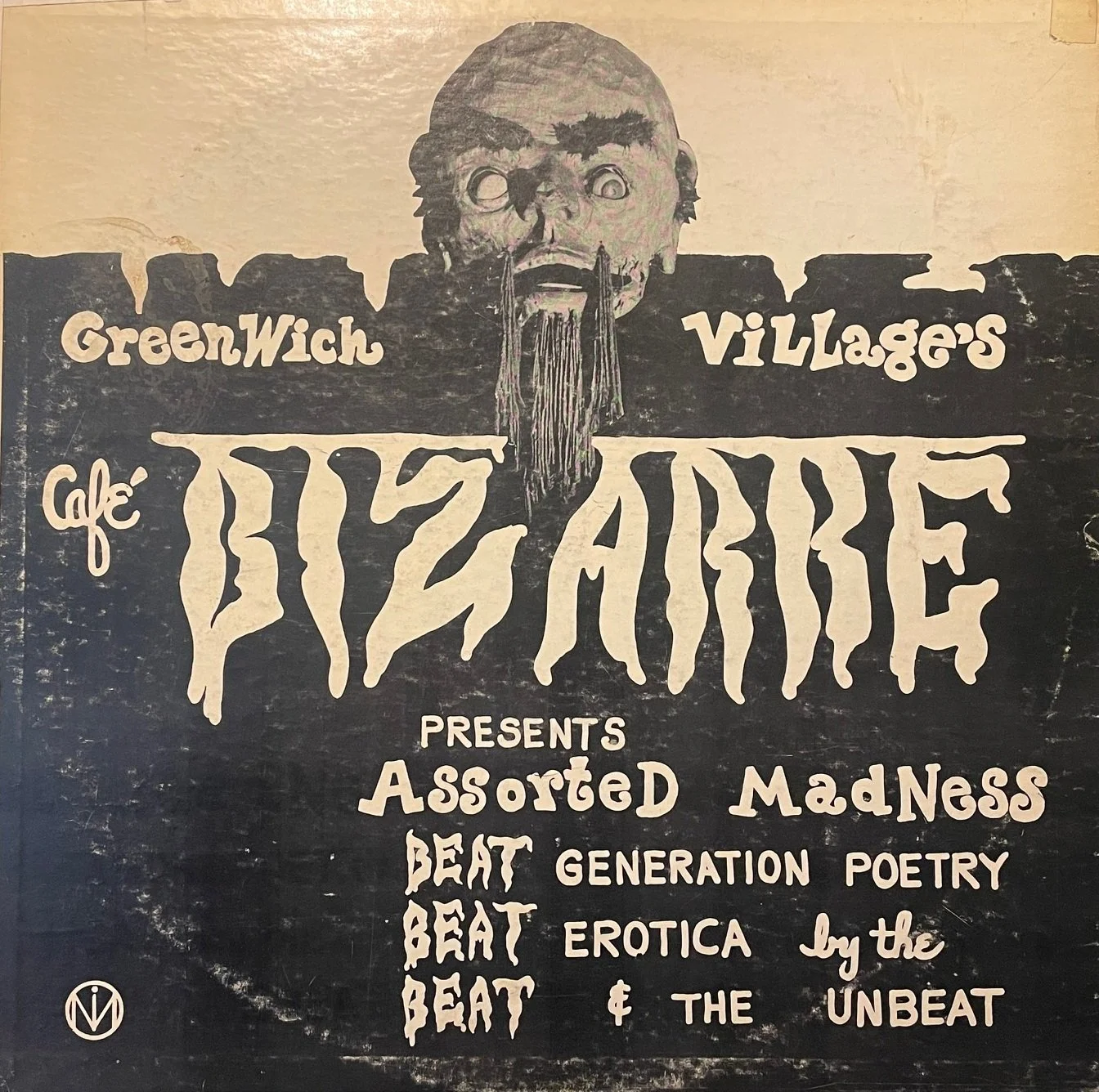
Album cover of recordings made at Greenwich Village’s Café Bizarre, a popular coffeehouse and hang-out spot for beat poets including Jack Kerouac and Allen Ginsberg in the 1950s and 60s. (Photo by Michael Simon/A. Lanset Collection).
WNYC also documented the broader literary world through its coverage of major cultural events. Between 1956 and 1966 the station broadcast at least six of the National Book Award ceremonies, which included a category for poetry. Listeners heard from Robert Penn Warren, Alan Duggan, Randall Jarrell, James Dickey and on behalf of Theodore Roethke, Stanley Kunitz. Here is W.H. Auden from February 8, 1956, accepting for The Shield of Achilles.
Over the decades, the weekly Cooper Union Forum broadcasts also featured numerous poetry related programs. Poet John Ciardi appeared on five occasions between 1958 and 1971 at the school’s Great Hall. Listeners also heard from other poets including Marianne Moore in a talk, Poetry, Soul of the People, and Barry Wallerstein as part of series called Poetry for Everyman.
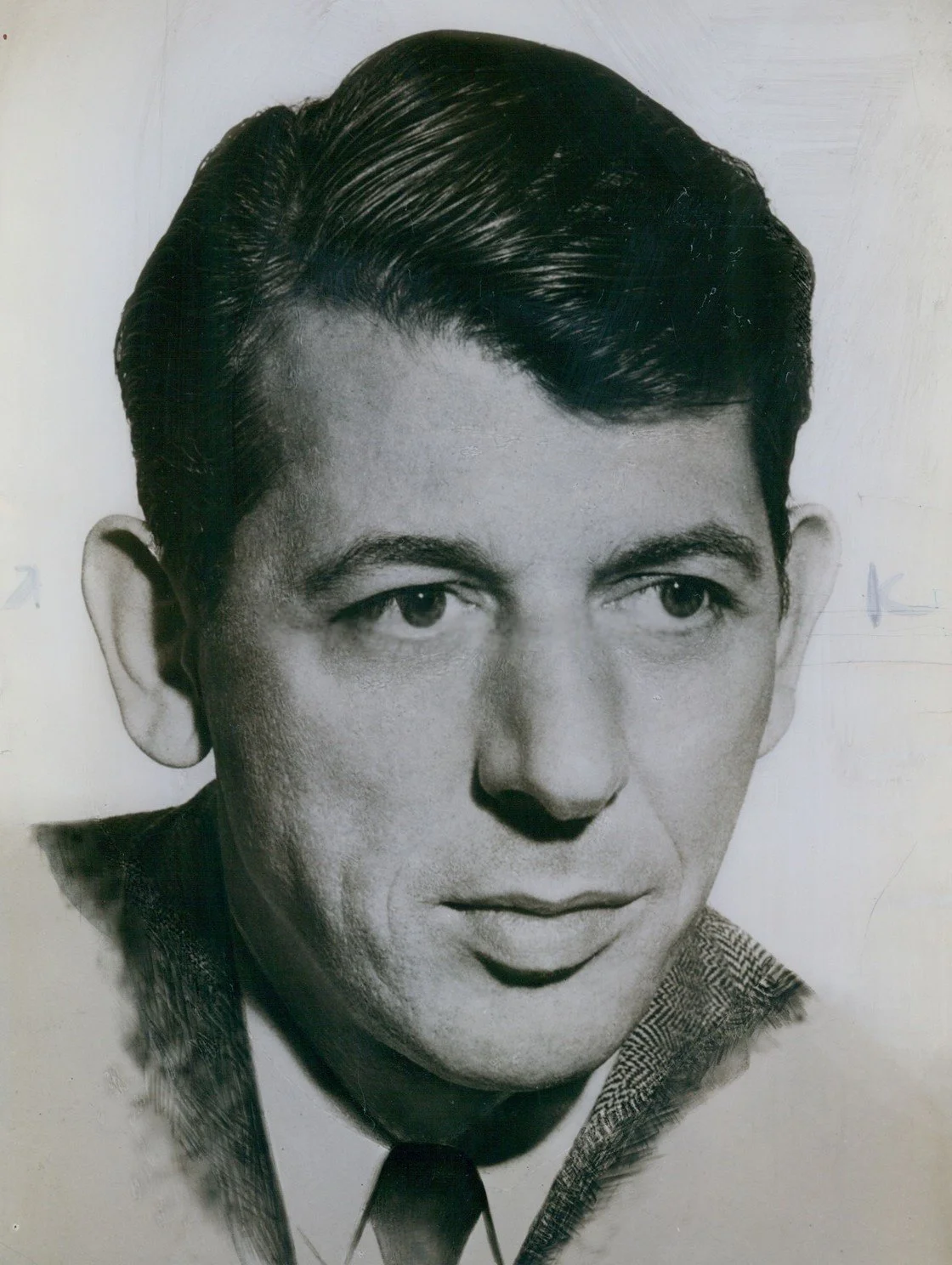
Poet John Ciardi in 1961 in a CBS publicity photo/Wikimedia Commons.
Aaron Kramer and Spoken Words
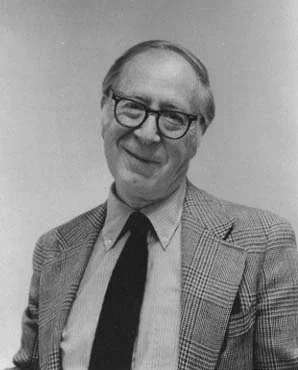
Portrait of Aaron Kramer around the time he did programming for WNYC. /Author publicity photo.
One of the most sustained poetry presences on WNYC came with poet, translator, and professor Aaron Kramer. Beginning in 1962 and continuing for twenty years, Kramer hosted Spoken Words. An English professor at Dowling College and a leading advocate of the “poetry as therapy” movement, Kramer brought a wide range of verse to listeners.
His programs included readings of major English and American poets, explorations of the poetry of the 1930s, tributes to World War II poets, and thematic broadcasts such as American protest poetry. On November 19, 1967—the eightieth anniversary of Emma Lazarus’s death—Kramer reflects on Lazarus and reads from her work, demonstrating a thoughtful and accessible approach that defined the series.
Avant-Garde Voices, Geography and Applications to Life
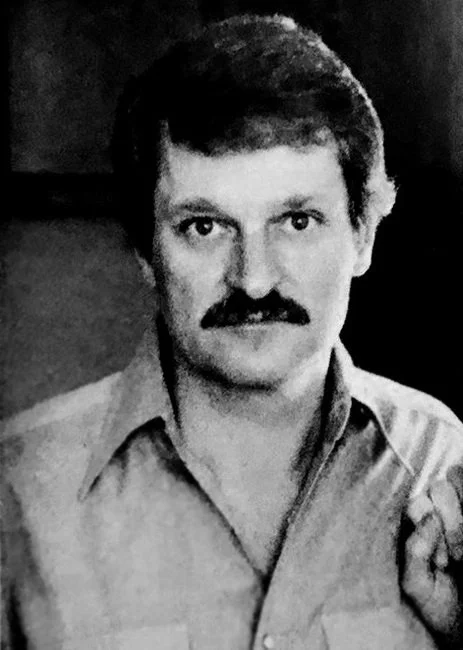
Portrait of poet John Ashbery circa 1974-1975/Wikimedia Commons.
WNYC also gave airtime to emerging experimental voices. In 1966 and 1967 Michael Silverton hosted Poetry of the Avant-Garde, a series of interviews with contemporary poets including Ted Berrigan, John Ceravolo, Michael Benedikt, Jerome Rothenberg, Peter Schjeldahl, Kathy Fraser, Aram Saroyan, and Lorenzo Thomas. Here, Silverton speaks with poet John Ashbery.
In 1968 poet and editor William Packard moderated a broadcast titled Is There a New York Poet?, examining how the city’s energy and diversity influenced contemporary verse. Joining Packard were poets Stephen Stepanchev and Norman Rosten in a lively discussion about geography and verse.
Publicity photo of poet William Packard/WNYC Archive Collections
Poetry programming continued to evolve. In 1975, WNYC-FM partnered with The New School to launch The Logic of Poetry, a weekly series encouraging listeners to engage with poetry as a living, accessible language rather than an academic exercise. Hosts Richard Monaco and John Briggs took listeners on an extensive tour that covered poetry’s relationship to sculpture, William Blake’s The Tiger, poetry and impressionist art, Russian poet Anna Akhmatova, Japanese poetry, Wallace Steven’s The Emperor of Ice Cream, the poetry of dreams, poetry and psychoanalysis, Anne Sexton’s The Moss of His Skin and many other poems and poetry topics. Here John Briggs speaks with photographer John Fay about poetry and photography.
And, as previously mentioned, Aaron Kramer’s Spoken Words continued into the 1980s with The Poet’s Voice as the leading poetry series on WNYC in the 1990s.
Conclusion
Across nearly seven decades of municipal ownership, WNYC created one of the most extensive records of poetry broadcasting in American radio. Educational lectures, studio readings, literary festivals, and interviews brought poets of many traditions to the microphone, reflecting the changing literary life of the city itself. Established figures such as Robert Frost and Marianne Moore shared the airwaves—sometimes directly, sometimes across decades—with Beat writers, experimental poets, and academic critics. The station’s microphones captured not only individual readings but also conversations about what poetry meant in different moments of American cultural life.
In doing so, the station demonstrated something radio had always made possible: poetry heard aloud could reach audiences far beyond the page. Through its broadcasts—many now preserved at the New York City Municipal Archives and WNYC Archives—the city’s radio station carried the voices of poets across New York and beyond, reminding listeners that verse has always belonged as much to the ear as to the printed page.