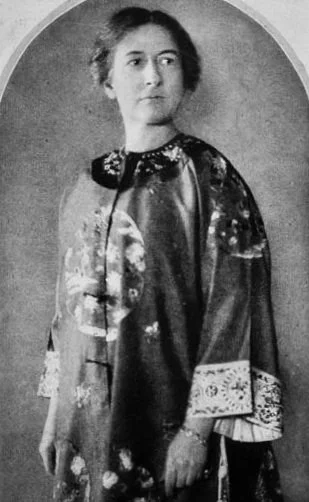
Harriet Monroe, founder and editor of Poetry magazine, in 1920. Wikimedia Commons.
During the seven decades of municipal ownership, both celebrated and obscure poets found their way to WNYC’s microphone. Some programs introduced listeners to canonical voices such as Robert Frost, Marianne Moore, and W.H. Auden. Others opened the airwaves to aspiring writers who might otherwise never have been heard beyond their own neighborhoods. Still others explored the relationship between poetry and radio itself, asking whether the medium might reshape how verse was written, performed, and experienced.
The result was an extraordinary range of programming: educational broadcasts from the station’s early Air College lectures; dedicated poetry series and readings; experimental verse drama; tributes to major poets; and discussions linking poetry to theater, politics, therapy, and everyday life. Together these broadcasts reveal how a municipal station—often overlooked in the larger history of American radio—played a meaningful role in sustaining the oral tradition of poetry.
The Air College Era & City Schools
In April 1930, Harriet Monroe—the formidable founder and editor of Poetry magazine—voiced a complaint about the still-new medium of radio. After a decade of broadcasting in the United States, she wrote, the American airwaves seemed curiously silent when it came to serious literary voices. In England, listeners regularly heard writers such as George Bernard Shaw, H.G. Wells, Virginia Woolf, T.S. Eliot, and John Masefield speaking over the BBC. In the United States, Monroe observed, comparable literary figures were largely absent.
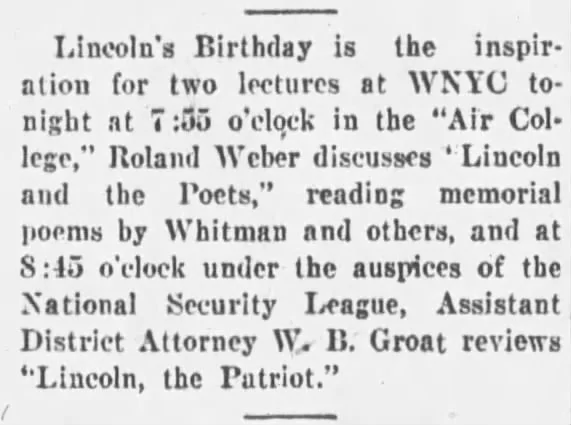
News clipping from The Brooklyn Citizen, February 12, 1929.
Her criticism, published in Poetry, drew an immediate response from New York. Roland V. Weber, announcer and director of the Lecture Bureau at the city’s municipal station WNYC, wrote to challenge Monroe’s claim. Serious poetry, he insisted, had already found its way to radio audiences. Over the previous two and a half years he had introduced listeners—on several New York stations, including WNYC—to a substantial body of both classic and modern verse. Station managers, Weber argued, were more receptive than Monroe suggested, and audiences more responsive.
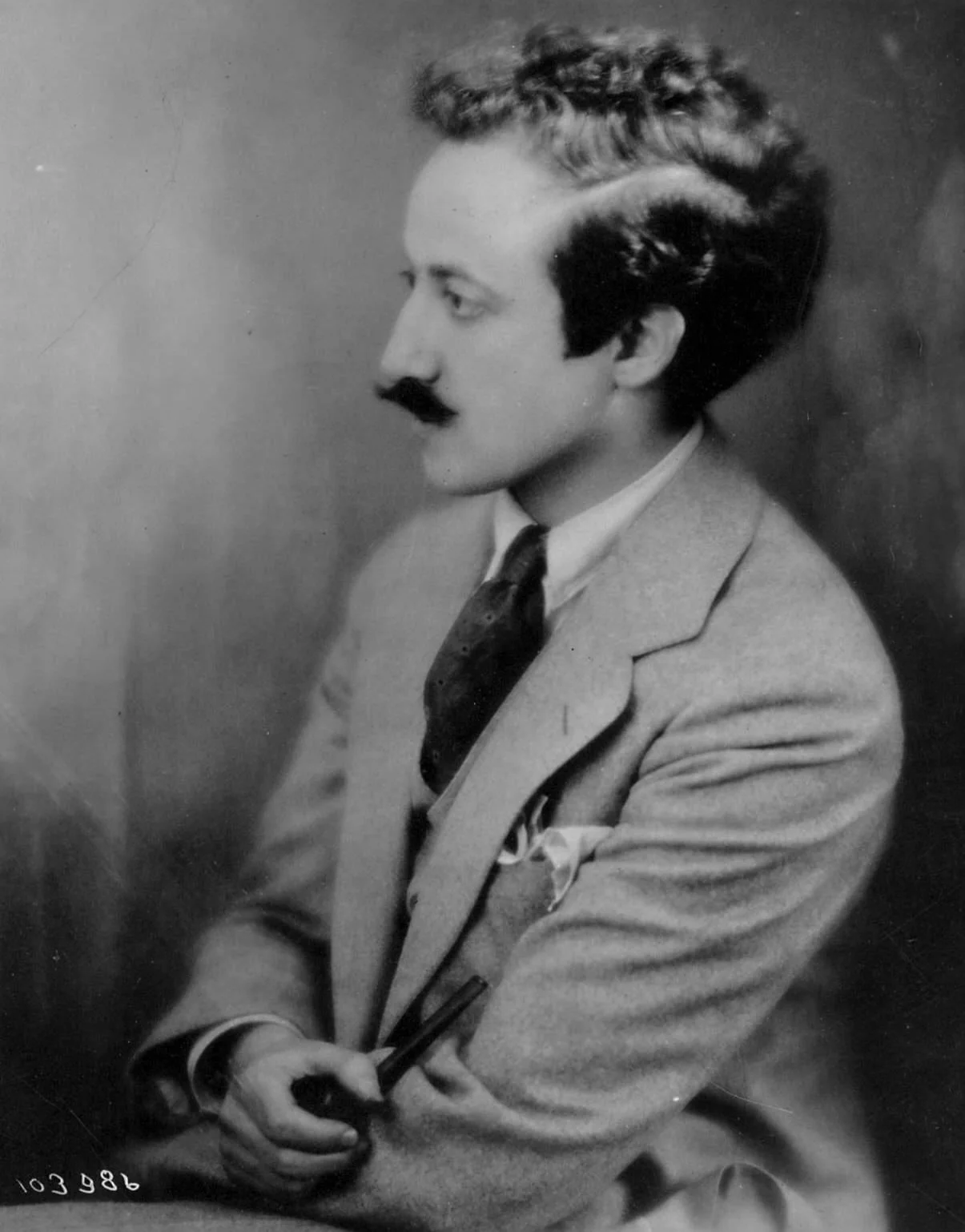
Joseph Auslander, U.S. Poet Laureate. Library of Congress.
The exchange highlighted an important question about radio history: could poetry truly find an audience on American radio, where commercial interests dominated broadcasting, unlike the United Kingdom where public broadcasting took the lead? For many observers the answer seemed doubtful. Radio, they believed, was better suited to music, news, or popular entertainment than to the concentrated language of verse.
As a non-commercial municipal station, however, WNYC was uniquely positioned to elevate cultural standards without the constraints of sponsorship. Through its Air College programming—developed with the City University of New York and other institutions beginning in 1927—the station offered lectures and courses that regularly featured poetry. These broadcasts included a wide range of works from Emily Dickinson and Edwin Arlington Robinson to Carl Sandburg and Hart Crane. Newspaper listings are unclear about whether the future U.S. Poet Laureate Joseph Auslander’s May 27, 1927, studio appearance was part of the Air College series, though it is likely.
Another Air College presenter was Dr. Mary McGovern, whose regular program series—Masters of Poetry, Poetry as a Mental Investment, and Applied Psychology of Poetry—were praised in the press for their clarity and delivery.
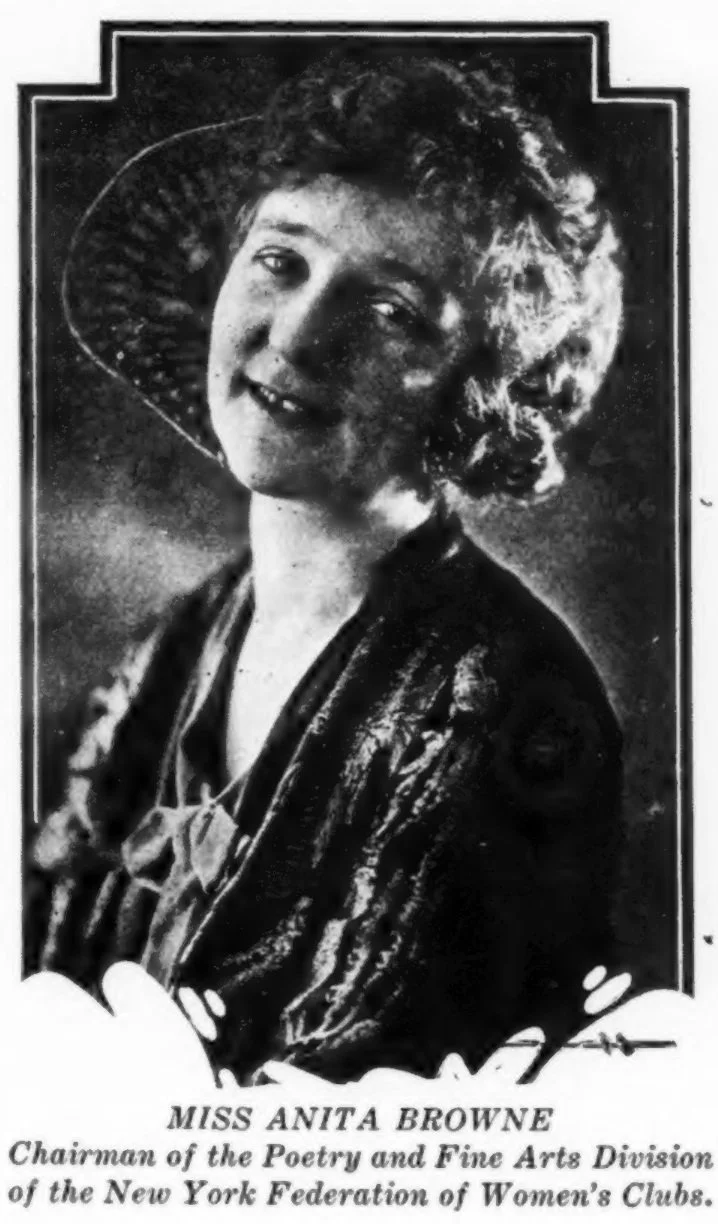
Anita Browne from National Magazine, an illustrated monthly, July 1928.
WNYC’s Air College reflected a broader national movement beginning in the 1920s that viewed radio as a potential “university of the air.” Universities and college stations experimented with a broad range of educational lectures. Within this context, poetry became one of the many subjects introduced to listeners through the new medium. These educational institutions also exchanged ideas through the Association of College and University Broadcasting Stations, which by the 1930s became the National Association of Educational Broadcasters or NAEB. WNYC became an active member in 1938.
While few recordings from this era survive, one related Air College clip remains: Dr. Alan Marshall on teaching poetry to children in 1931.
In June 1934, Anita Browne launched Poetry with Anita Browne, a weekly program that ran for three years. Browne—founder of Poetry Week and director of the National Poetry Center at Rockefeller Center—helped solidify poetry’s presence on the municipal airwaves
Running concurrently with Browne’s program was Edward Leahy’s The Poet’s Friend, which aired into 1937. Little documentation survives beyond radio listings, leaving its format largely unknown. That year WNYC broadcast programs created by and for New York City public schools. One seven-week series—originating from a studio at Brooklyn Technical High School—featured adaptations of plays, poetry readings, and songs performed by students.
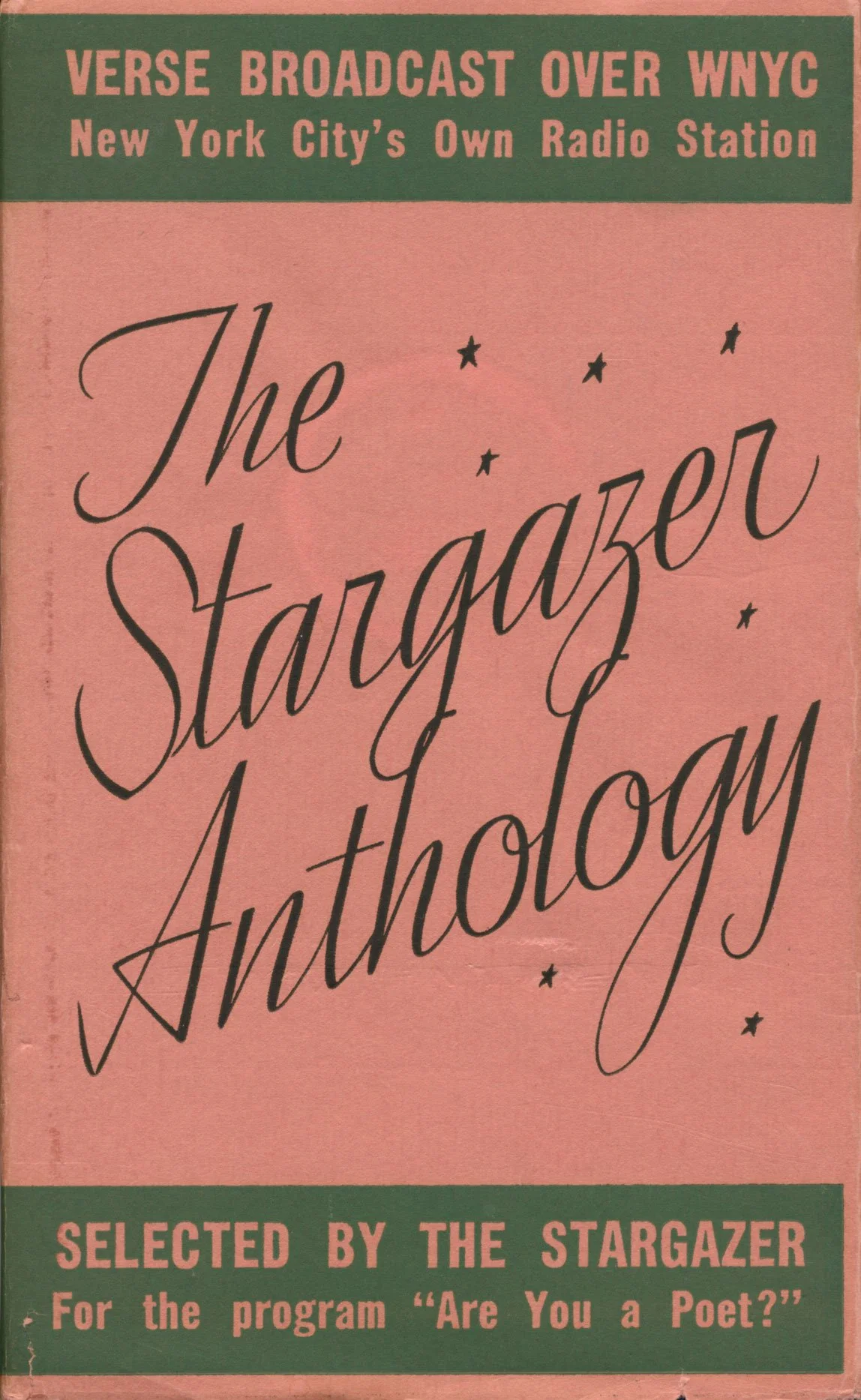
Cover of the 1946 book based on the Are You a Poet segment of WNYC’s Star Gazer poetry program. (A. Lanset collection)
Listener Poetry and Popular Participation
1937 also saw announcer George Ward launching Melody and Rhyme, a program that would run for nearly a decade. The Sunday morning show—renamed The Star Gazer—combined poetry with recorded musical accompaniment. According to Milton Allen Kaplan’s 1949 study Radio and Poetry, Ward carefully structured the forty-five-minute program to alternate between poems and music, selecting works that were clear, accessible, and often sentimental. Edgar A. Guest— “the people’s poet”—was a frequent favorite, though Ward also included the work of Shakespeare, Keats, and Frost.
Ward expanded the program by actively soliciting poems from listeners through the recurring Are You a Poet? segment. Hundreds of submissions were broadcast each year, turning WNYC into an early platform for amateur literary culture. In 1946, Ward edited a volume drawn from these listener contributions.
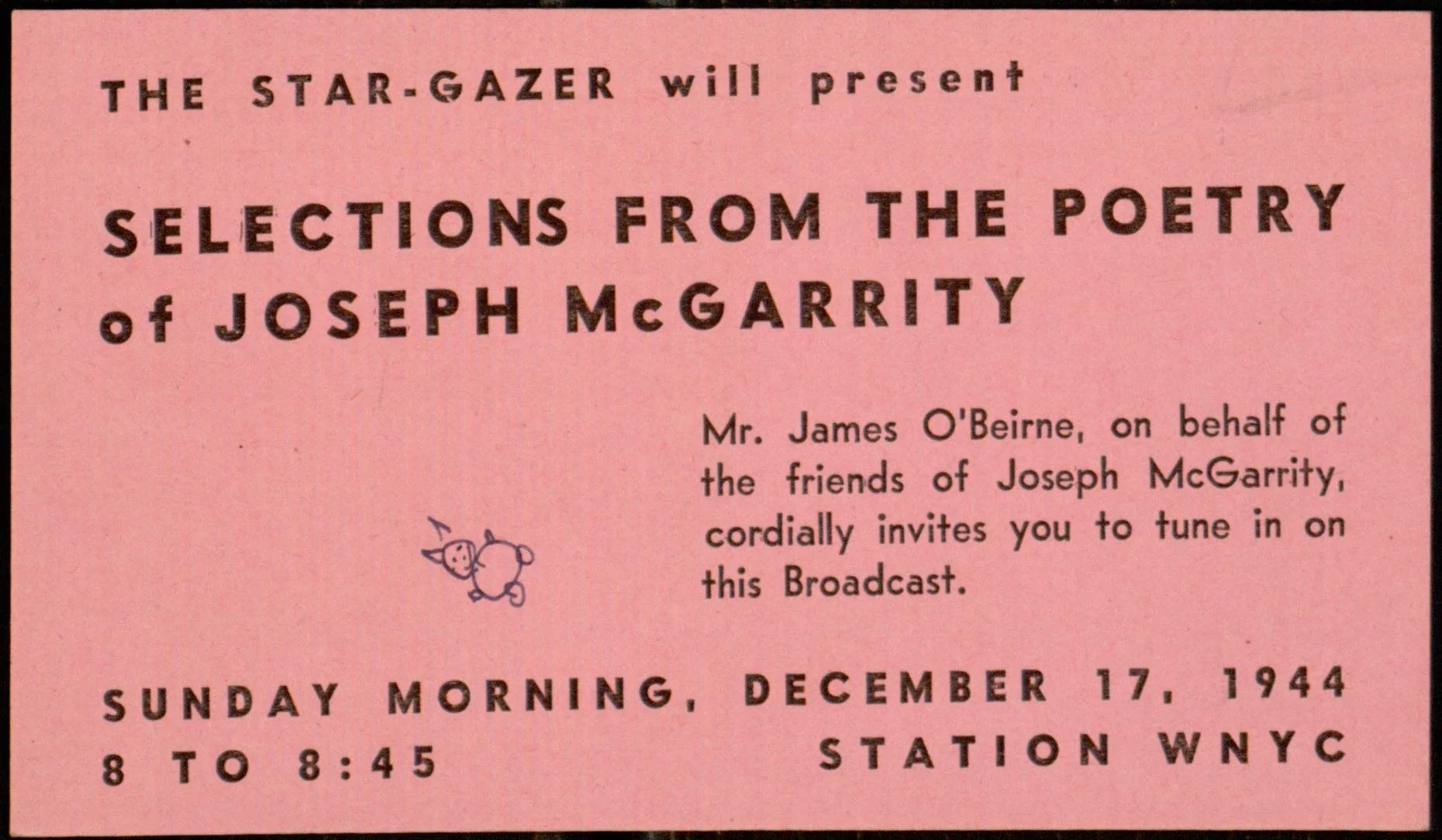
Postcard for Star Gazer episode in 1944. WNYC Archive Collections.
The only surviving broadcast is the program’s last, a memorial to George Ward hosted by station director Seymour Siegel in 1947 with radio pioneer Ted Malone, heard nationally over NBC, reading some of Ward’s poetry.
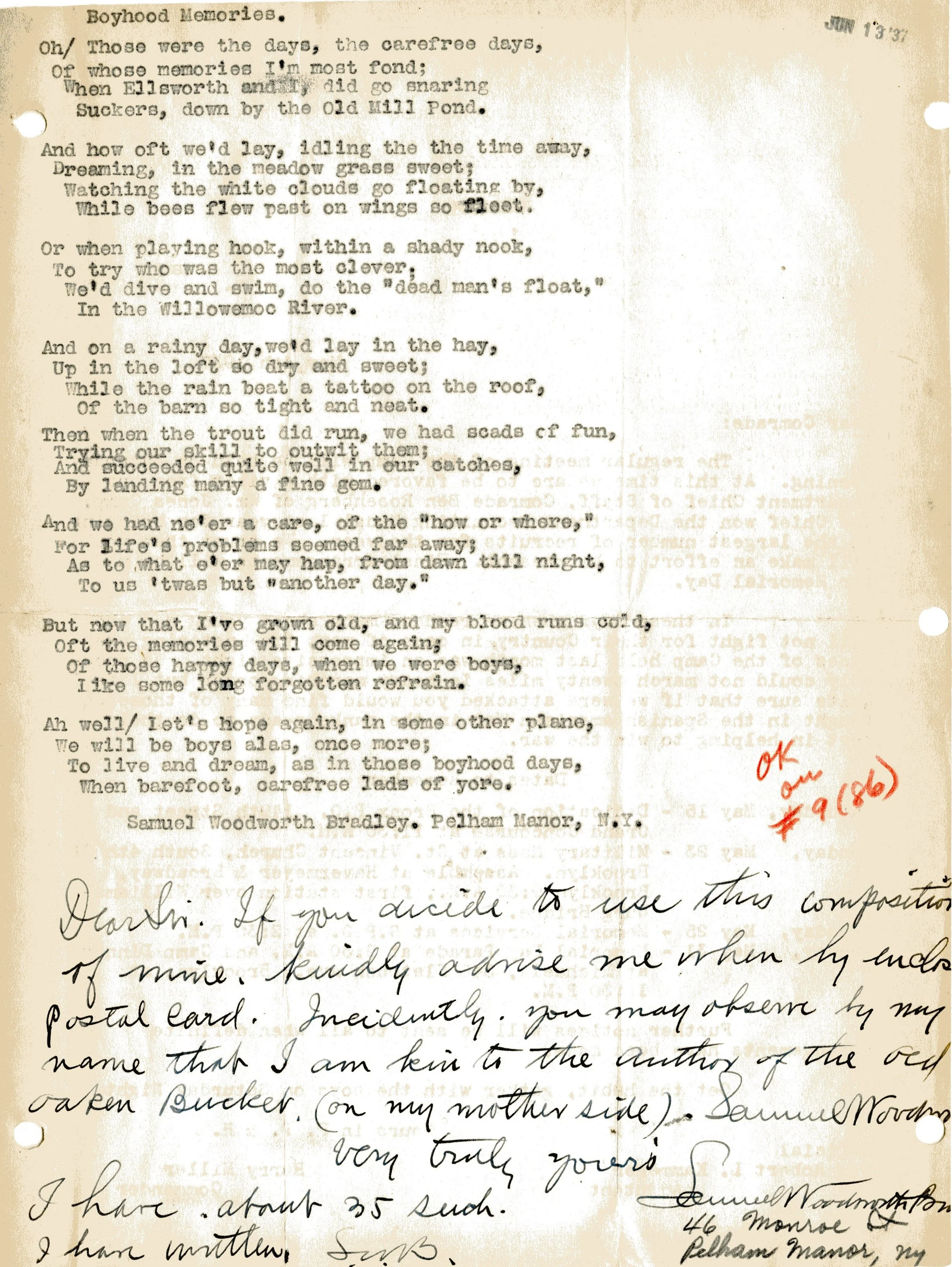
Boyhood Memories by Samuel Woodworth Bradley, a descendent of the poet Samuel Woodworth. (WNYC Archive Collections)
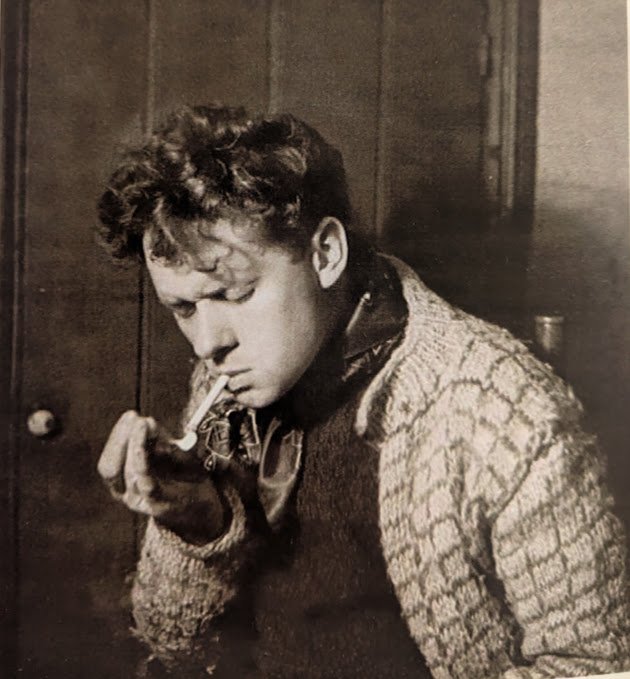
Nora Summer’s iconic 1937 portrait of Dylan Thomas/Wikimedia Commons
Another 1937 program encouraging listener poetry submissions was, Whisperings and Musings. A press release described the thirty-minute Sunday morning slot as “especially conceived for the entertainment of shut-ins,” with poetry, music and “a word of cheer.” Surviving only is a fan mail folder of cards and letters including this one from Samuel Woodworth Bradley, a descendant of the poet Samuel Woodworth.
When Reader’s Almanac launched in 1938 (it continued through the mid-1980s) the program focused on all genres of literature. Poetry, however, was never neglected on the Peabody award-winning program. Over the decades many notable poets appeared, including W.H. Auden; Marianne Moore; Samuel Menashe; John Ashbery; William Packard; Robert Frost, May Sarton; Archibald MacLeish and others. Here listeners can hear the distinctive voice of Welsh poet Dylan Thomas, whose dramatic reading style helped redefine how poetry came across on radio.
Experimental Radio Verse
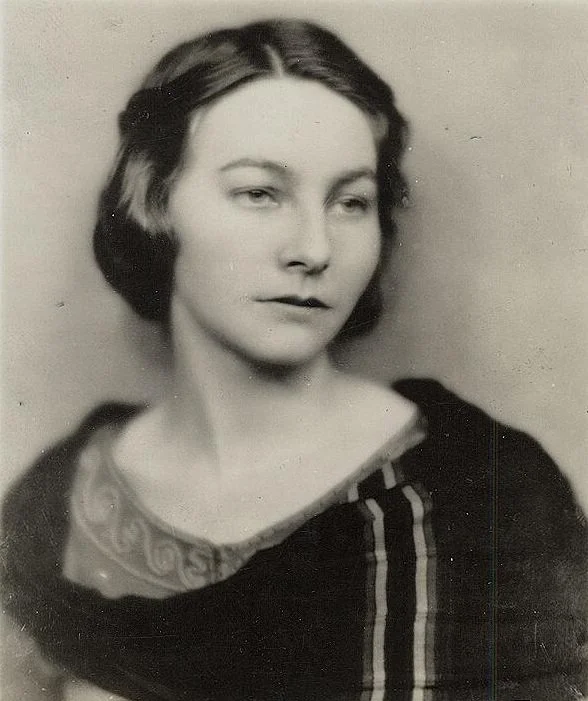
Portrait of Genevieve Taggard by Nickolas Muray (1926) NEA Press/Publicity Photo distributed nationally to newspapers. (Newspaper Enterprise Association)
In the spring of 1939, poet and Emily Dickinson biographer Genevieve Taggard hosted a series of alternate Sunday broadcasts devoted to reading and discussing modern poetry. Taggard viewed radio not merely as a venue for poetry but as a medium capable of reshaping the art itself.
In surviving scripts she suggested that poetry might eventually be written specifically for radio, imagining a time when poems would be heard in daily life rather than encountered primarily in books or classrooms. Radio, she argued, could return poetry to its older oral tradition.
Taggard described WNYC as a force that “holds the great city of New York together by a million vibrating lines,” adding that poets were entering radio studios to learn how to write for “the ears of millions.” In her view the medium offered a way to escape “the prison of the printed page” and revive the traditions of ballads and troubadours.
At the same time she acknowledged that poetry had not yet fully adapted to broadcasting. “Poetry has not yet tuned itself” to radio, she admitted. Some of her programs experimented with forms designed for the medium, including what she called a “mass-chant.” At a time when most poets still wrote primarily for print, Taggard’s broadcasts were strikingly forward-looking.
Wartime and Postwar Broadcasting
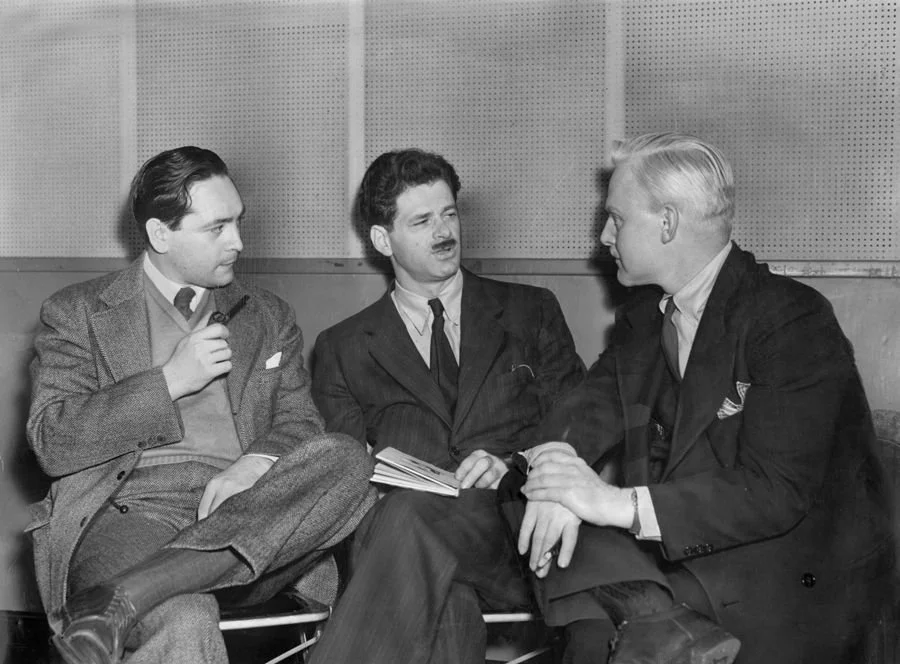
May 15, 1942: “Now under way at WNYC is a series of revivals of the works of Norman Corwin. Here are Mitchell Grayson, director: Mr. Corwin and House Jameson, actor, talking it over.” Photo Courtesy of The New York Times.
Poetic drama also found a home on radio in the mid-1930s. Archibald MacLeish’s The Fall of the City (1937) and Alfred Kreymborg’s The Planets (1938) helped establish the genre. WNYC contributed to the pioneering effort by airing the original poetic radio plays of Sidney Alexander: The Hawk and the Flesh (1939), about the struggle against fascism in Spain, and Where Jonathan Came (1940), based on the Salem witchcraft trials.
However, the undisputed master of the radio play in verse was Norman Corwin. After early success at WQXR, Corwin moved to CBS, where his poetic radio dramas became national sensations. WNYC responded in 1942 by producing The Corwin Cycle, a revival of his works originally broadcast on CBS’s 26 By Corwin. Directed by Corwin collaborator Joel O’Brien with assistance from WNYC drama director Mitchell Grayson, the series marked the first time a station devoted a sustained revival to a single radio writer. The production received honorable mention from Ohio State’s Institute for Education by Radio. Of the surviving broadcasts, Radio Primer is perhaps the most poetry rich.
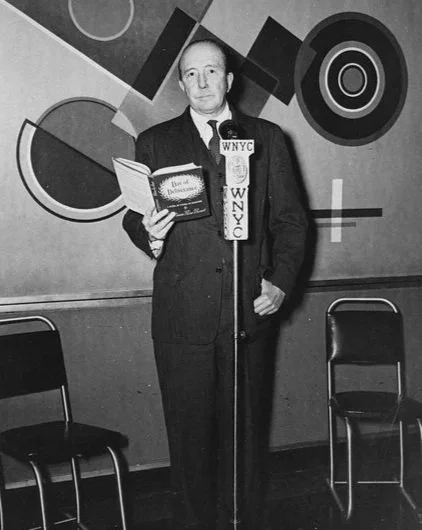
William Rose Benét at WNYC in front of Jon von Wicht’s WPA mural. Photo courtesy of Brooklyn Public Library, Center for Brooklyn History
Sadly, Archibald MacLeish would lament to Reader’s Almanac host Warren Bower seventeen years after Fall of the City, that American radio had largely abandoned verse drama. His most recent script, Trojan Horse, was totally ignored in the states while being produced and rerun by the BBC. The former Librarian of Congress seemed almost bitter saying, “radio with its free imagination, needing little production, mostly words, was God’s gift to the poets.”
During World War II the Brooklyn Public Library had a biweekly program on WNYC. On December 18, 1944, borough-born Pulitzer Prize-winning poet William Rose Benét appeared in Studio C to read from several of his works, including The Dust Which Is God, The Golden Fleece, and Day of Deliverance: A Book of Wartime Poems.
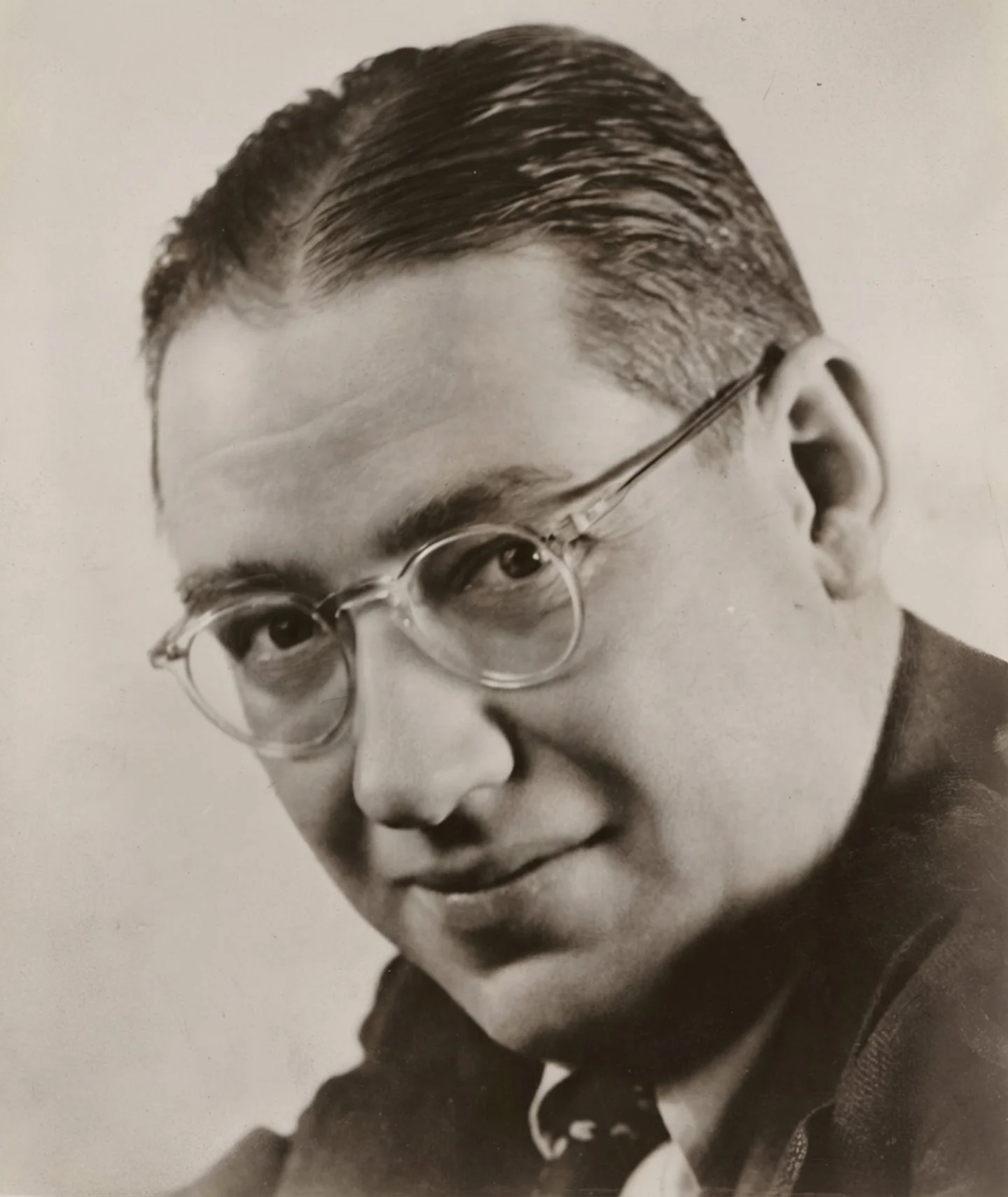
Ogden Nash author publicity photo/A. Lanset Collection.
After World War II, poetry remained a steady presence on WNYC. In October 1945 playwright Tennessee Williams joined theater historian and critic George Freedley to discuss the role of poetry in modern theater. Another WNYC platform for literary figures was The New York Herald Tribune Book and Author Luncheon series where listeners largely heard from fiction and non-fiction writers with an occasional poet like Ogden Nash. Here, he demonstrates a wit and conversational tone that made his verse a favorite with audiences.
The Queens College Forum began in 1947 with an attempt to make some sense of poetry in post-war America. Three English professors debated the merits of experimentation and departures from tradition in a scripted roundtable discussion.
Beginning in July 1948, poet, broadcaster, editor, and businessman A.M. Sullivan hosted The Poet Speaks. Sullivan had earlier been heard on The New Poetry Hour on WOR and the Mutual Network from 1932 to 1940. The WNYC program followed a similar format, combining poetry readings with discussion. In one surviving broadcast from December 17, 1948, Sullivan explored what he considered the perfect “mood poem,” Matthew Arnold’s Dover Beach, before introducing poet and critic Shaemas O’Sheel.
Meanwhile another WNYC series, Remembered Words, hosted by David Allen from 1949 to 1952, offered thoughtful readings of major poets. In October 1950, following the death of Edna St. Vincent Millay, Allen devoted a broadcast to her work, reading Renascence, Dirge Without Music, and other poems with musical accompaniment. Variety praised the program as “a fine tribute,” noting Allen’s restrained style and careful attention to the meaning of each line.
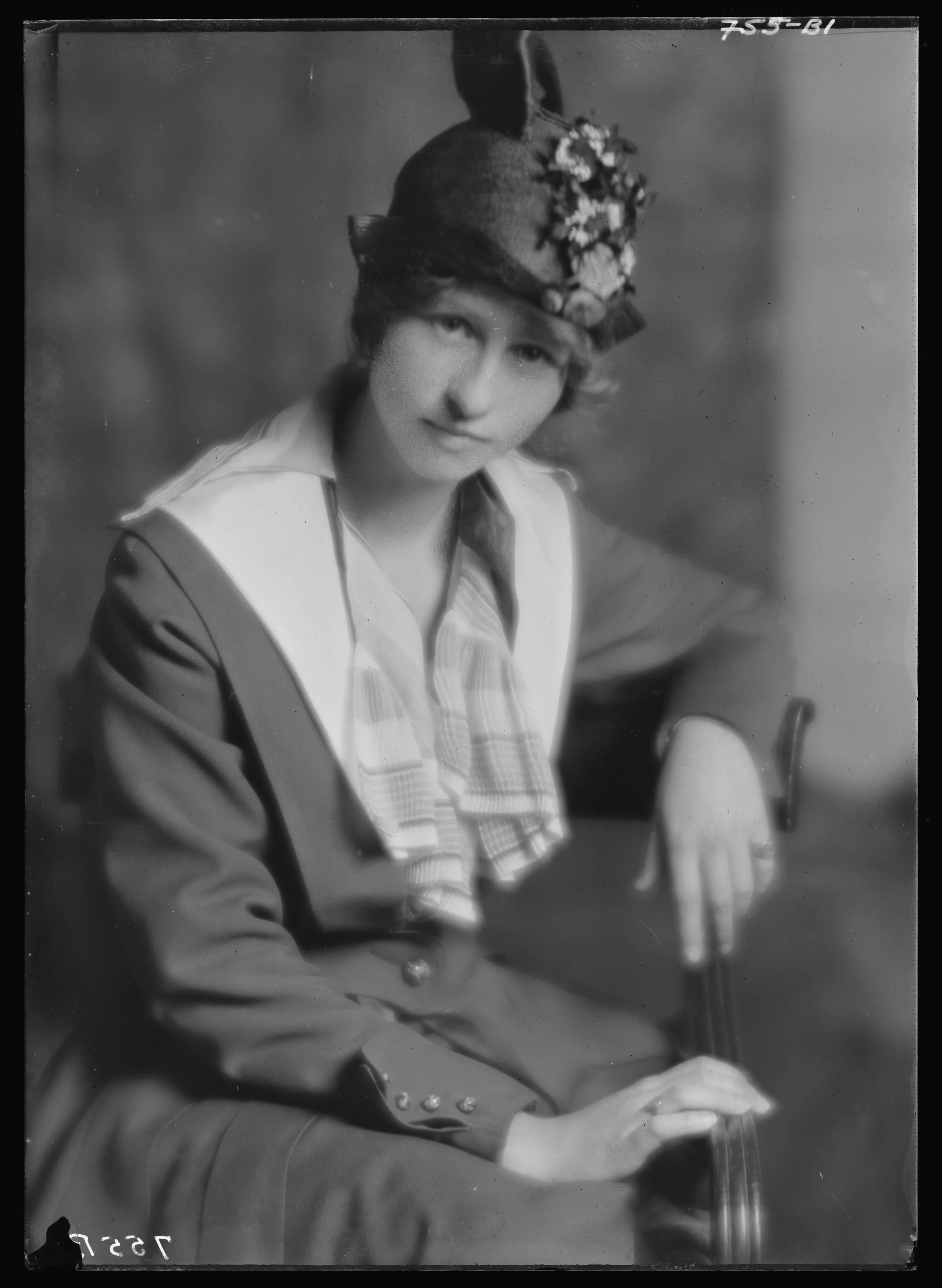
Portrait of Edna St. Vincent Millay by Arnold Genthe/Library of Congress.
By the end of the 1940s, poetry had become a familiar presence on WNYC. What began in the late 1920s as academic lectures and holiday recitations had expanded into a diverse range of broadcasts: readings by major poets, panel discussions, listener-submitted verse, and even experiments in poetic drama.
The station’s noncommercial mission allowed it to cultivate voices that might otherwise have been absent from American radio. Programs such as The Star Gazer, Reader’s Almanac, and Remembered Words brought poetry directly into listeners’ homes, while Genevieve Taggard and the celebration of Norman Corwin’s work explored the creative possibilities radio offered.
By mid-century, WNYC had already demonstrated that poetry could thrive on the airwaves. Yet the decades ahead would introduce new literary movements, new technologies, and new audiences that would continue to reshape how poetry was presented on the station.
Next week the story of poetry on New York City’s municipal station begins in the 1950s, as postwar literary culture—and radio itself—entered a period of expansion and change with the growth of FM.