The New York Parental School for “truant” boys opened in 1909 in Flushing, Queens on what is now the Queens College campus. The stated goal of the boarding school was to provide structure, discipline, and industrial training. It was supposed to be a model of progressive reform, but just twenty-five years after it opened, a Brooklyn Daily Eagle headline blared: “Terror Reign Revealed by School Jury.” What went wrong?
Hand-tinted lantern slide showing the three original cottages of the New York Parental School, ca. 1909. BPQ_ls_157: Borough President Queens Collection, NYC Municipal Archives.
A Progressive Ideal
In 1907, New York City purchased the Kane and Wright Manure Farm in Flushing, Queens in order to provide relief to “the present congested truant schools.” Prolific architect and Superintendent of School Buildings Charles B.J. Snyder, responsible for more than 400 iconic schools, designed a campus of buildings in the Spanish Mission style. The 1906-07 Annual Report of the Board of Education stated that: “The New Parental School farm is located in the Borough of Queens on the road leading from Flushing to Jamaica. The farm consists of about 107 acres of rolling land in a superb location about one mile from Flushing, from which all the buildings can be seen.” The report had progressive hopes for the institution:
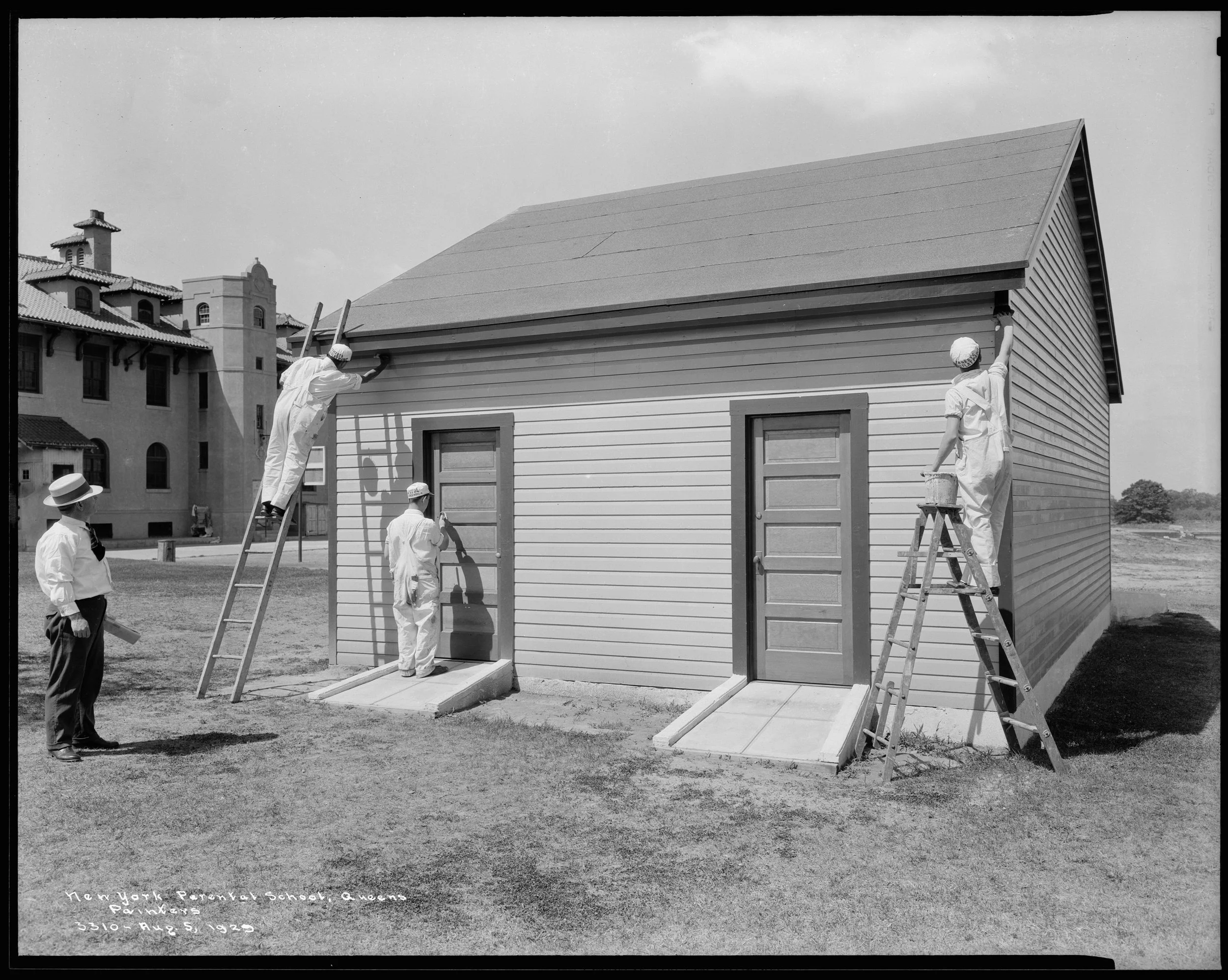
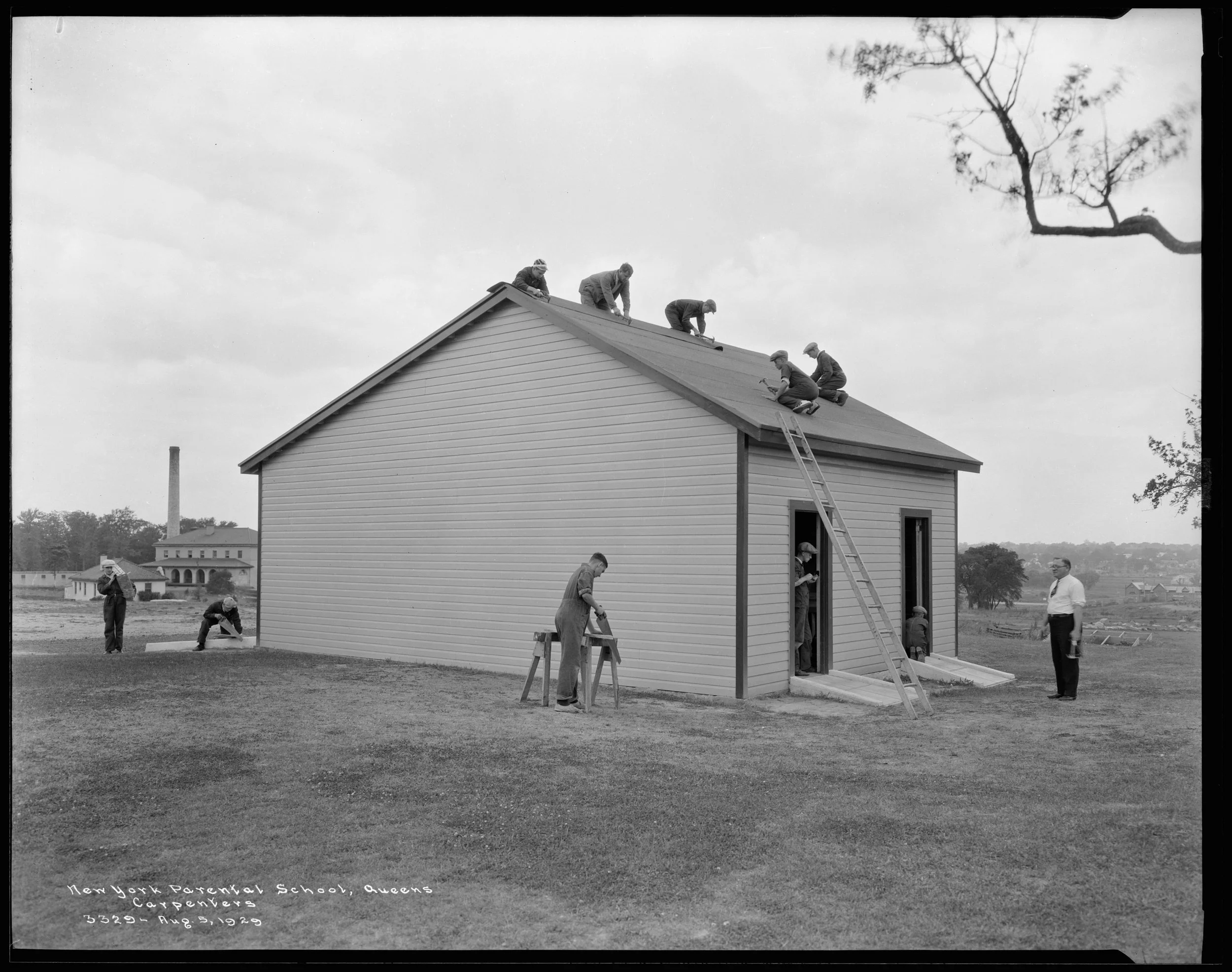
“These boys will have advantages for obtaining an education which shall be equal to those offered in any public school in New York, and the teachers to be engaged shall be the best in their line. Industrial education will be a special feature. Agriculture and horticulture will be taught as well as manual training and the elements of some trades, which we shall teach in our well-equipped shops. The boy who is tending toward criminality and indolence from habits of truancy, will be shown the path to upright citizenship and industry.” (p. 341-343)
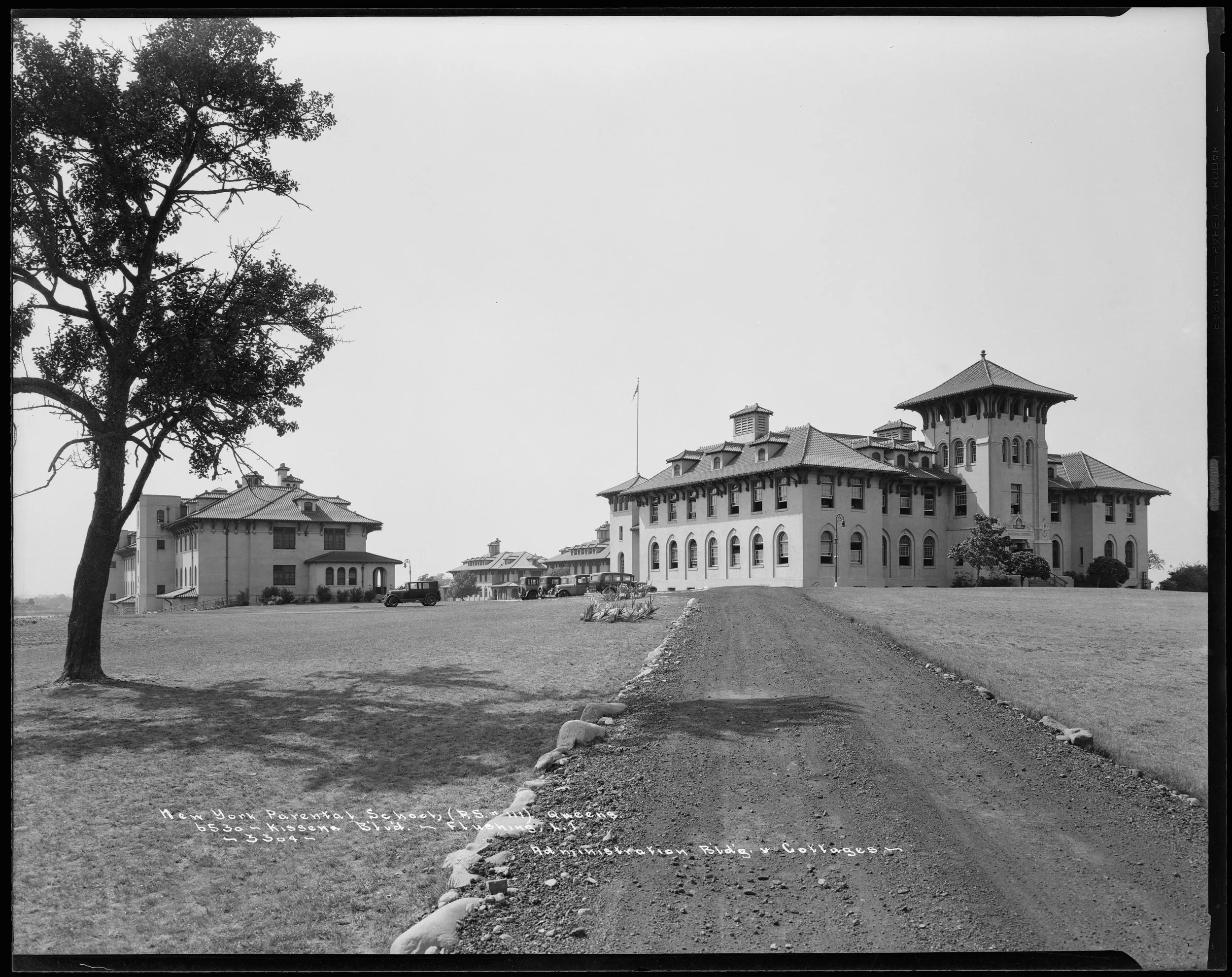
New York Parental School, Queens, Administration Building, August 5, 1929. Board of Education Collection, NYC Municipal Archives.
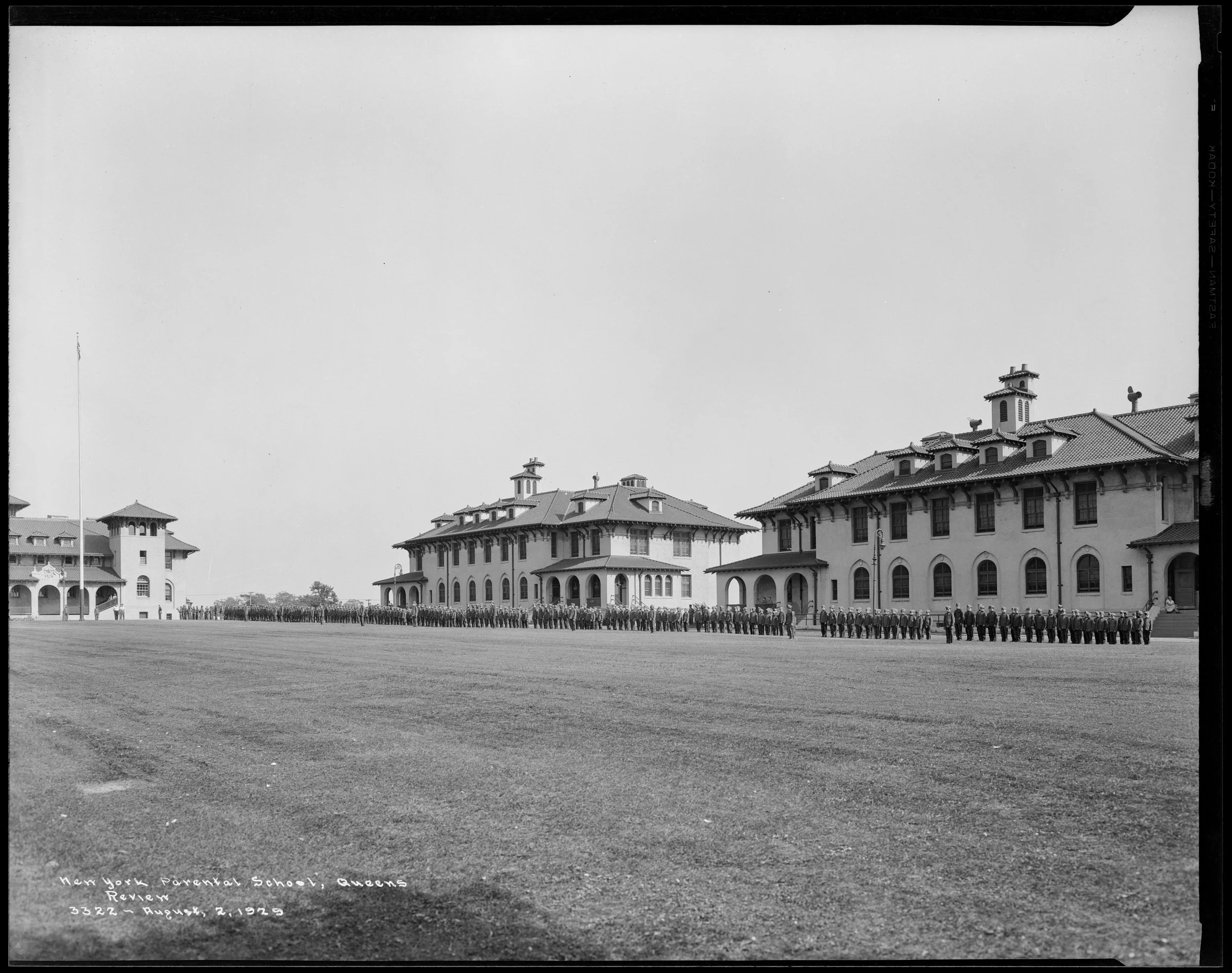
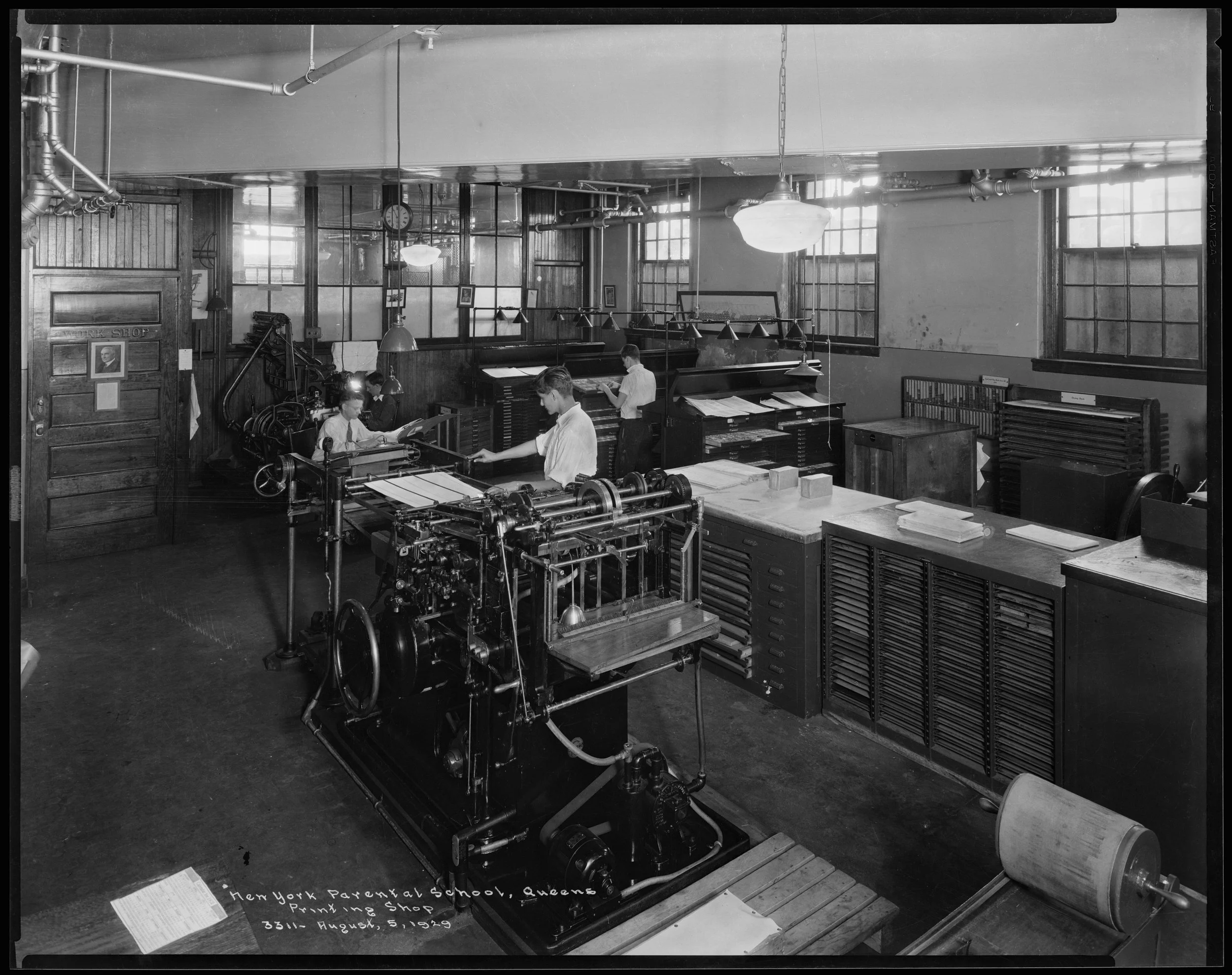
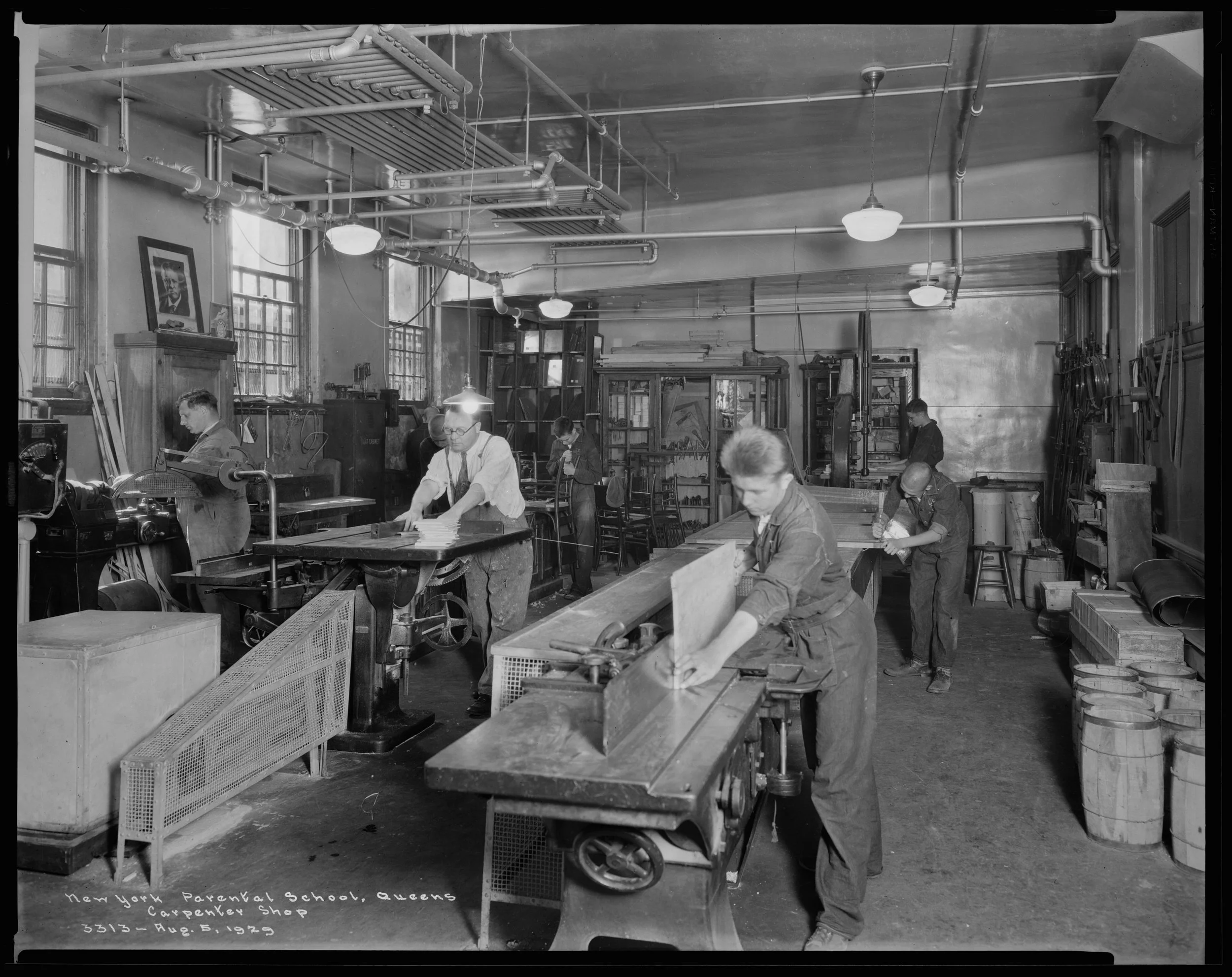
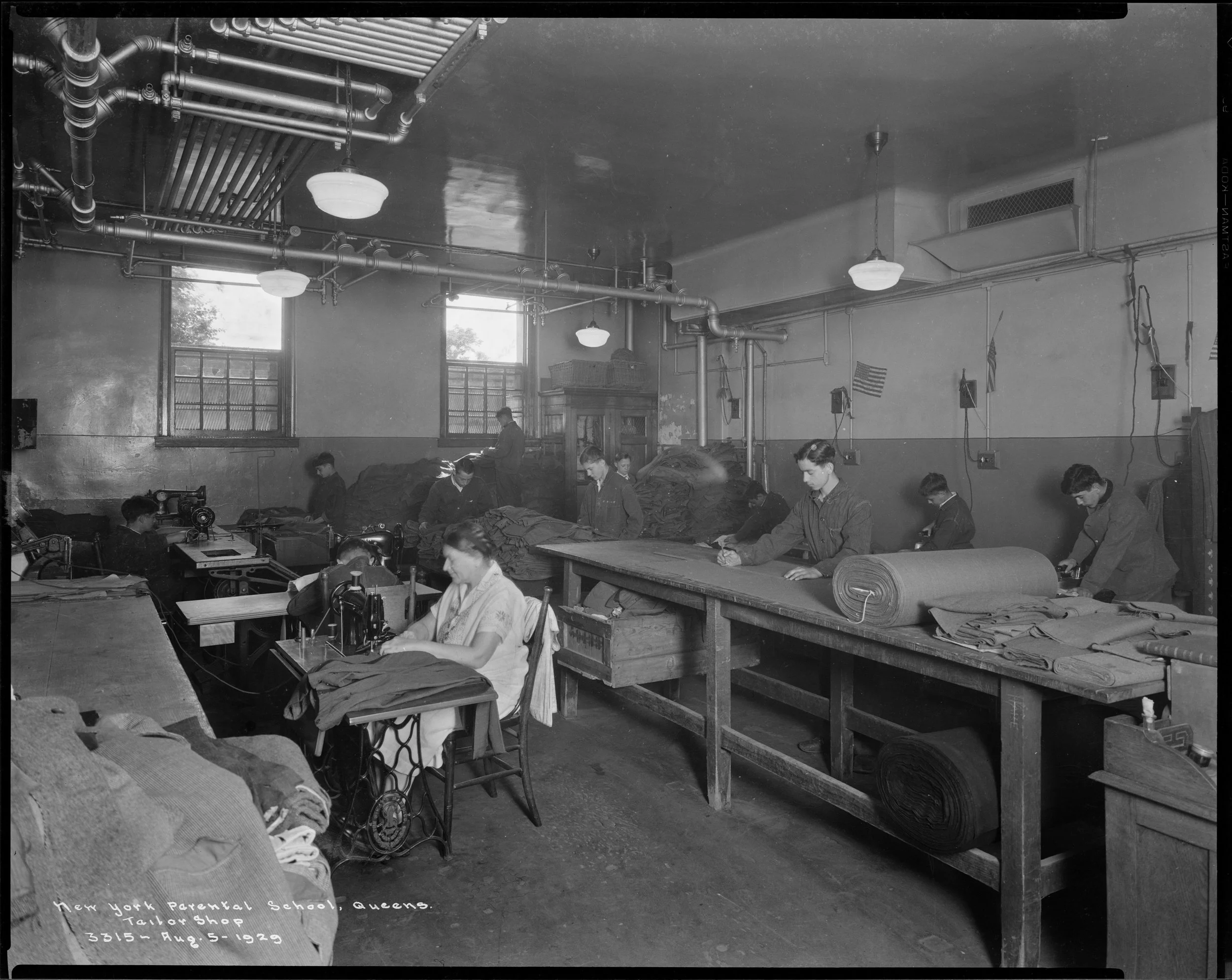
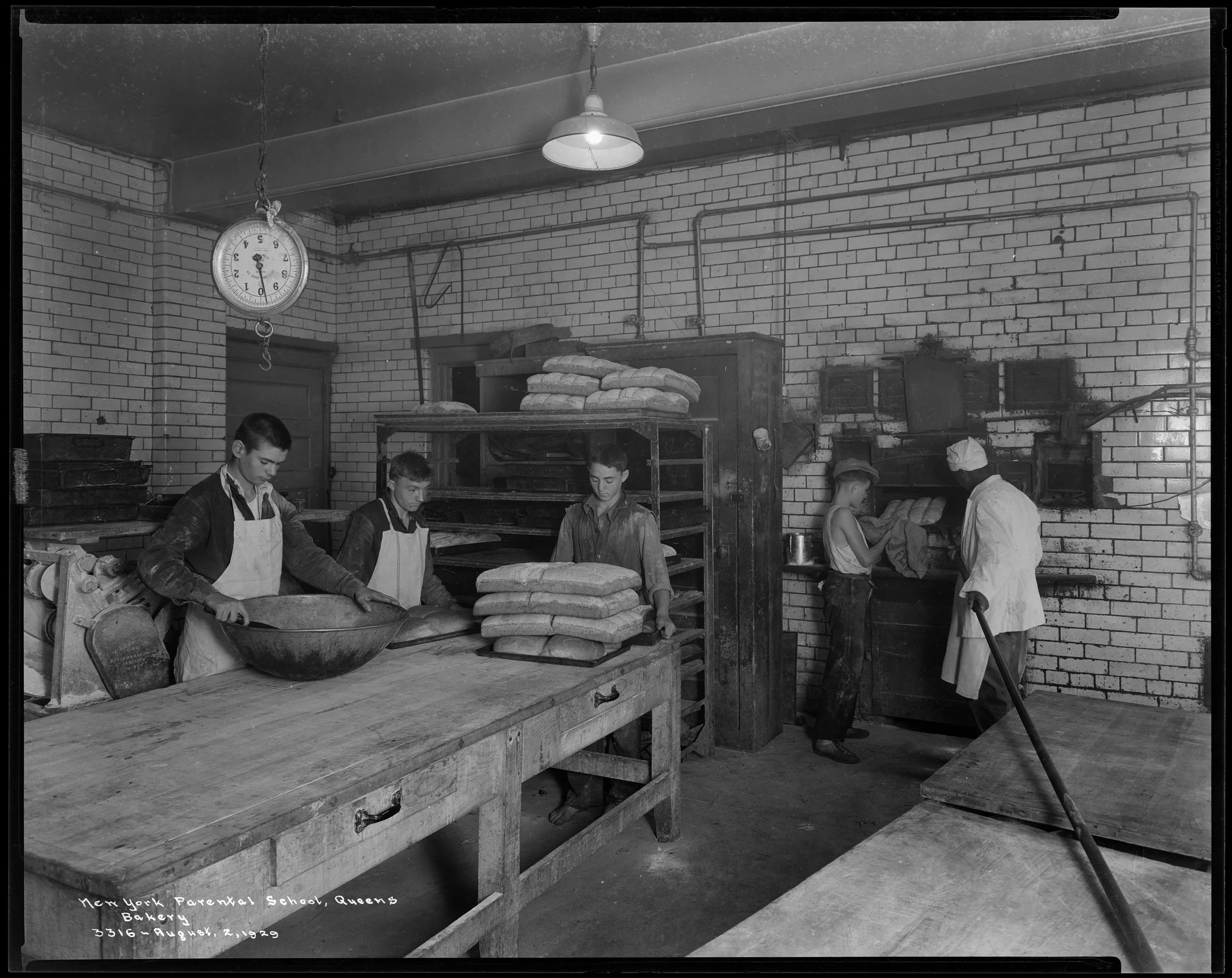
Only five buildings had been completed by the May 19, 1909 opening of the school: an administration building, three double dormitories or “cottages” located on the north side of a parade ground, and a power plant. Underground tunnels connected the buildings. The administration building had in its basement a tailor shop, manual training shop, carpenter shop, print shop, tin shop, shoe shop, and gymnasium. The first and second floors contained classrooms, offices, a library, a medical room, and an art room. Bedrooms on the third floor housed school staff. The cottages had east and west sections, each to be self-contained residential unit with a living room, a dining room, a pantry, reception room and a house master and matron’s room (sometimes referred to as a “house father and mother” and presumed to be a married couple).
New York Parental School, Queens, Review, August 2, 1929. View looking east toward Administration Building. Board of Education Collection, NYC Municipal Archives.
The 1909-1910 Annual Report was glowingly positive:
“No better demonstration of the wisdom of establishing the school need be given than is presented in the character of the classroom work, and in the mechanical and agricultural work performed by the boys…. Boys in all grades from 1A to 4B, inclusive, attend school in the morning, and all those in grades 5A to 7B, inclusive, attend in the afternoon. The time not spent in school is devoted to work in the shops, to farm and garden work, to helping in the bakery, the kitchen and the laundry, to cleaning the cottages and to practice in the band. Ample time is allowed for recreation, military drill and athletic sports.” (p. 385-386)
Superintendent’s Cottage and Hospital, Parental School, Queens, May 20, 1925. Board of Education Collection, NYC Municipal Archives.
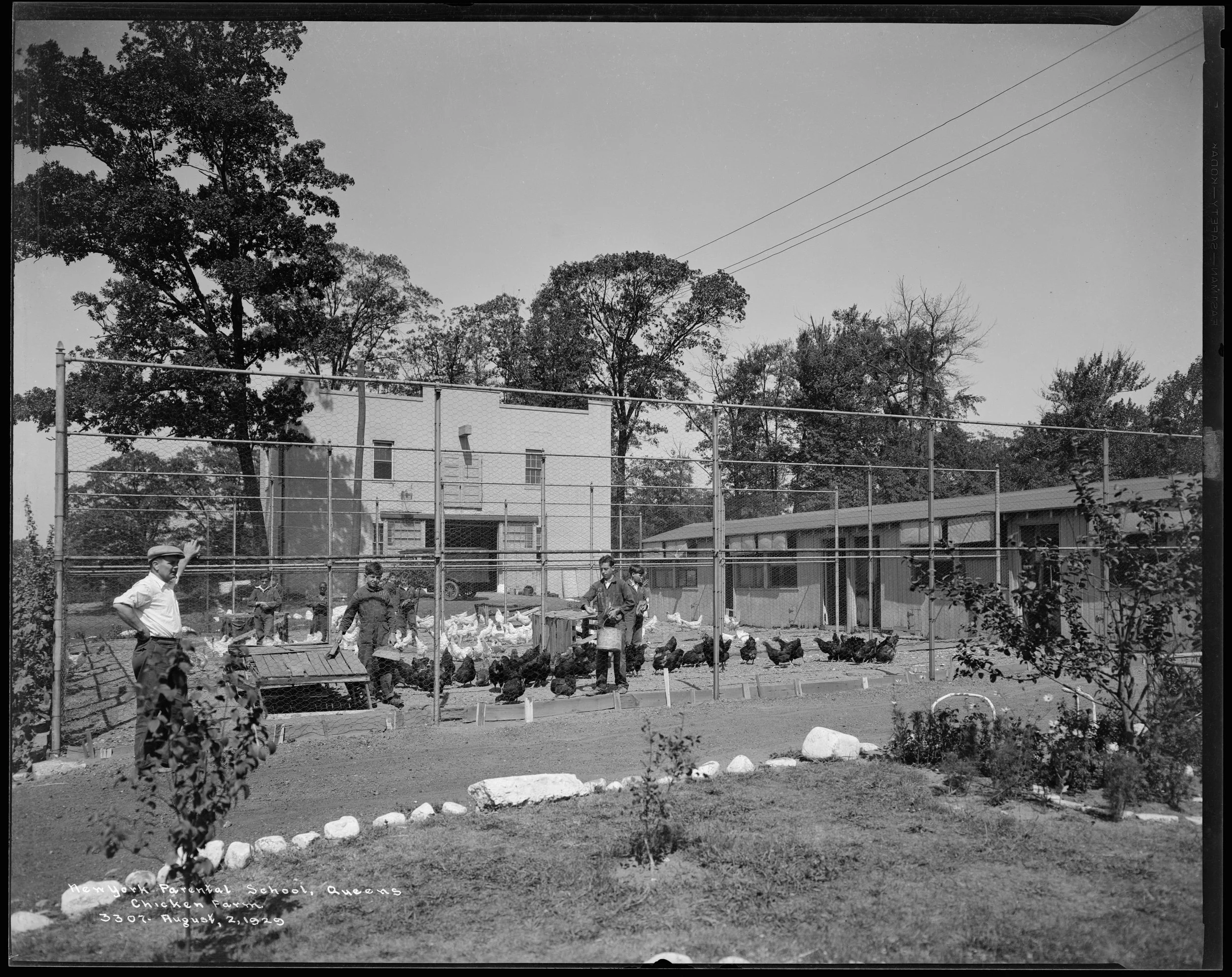
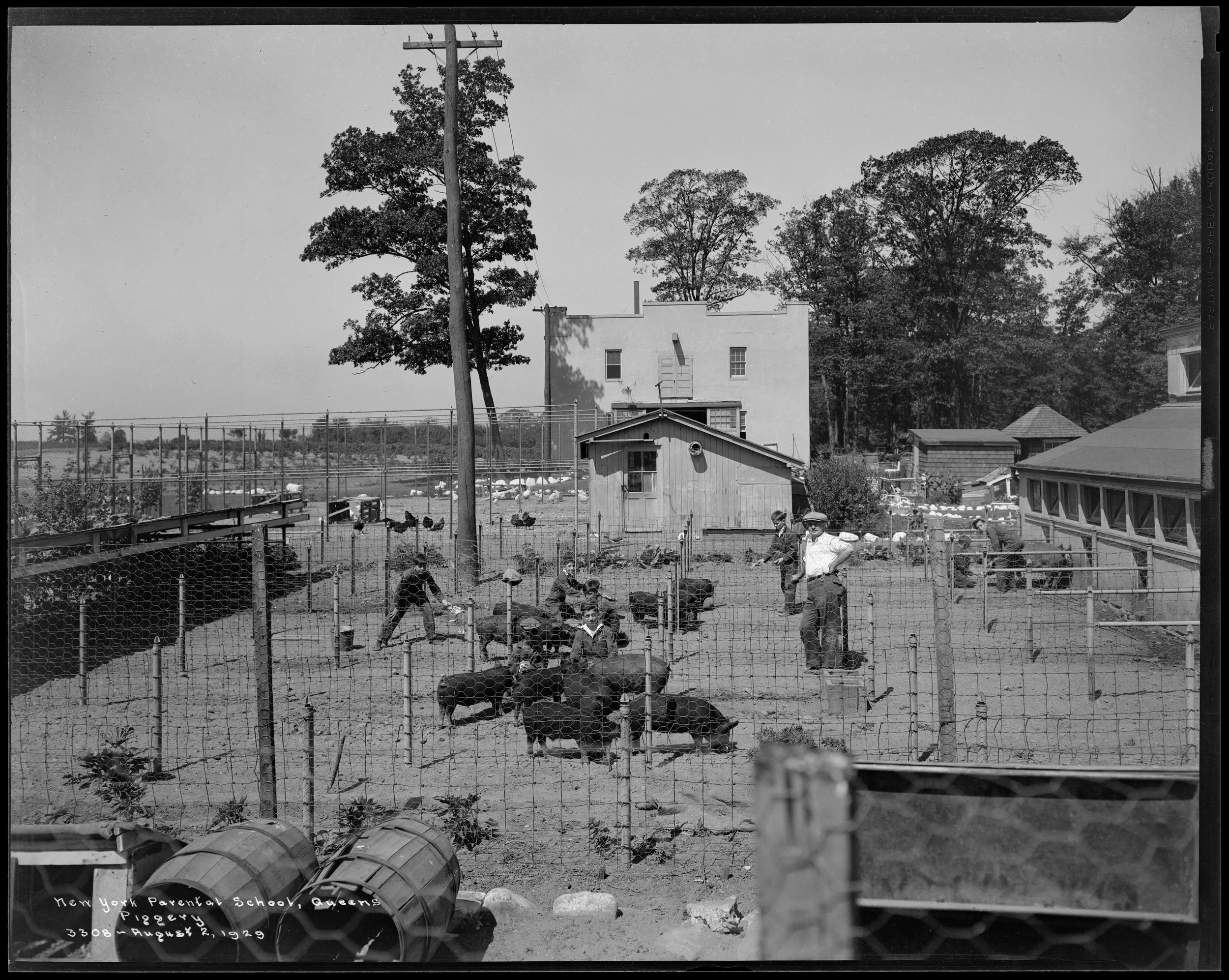
The report also stated, “additional buildings should be erected for the accommodation of truants on the lands of the Parental School.” By 1915, the school was deemed so successful that the Board of Education asked C.B.J. Snyder to draft plans for three additional cottages, a hospital/quarantine station, and a cottage for the principal of the school. In order to pay for these improvements, they planned to close the Manhattan and Brooklyn Truant schools, transfer their students to the Parental School and sell the Brooklyn land. The only negative noted about the school in the 1915 correspondence was “the extravagant criticisms that have been freely lodged against it for munificence and luxurious surroundings...” It was noted that a stable was currently being constructed by the boys themselves under instruction of the shop teachers. The additional buildings were not completed until 1925 and consisted of two quadruple cottages on the south side of the parade ground, a hospital, a principal’s cottage, and a barn, piggery, and chicken house. In 1927 a house for the custodian was added.
New Dormitories, Parental School, Queens, May 20, 1925. Board of Education Collection, NYC Municipal Archives.
In 1929, the Brooklyn Eagle published an article about the school (using some of the photographs shown here) and noted that “more than 90% of the boys discharged from the city’s truant school are never brought back.” This was taken to be a mark of success. They called the school “a model for the entire country...” By the 1929-1930 school year there were 335 students boarded at the school although it had beds for nearly twice that number.
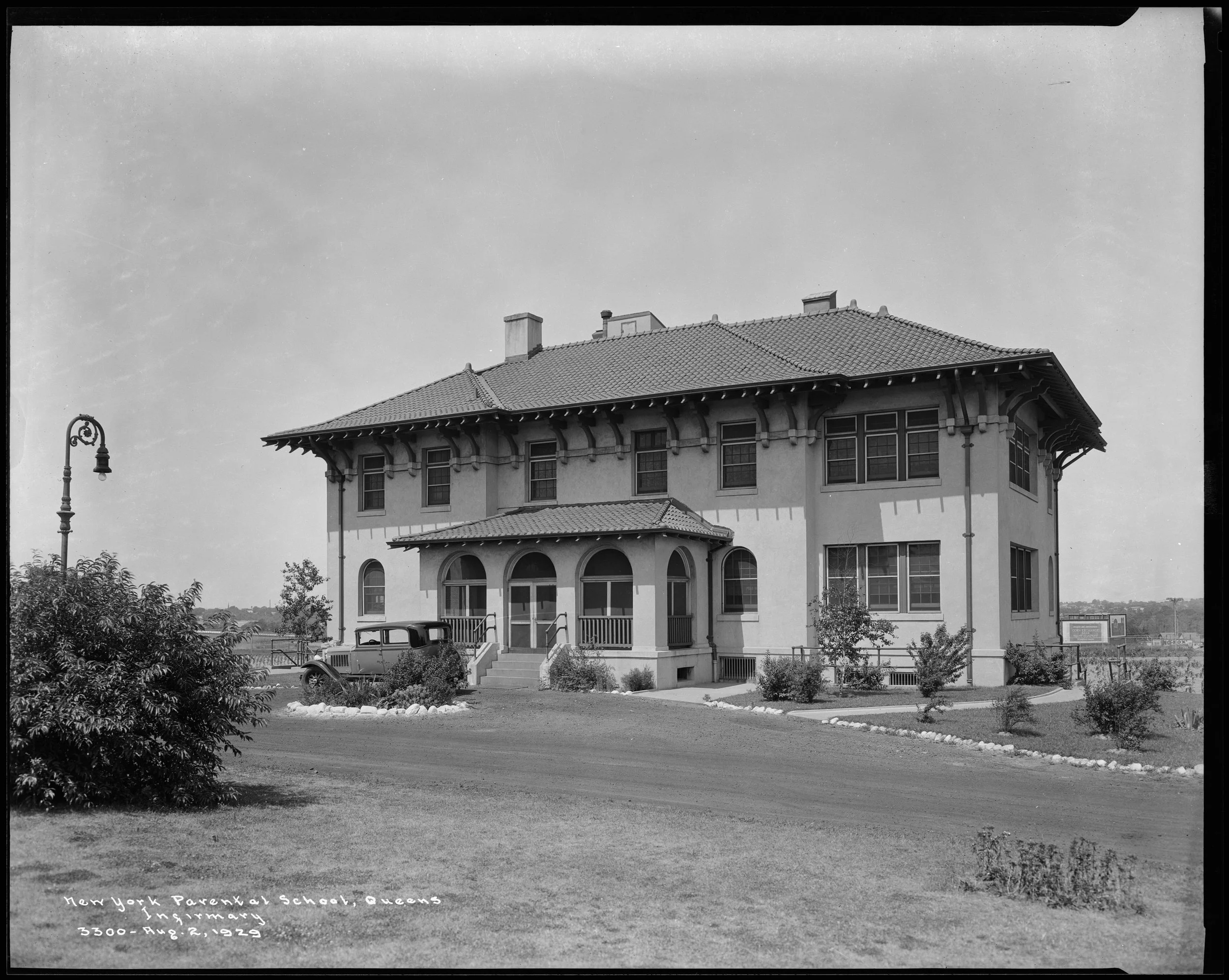
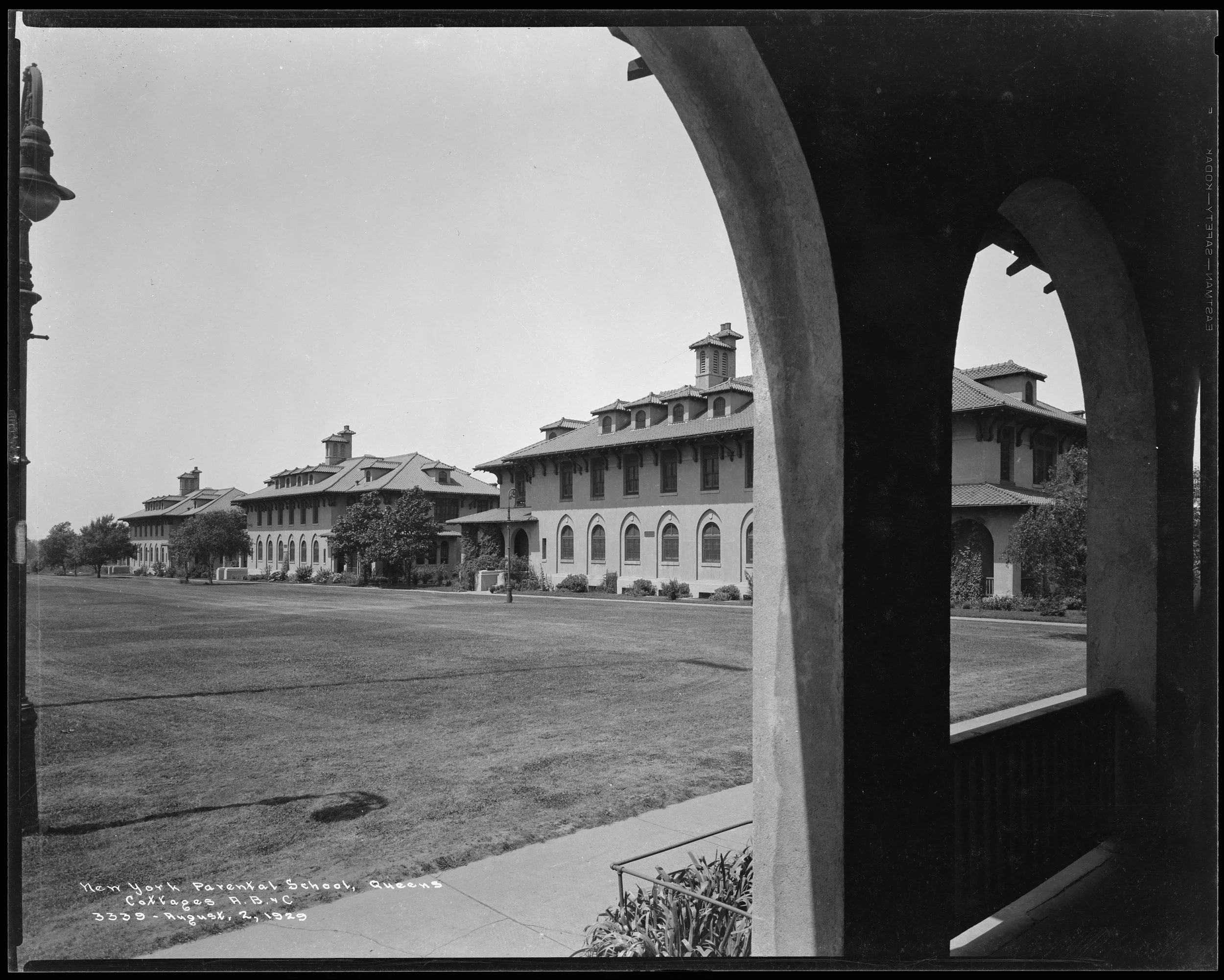
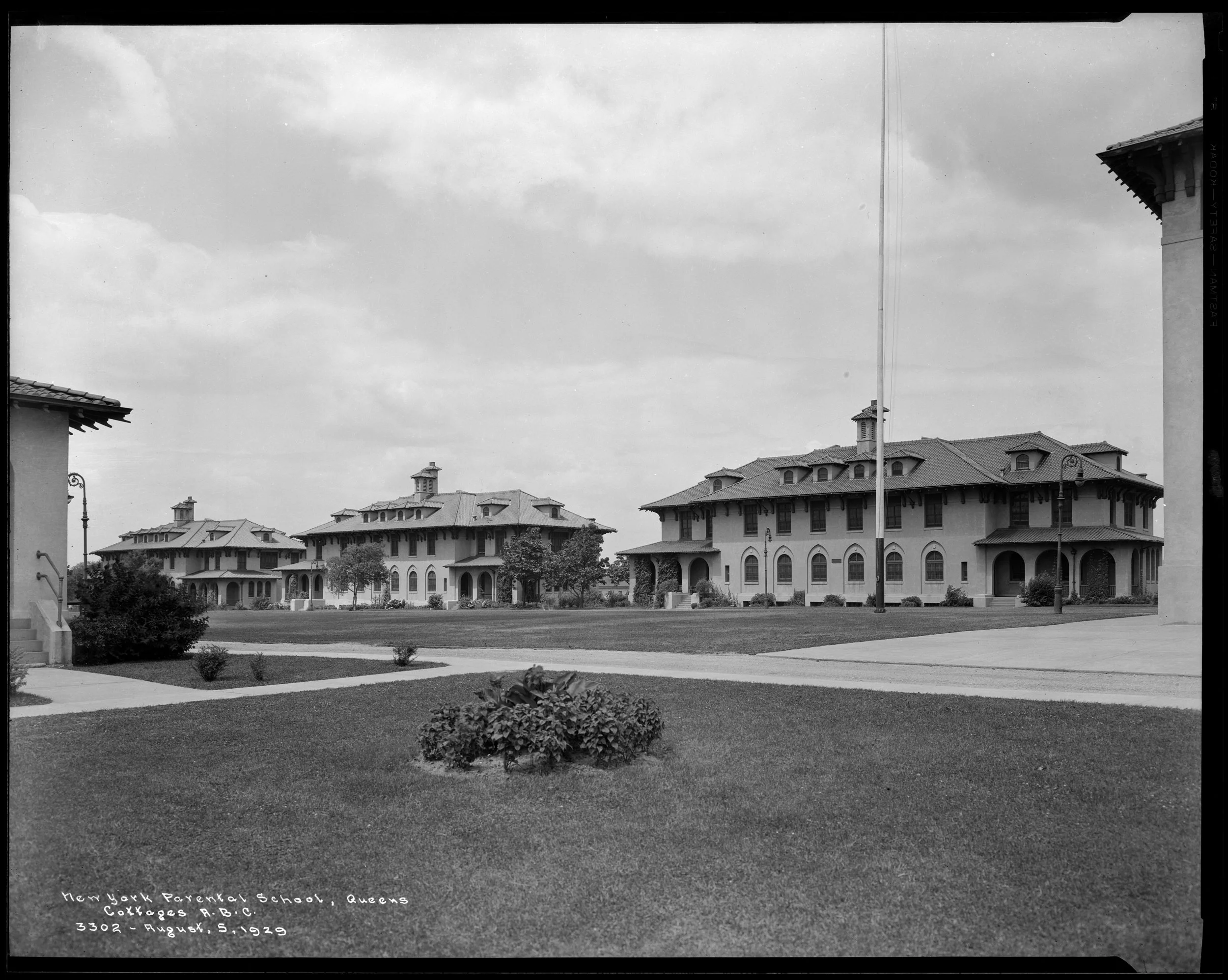
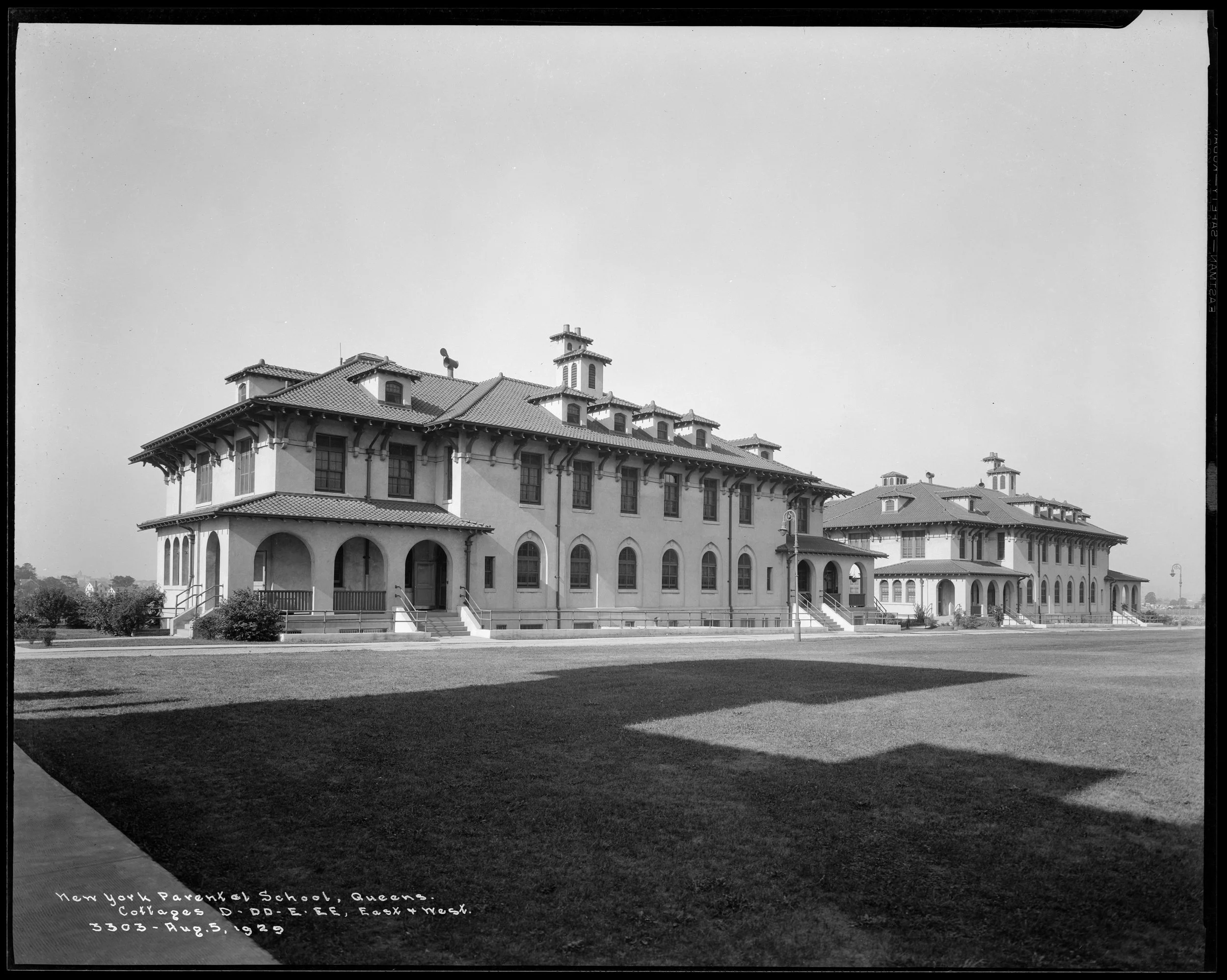
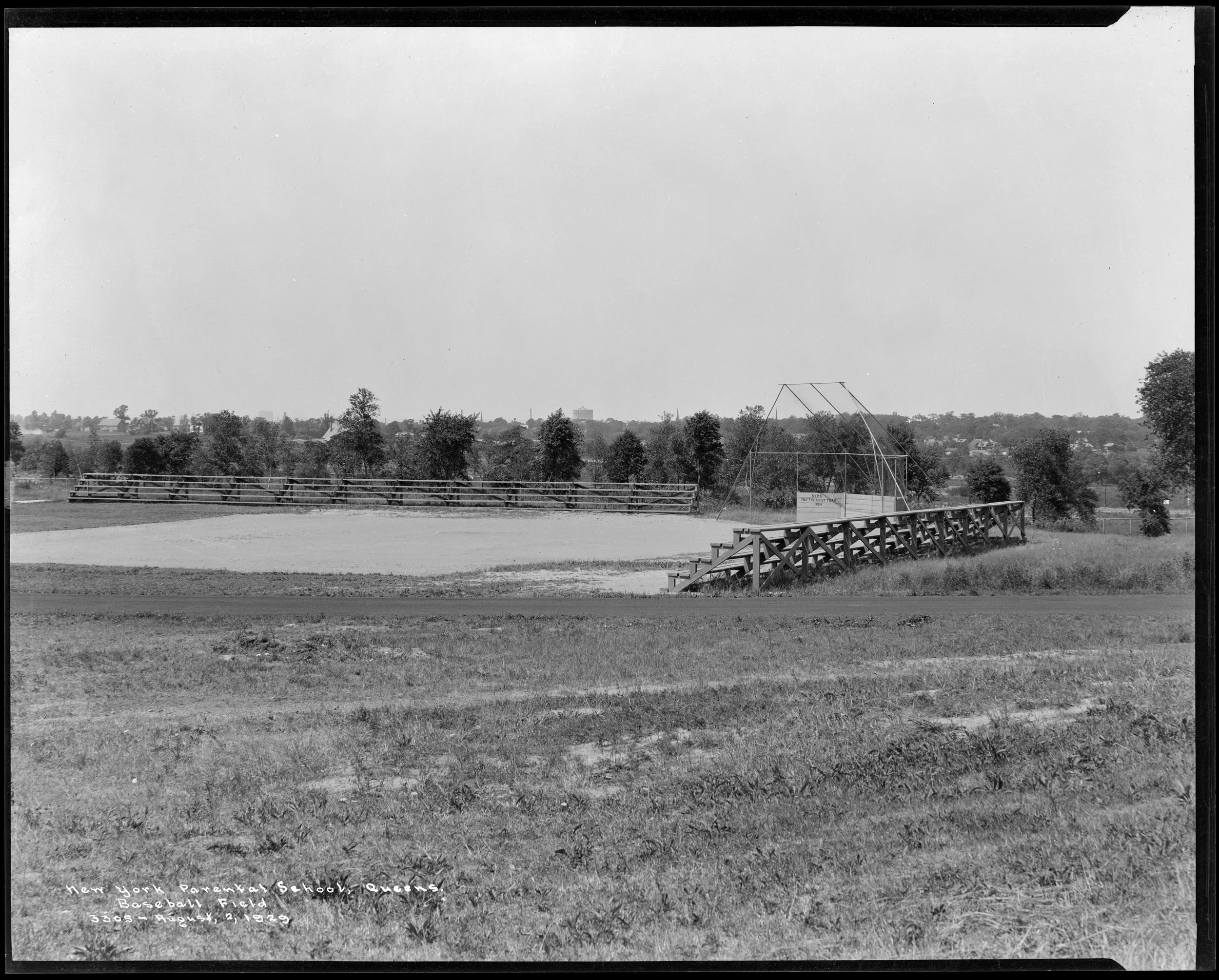
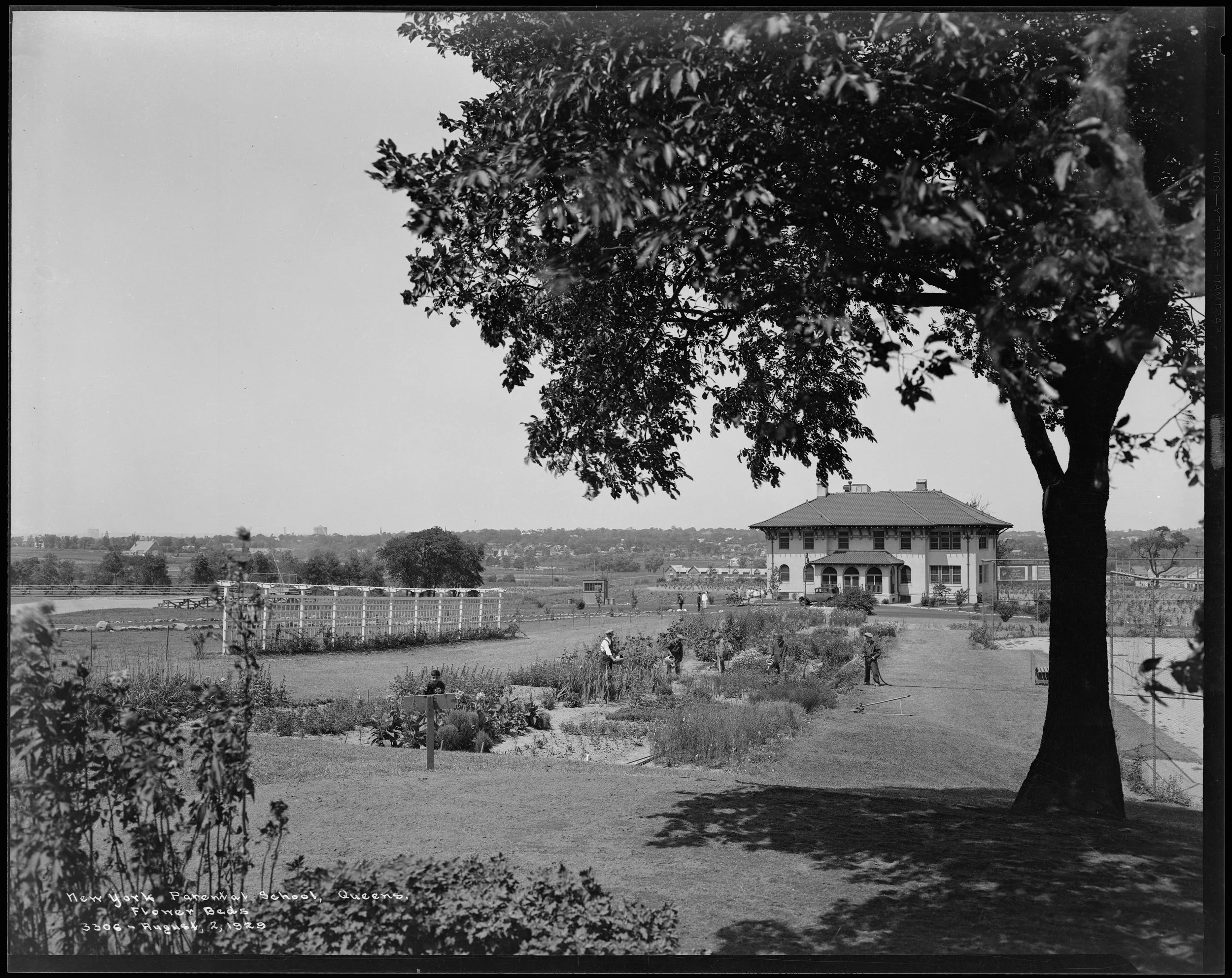
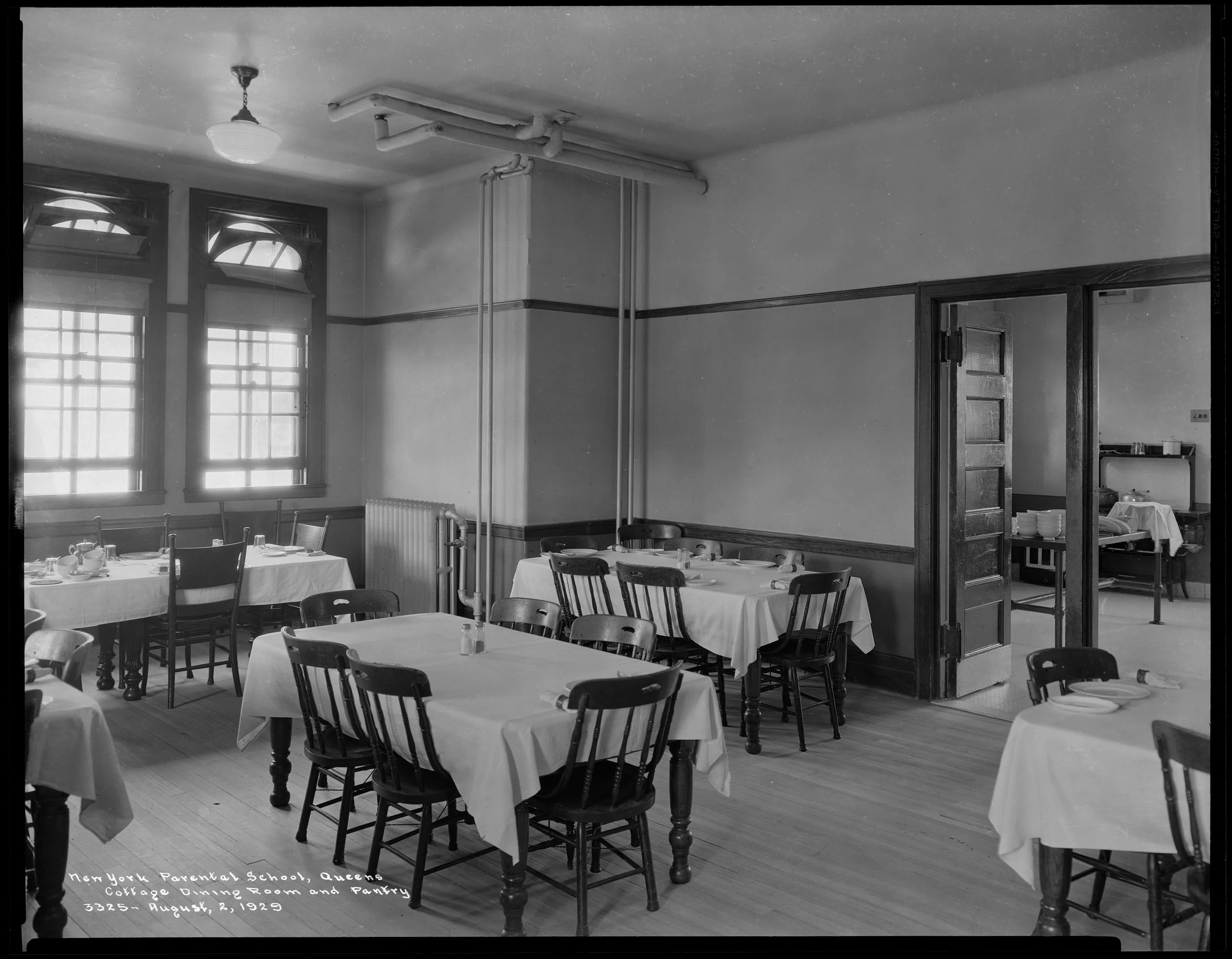
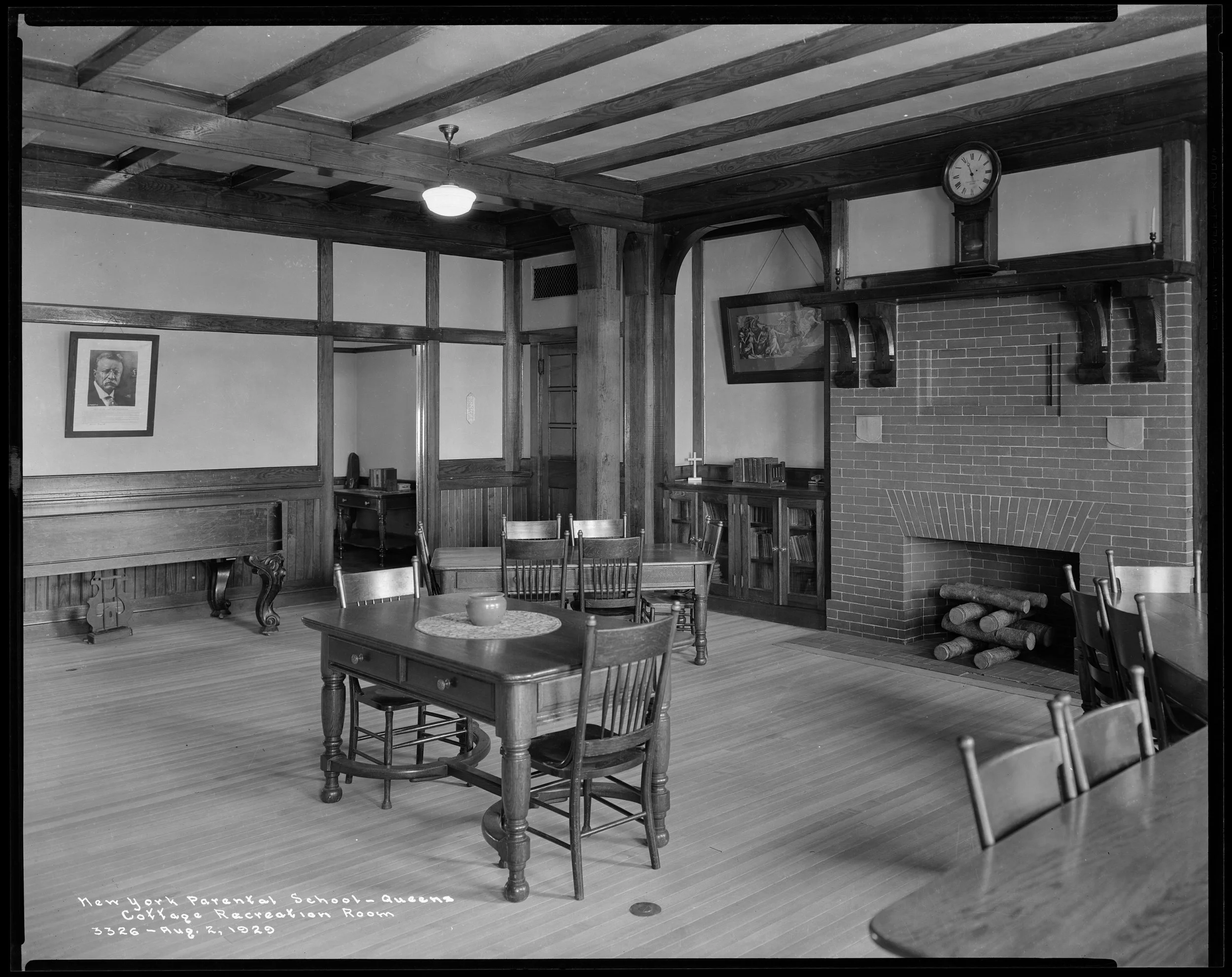
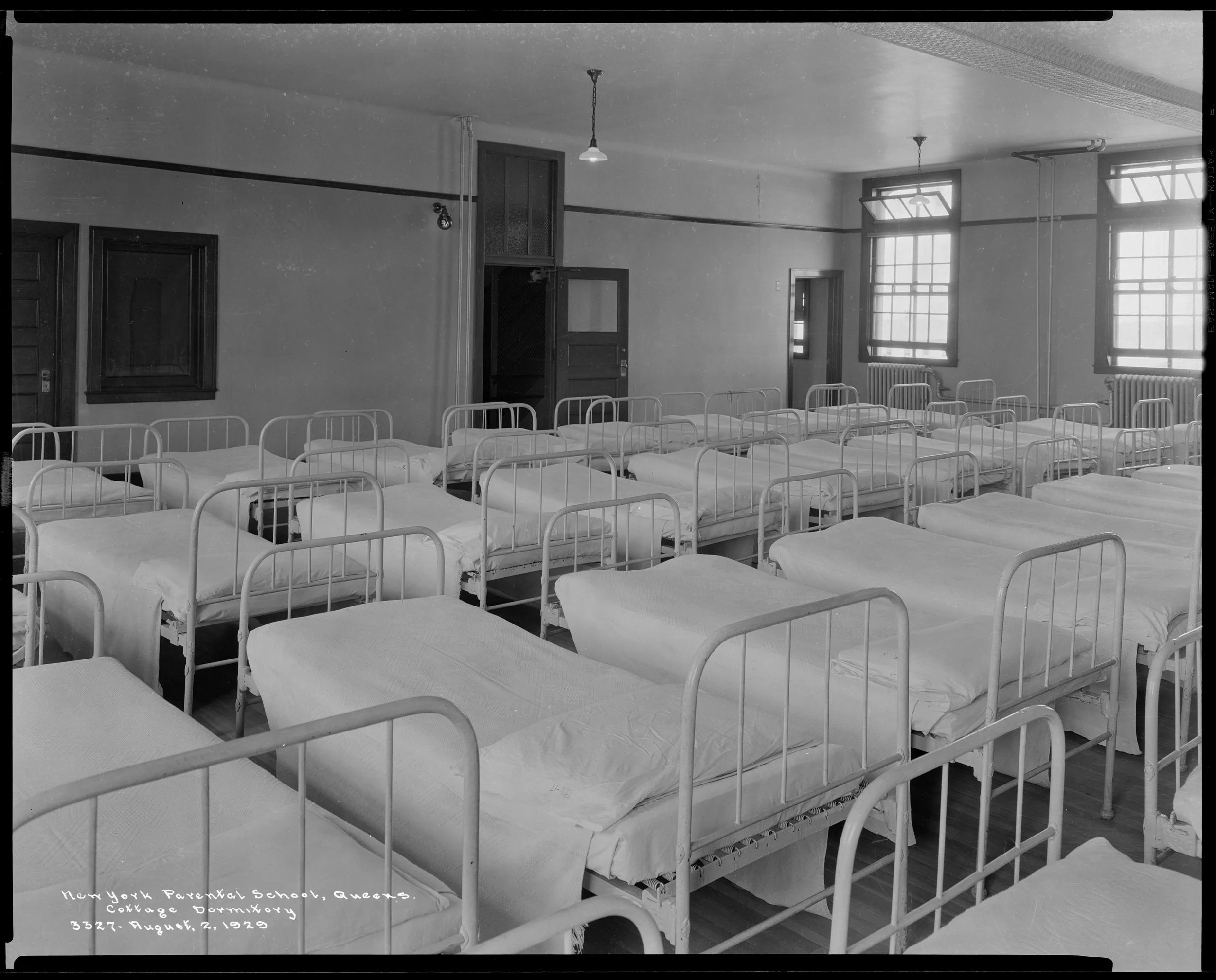
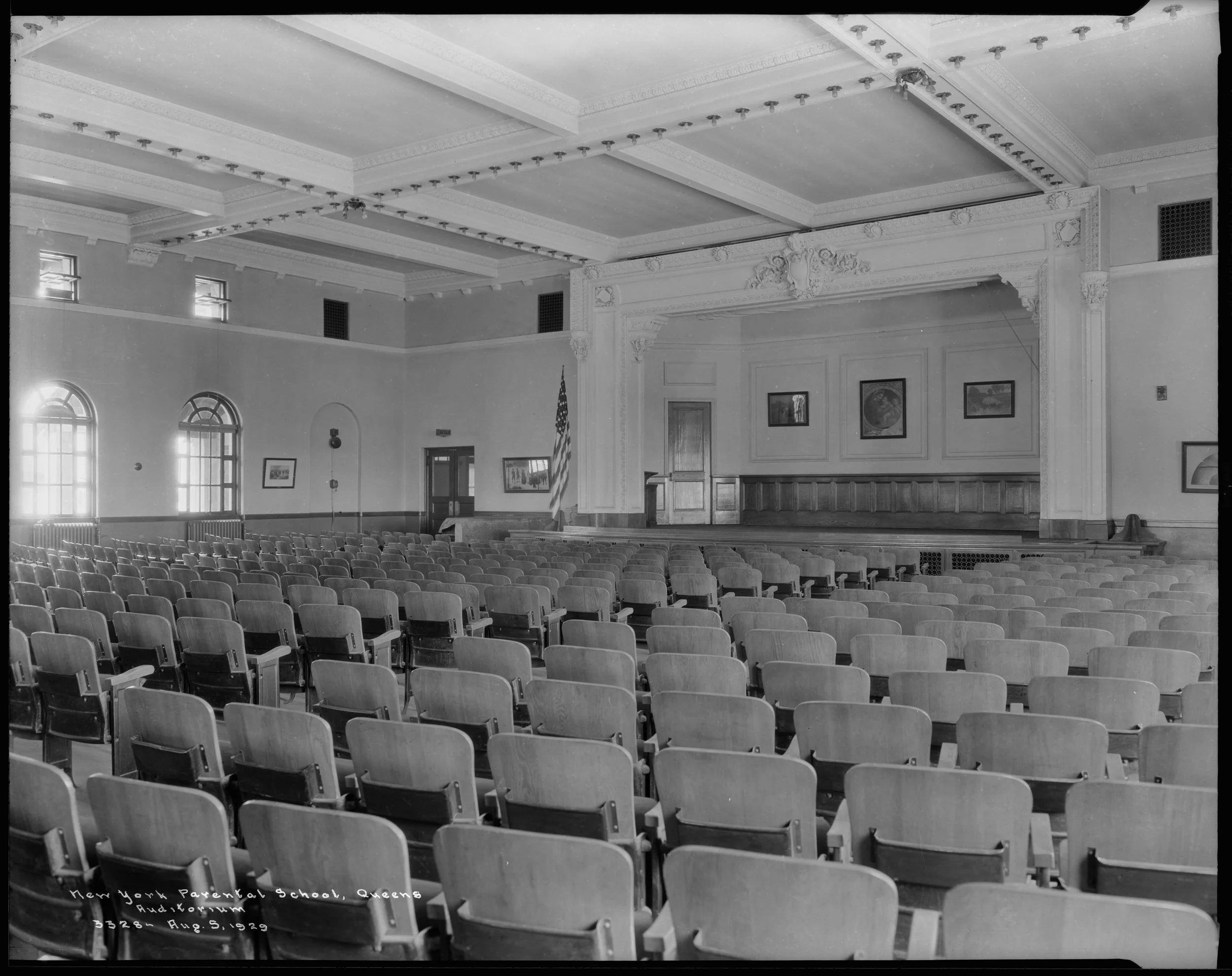
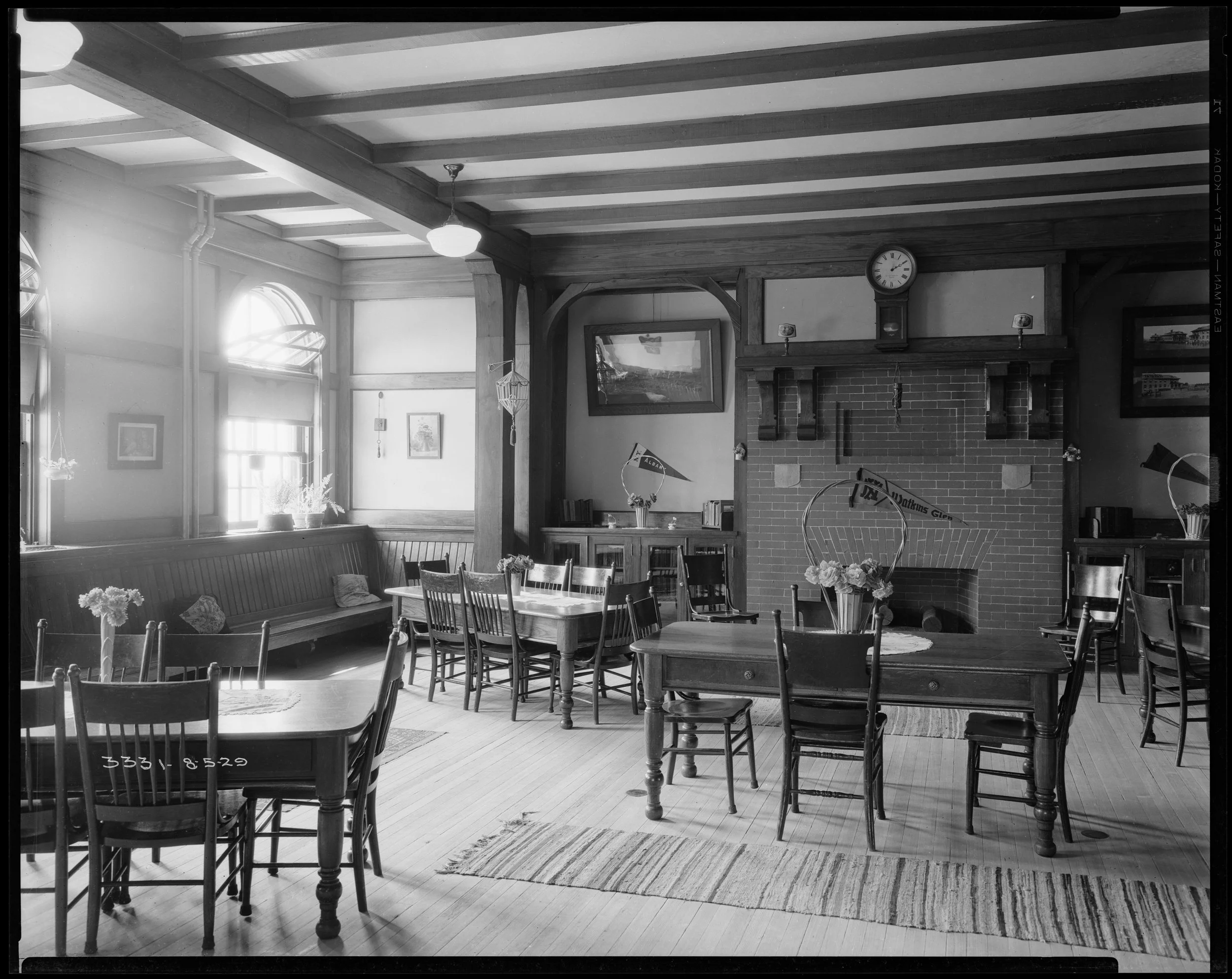
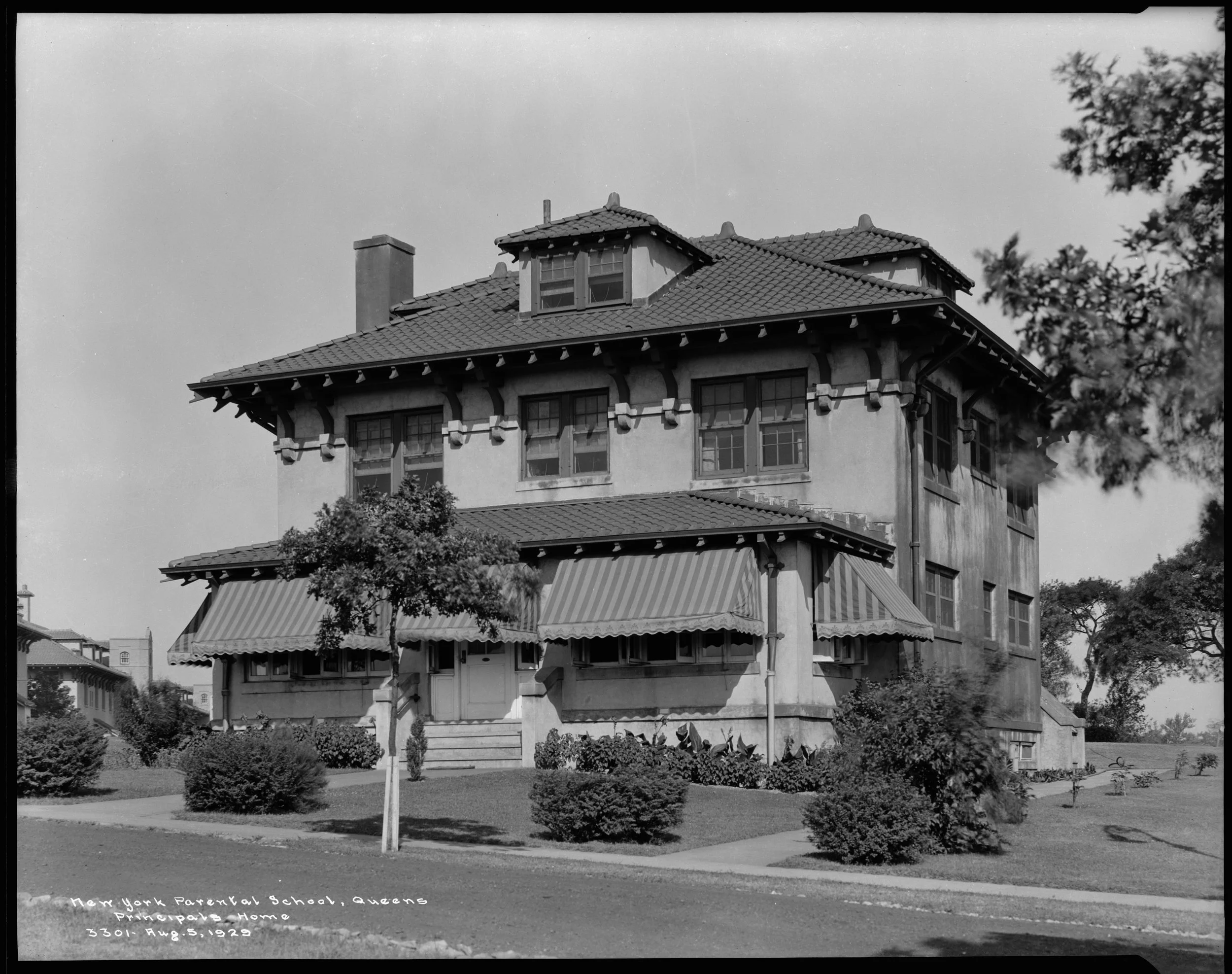
In 1930, William J. O’Shea, Superintendent of Schools, made “Retardation, truancy, and problems of personality and conduct” the first section of his 1930 Annual Report. He had appointed a committee to study the subject and one of the questions they investigated was “Is the Parental School discharging its functions in a satisfactory way?” This was the first sign that all might not be right with the school. The report noted that “a child be not committed to the parental school until it has been shown that his delinquency cannot be overcome by required attendance at a special day school.” (p.47) And that,
“It is the function of the New York Parental School to provide school care for boys who have violated the compulsory education law or who are incorrigible, and who on that account have been committed to the parental school by the courts or by the Director of Attendance.”
Under a section labeled “Progressive Steps” the report stated,
“Considerable improvement was noted in the work of the parental school during the past school year. This was due in a large measure to (1) a general improvement in the physical condition of the boys, resulting from the treatment and cure of physical defects, (2) the establishment of a plan for the systematic and scientific reception and placement of the boys and (3) the extension of industrial work.” But it noted that “medical and dental service is inadequate.” (p. 300-301)
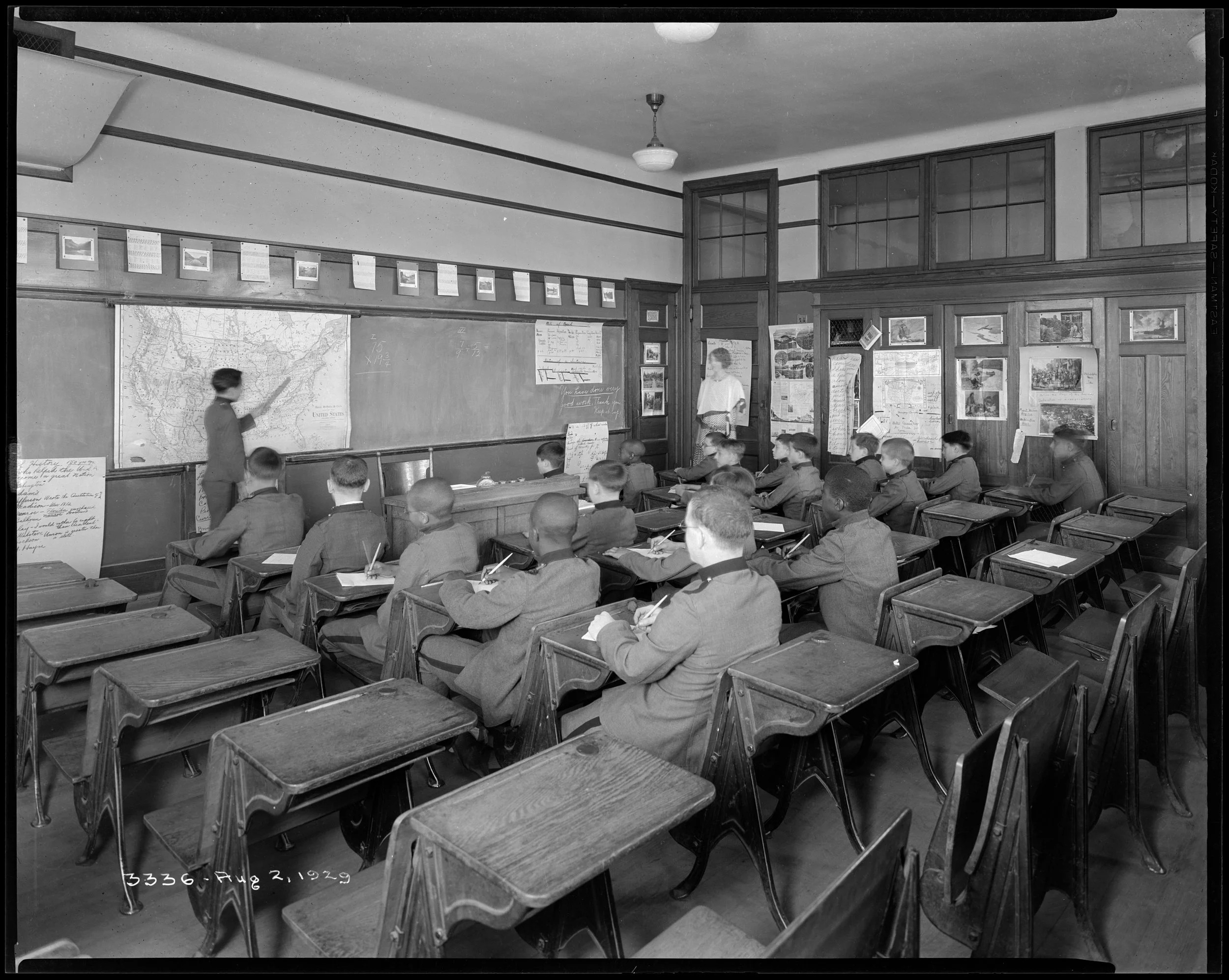
New York Parental School, Queens, Class, August 5, 1929. Board of Education Collection, NYC Municipal Archives.
The 1930-31 Annual Report asked: “should a special school similar to the parental school for boys be established for the behavior-problem girl?” Representatives from the schools were unanimous in favor if the selected girls came from homes with a “vicious environment.” But, “representatives of the social agencies were in general opposed to such segregation and strongly recommended that the girl be adjusted in her home environment by trained psychologists and social workers.” (p.109) But again, this remark signaled possible problems: “On the basis of a number of inspections, studies and recommendations.... a number of improvements have been made in methods and practices at the New York Parental School.” Including “the elimination of all practices smacking of a penal institution.” (p.119) Not much mention was made of the Parental School in the 1932 Annual Report, other than noting a piggery had been converted to an auto-mechanic shop.
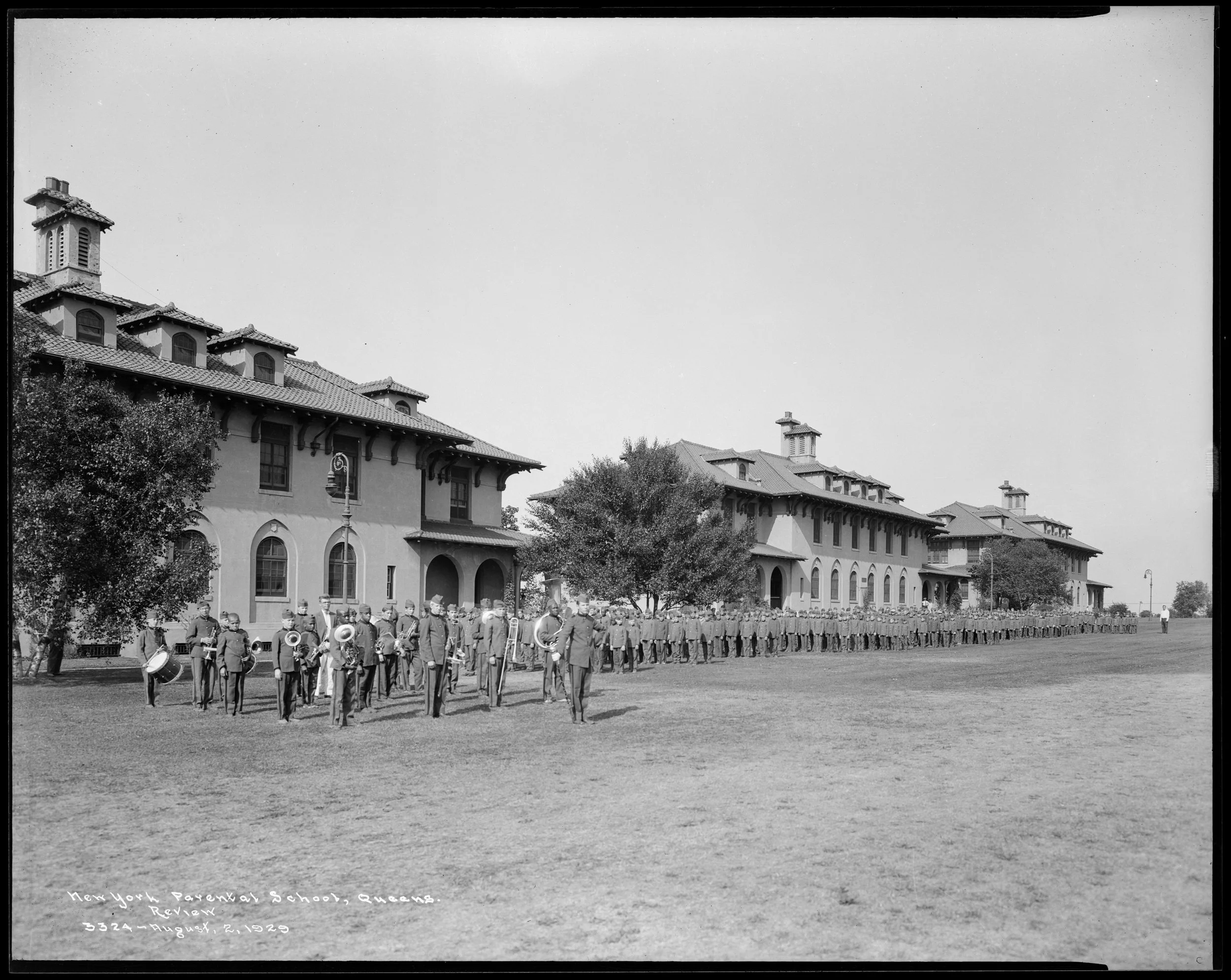
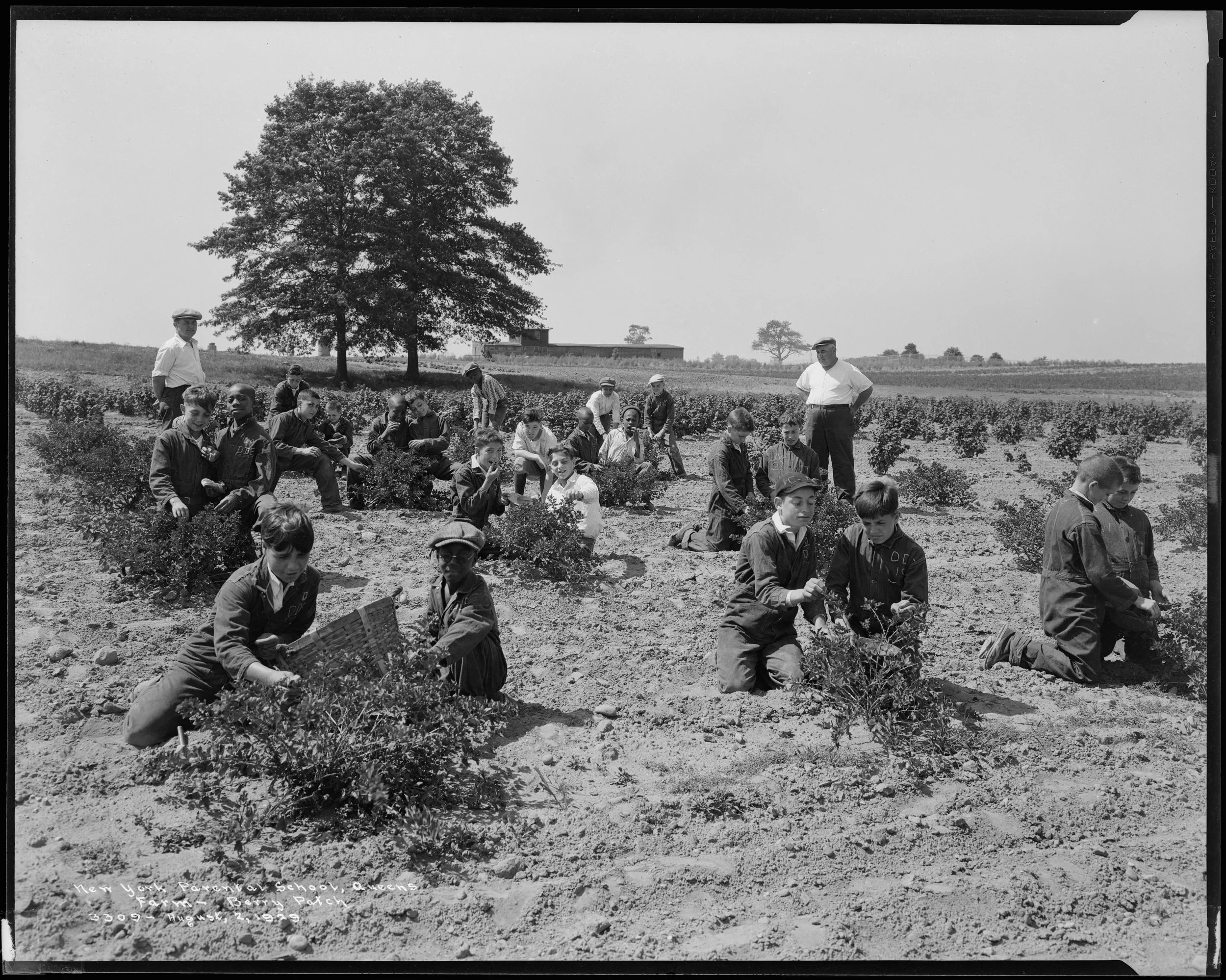
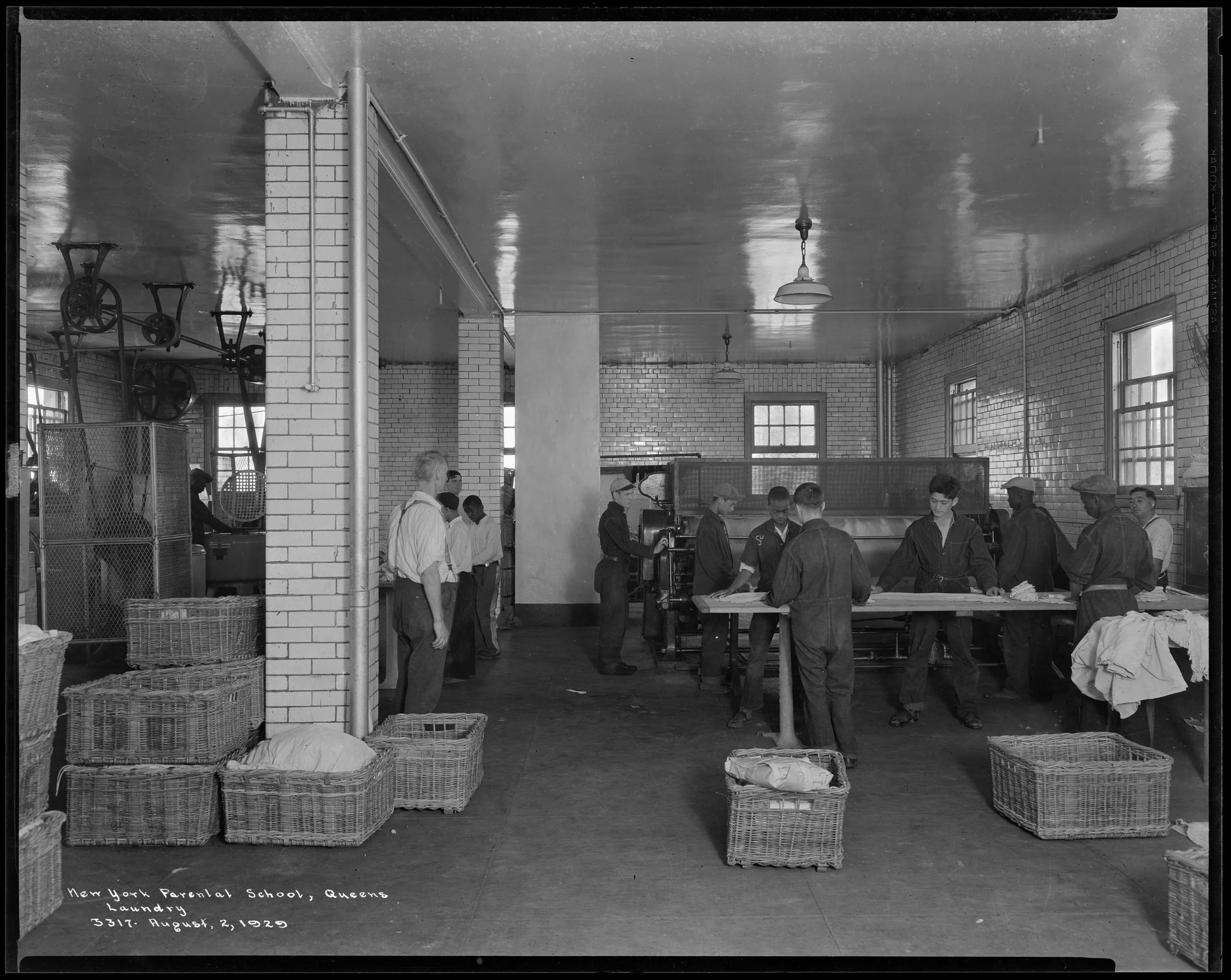
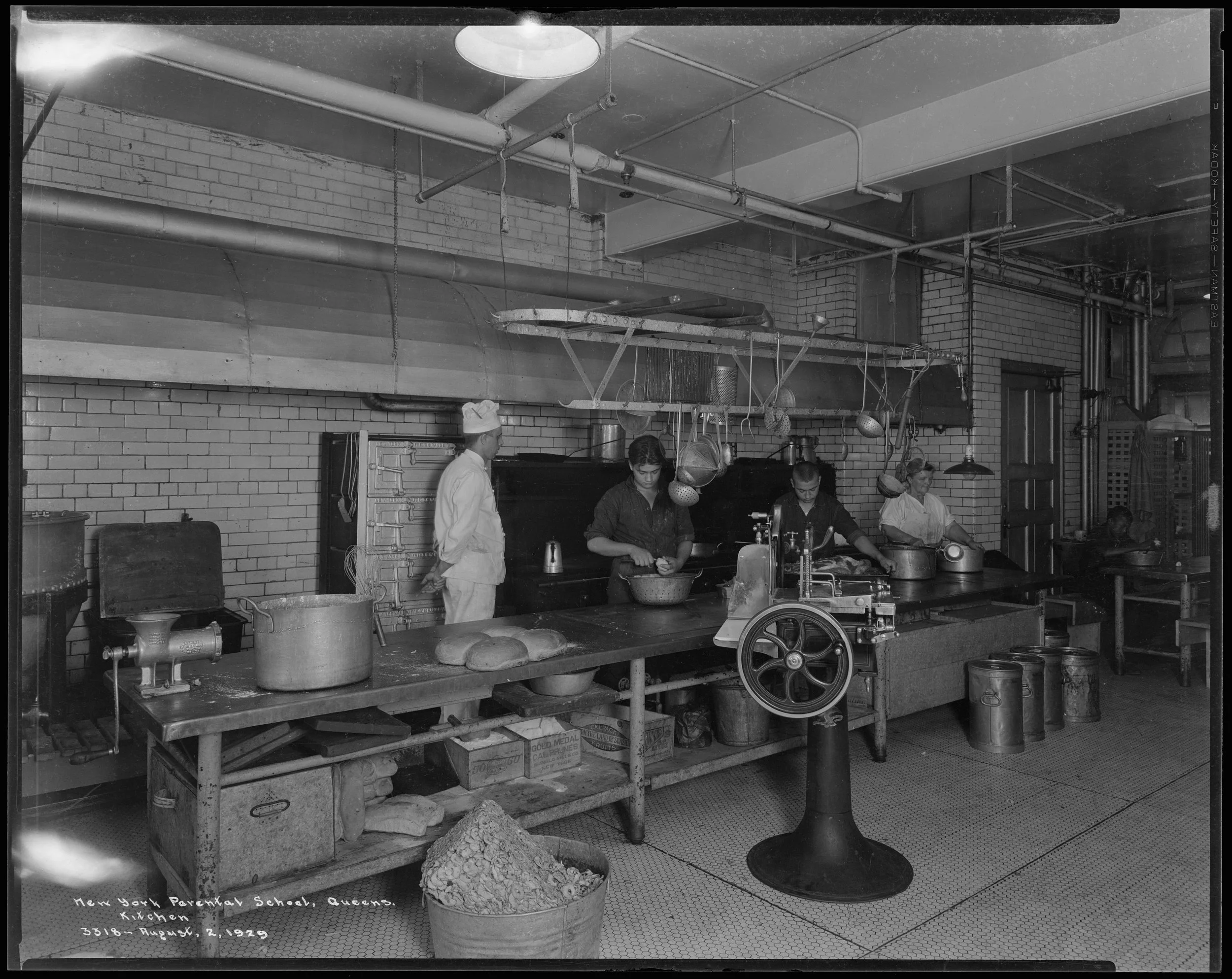
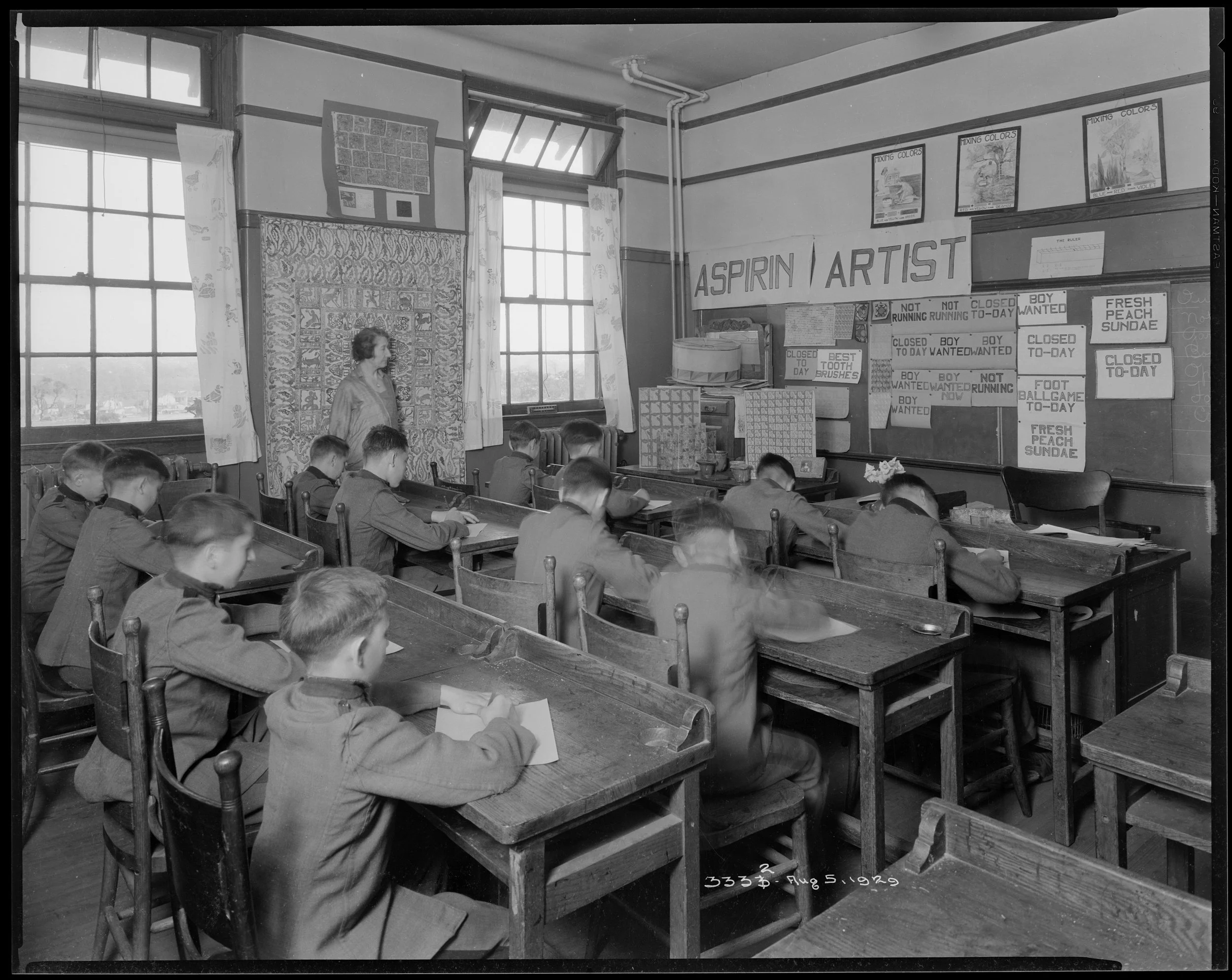
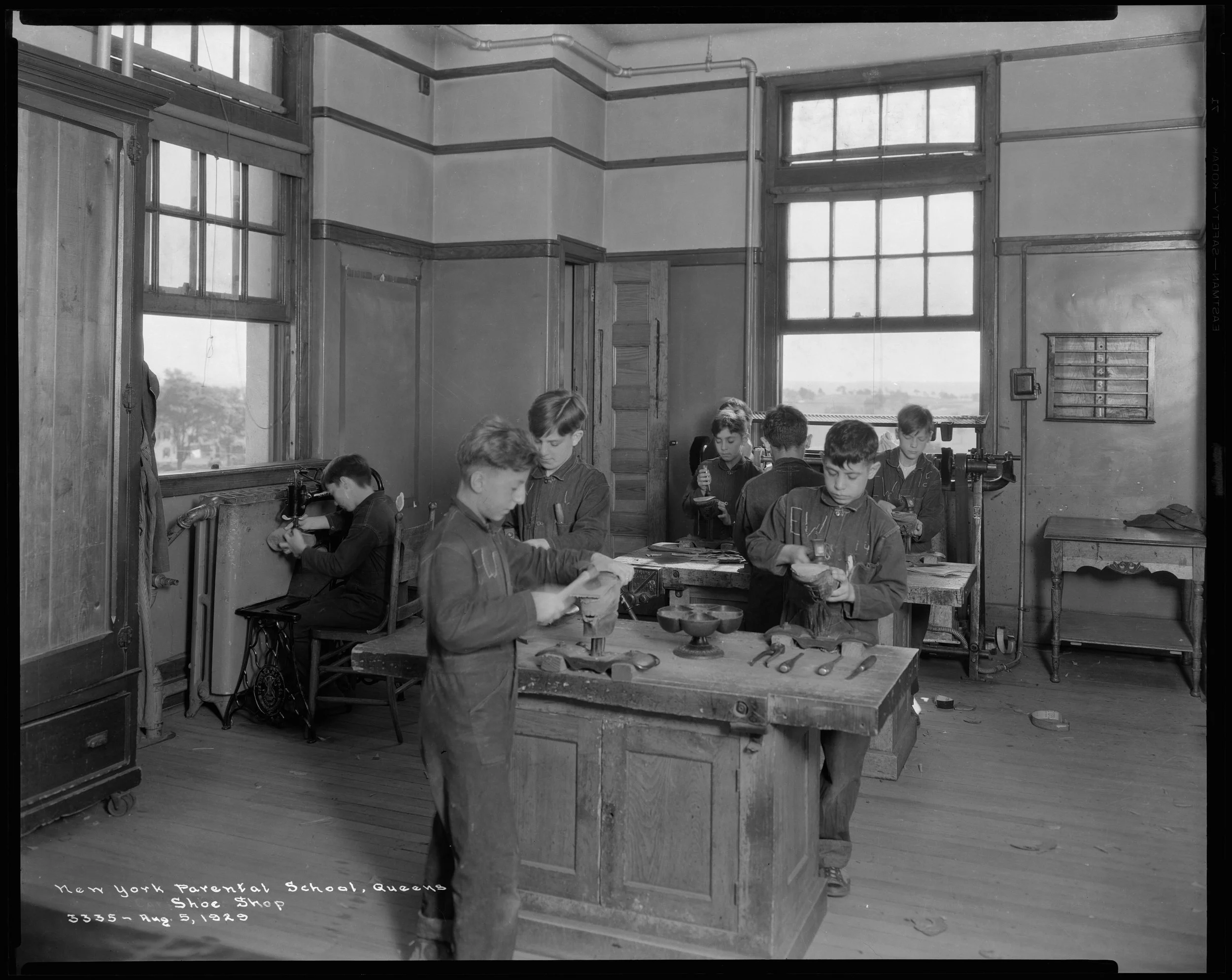
Troubling Reports
In April 1934, Harold J. Campbell, Superintendent of Schools, sent a letter to Mayor Fiorello LaGuardia’s secretary, acknowledging receipt of an anonymous letter charging “irregularities” at the Parental School. Mayor LaGuardia had been sworn in on January 1, 1934, after running on an anti-corruption platform. He picked Paul Blanchard, a socialist reformer, to be the Commissioner of Accounts, charged with investigating corruption (the office became the Department of Investigation in 1938). On April 30th, Blanchard received a preliminary report on the Parental School from his investigators, led by lawyer Will Maslow, cousin to the famous psychologist Abraham Maslow. The report was compiled through interviews with staff members willing to talk and through secret interviews with the boys conducted by a nightwatchman. The investigation had revealed “boys between eight and seventeen years are committed for nothing but truancy...” and subjected to “abuses such as brutality, sodomy and bad food, worse than those in prison.”
“Office of the Commissioner of Accounts, In Reference to New York Parental School – Preliminary Report,” April 30, 1934. NYC Municipal Archives, Mayor LaGuardia Collection, box 3114, folder 5.
In accompanying oversize sheets of paper, the investigators catalogued reports of brutality by the cottage masters and other employees, detailing the name of the employee, the names and age of the boy, the offence or provocation, description of brutality, consequence or injury, remarks, and a citation to a ledger where the interviews were recorded. For what appear to be very minor offences students were kicked, punched, beaten with objects, and routinely received “muchachos,” beatings on the buttocks. One house master, noted to be a former guard in a southern chain gang, used a rubber hose on the boys in his charge, many of whom were Black and he referred to them as “Dirty black bastards.” Another cottage master was so brutal a boy attempted suicide after a beating.
Despite corporal punishment being banned by the Board of Education, Director William D. Pulvermacher was accused of not only tolerating these beatings, but himself being guilty of acts of felonious assault. His punishments, meted out in his private office, included hitting a boy over the head with a phone. Pulvermacher, it was noted, was a close personal friend of School Superintendent Campbell. Although none of the staff were accused of sexual assault, under a section titled “immorality” it was stated that some older boys routinely raped younger boys. These incidents were said to be covered up when reported to the masters or Director Pulvermacher.
Poor nutrition was also well-documented, in particular the difference between the diet of the boys and the staff. The typical boys’ supper was bean soup or stew of leftovers while the typical master’s supper would be ham, steak, lamb, or fresh fish on Fridays. Contamination of the boys’ food supplies with insects or vermin was common. The fourth item, almost minor compared to the first three, was the lack of an adequate education either in basic subjects or vocational training.
Battles in the Press
Daily News, June 22, 1934.
Things came to a head when the Daily News, on June 18, 1934, under the headline “Truant School Nest of Crime, Probe Charges,” revealed that the LaGuardia Administration had been secretly investigating the school for two months after “complaints of brutality and shocking moral conditions....” Grace Robinson, a pioneering investigative journalist, authored the article. Over the following week, she published an article almost daily with new revelations. Mayor LaGuardia did not have direct oversight of the schools; Mayors appointed the members of the Board of Education but until their terms ended the existing Board had complete control. What LaGuardia did have was a bully pulpit, speaking out and feeding the story to Grace Robinson and other journalists.
Superintendent Campbell pushed back in the press, criticizing LaGuardia for overstepping his authority and revealing that he was conducting his own investigation into the school. The United Parents Association called for an outside investigation, and District Attorney Charles S. Colden responded to the call, bringing the matter to the Queens County Grand Jury. Director Pulvermacher also pushed back against the accusations, although he admitted to the press “it was not a Sunday School.” In a June 24, 1934, New York Times article, he attributed the claims of brutality to “a dismissed employee and the supporting affidavits to ‘some of these boys who would say anything for a carton of cigarettes.’”
Daily News, June 24, 1934.
But that same day the Daily News dropped Grace Robinson’s bombshell, from 1931-1932, “a murderer who had served sixteen years in Sing Sing and Comstock prisons was employed as a guard....” What’s more, the man in question (not named, but Edward F. McGrath) had a soon-to-be published autobiography, I Was Condemned to the Chair. Queens DA Colden, already investigating the institution, was horrified. According to the Daily News, those familiar with the school were less shocked and reported “that the boys teach each other the gentle art of pickpocketing and how to pick locks, that their heroes are Al Capone, Owney Madden and Jack Diamond, and their idea of real achievement is to kill a cop.” Other “affidavits charge that boys have been brutally whipped for small offenses, given insufficient and inferior food, and that immorality is practiced in the dormitories almost under the eyes of masters.”
Conflicting Investigations
On July 6, 1934, Owen R. Lovejoy, secretary of the Children’s Aid Society, submitted a report to the Board of Education, “Cottage Life at New York Parental School.” Overall, it is upbeat in tone, with passages like “the writer was deeply impressed by the spirit, resourcefulness and interest in the welfare of the boys manifested by every one of the house fathers and mothers interviewed.” Claims of abuse are dismissed as rumors, but Lovejoy also noted under a section “Moral Condition” that “in the past men had been discharged from the staff because of either encouraging or condoning sex offenses....” Health Commissioner John L. Rice submitted a report on his medical investigation of the school on July 16th. It too was positive and contained no shocking revelations.
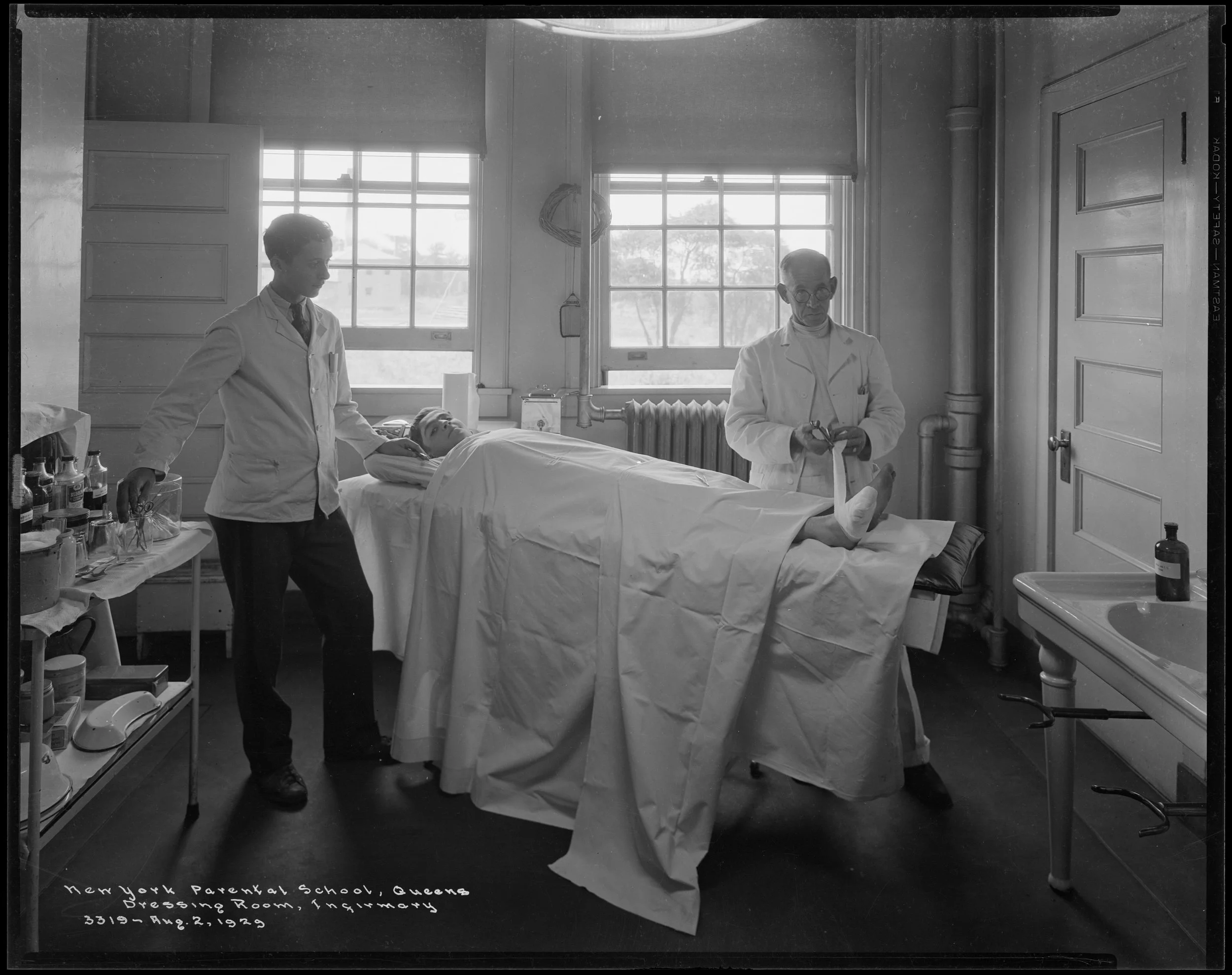
New York Parental School, Queens, Dressing Room, Infirmary, August 2, 1929. Board of Education Collection, NYC Municipal Archives.
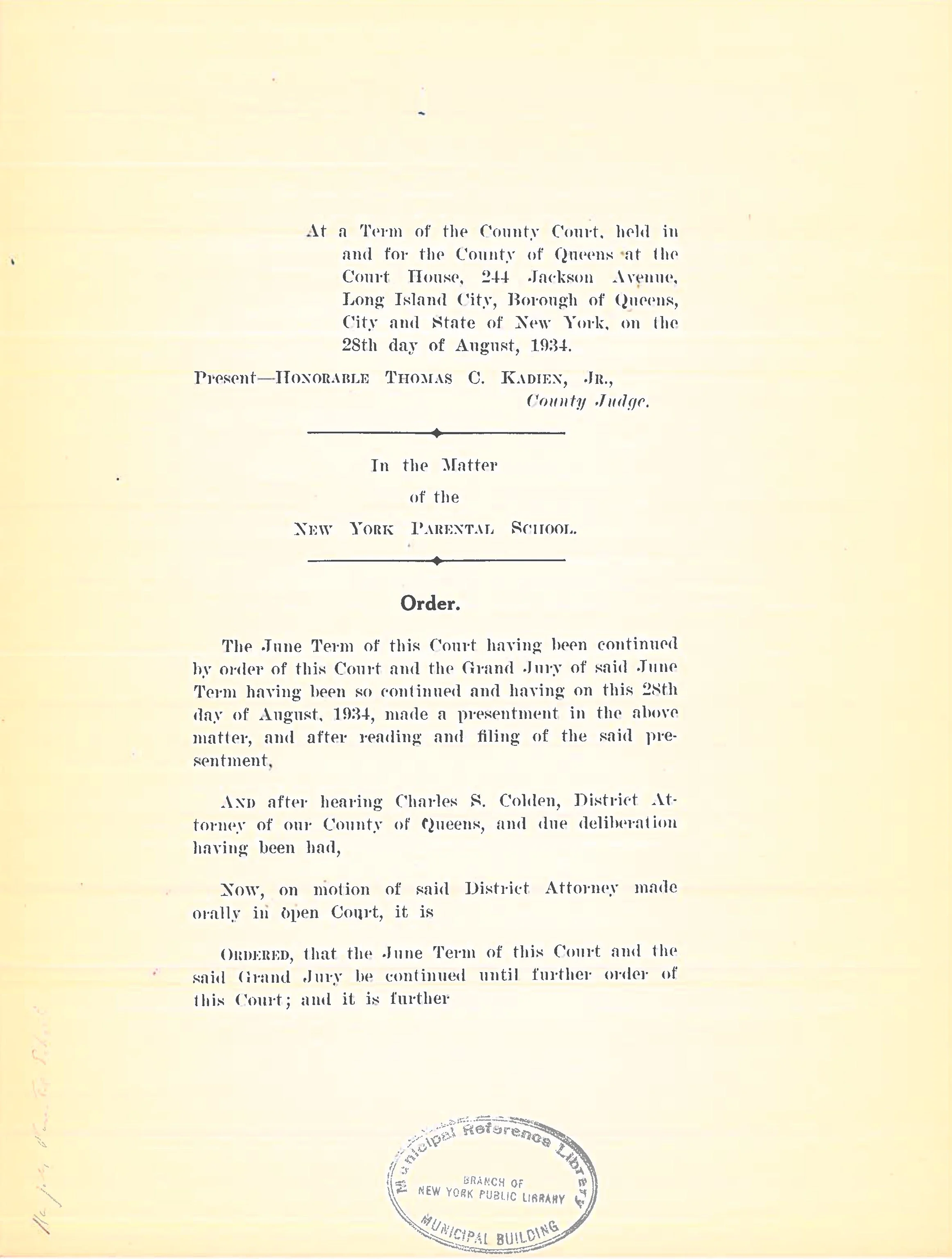
When it came out on August 28, 1934, the Queens Grand Jury report was unsparing: “the Board of Education of the City of New York maintains... an institution known as the Parental School... for the care, maintenance, education and rehabilitation of truant and delinquent boys. No evidence we have been able to discover indicates that this has even remotely been accomplished.” They noted it more closely resembled “a place of detention with amenities that would hardly distinguish it from a reformatory.” However, they did not summarily call for its closure, but for “sweeping reform to salvage these children from becoming the criminals of tomorrow,” by putting the school under “competent direction.”
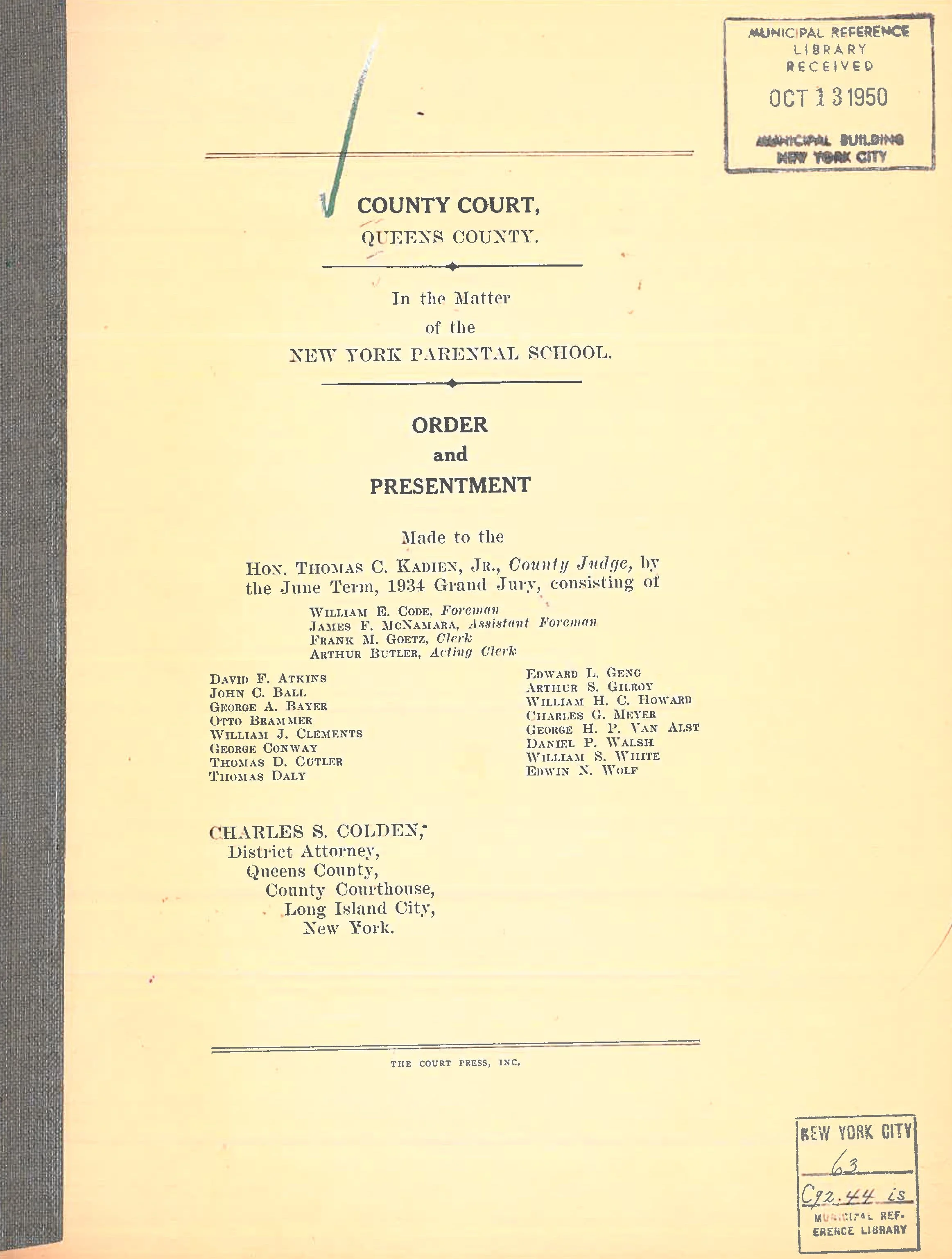
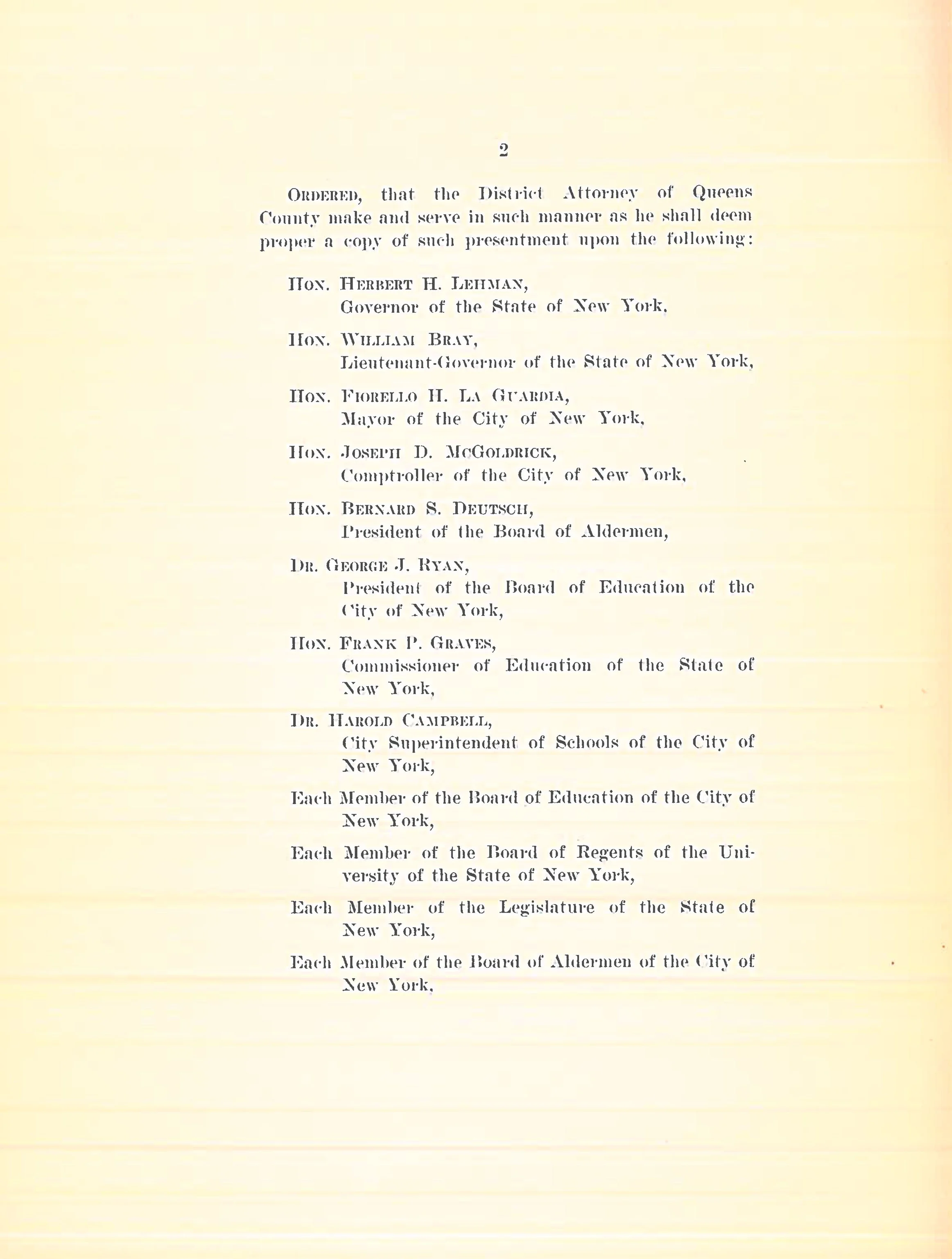
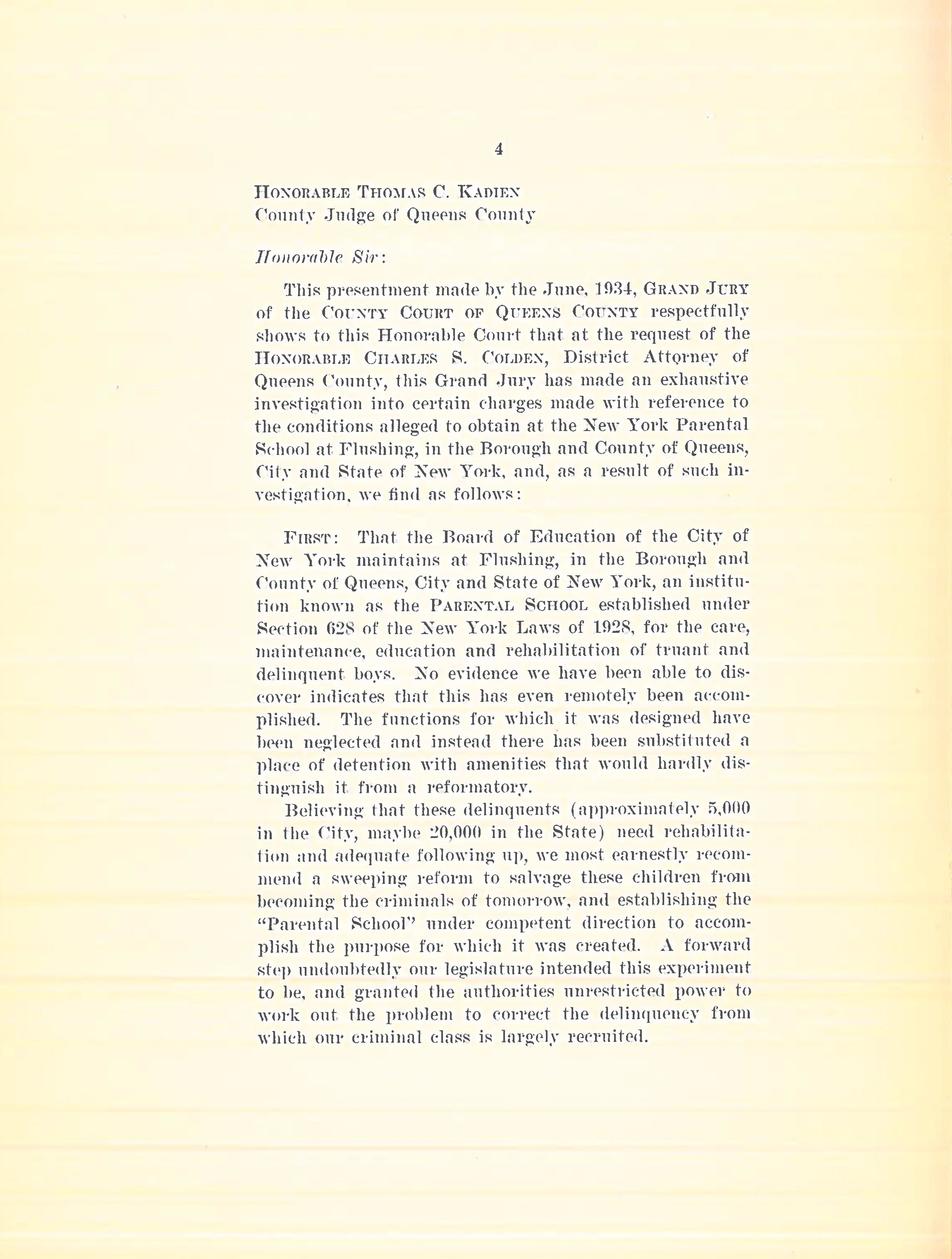
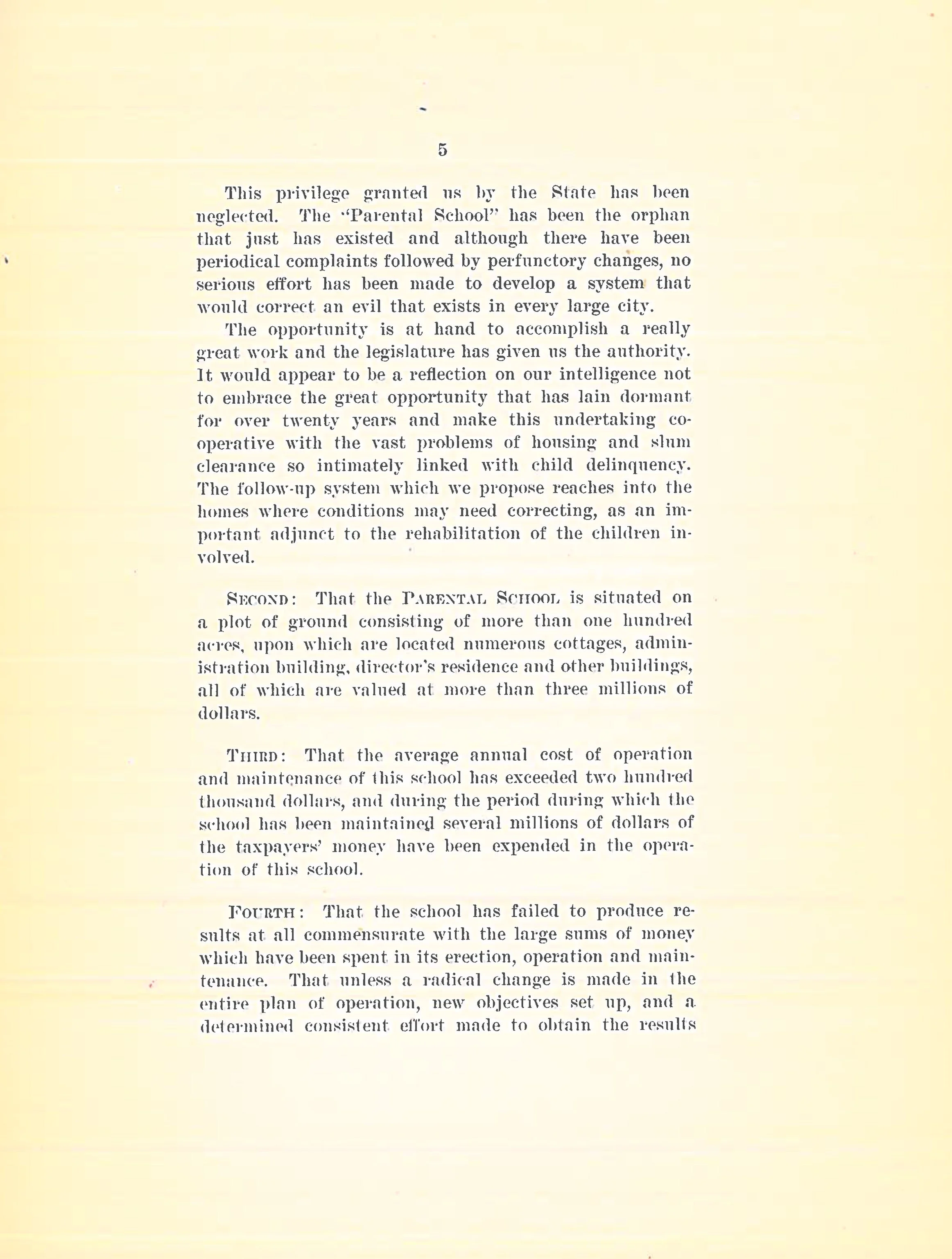
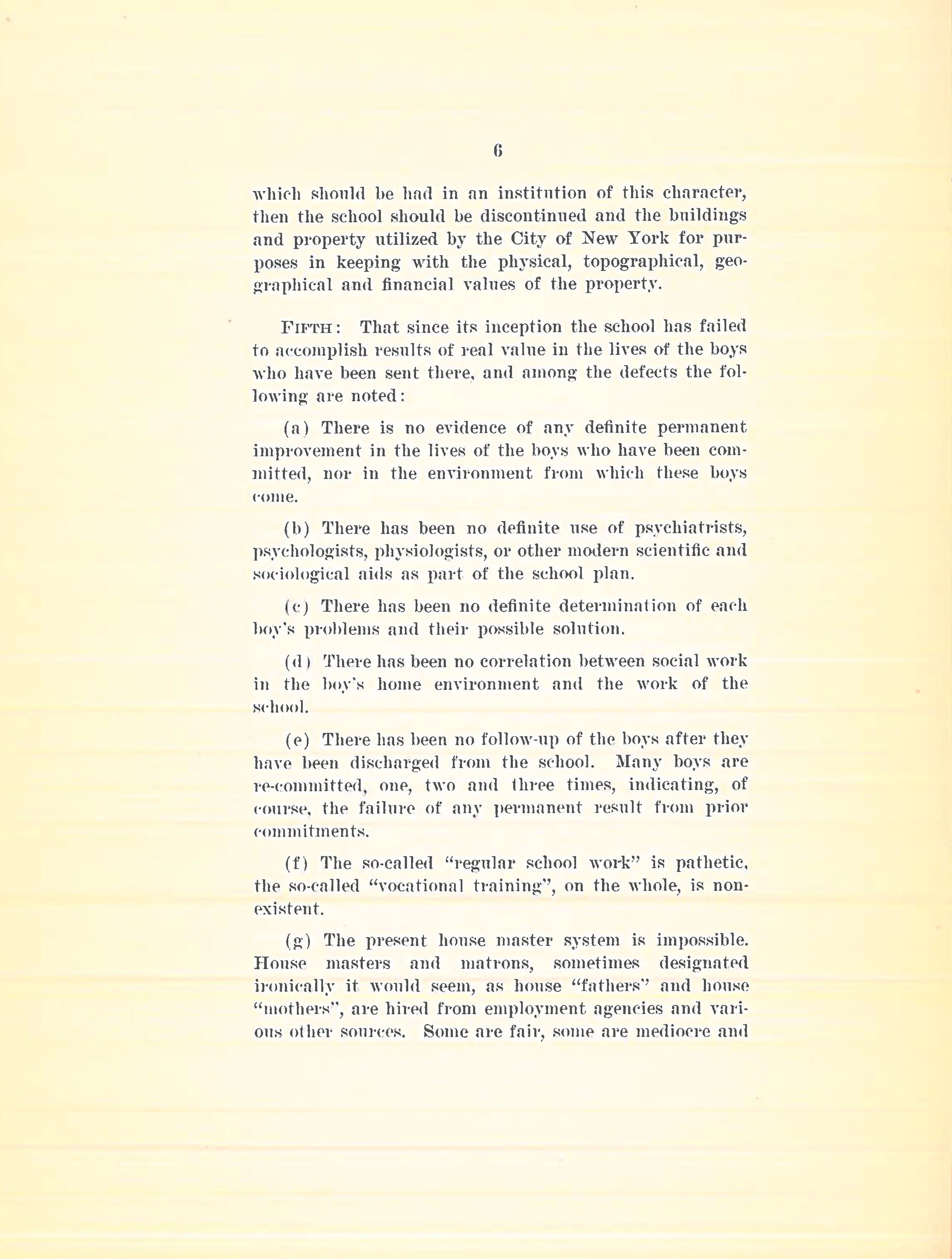
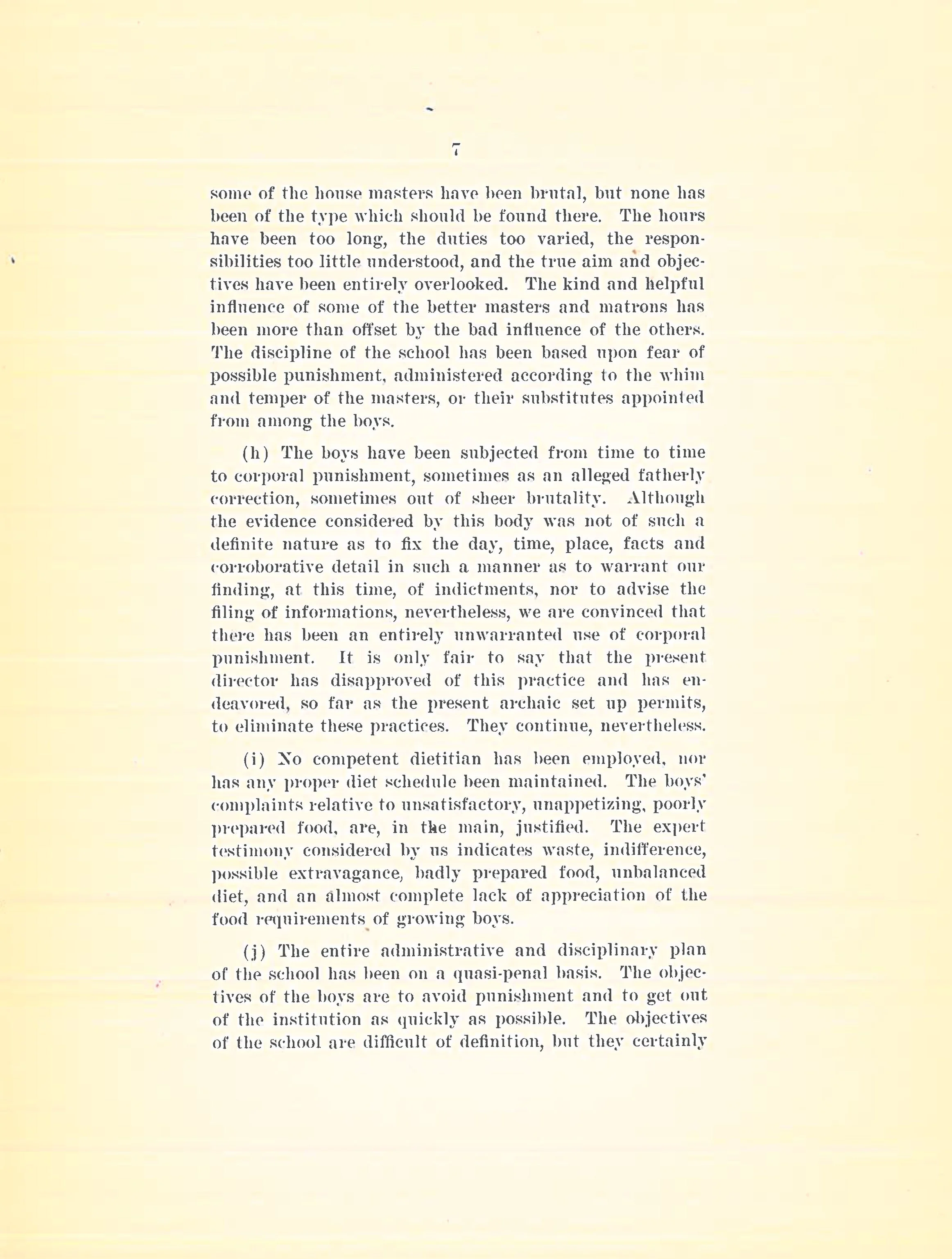
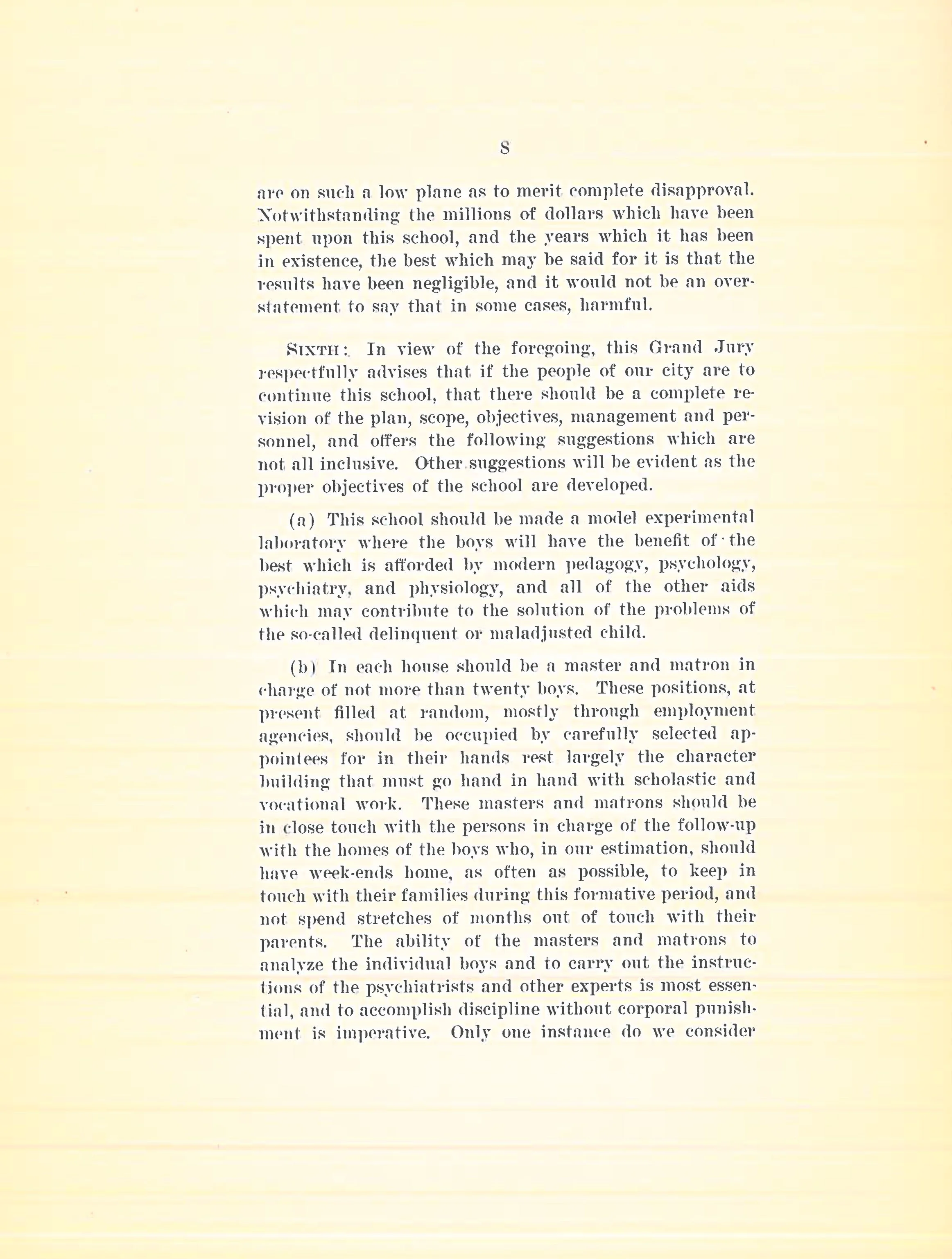
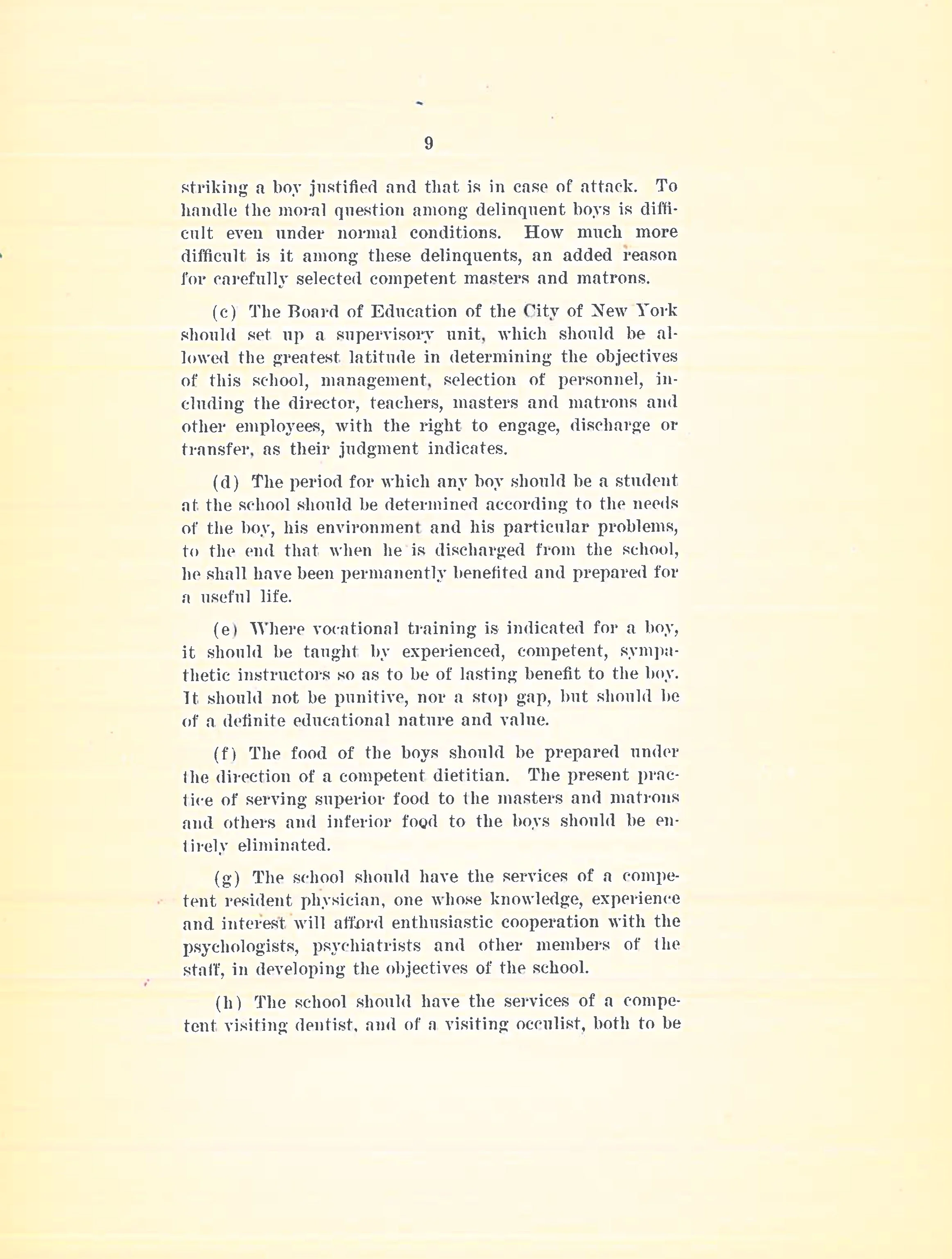
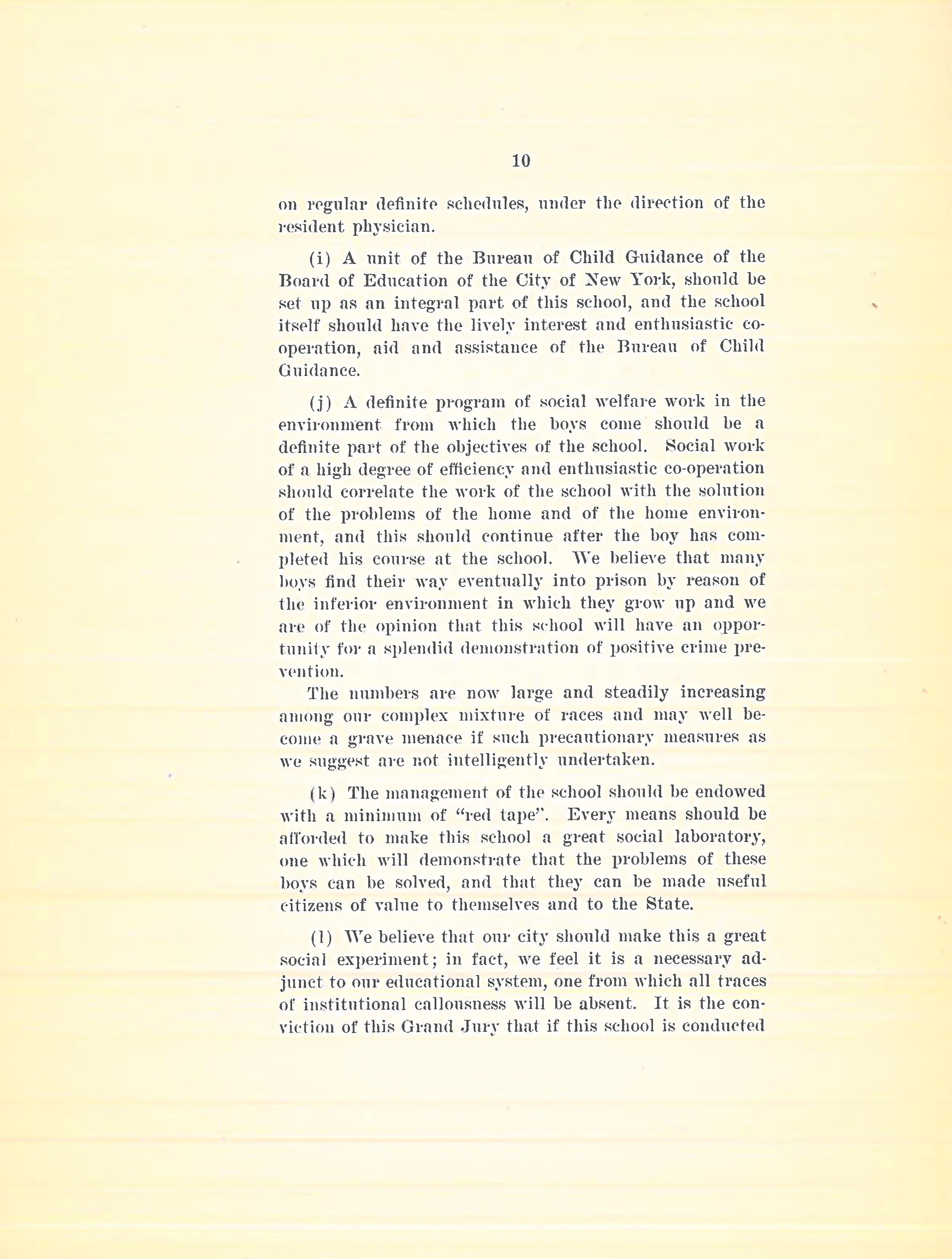
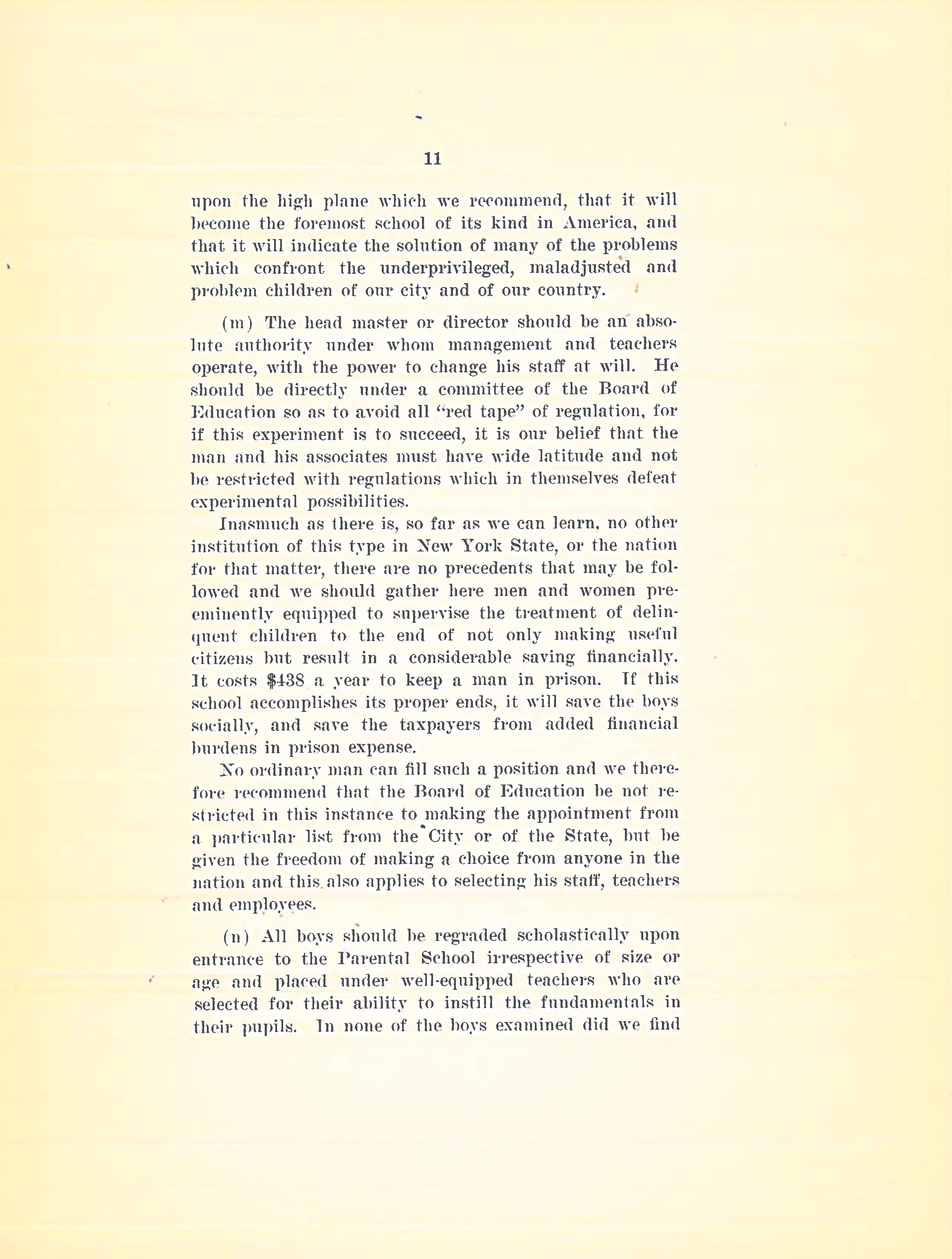
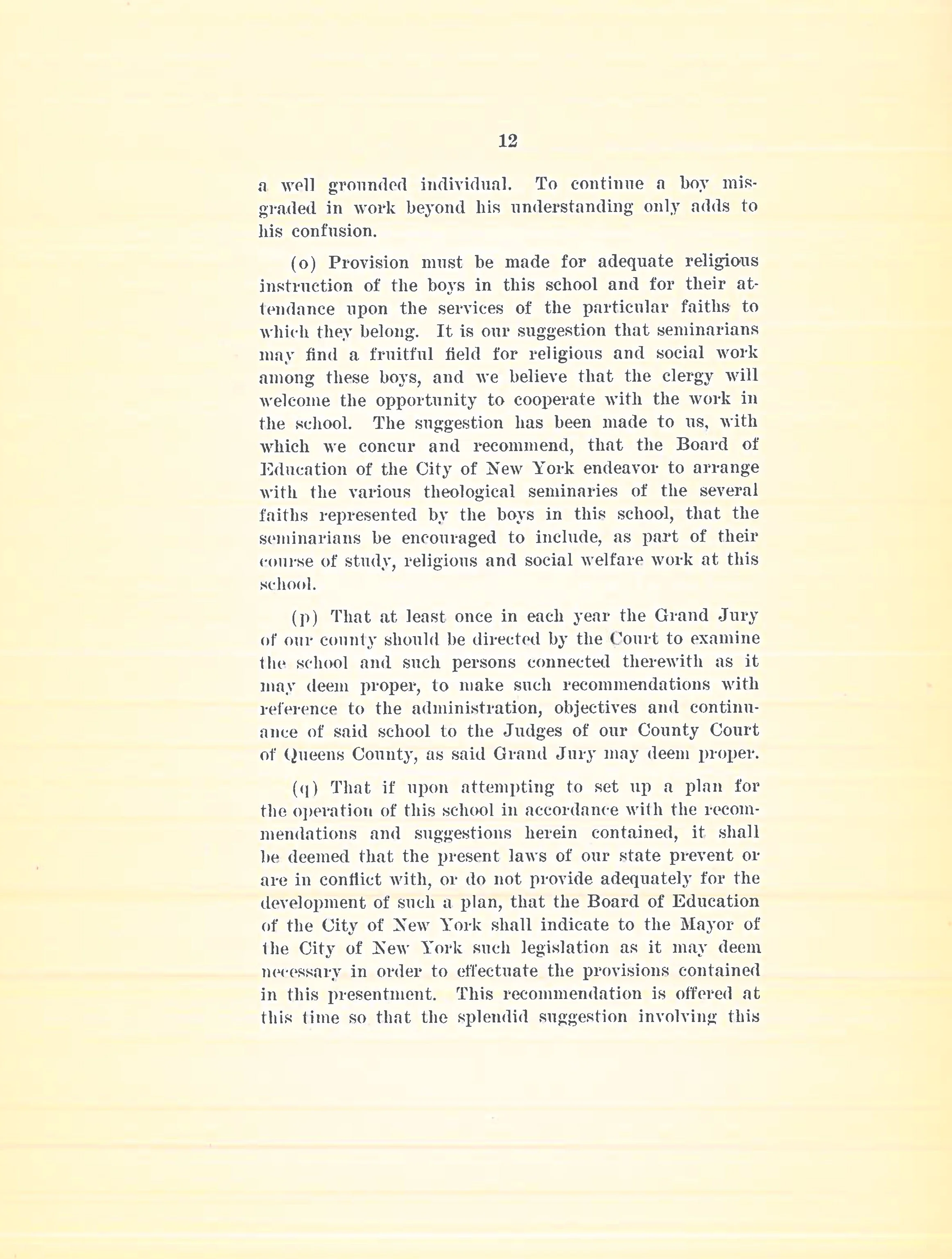
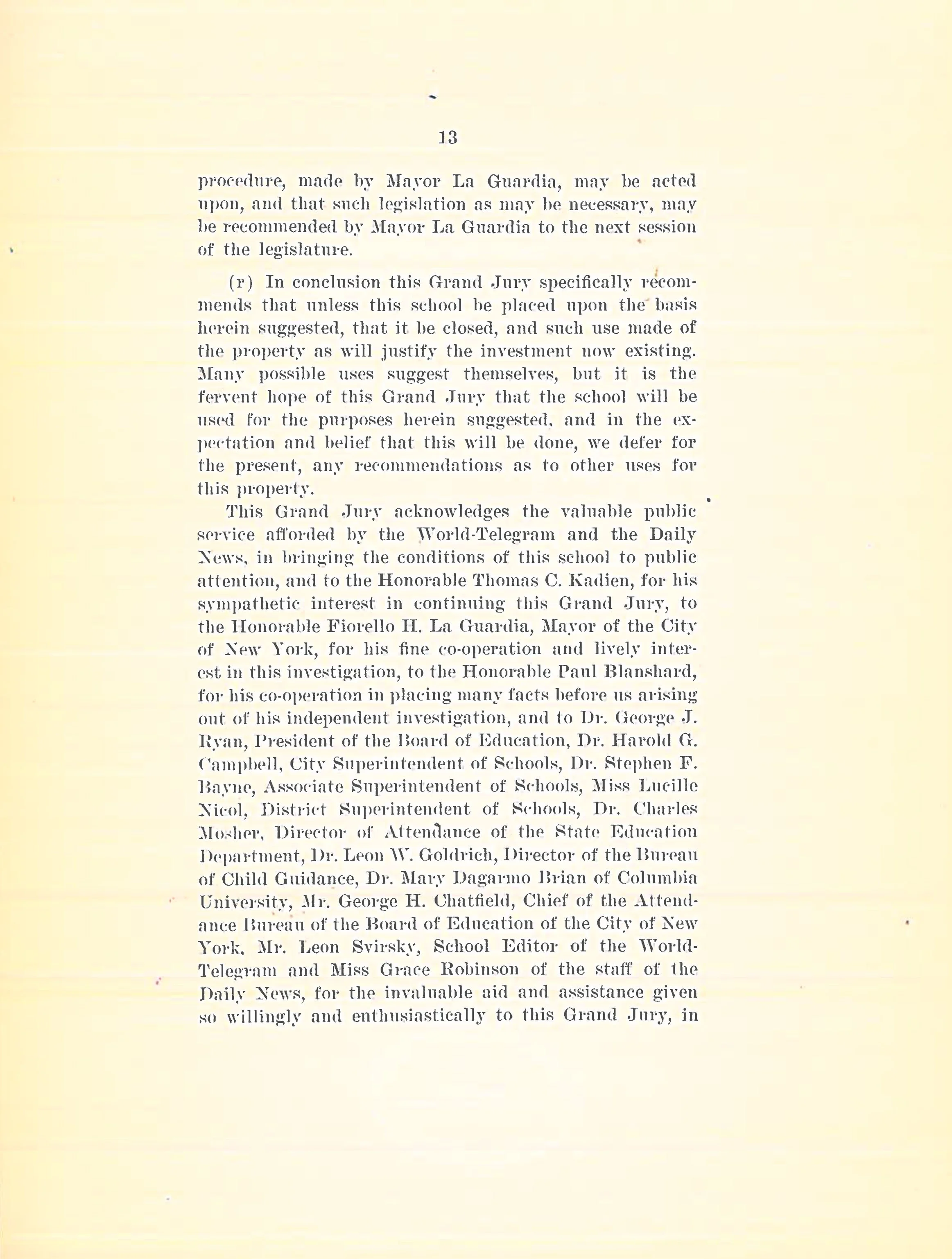
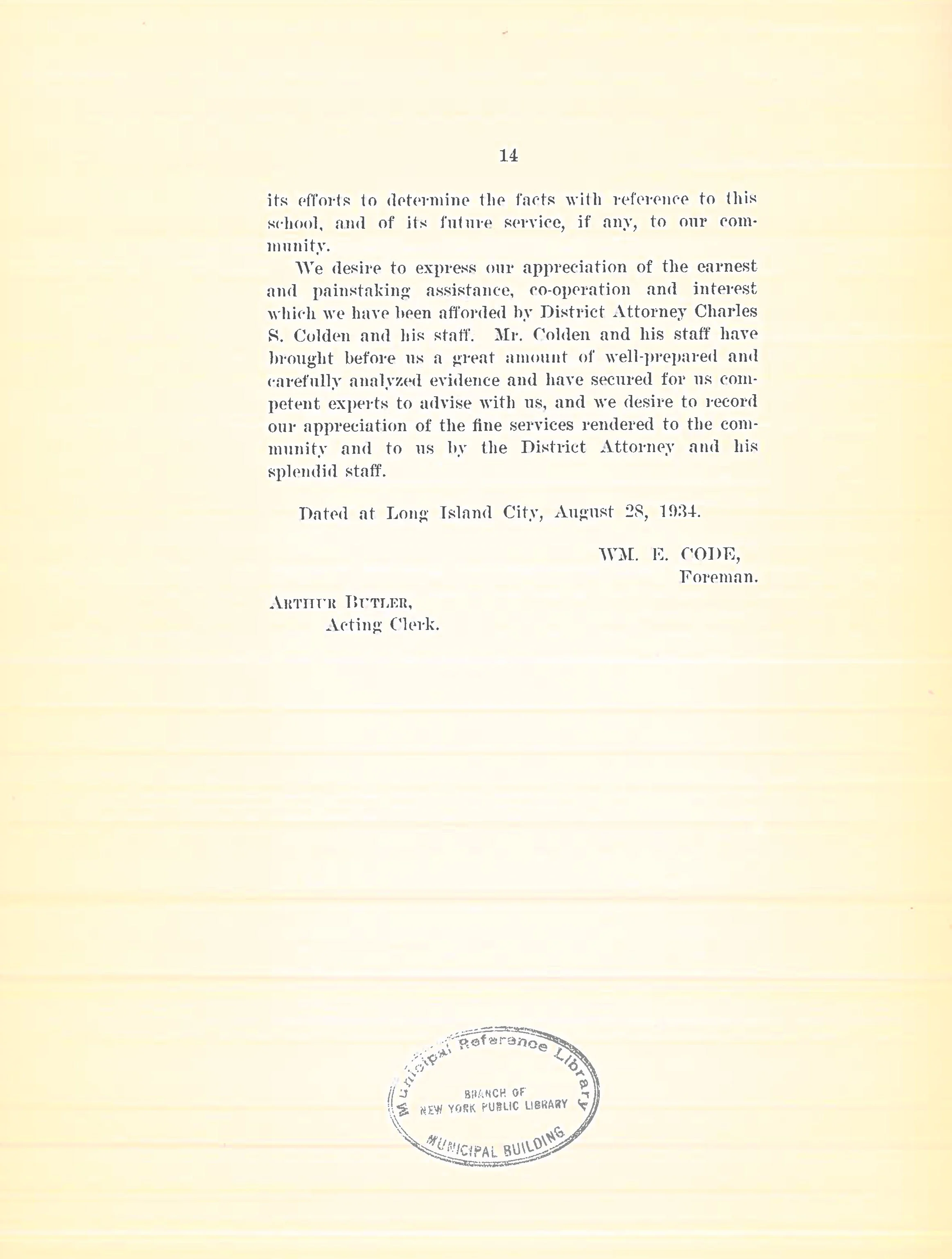
The main problems the Grand Jury identified were the lack of long-term improvement of the boys, “no use of psychiatrists, psychologists, physiologists, or other modern scientific and sociological aids...,” no follow-up after discharge, a lack of useful training, ill-trained and screened house masters and matrons (who were noted to range from fair to mediocre to brutal), corporal punishment, poor nutrition, and an overall sense of a penal institution. After listing a 16-point plan for improving the school, the Grand Jury concluded that unless these recommendations were followed the school should be closed and the buildings and land repurposed.
New York Parental School, Queens, Plumbing Shop, August 5, 1929. Board of Education Collection, NYC Municipal Archives.
Although a September 4th New York Times article noted the conflicting reports from Lovejoy and Rice, by September 30, 1934, all students at the Parental School were returned to classes in the public schools. The school was effectively closed while debates on whether to reform or abandon it continued.
The 192-page Board of Education final report was submitted in November 1934. It approached the school from a variety of angles, educational, medical, psychological, and incorporated the earlier reports by Rice and Lovejoy dismissing claims of abuse. Joseph K. Van Denburg, a teacher and educational reformer, had been assigned to review the staff at the school. His report was most critical, saying “The Parental School is still in the Dark Ages... the Home in 1934 shows few advances over the Home of 1904” despite advances in psychology and psychiatry. (p.114) The biggest problems noted by the survey committee were that the school was underfunded (and therefore not able to hire staff with the requisite training) and overcrowded with too many students assigned to each housemaster. Additionally, the mixing of ages, wildly different intellectual capacities, and developmental or behavioral issues almost guaranteed problems. In its conclusions, they outlined a roadmap for reforming and reopening the Parental School with a maximum capacity of 240 boys, 20 to each cottage division, and large increases in staffing and operating budget.
New Ideas
While “some members of the Board... favored closing the school permanently and ‘farming out’ incorrigible pupils to religious and social welfare organizations,” some still hoped to turn the institution around. In March 1935, Pulvermacher resigned as Director and the Board appointed Dr. Leon W. Goldrich, director of the Bureau of Child Guidance, to usher in a new era “marked by sympathetic treatment and the most advanced thought in mental hygiene and child guidance.” Dr. Goldrich stated that the Parental School would not be reopened until it had “adequate and well-trained personnel.” But in June 1935, at the request of Mayor LaGuardia, the Board turned control over the Parental School to the City to temporarily house patients from the NYC Children’s Hospital for Mental Defectives on Randall’s Island—soon to be displaced by Robert Moses for the construction of the Triborough Bridge.
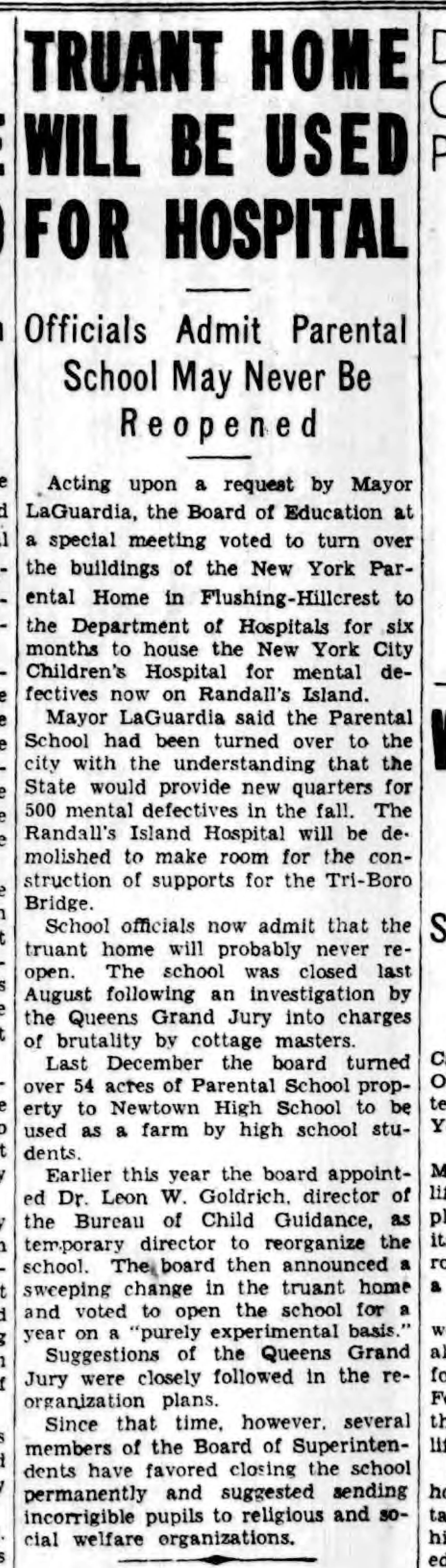
Long Island Daily Press, June 15, 1935.
Meanwhile, Charles S. Colden (now a Queens County Judge) had established a committee “to study the feasibility of establishing a free city college in Queens.” In September 1935, the committee unanimously voted in favor of it and asked the City to turn over the campus of the Parental School. The plan gained the support of Johanna Lindlof, Queens member of the Board of Education, who envisioned an education center with a college and three high schools: a general, a vocational, and an agricultural high school. She hoped “the center would be completed in time for the World’s Fair of 1939 as ‘a progressive experiment for the whole world to see.’” (Brooklyn Eagle, Nov 3. 1936)
In April 1937, The Board of Education formally surrendered forty-eight acres of the 107-acre campus and the buildings of the New York Parental School to the City for Queens College. The remaining fifty-five acres of the site were set aside for a public-school educational center. The Board of Superintendents of the Department of Education recommended “that an industrial high, a general high and an elementary school be built on the remaining acres, thus turning the area into an educational center for the borough.”
On October 4, 1937, Queens College welcomed 400 high school graduates as its incoming class. Of them, 95% were from Queens and 50% were women. The high school educational center was never built, as college administrators stated they would need room for expansion. Beginning in 1950, with the addition of the first new campus building, two of the original three cottage dormitories were torn down, along with the Superintendent’s Cottage. However, the Administration Building, the Hospital, and three cottages remain, repurposed into classrooms and offices. Few who pass through these buildings know of the troubled history of the New York Parental School.
Sources:
Doing justice to this story required researching multiple collections and reading often conflicting reports and newspaper articles. In order to show the way this story unspooled in the public eye I have arranged my sources chronologically.
Annual report - New York City Board of Education. Superintendent of Schools 1906/07
Annual report - New York City Board of Education. Superintendent of Schools 1909/10
Annual report - New York City Board of Education. Superintendent of Schools 1910/11 PT.1
Annual report - New York City Board of Education. Superintendent of Schools 1929-1930
Annual report - New York City Board of Education. Superintendent of Schools 1930-1931
Annual report - New York City Board of Education. Superintendent of Schools 1932/1933
36th Annual Report of the Superintendent of Schools, City of New York. NYC Municipal Library.
“City’s Parental Home to be Dedicated Dec. 11,” Brooklyn Daily Eagle, November 30, 1909.
NYC Municipal Archives, REC0007 Records of the Board of Education, Series 755 Bureau of Reference, Research, and Statistics (BRRS). Vertical File. ca. 1888-1966.
“90% of Boys Discharged from City Truant School Become Useful Citizens,” Brooklyn Daily Eagle, September 11, 1929.
“Office of the Commissioner of Accounts, In Reference to New York Parental School – Preliminary Report,” April 30, 1934. NYC Municipal Archives, Mayor LaGuardia Collection, box 3114, folder 5.
“Truant School Nest of Crime, Probe Charges,” Grace Robinson, New York Daily News, June 18, 1934.
“Board Willing City Probe Truant Home,” Grace Robinson, New York Daily News, June 19, 1934.
“Early Clean-up Predicted for Boys’ School,” Grace Robinson, New York Daily News, June 20, 1934.
“Boys Home No Sunday School, Dean Admits,” Grace Robinson, New York Daily News, June 21, 1934.
“Truant School Data Going to Grand Jury,” Grace Robinson, New York Daily News, June 22, 1934.
“Killer Guarded Them? Truant School Master Bared As a Murderer.” Grace Robinson, Daily News, Sunday, June 24, 1934, page 127.
“Truant School Long a Problem—Parental Institution Under Inquiry,” New York Times, June 24, 1934.
“Mother Near as Truant Got Brutal Beating,” Grace Robinson, New York Daily News, June 25, 1934.
“Cottage Life at New York Parental School – Flushing, N.Y. Report of Owen R. Lovejoy,” July 6, 1934. REC0007 Records of the Board of Education, Series 755 Bureau of Reference, Research, and Statistics (BRRS). Vertical File. ca. 1888-1966
“Boy Bares Bruised Head in Parental School Probe,” New York Daily News, July 7, 1934.
“Grand Jury Hears Them, Jury Reviews School Abuses Told by Pupils,” New York Daily News, July 11, 1934.
“Medical Findings, Parental School, Flushing,” Submitted by Health Commissioner, John L. Rice, July 16, 1934. REC0007 Records of the Board of Education, Series 755 Bureau of Reference, Research, and Statistics (BRRS). Vertical File. ca. 1888-1966.
Queens County, New York. “In the matter of the New York Parental School,” August 28, 1934. NYC Municipal Library.
“Jury Demands Reforms for Truant School,” Robert Conway, Daily News, August 29, 1934.
“Terror Reign Revealed by School Jury—Boys Beaten, Badly Fed at Queens Parental Institution, Says Report.” Brooklyn Daily Eagle, September 28, 1934.
“Report of the Survey of the New York Parental School,” November 1934. REC0007 Records of the Board of Education, Series 755 Bureau of Reference, Research, and Statistics (BRRS). Vertical File. ca. 1888-1966.
“City College for Queens is Pressed in New Education Center Proposal—3 High Schools Added to Plan By Mrs. Lindof.” Brooklyn Daily Eagle, November 3, 1936.