“As we celebrate Pride, we also celebrate all those who came before us, the power they built, the sacrifices they made, the first steps they took when a day like today never seemed possible.” Mayor Zohran Kwame Mamdani spoke these words to hundreds of community members on June 9th, 2026, at his first ever Pride event. Whereas recent June community celebratory events have been held at Gracie Mansion, such as the Puerto Rican celebration or Juneteenth, the Pride Event was held in the Surrogate’s Courthouse, 31 Chambers street, also home and headquarters to the Department of Records and Information Services, which houses the Municipal Library and Municipal Archives. Aptly aligned, his speech included a focus on the significance of the archival imprints that the queer community has insisted permeates across generations through decades of community archiving.
In his community remarks, he told the story of Joan Nestle and her close companion, Mabel Hampton. Nestle is a Jewish fiction writer and co-founder of the Lesbian Herstory Archives, a non-profit, volunteer-led community archive in New York City. Hampton is a Black lesbian dancer and entertainer, who had met Joan as her employed caretaker. By the end of Hampton’s life, in addition to being her dear friend, Nestle acted in many ways as Hampton’s biographer: capturing her life through oral histories, leading to film and writing. The archive reveals Hampton as holding court for younger dykes to learn about lesbian life in 1920s Harlem, or for her cataloguing of the pulp fiction collection, affectionately branded as “survival literature.” Mayor Mamdani illustrated the impact of their connection:
I think of a story told by Joan Nestle, an archivist of queer history in New York City. In the 1950s, her mother had briefly employed a woman named Mabel Hampton. Mabel was an activist, a domestic worker, and a dancer during the Harlem Renaissance. One day, Joan's mother approached Mabel and said, “I don’t know what to do.” She suspected that her daughter was gay.... Mabel turned to Joan’s mother and said, “So what?” Mabel was a lesbian, too. She took Joan under her wing as a second mother.
In his retelling, the mayor referred to Joan and Mabel’s home in the upper west side, at 215 West 92nd Street, now otherwise occupied, and earmarked as an LGBT historic site. This site later became the home to the Lesbian Herstory Archives, the largest and oldest lesbian archive in the world. The organization is now located in Brooklyn, at 484 14th Street, also designated as an historic site.
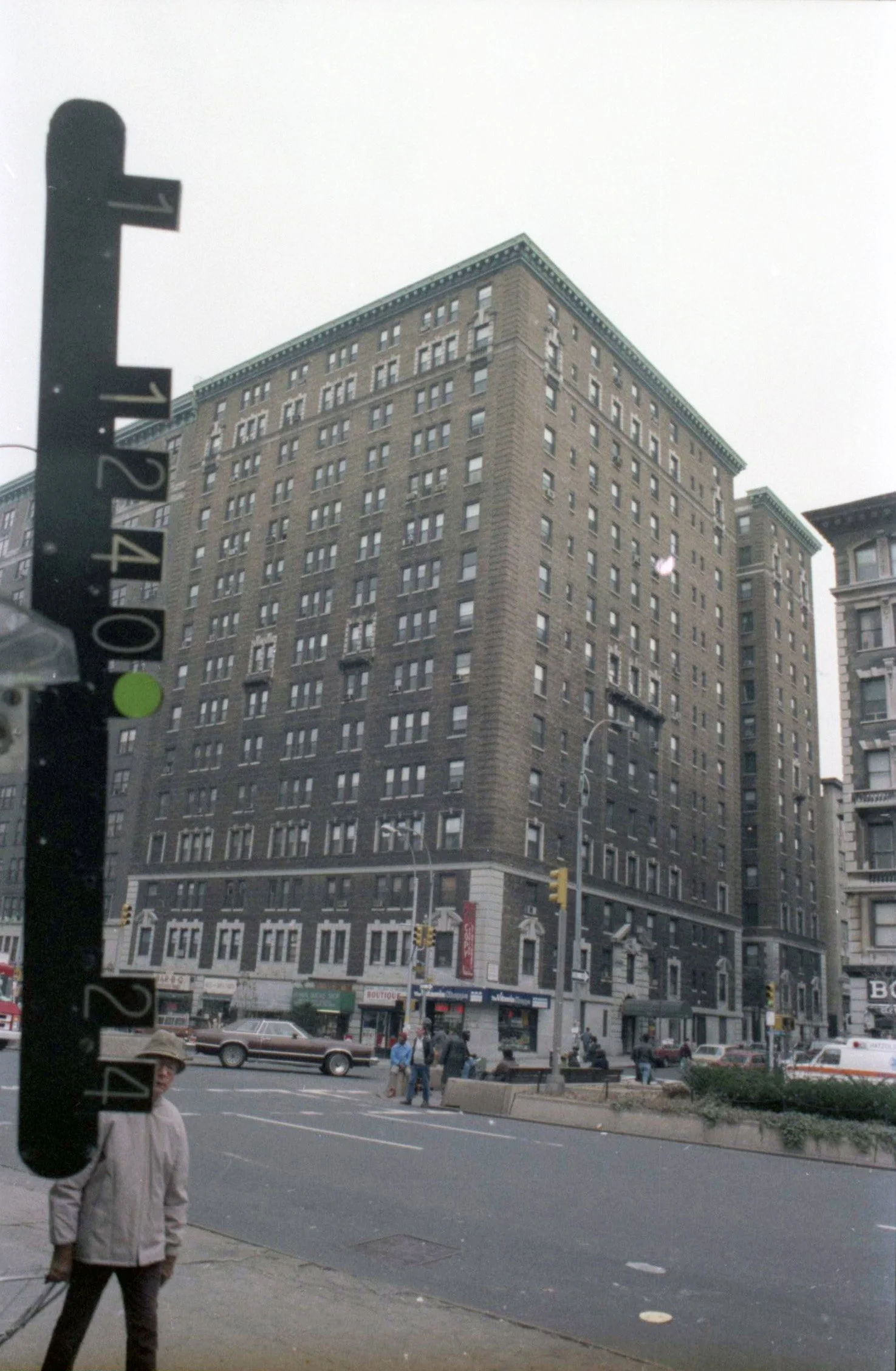
215 West 92nd Street, ca. 1985. From 1974-1992 the Lesbian Herstory Archives was located in Joan Nestle’s apartment, #13A. 1980s Tax Photo Collection. NYC Municipal Archives.
Mayor Mamdani ends his story of Nestle and Hampton with:
I cannot help but think of how many acts of protection and guidance, like Mabel to Joan, have taken place throughout New York City history in the apartments, the dance halls, the ballrooms, the bars where queer New Yorkers gathered. I think too of Joan’s commitment to preserving queer history, of keeping Mabel’s memory alive.
Currently residing in Australia, Joan Nestle learned of this storytelling and was overjoyed. She was happy to share her excitement with For the Record:
My world stopped, I could not believe what I was hearing, the Mayor of New York, Mayor Mandani speaking in a caring voice about the importance of Ms. Mabel Hampton and our friendship in the rich tapestry of New York history, said Joan Nestle as a response to hearing Mamdani’s June 9th Pride speech. “At 86 [years old], I heard respectful words that I never believed would be said by a powerful person. Ms. Hampton is truly a New York legend, and how she would have loved our new Mayor. I thank him so much.
For the Record is thankful that Pride has encapsulated the archive, and that we can use our historic markers in place and time, to share the history of this celebratory moment of NYC history.
To learn more about what we hold in the Municipal Library and Archives related to Pride, check out the many blogs on the history of pride:
https://www.archives.nyc/blog/2019/6/21/nypd-surveillance-of-lesbian-and-gay-power
https://www.archives.nyc/blog/2019/6/28/the-mayors-and-the-gay-pride-parade
https://www.archives.nyc/blog/2025/6/18/love-counts-nyc-lgbtq-history-in-the-municipal-library
https://www.archives.nyc/blog/2023/6/23/the-battle-for-gay-rights
https://www.archives.nyc/blog/2023/6/30/the-battle-for-gay-rights-continued
https://www.archives.nyc/blog/2022/6/17/lgbtq-teachers-parents-and-children
https://www.archives.nyc/blog/2022/6/24/new-york-city-celebrates-pride
We also have videos and additional mechanisms for finding out about being queer in NYC in the 1980s and 1990s. Searching “gay” “lesbian” or “AIDS” within the WNYC-TV Video collection will yield a lot of content.
Some stand outs include:
REC0047_2_013_0229 | NYC Municipal Archives : about lesbian + gay families
REC0047_2_013_0231 | NYC Municipal Archives : about lesbian + gay activism re: HIV/AIDS
REC0047_2_014_0244 | NYC Municipal Archives : about “outing”
REC0047_2_006_0041 | NYC Municipal Archives : partially about expanding the women’s movement to include lesbians
And there are so many others! The Hotline Episodes about Arts + Obscenity, Gay Bashing, and Gay Greenwich Village are also rich.