On February 2, 1949, New York City became the stage for a remarkable moment of postwar reconciliation and gratitude. A French freighter, the S.S. Magellan, docked at Erie Pier in Weehawken, New Jersey. Aboard was the French Gratitude Train, or Train de la Reconnaissance Française, also known as the “Merci Train,” bearing tokens of immense cultural and historical value that served as a priceless expression of a nation’s thanks.
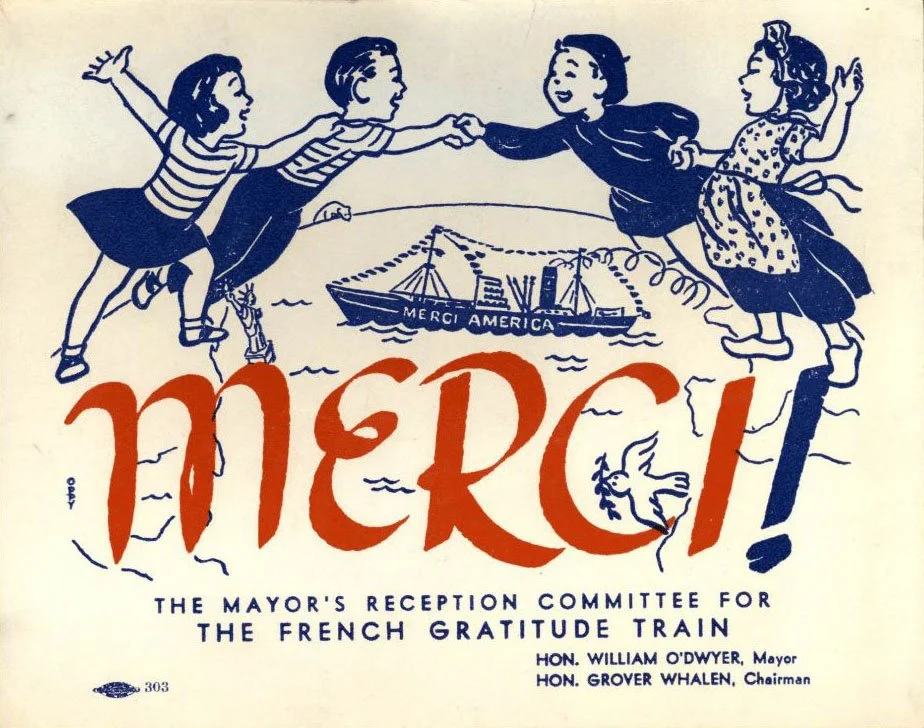
Invitation to the presentation of the Gratitude Train to the City of New York on February 3, 1949. Grover A. Whalen papers, NYC Municipal Archives.
The shipment consisted of 49 World War II–era French boxcars, each filled with carefully selected gifts for the people of the United States. The boxcars themselves, elaborately decorated, were considered significant artifacts in their own right. Known as the “40-and-8” boxcars, they held as much symbolic importance as the treasures they carried.
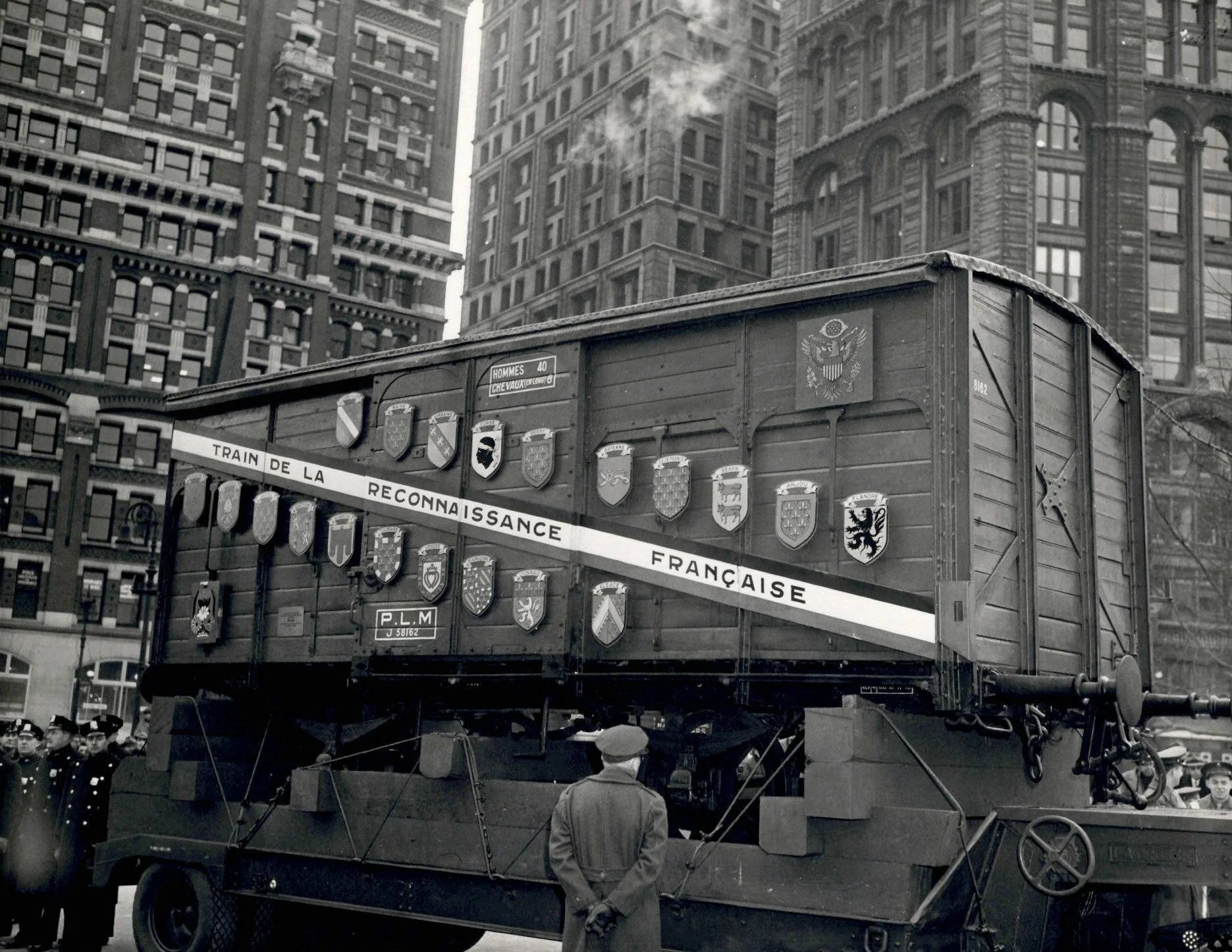
Gratitude Train Reception City Hall – Parade Presentation on February 3, 1949. Grover A. Whalen papers, NYC Municipal Archives.
Originally built in the 1870s as covered freight wagons, boxcars were later adapted for military use. Their name referred to their capacity to carry either forty men or eight horses. These cars had a long and complex history: they were used by France in both World Wars, by German forces during the occupation, and ultimately by Allied troops. Though never designed for passenger travel—with no seating, windows, or sanitary facilities—they nonetheless transported U.S. soldiers to and from the front lines during World War II. Infamously, the Germans used boxcars to transport millions of people to concentration camps.
Initially conceived by a French veteran employed by the Railroads of France, the Gratitude Train was filled with art, cultural artifacts, and historical treasures intended for each U.S. state, as well as the District of Columbia and the Territory of Hawaii. The gifts represented contributions from approximately six million French families and stood as a spontaneous, collective expression of gratitude.
The Gratitude Train was France’s heartfelt response to the 1947 American Friendship Train, envisioned by journalist and radio commentator Drew Pearson, which delivered more than $40 million worth of food, fuel, and clothing to war-torn France and Italy before the Marshall Plan took effect in 1948. Pearson emphasized that the effort was not a political gesture, but a means of strengthening the bond between the people of the United States and France.
The boxcar designated for the State of New York, containing about 10,000 gifts, was transported in a celebratory parade from the Battery to City Hall Plaza. The items ranged from children’s dolls and handmade wedding dresses to paintings, rare books, and historic swords—one reportedly belonging to Napoleon—and more. The collection was later displayed at 500 Park Avenue, where it remained open to the public for two weeks, from February 2, to February 20, 1949. “It is the first time in the history of the world,” declared the City’s Official Greeter, Grover A. Whalen, “that the people of any country have taken it upon themselves to address a direct message of friendship, devotion and loyalty to the people of another country.”
Among the reportedly more than 52,000 donated objects was a particularly unique collection: a set of 49 finely crafted miniature mannequins that documented two centuries of French fashion history
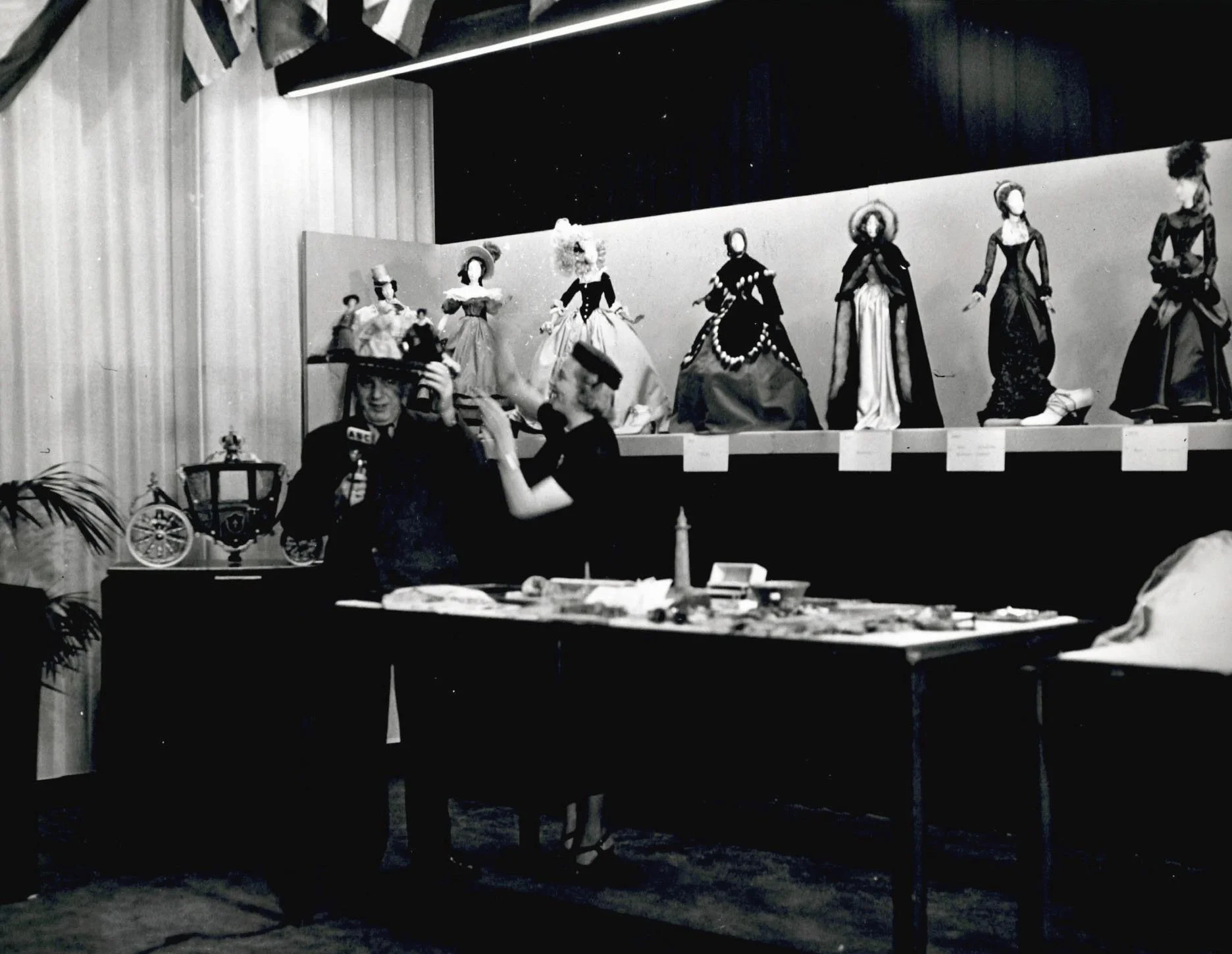
Gratitude Train Exhibit at 500 Park Ave. WJZ-TV Show “Kieran’s Korner” from exhibit GAW Walter Kieran, Elinor Lambert, Countess Tolstoi. February 21, 1949. Grover A. Whalen papers, NYC Municipal Archives.
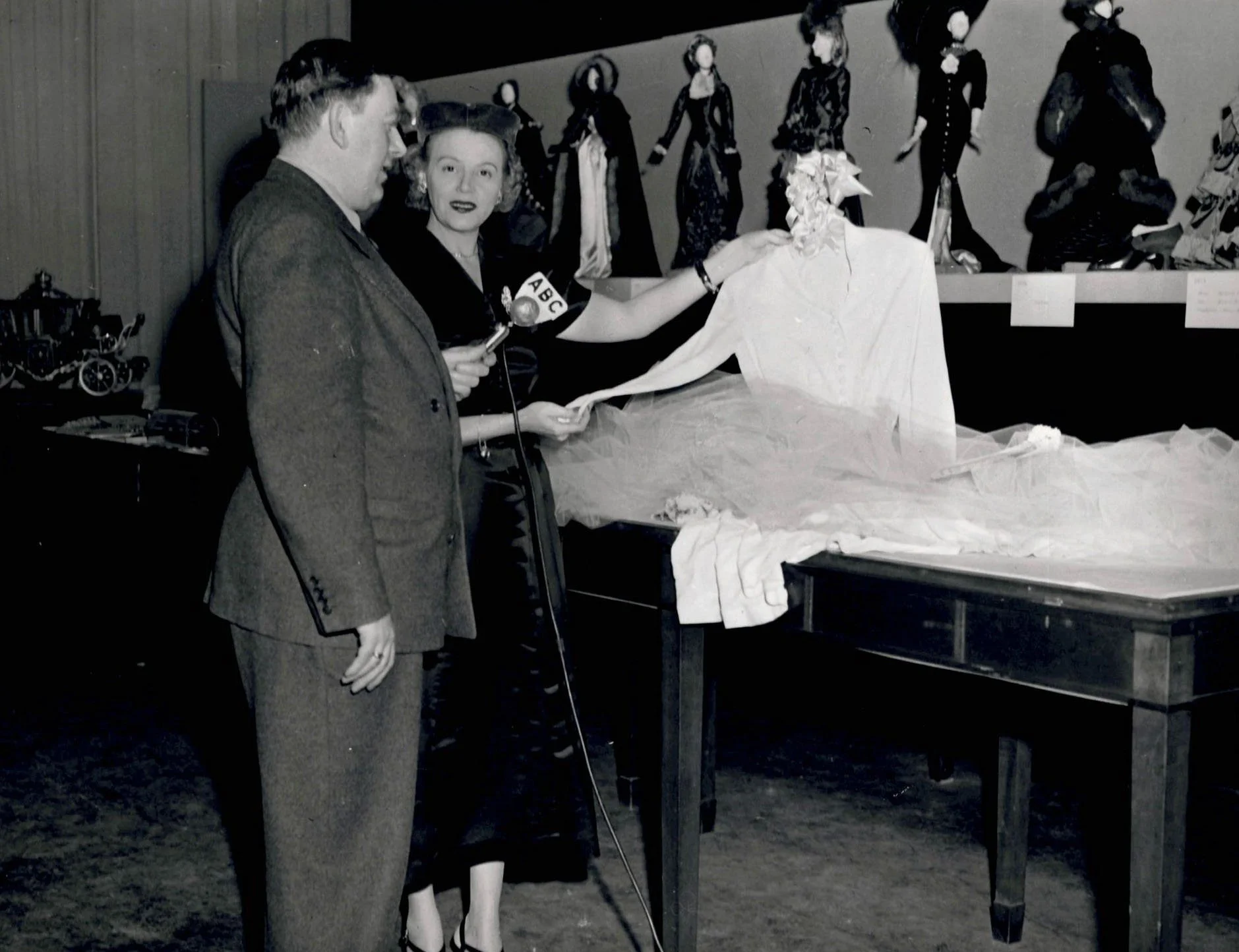
Gratitude Train Exhibit at 500 Park Ave. WJZ-TV Show “Kieran’s Korner” from exhibit GAW Walter Kieran, Elinor Lambert, Countess Tolstoi. February 21, 1949. Grover A. Whalen papers, NYC Municipal Archives.
Symbolic Ambassadors of Parisian Couture
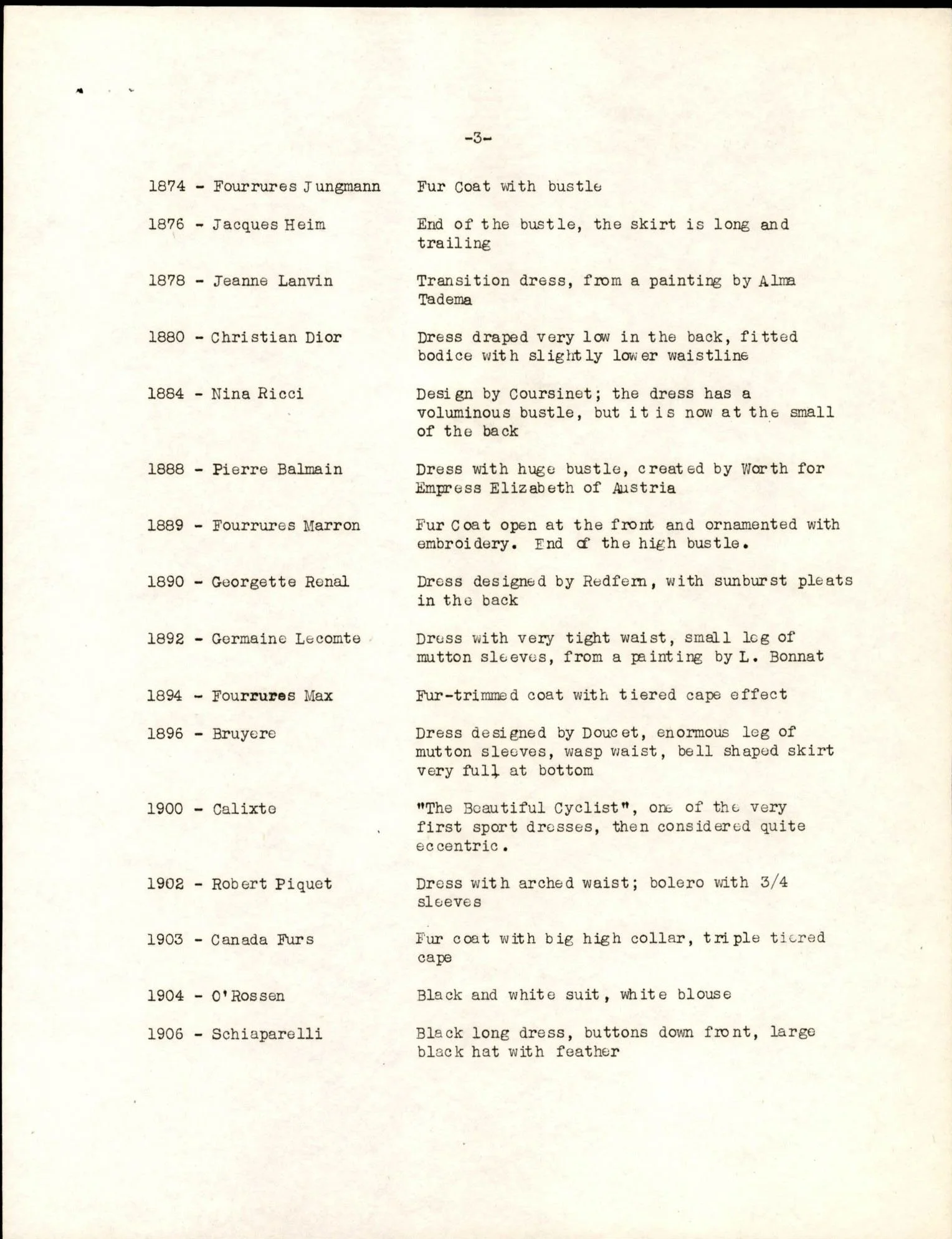
The most celebrated French couturiers of the day created the miniature figures, often referred to at the time as the “49 Little Ladies.” Each stood approximately 80 centimeters tall and was dressed in exquisitely crafted garments representing women’s fashion from 1706 to 1906, spanning stylistic periods from Rococo elegance to the refinement of the Belle Époque.
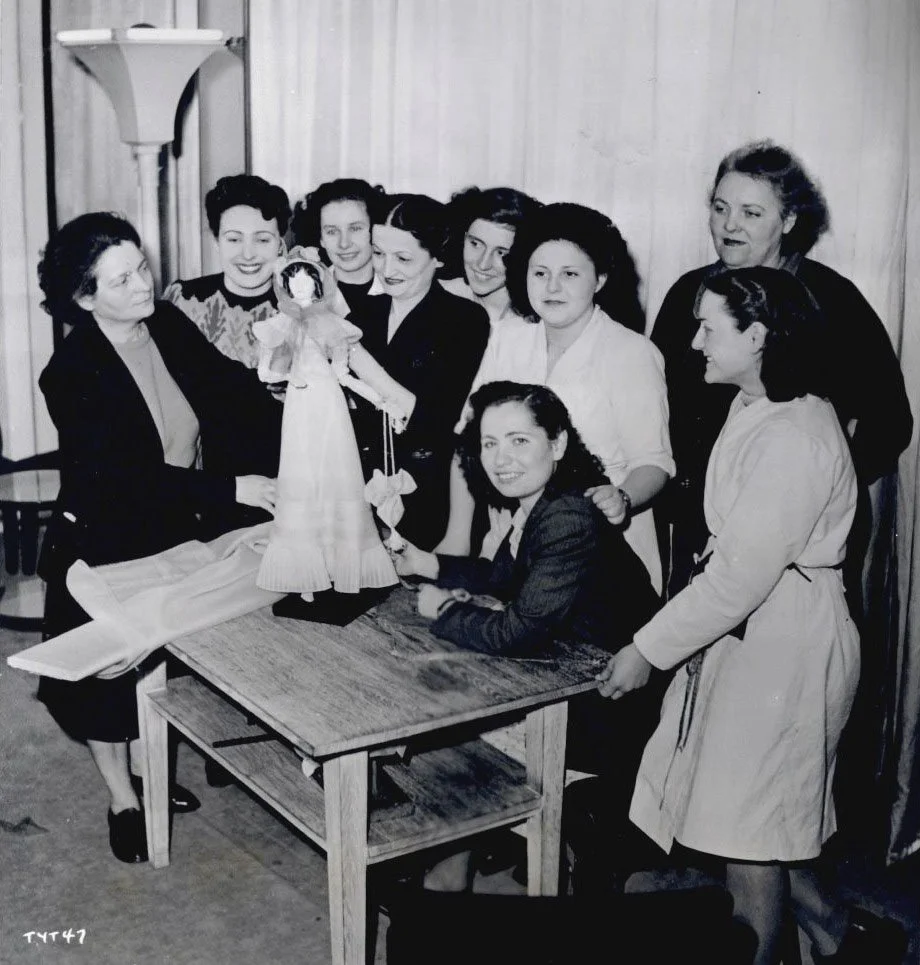
The costumed mannequin shown here is clothed by Paquin, the hat is by Elegances, the hairdresser is Elegances and the shoemaker is Richomme. The style is from the year 1811. Photograph from 1948, most likely in the workshop of the company. Grover A. Whalen papers, NYC Municipal Archives.
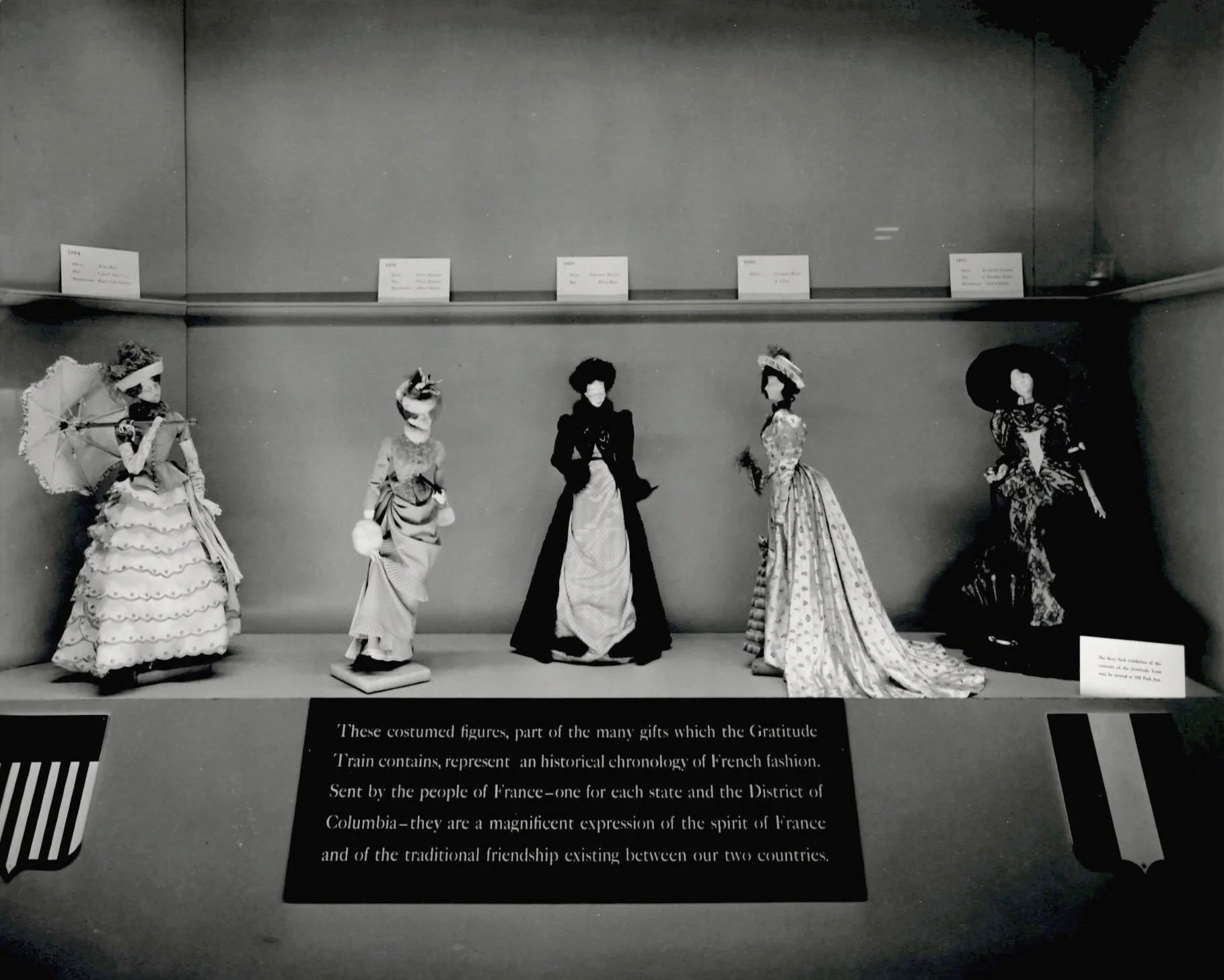
“These costumed figures, part of the many gifts which the Gratitude Train contains, represent a historical chronology of French fashion. Sent by the people of France – one for each state and the District of Columbia - they are a magnificent expression of the spirit of France and of the traditional friendship existing between our two countries.” The costumed mannequins display French fashion from (left to right) 1884 by Nina Ricci, 1888 by Pierre Balmain, 1889 by Fourrures Marron, 1890 by Georgette Renal, 1892 by Germaine Lecomte. Grover A. Whalen papers, NYC Municipal Archives.
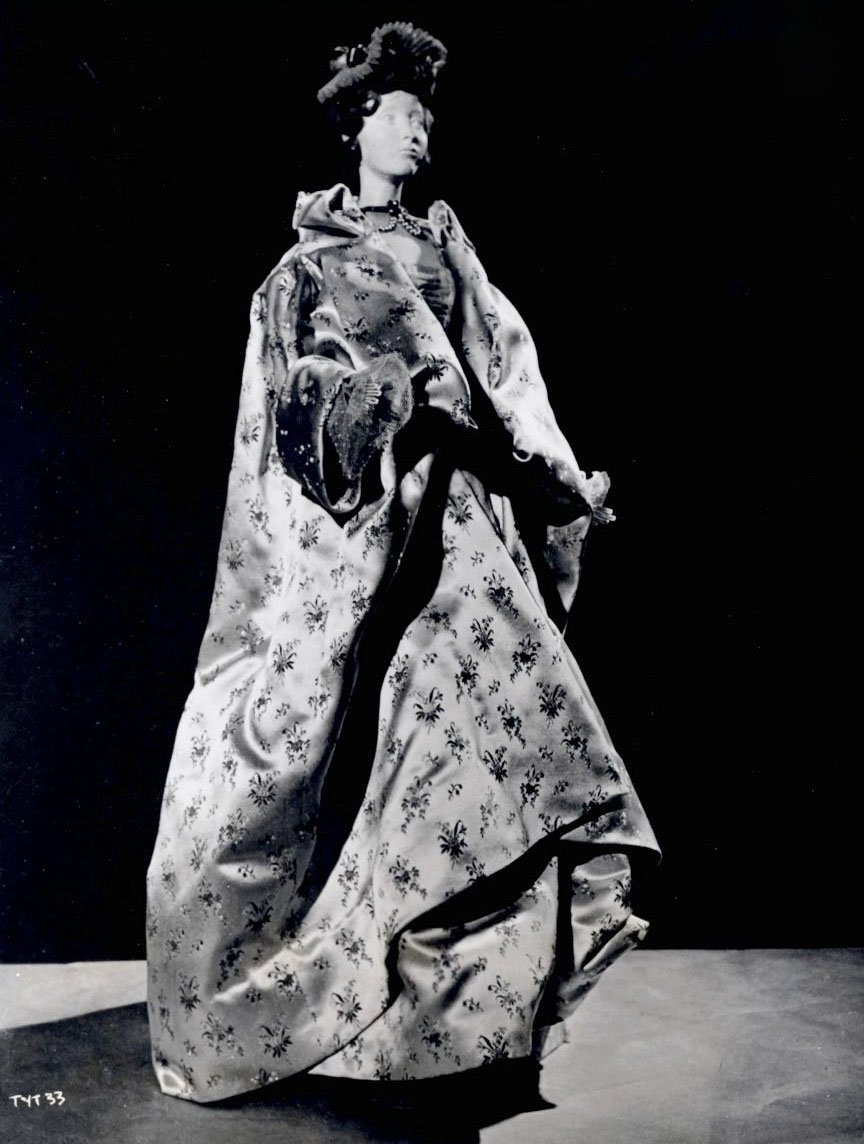
Although the accompanying text on the back describes the figure as “The mannequin shown here is clothed by Marcel Rochas, the hat is by Maud Roser, and the hairdresser is Luzie. The style is from the year 1718,” the inventory list instead labels the design as 1715 fashion, describing a “flowing dress on a funnel-shaped pannier—puckered back inspired by Watteau’s L’Enseigne de Gersaint (1720).” This discrepancy raises questions of historical accuracy and reflects how French fashion was represented for American audiences—anticipating what would later be formalized as fashion history, often without accounting for the lived experiences of everyday people. Grover A. Whalen papers, NYC Municipal Archives.
Far from being mere toys, these dolls functioned as artistic and cultural artifacts. Each mannequin featured intricately tailored gowns, carefully styled wigs, tiny shoes, and finely detailed accessories. Together, they demonstrated not only the technical mastery of French fashion houses but also the deep cultural significance of sartorial artistry within France’s national identity. Although they served no direct commercial purpose, the mannequins operated as symbolic ambassadors of French fashion, projecting an image of craftsmanship, heritage, and aesthetic authority.
The dolls themselves—and the concept of using miniature figures to display historic dress—were the brainchild of Eileen Bonabel. This was the second iteration of such a project; the first, Théâtre de la Mode, featured similarly scaled mannequins dressed in garments from the 1947 haute couture collections. Created between 1946 and 1947, that earlier exhibition traveled internationally to raise funds for war survivors and to help revive France’s severely weakened fashion industry. The idea was revived for the Gratitude Train, where it took on new meaning as both a diplomatic gift and a carefully constructed historical narrative.
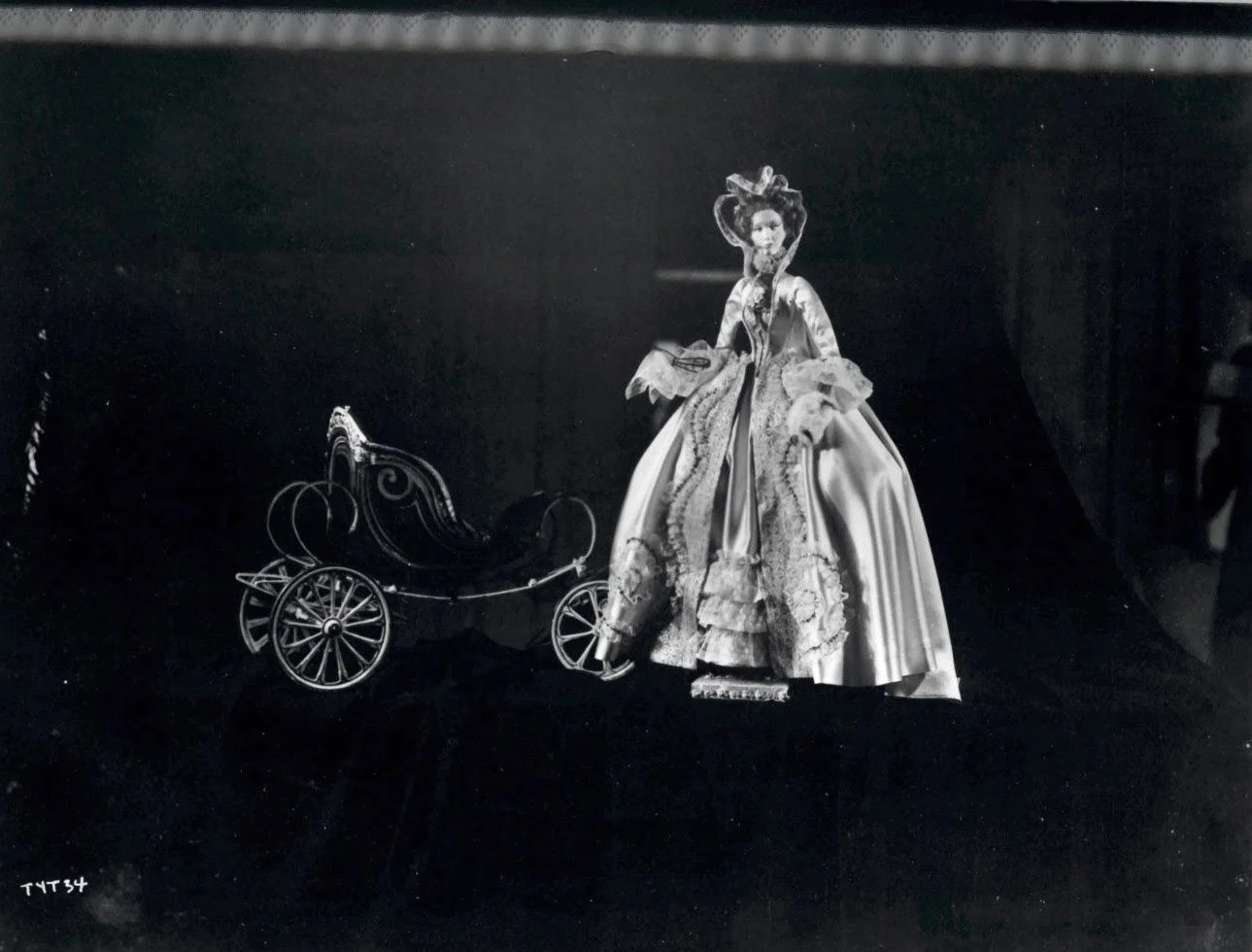
“The mannequin shown here is clothed by Jean Bader the hat is by Domino and the hairdresser is Marcel Maggy. The style is from the year 1733.” Grover A. Whalen papers, NYC Municipal Archives.
At the same time, the collection reflects a selective vision of fashion history. The garments on the mannequins largely capture elite and affluent modes of dress—those associated with aristocracy, royalty, and high society—while overlooking the clothing and lived experiences of ordinary people. In this sense, the “49 Little Ladies” help codify what has come to be widely understood as “fashion history,” reinforcing a narrative centered on haute couture and its traditions. By foregrounding Paris and its couturiers as the arbiters of style, the collection contributes to the enduring perception of that city as the epicenter—and, in many ways, the gatekeeper—of fashion. This legacy remains significant, as these same standards continue to shape contemporary definitions of taste, luxury, and legitimacy within the global fashion system.
The Legacy of Parisian Fashion
The ensemble was organized by the Society of Parisian Couturiers, formally known as the Chambre Syndicale de la Couture Parisienne. The 49 dolls assembled in 1948 represented a highly collaborative effort: a total of 113 contributors participated, including 42 fashion houses that designed the garments, 7 furriers, and an additional 64 artisans such as milliners, hairdressers, shoemakers, glovemakers, and embroiderers. This collective undertaking underscored the breadth of skilled labor behind haute couture, extending beyond designers to a wide network of specialized craftspeople.
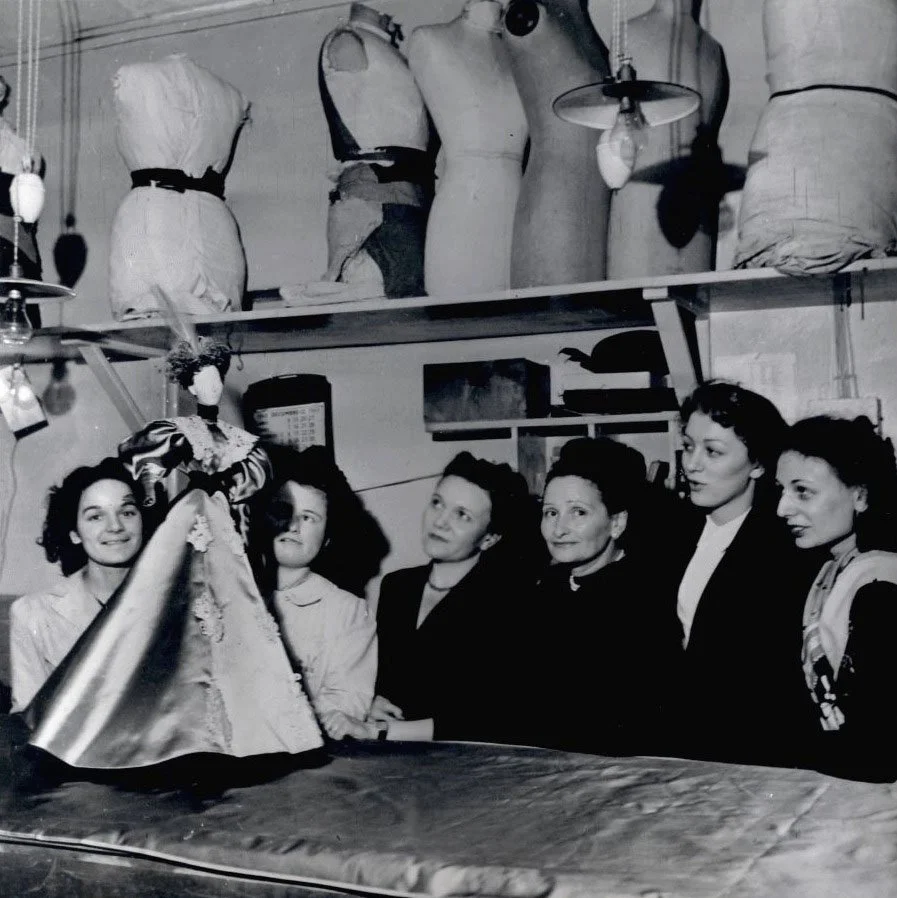
The mannequin shown here is clothed by Bruyere, the hat is by Bruyere, the hairdresser is Luzic. The style is from the year 1896. Grover A. Whalen papers, NYC Municipal Archives.
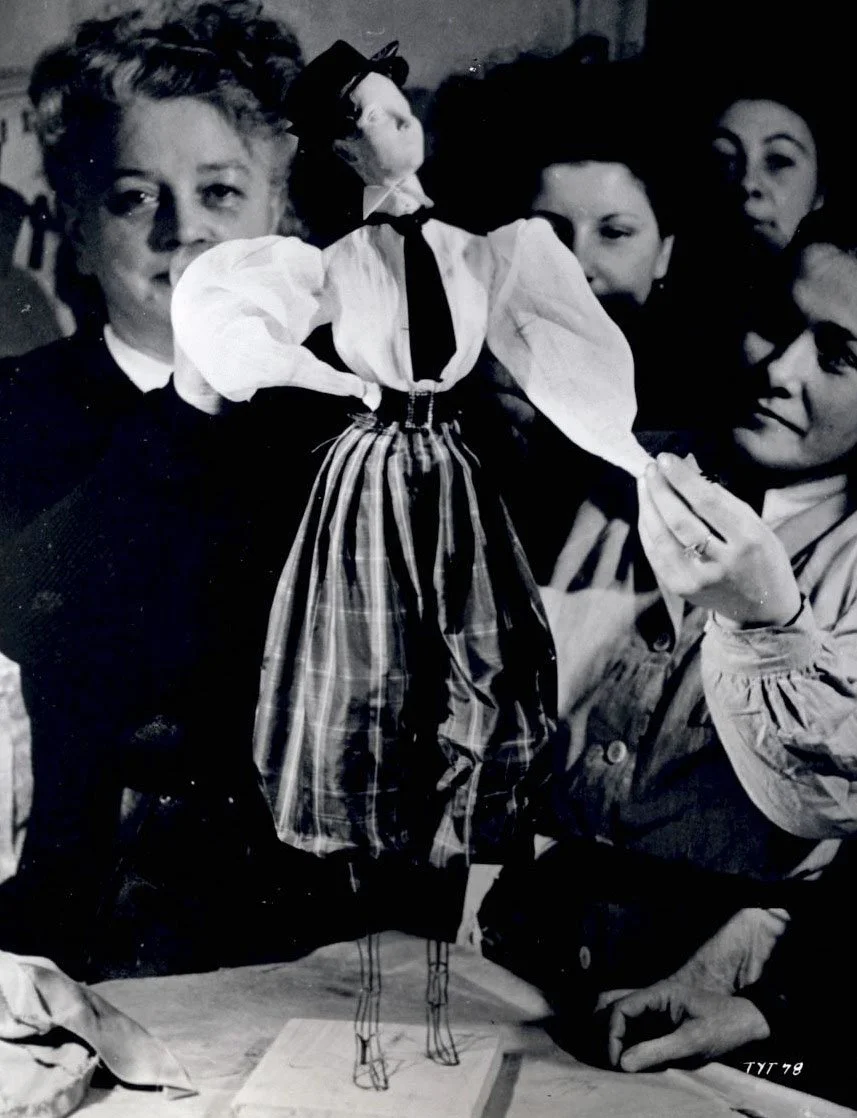
The mannequin shown here is clothed by Calixte, the hat is by Maud & Nano, and the hairdresser is Phyris. The style is from the year 1900. Grover A. Whalen papers, NYC Municipal Archives.
Although this was not the first time the organization had commissioned its members to dress scaled mannequins, it marked a significant conceptual shift. Unlike earlier projects that showcased contemporary styles, this collection required each participating house to interpret a specific historical moment, with designs corresponding to individual years between 1706 and 1906. In doing so, the mannequins constructed a retrospective vision of French fashion history, one filtered through the aesthetic values and perspectives of the late 1940s couture industry.
The “49 Little Ladies” therefore offer a distinctive lens on the past: rather than presenting history as it was lived, they present history as it was reimagined by some of the most influential designers of the mid-twentieth century. Esteemed couturiers such as Christian Dior, Elsa Schiaparelli, Jeanne Lanvin, and Jacques Fath contributed to this project, effectively shaping a canon of fashion history that privileged haute couture as its central narrative. This act of retrospective interpretation reinforces the authority of elite designers not only as creators of fashion, but also as arbiters of its history.
The Public Life of the “49 Little Ladies”
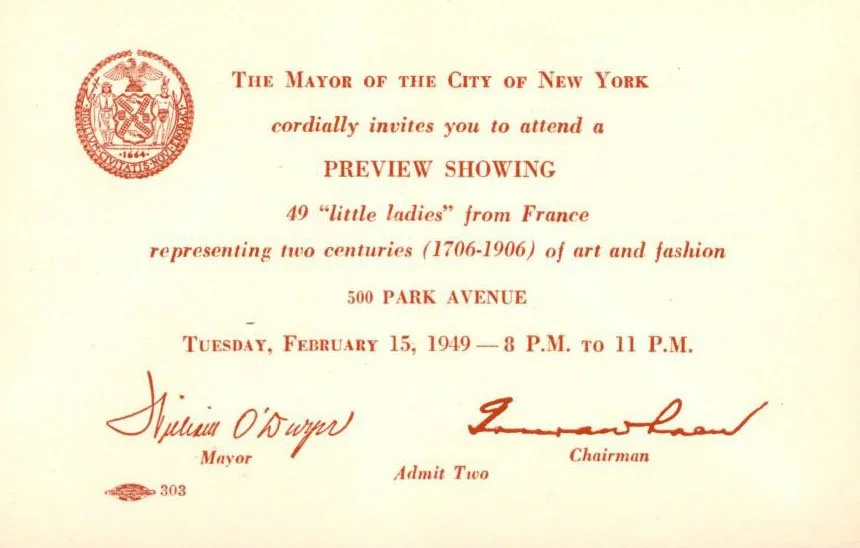
Invitation to the preview of the 49 “Little Ladies” from France representing two centuries (1706 – 1906) of art and fashion. Grover A. Whalen papers, NYC Municipal Archives.
Upon arrival in New York, the collection made its first public appearance in the ground floor windows of IBM headquarters at 590 Madison Avenue in Manhattan, where crowds paused to admire the “array of French fashion through two centuries.” The exhibit welcomed a diverse audience, from local high school students to international visitors, highlighting fashion as a form of accessible cultural exchange.
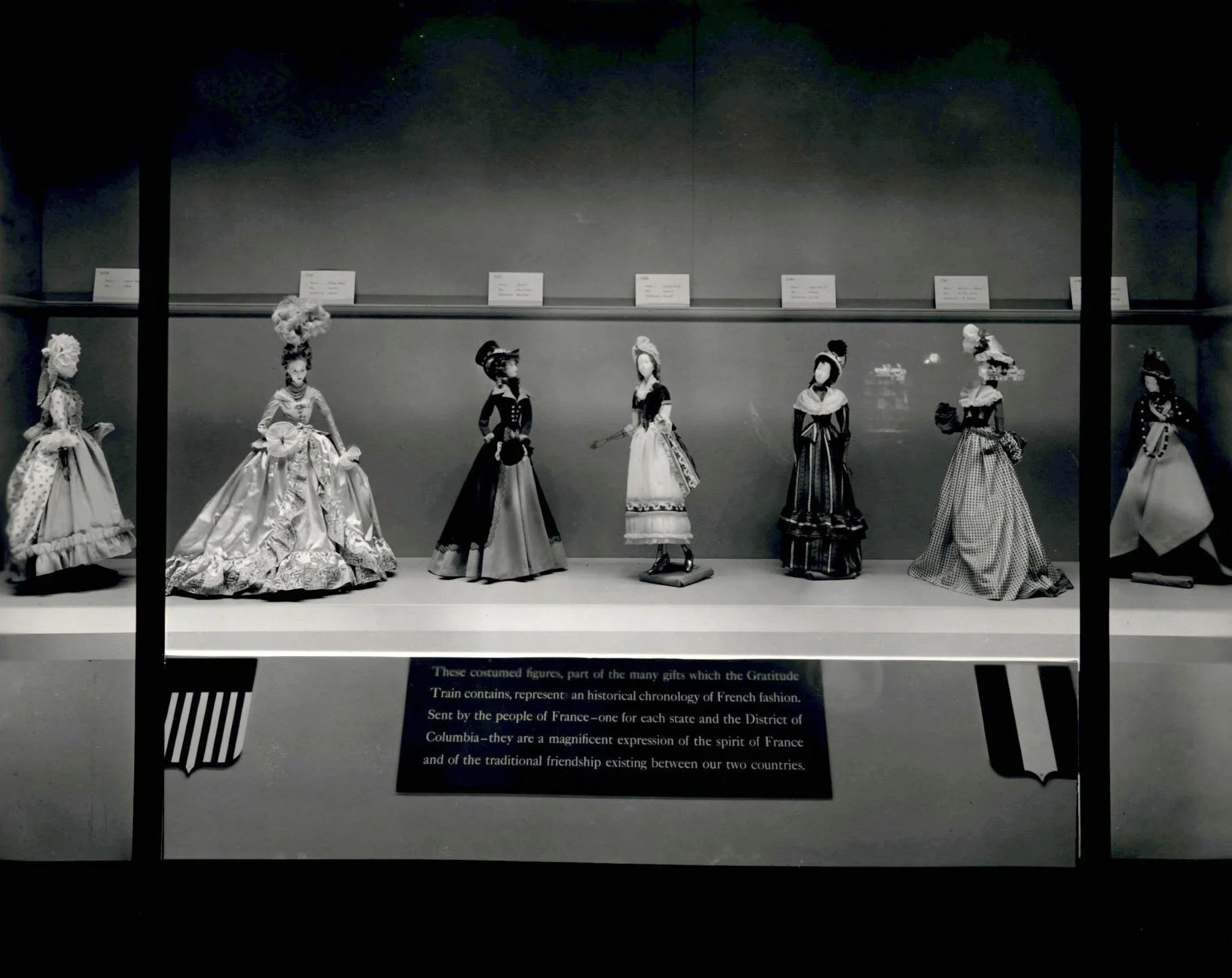
(left to right) 1779 by Lucile Manguin, 1785 by Maggy Rouff, 1787 by Mendel, 1788 by Jacques Griffe, 1789 by Agnes Drecoll, 1791 by Martial et Armand, 1797 by Jean La Faurie. Grover A. Whalen papers, NYC Municipal Archives.
The dolls were then moved to 500 Park Avenue, where countless visitors viewed the dolls alongside other gifts. The original plan had been for the dolls to travel across the United States, visiting all 48 states and the District of Columbia, to share the rich tradition of French couture with Americans. This travel itinerary also served a diplomatic purpose: by placing French fashion directly in the hands of the American public, the dolls acted as cultural ambassadors, reinforcing postwar goodwill and highlighting France’s enduring artistic influence.
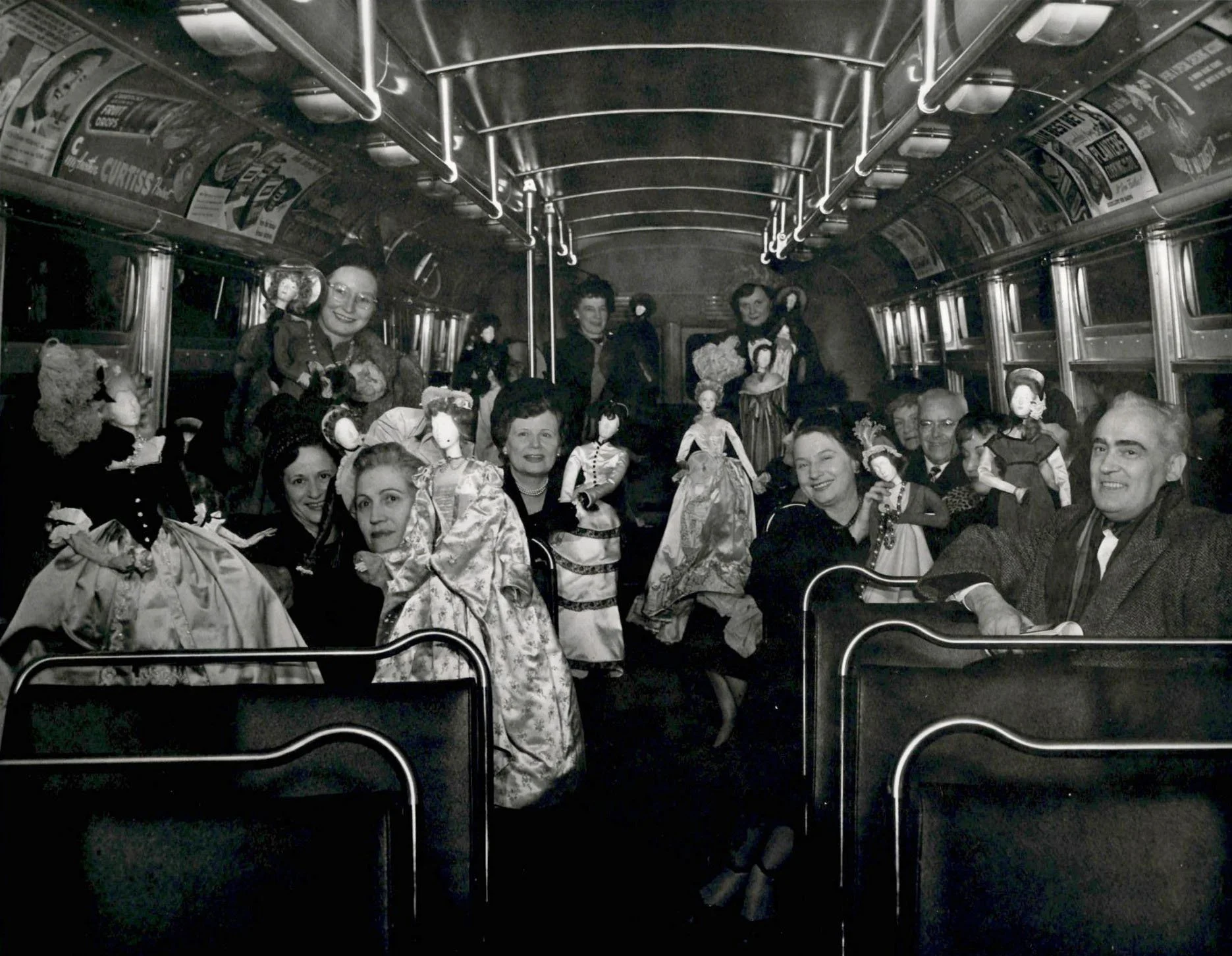
Gratitude Train Exhibit: Transfer of “49 Little Ladies” from IBM Windows to Exhibit at 500 Park on February 14, 1949. Grover A. Whalen papers, NYC Municipal Archives.
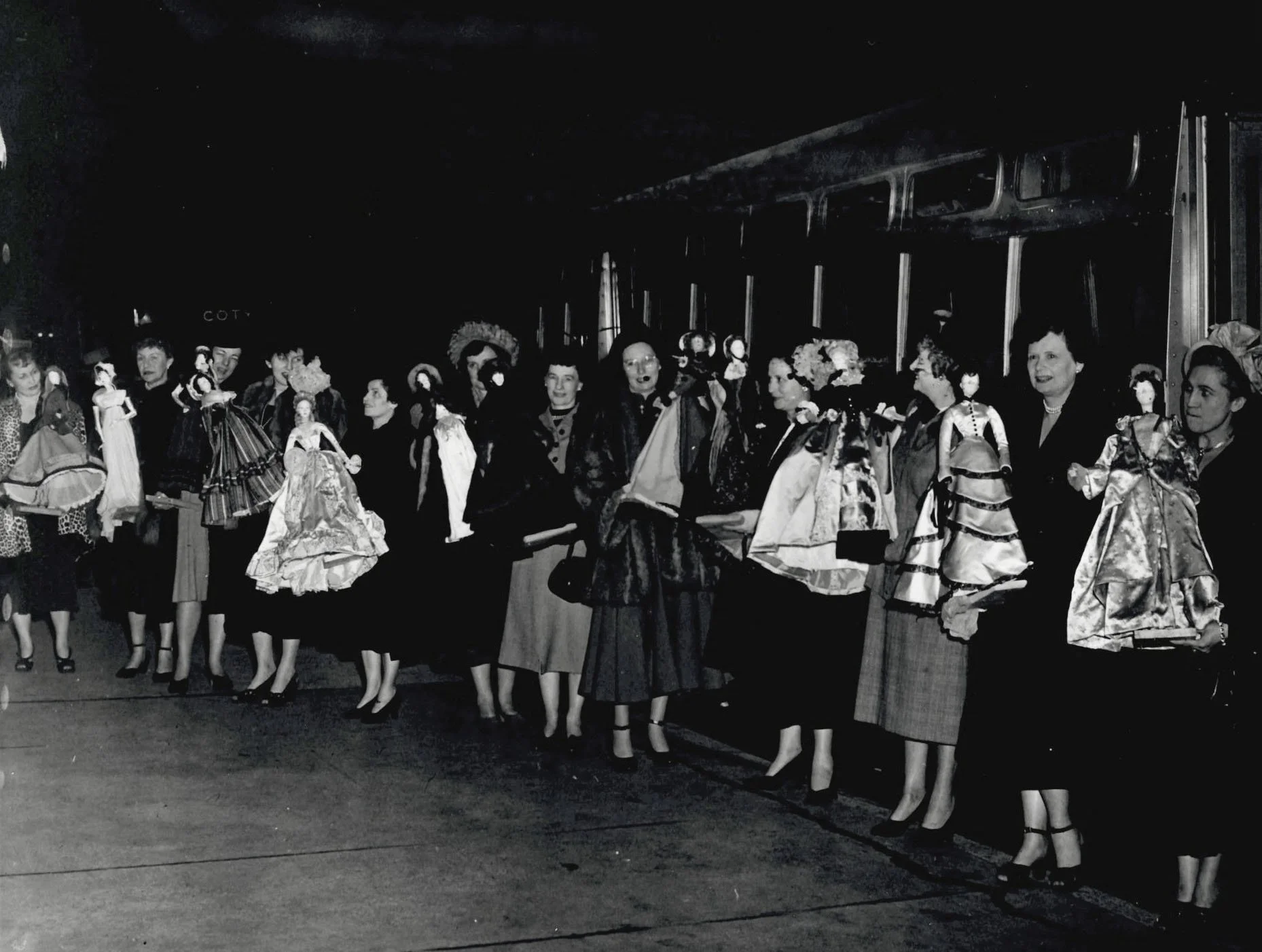
Gratitude Train Exhibit: Transfer of “49 Little Ladies” from IBM Windows to Exhibit at 500 Park on February 14, 1949. Grover A. Whalen papers, NYC Municipal Archives.
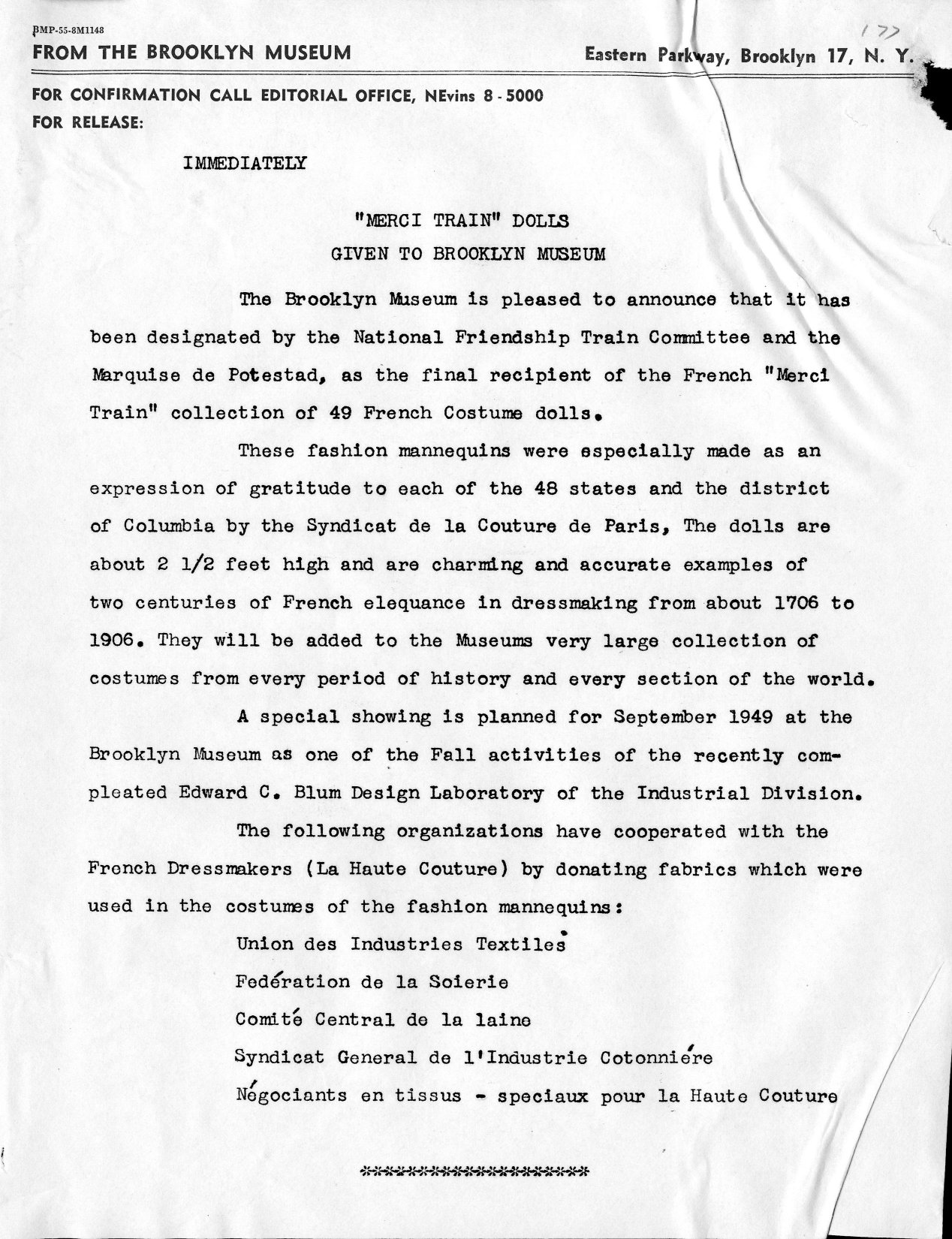
While the initial intent was to disperse the dolls—one to each state along with the corresponding boxcar—their fragility and cultural significance led to a different outcome. Ultimately, the collection was preserved at the Brooklyn Museum, where it was studied and exhibited, including in the Two Centuries of French Fashion Elegance exhibition, on display from September 26, 1949, to January 8, 1950.
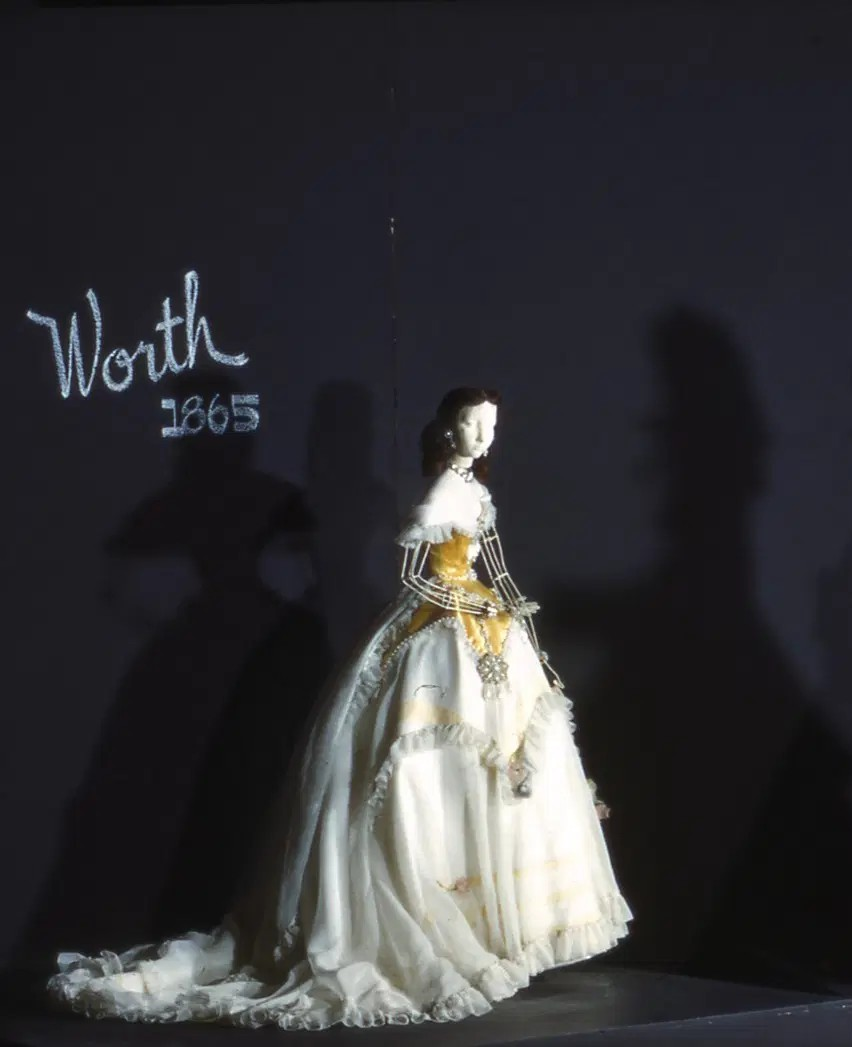
Installation view of Two Centuries of French Fashion Elegance exhibition which was open between 09/26/1949 - 01/08/1950. It features Worth’s design of 1865 French fashion, made in 1948 for the French Gratitude Train or ‘Merci Train.’ Source: Two Centuries of French Fashion Elegance · Brooklyn Museum
Why It Matters Today
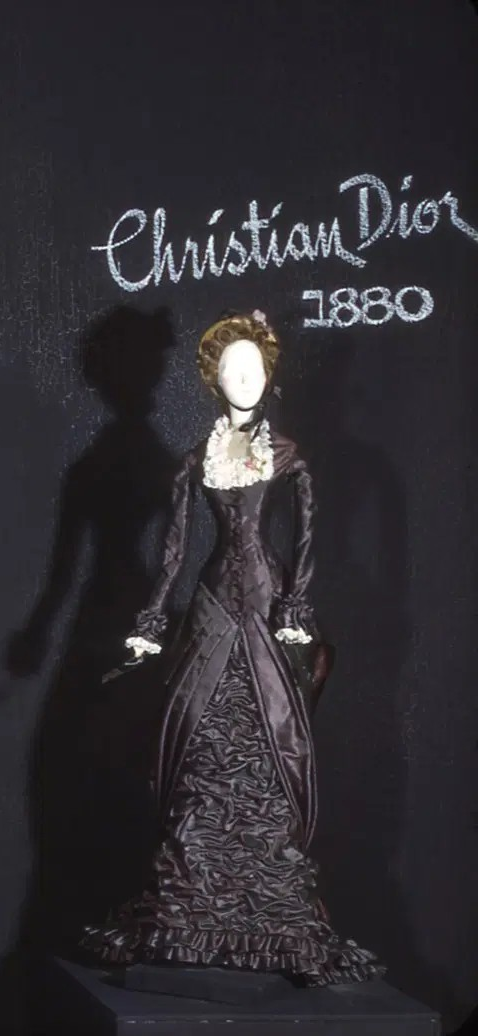
Installation view of Two Centuries of French Fashion Elegance exhibition which was open between 09/26/1949 - 01/08/1950. It features Dior’s design of 1880 French fashion, made in 1948 for the French Gratitude Train or ‘Merci Train.’ Source: Two Centuries of French Fashion Elegance · Brooklyn Museum
The story of the “49 Little Ladies” is more than a charming footnote in fashion history. It reflects a period when craftsmanship served as a form of cultural diplomacy, and when ordinary people, through their contributions to the French Gratitude Train, helped fill boxcars destined for a grateful, recovering nation.
Through these dolls’ exquisitely tailored garments, we glimpse eras of French social history and witness the enduring power of creative expression to bridge nations.
Importantly, these dolls also reveal how couture and design were often practiced first on miniature models before being translated to full-scale garments. Designers historically used scaled mannequins to test drapery, silhouette, and construction, allowing them to refine their vision before cutting fabric for a client’s dress. In this way, the “49 Little Ladies” serve as both artistic artifacts and functional design tools, preserving the creative process of couture.
The costumed mannequins subtly bear the traces of their designers’ signatures. A striking example is an 1865 doll attributed to the House of Worth, founded by Charles Worth, the father of haute couture. Here, we do not merely see a mid-19th-century gown; we recognize the house’s signature intricate detailing, reflecting the aesthetic established by Worth in designs for Empress Eugénie. Similarly, Dior’s interpretation of an 1880s French fashion ensemble captures his hallmark corseted silhouette, an early nod to the ‘New Look’ that had already begun to define postwar Parisian style.
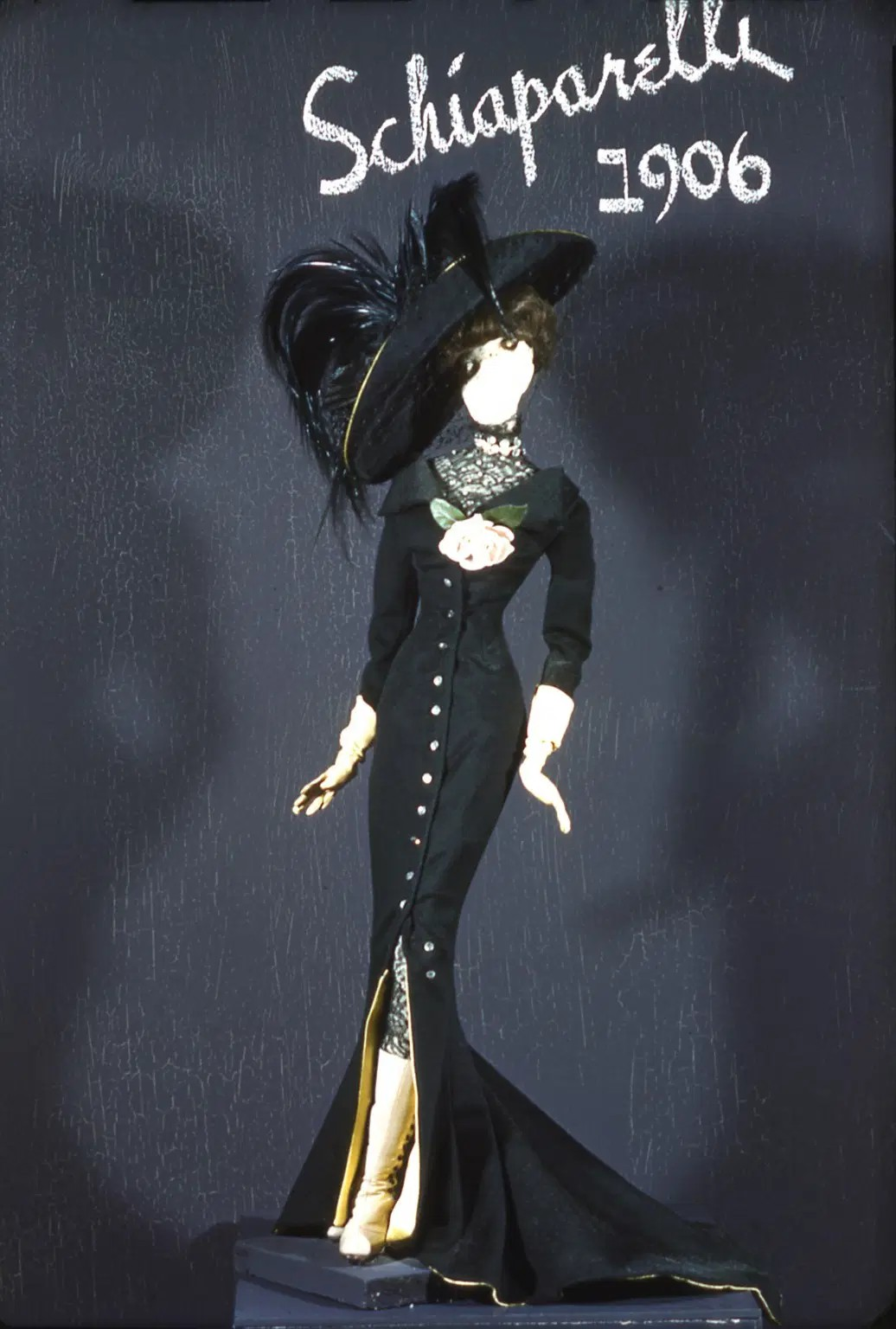
Installation view of Two Centuries of French Fashion Elegance exhibition which was open between 09/26/1949 - 01/08/1950. It features Schiaparelli’s design of 1906 French fashion, made in 1948 for the French Gratitude Train or ‘Merci Train.’ Source: Two Centuries of French Fashion Elegance · Brooklyn Museum
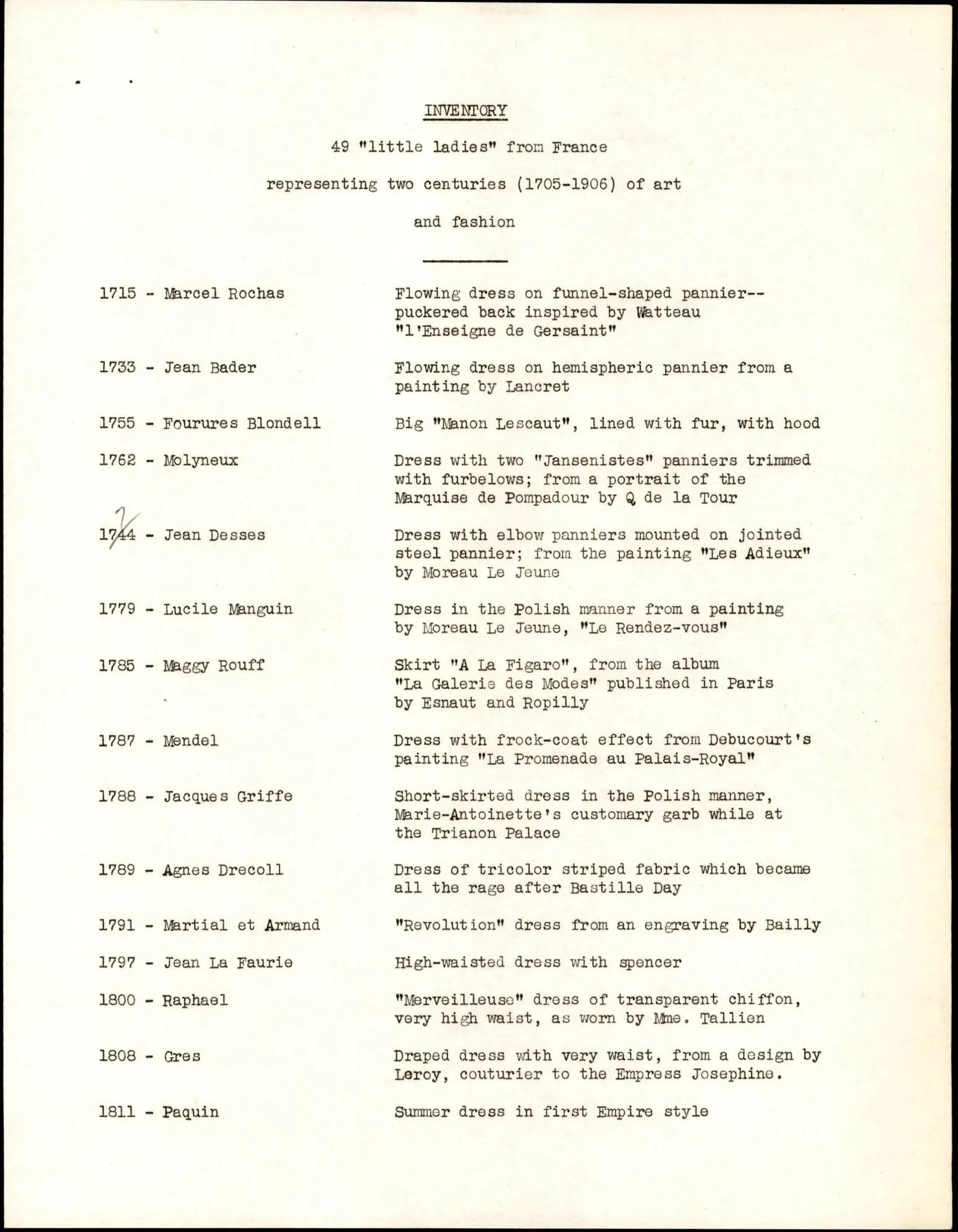
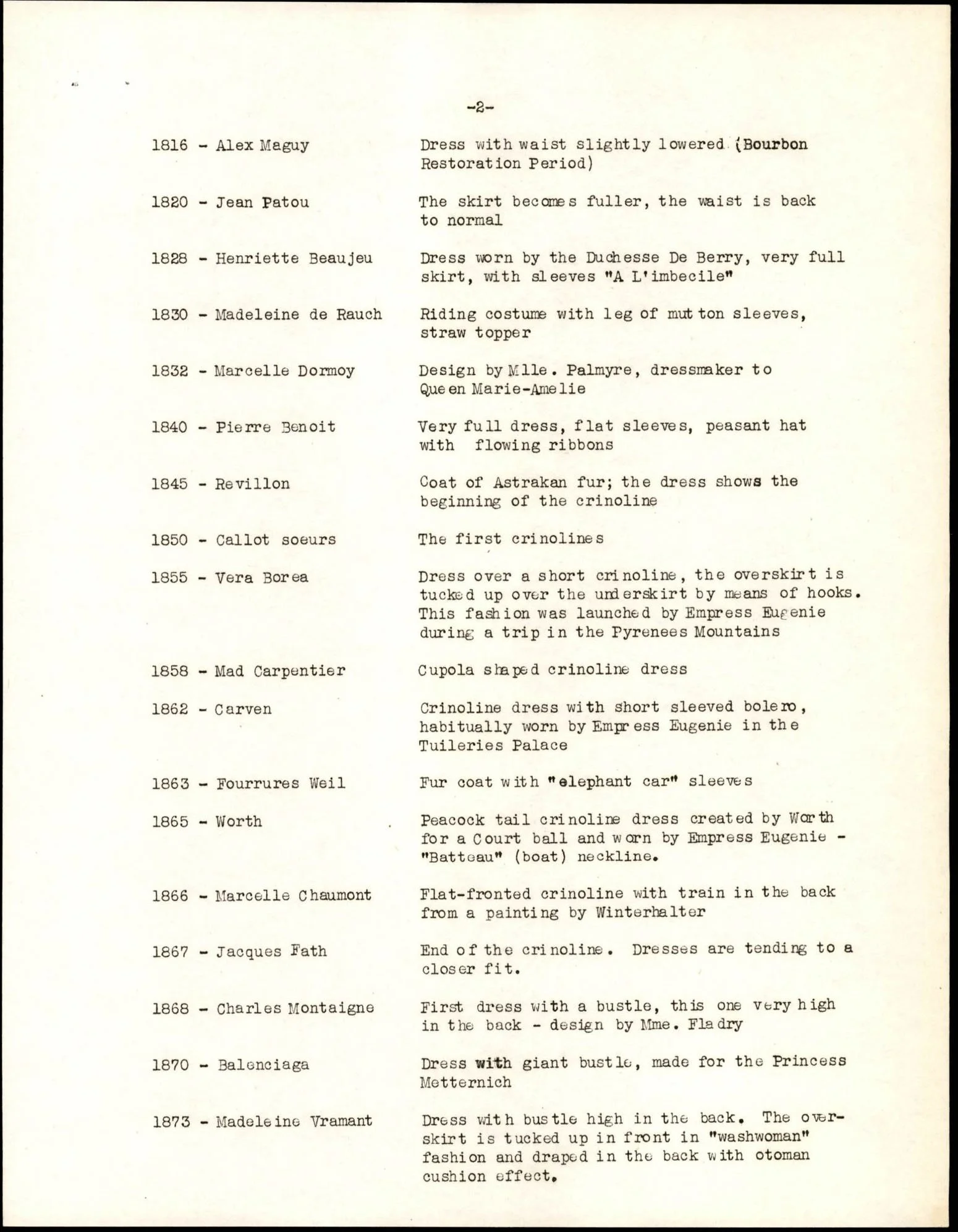
As the Municipal Archives’ records suggest, objects like these invite us to trace the human stories embedded in material culture—the creative labor, artistic choices, and social histories that continue to resonate in the artifacts we preserve today.
References
de Groot, A. (2018). The creative craft of thankfulness: Haute couture dolls on the French Gratitude Train. International Committee for Museums and Collections of Costume. https://costume.mini.icom.museum/wp-content/uploads/sites/10/2020/02/Annelena-de-Groot-The-creative-craft-of-thankfulness.pdf
Gross, M. (2022). The haute couture dolls of the French Recognition Train. Fashion Conservatory. https://research.fashionconservatory.com/blog/haute-couture-dolls-french-recognition-train
Gulatsi, T. (2025, July 8). What “haute couture” really means in French law. In In Custodia Legis. Law Library of Congress. https://blogs.loc.gov/law/2025/07/what-haute-couture-really-means-in-french-law/