World Digital Preservation Day | November 5, 2026
The New York City Municipal Archives preserves centuries of government records documenting the people, places, and events that have shaped the city. Records like birth and death certificates, court proceedings, photographs, and government correspondence offer invaluable glimpses into the lives of New Yorkers across generations.
While the records we preserve weave a dynamic fabric of city history, the records we don’t save also tell meaningful stories.
Government records are created for specific purposes; they are shaped by the laws, priorities, and practices of their time. They are preserved for specific purposes as well. The subjects of these records filter through ever-evolving record creation, records management, and records appraisal practices before being accessioned into the Municipal Archives. Some New Yorkers feature prominently throughout government records, while others are documented only briefly or indirectly. Others are absent altogether.
For World Digital Preservation Day, we’re looking at how the records we preserve today shape what and how future New Yorkers will learn about their city. This year’s theme, Save Our Stories: Our Digital Heritage in Danger, is especially topical as record making and keeping practices become more digitally focused.
The Records that Were Created
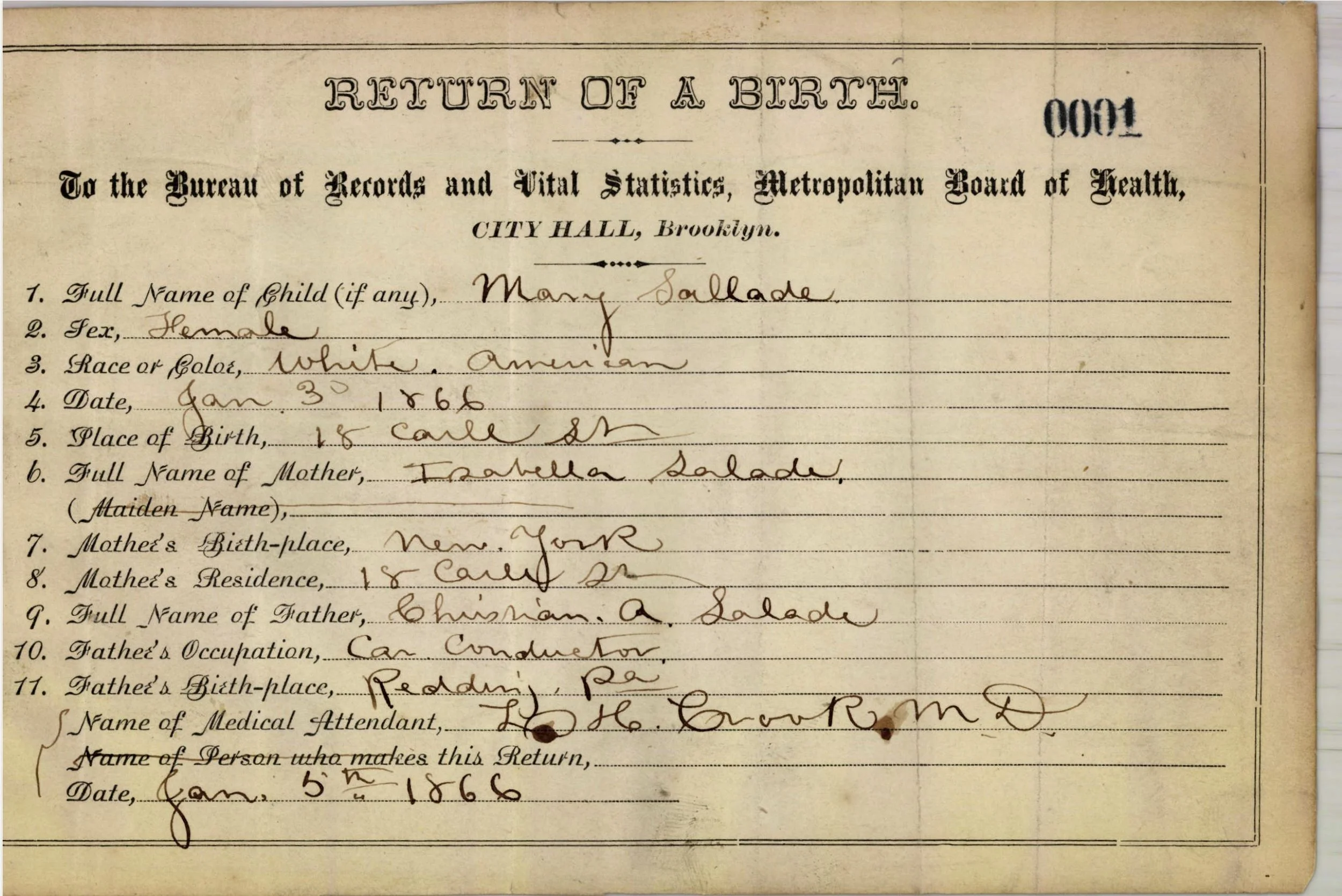
Birth certificate for Mary Sallade, born January 3 1866 in Brooklyn. The record documents her parents, their birthplaces and her father’s occupation, illustrating the personal and family information persevered in historical vital records. New York City Municipal Archives, Historical Vital Records, Brooklyn Birth Certification number 1 1866, View the Historical Vital Records collection.
The Municipal Archives’ Historical Vital Records collection provides online access to approximately 11 million digitized birth, marriage, and death records. For family historians, a single certificate can establish a relationship, identify an ancestor, or place a family in a particular neighborhood at a particular time.
These records also tell larger stories about the history of government recordkeeping and the subjects of government records. As registration requirements and administrative processes changed over time, the information collected in vital records and the ability to access those records changed as well. The evolution of this data reflects the interdependent relationship between city government, the historical process, and collective memory. Not every New Yorker’s birth, marriage, or death was documented in the same way, and not every record survived. The variance in these records creates a variance in how we construct memory.
The link between memory and record-keeping processes is particularly important when researching the lives of enslaved New Yorkers.
For enslaved people, evidence of a birth, familial relationship, or change in legal status may survive in documents related to manumission, legal obligations, or financial decisions. But records created to satisfy administrative requirements differ in tone, data, and purpose than records created to preserve personal histories. Consequently, government records can feel limited and harsh in the window they provide into lived experience—especially in relation to records documenting the lives of enslaved people. When we understand those records as threads to be weaved into others, we can begin to acknowledge their contributions alongside their limitations.
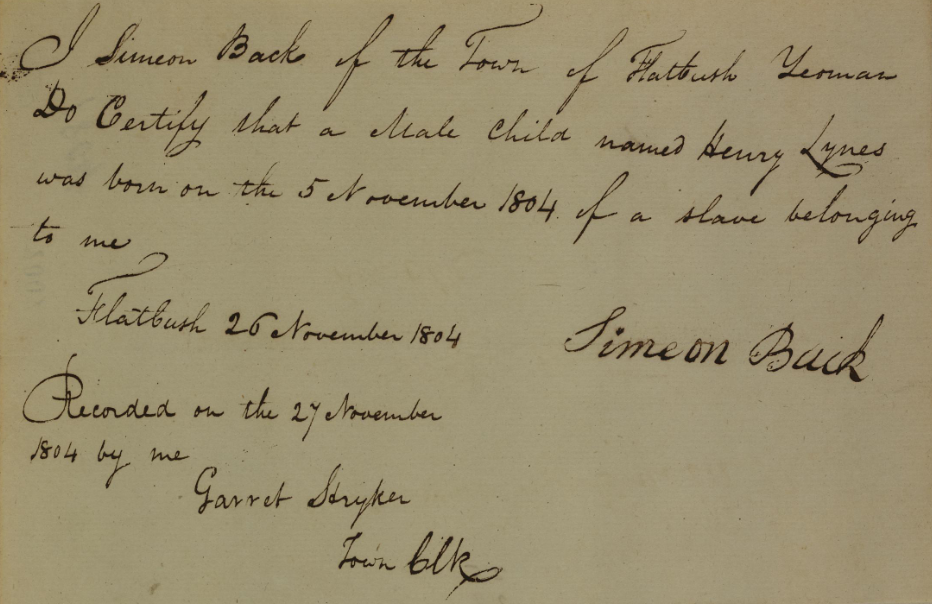
Birth registration of Henry Lynes, born November 5, 1804, in Flatbush, to an enslaved woman held by Simeon Back. The entry was recorded on November 27, 1804, in the Town of Flatbush’s register of births of enslaved children. New York City Municipal Archives, Records of Slavery, ledger page 46, entry 1. View the digitized record.
Among the Municipal Archives’ holdings are records documenting slavery in New York City from 1660 to 1838, including birth records, manumission certificates, and court minutes. Created within institutions that upheld slavery, these documents often treated enslaved people as property. They also contain names, dates, family relationships, and other details that can help researchers reconstruct individual lives.
Through the Transcribing Records of Slavery project, volunteers use FromThePage to transcribe handwritten documents and make their contents searchable.
A reference to a child’s birth, a parent’s name, or an individual’s manumission may provide an important connection for someone tracing a family history. Transcription makes it possible to identify this information within documents that might otherwise be difficult to search. It can also help researchers follow a name or relationship across multiple records. One such record documents the birth of Henry Lynes in Flatbush on November 5, 1804. His name survives in a registration submitted by Simeon Back, who identified himself as the child’s enslaver. Although created within a system that treated people as property, the document preserves evidence of Henry’s birth more than two centuries later.
The work requires care in interpreting the original language. Names may be incomplete, terminology unfamiliar, and descriptions shaped by the prejudices of the institutions that created the records. Making these documents searchable must go hand in hand with preserving the original evidence and providing the context needed to understand it.
The original documents are held by the Municipal Archives, but the volunteer transcriptions exist on a digital platform. Their long-term value depends on retaining both the text and its relationship to the source documents so researchers can compare the two. Establishing a process to preserve these transcriptions independently of the platform is an important next step.
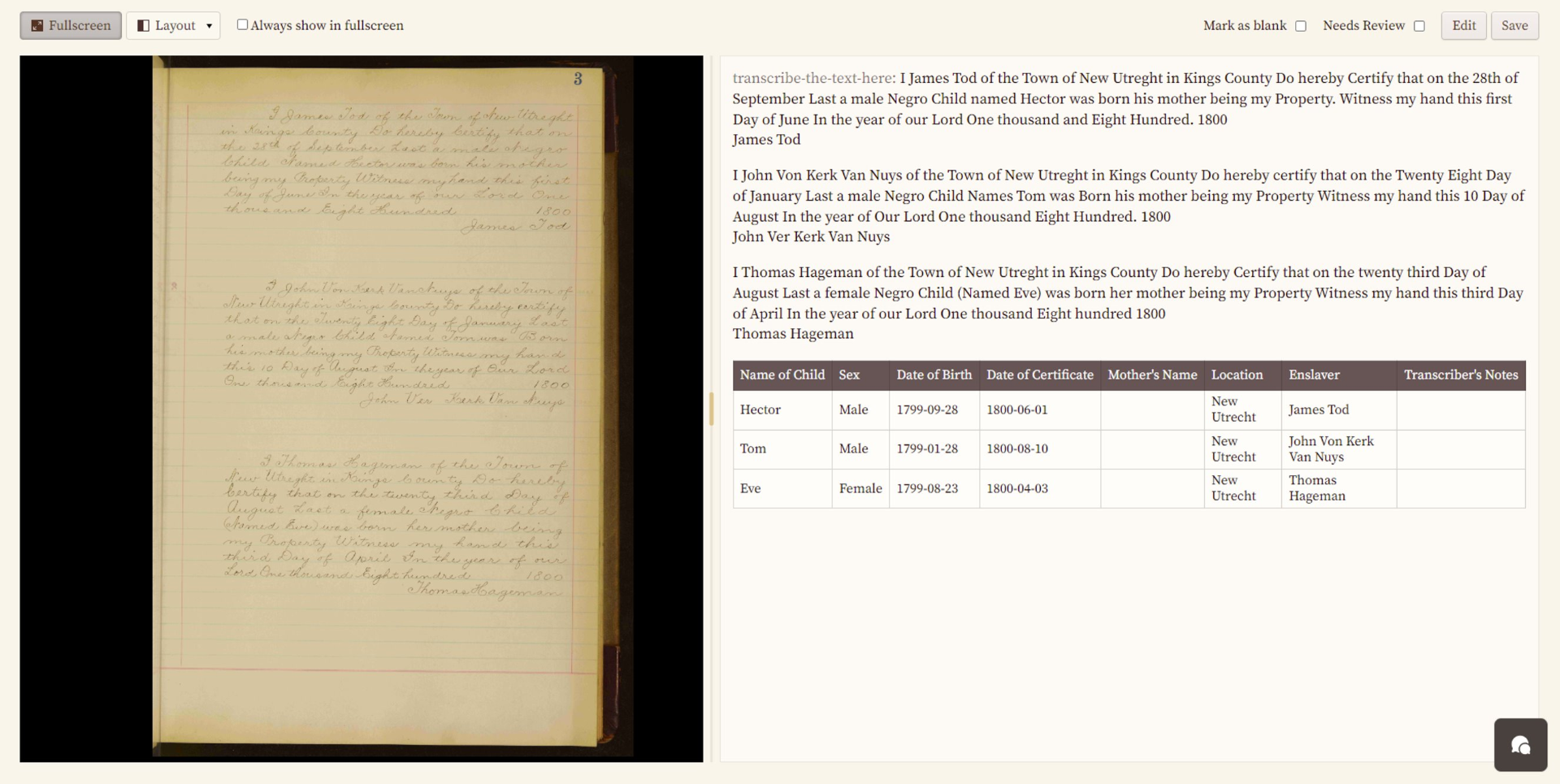
The Transcribing Records of Slavery project on FromThePage, showing a digitized image from a ledger alongside a volunteer transcription and structured data documenting the births of enslaved children of New Utrecht, Brooklyn, in 1799. New York City Municipal Archives, Records of Slavery. View the project on FromThePage
The Records We Are Creating Now
The records of New York City government look very different today. Correspondence, policy decisions, reports, photographs, databases, and administrative records are increasingly created and maintained electronically, often without a paper equivalent.
These born-digital records will one day provide evidence of how government decisions were made, how public resources were used, and how policies affected New Yorkers. But preserving them presents challenges that begin long before they reach the Archives.
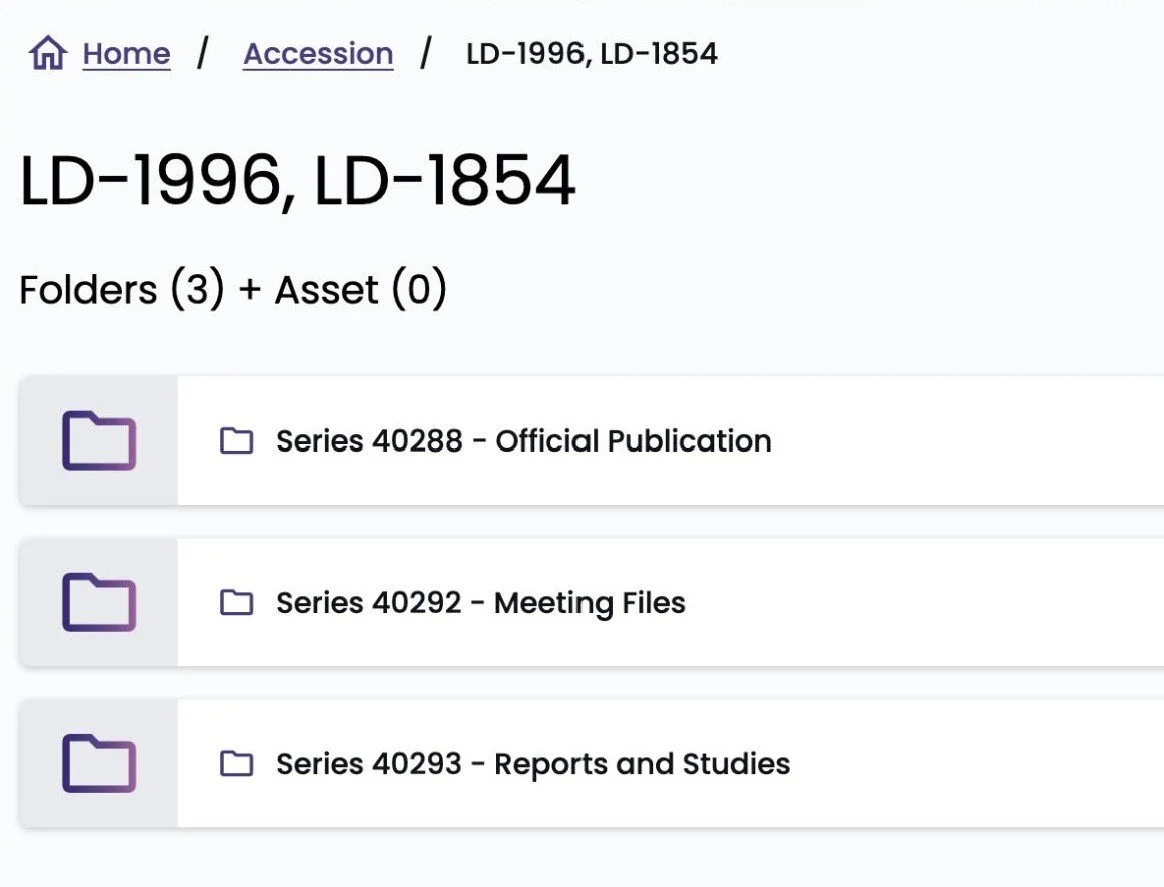
Born-digital government records organized by record series in the New York City Municipal Archives Digital Preservation System. The collection includes official publications, meeting files, and reports and studies, illustrating how archival arrangement and descriptive information help preserve the context of government records. New York City Municipal Archives, Accessions LD-1996 and LD-1854.
A collection transferred from a City agency may contain millions of files, complicated folder structures, and formats that require specialized software. Before these materials can enter a long-term preservation system, staff need to establish what was transferred, whether the files are intact, and whether the information about their origins has survived.
Sometimes the problem is not that a file is missing, but that something about it has changed. Moving records between storage systems can alter file modification dates, for example. Staff must then determine whether those dates reflect changes to the original records or changes introduced during the transfer. That can involve reviewing technical logs, comparing file information, and documenting the results.
A folder structure may reveal how a government office organized its work. An email attachment may provide context for a decision. A file’s original date can help establish when a record was created or used. Losing these details can make a surviving document much harder to interpret.
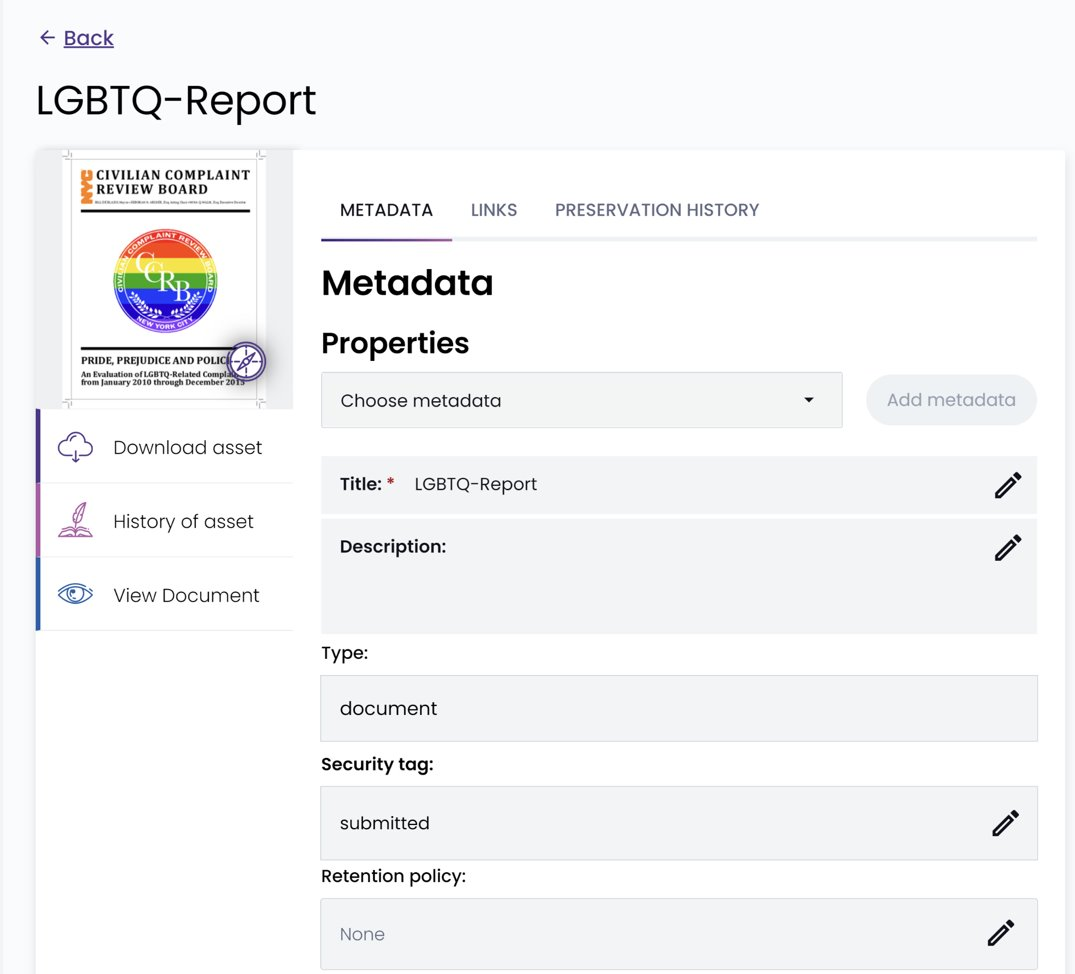
A born-digital government record displayed in the Municipal Archives’ digital preservation system. The record’s descriptive metadata, access settings, and preservation history help archivists manage digital records and maintain information about their origins. New York City Municipal Archives.
This work involves staff across the Department of Records and Information Services (DORIS), from archivists and records managers to the technical teams responsible for maintaining digital preservation systems. The Digital Programs Unit develops and maintains the workflows and systems supporting digitization, digital preservation, and access.
The Archives manages hundreds of terabytes of digital material, from reproductions of historical collections to records created entirely electronically. As that volume grows, staff must plan for how records will be transferred, maintained, and made accessible over time.
How City agencies organize their records, what metadata they retain, and whether files can be exported without losing their relationships can determine what the Archives is ultimately able to preserve. These decisions are often made years before records are transferred.
What Future New Yorkers Will Find
We know from the records in our collections how much can be lost when information is never recorded or when records fail to survive. Some documents were preserved because institutions considered them important enough to keep upon creation.
As more of New York City’s government work takes place electronically, the Archives faces a different set of challenges. The records exist, often in enormous quantities, but keeping them accessible and understandable for decades to come requires planning, technical expertise, and continued investment.
What survives from this period of the city’s history will depend, in part, on the decisions we make now.