In my search for content that I could use to write curriculum aids, I came across a startling item in the Municipal Library vertical files: Welcome to Fear City: A Survival Guide for Visitors to the City of New York.
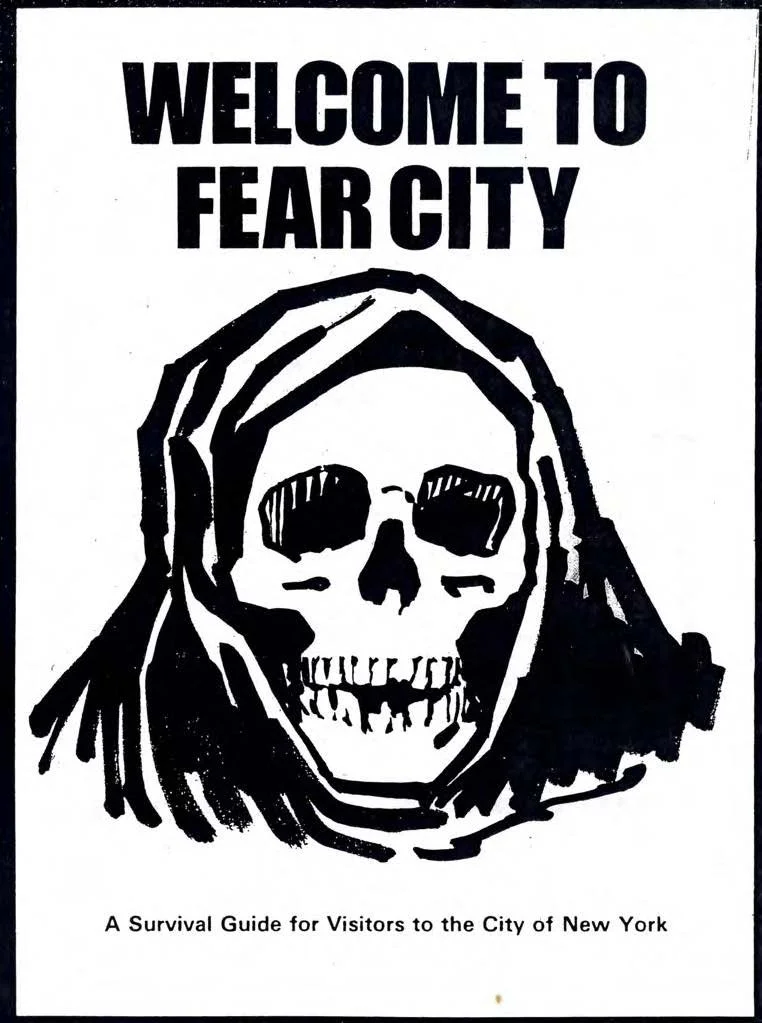
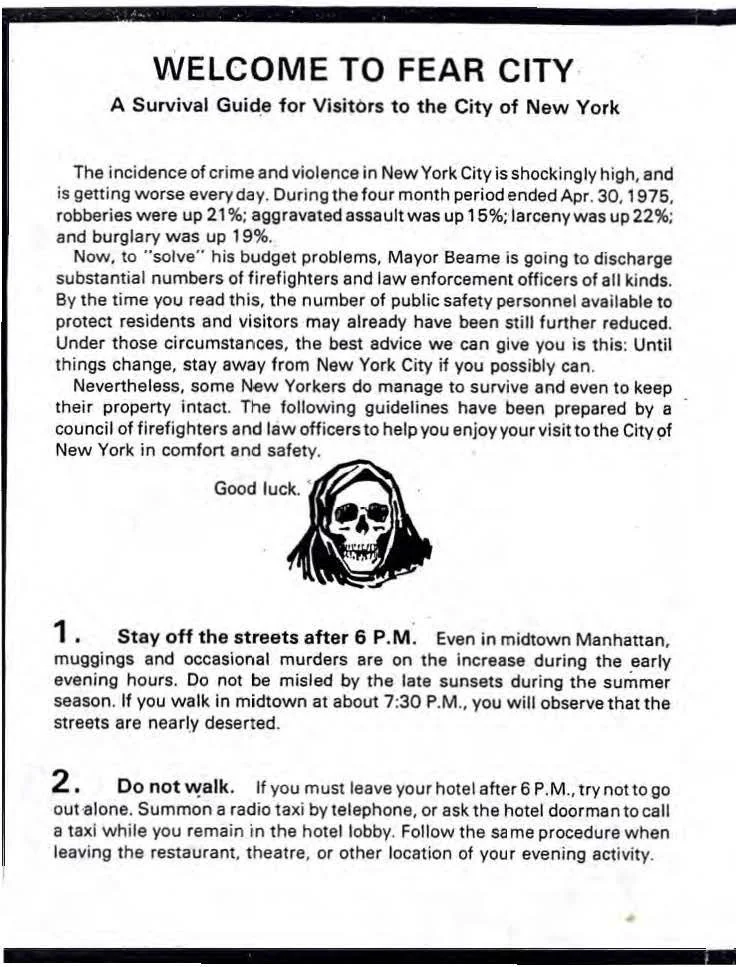
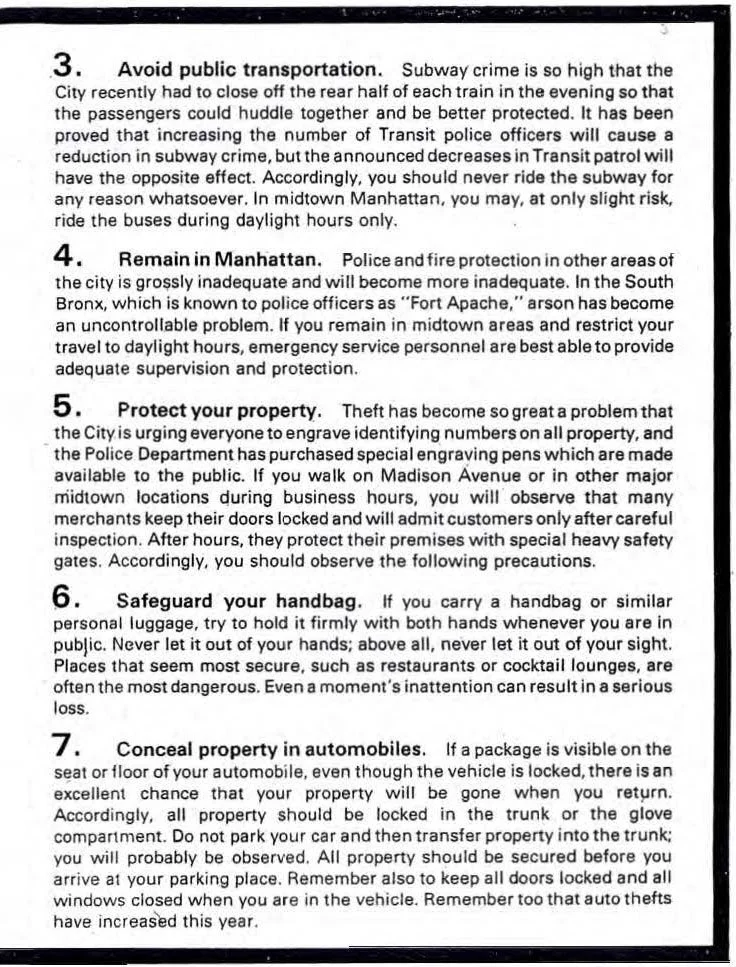
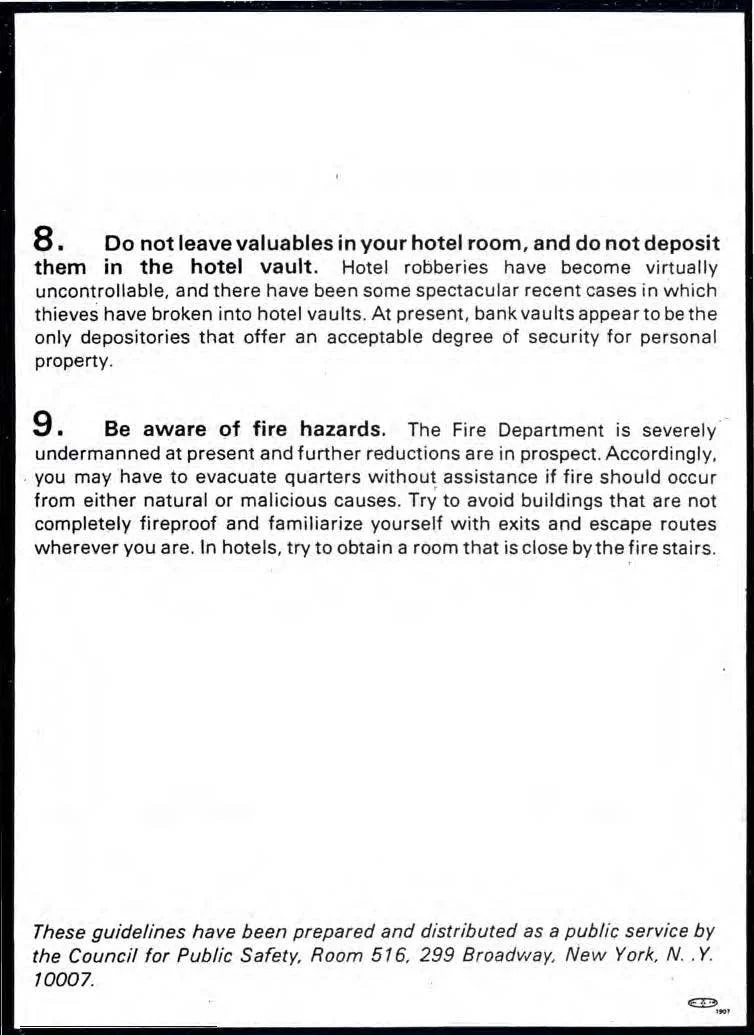
The cover image was too compelling to ignore, and its contents were even grimmer than expected. This “Survival Guide” contains nine “tips” for, well, surviving a vacation in the Big Apple. As you can see when you click inside the pamphlet, the tips are ominous, foreboding warnings such as “do not walk,” “avoid public transportation,” “Remain in Manhattan,” and “stay off the streets after 6 P.M.”
I was baffled as to who would create this brand of menacing travel brochure, but the reasons for its existence are clearly stated in the pamphlet: “By the time you read this, the number of public safety personnel available to protect residents and visitors may already have been still further reduced. Under those circumstances, the best advice we can give you is this: Until things change, stay away from New York City if you possibly can.”
Here’s some back story.
The fiscal crisis in 1975 led New York City to enact extreme budget cuts; city workers experienced reductions in salaries and pensions, and more than 50,000 people (one-sixth of the workforce) were laid off. On July 1, 1975, 5,000 police officers, many in radio-car patrols, were furloughed, along with 1,600 firefighters—20% of the city’s entire department, 7,000 teachers, and many highway, sanitation and bridge workers. Initially, some unions reacted strongly. Highway workers picketed during rush hours, teachers went on strike for one week at the beginning of the school year, and sanitation workers left 48,000 tons of garbage on the street for two days. There are also accounts of bridge workers walking off the job with three drawbridges still raised.
REC0022_01_1975_010_10: Unsafe building, Georgia Avenue and Liberty Avenue, Brooklyn, January 30, 1975. Photograph by Paul Rice, Department of Housing Preservation and Development photograph collection, NYC Municipal Archives.
New York City police officers took a different approach. The Council for Public Safety (a consortium of municipal labor unions but mostly NYPD and FDNY) created and distributed the Fear City “survival guide” pamphlet to deter tourists from visiting the city, citing high crime rates and an increasingly dangerous environment. They printed one million copies and distributed them over a few days at JFK airport. Authorship of the pamphlet is attributed to “uniform” unions, but Ken McFeeley, president of the Patrolmen’s Benevolent Association in New York City, was the man behind the campaign.
REC0022_01_1975_070: Removal of cars from site, Department of Relocation, 36 Pitt Street, Manhattan, May 14, 1975. Photograph by Leonard Boykin, Department of Housing Preservation and Development photograph collection, NYC Municipal Archives.
This pamphlet was not designed as public policy guidance from City Hall. It was dystopian propaganda and one of the boldest public pressure campaigns in the City’s history.
This stated, the facts remain. Across the city, crime and violent crime was on the rise and had been for years. The number of murders, car thefts and assaults had doubled (or more) from 1965 to 1975. The rate of burglaries and rapes had more than tripled. (The Guardian, 2015)
Despite the increase in crime, 10.5 million tourists still visited each year. Many New Yorkers couldn’t fathom why the unions who were hired to protect the city (and paid with tax dollars) would try to reduce any streams of income during the fiscal emergency that led to their members layoffs.
The Municipal Archives WNYC moving image collection also includes a video of elected officials discussing the campaign.
REC0047_1_3339: Feedback On Pamphlet, “Welcome To Fear City”; Council President Paul O’Dwyer, Council Member Reverend Gigan, June 13, 1975. WNYC-TV collection, NYC Municipal Archives.
REC0022_01_1975_046: Collapsed landmark building, 318 Hicks Street, Brooklyn, April 4, 1975. Photograph by Leonard Boykin, Department of Housing Preservation and Development photograph collection, NYC Municipal Archives.
As you’ll see in the video, there was a sentiment that this campaign only added insult to injury to a city already in crisis. Council President Paul O’Dwyer called the campaign “the worst piece of propaganda” and “a certain kind of madness.” He even said it should be considered “criminal libel” due to its “false and deliberate” nature. He sponsored a residency bill to make sure people who work for the city also live here. The video contends that the general population, including members of the unions in the Council for Public Safety, did not support the Fear City campaign. In fact, the Police Department’s Captains Endowment Association, Lieutenants Benevolent Association, the Sergeants Benevolent Association, and the Uniformed Fire Officers Association publicly stated they did not support it. And, ultimately, the city’s unions wound up essentially risking their retirements by investing $2.5 billion in pension funds in the city’s bonds, which helped the city regain solvency.
REC0022_01_1975_180: Collapsed building, 21 President Street, Brooklyn, December 4, 1975. Photograph by Leonard Boykin, Department of Housing Preservation and Development photograph collection, NYC Municipal Archives.
The pamphlets were distributed for two days but the effects of using fear as political leverage and spreading information with harmful intent are long-lasting. This artifact is a reminder of how perception can shape public policy and that propaganda doesn’t only come from the government. There are many implications for today’s media consumers; this resource is definitely worth a closer look.
The Welcome to Fear City: A Survival Guide for Visitors to the City of New York is housed in the Municipal Library Vertical Files under the subject “Safety.”