October 14th was Ask An Archivist Day, and our staff answered many queries. Here are some of the most interesting exchanges.
Question 1: Do the Municipal Archives still hold the original Dutch minutes for that session, or only later translations?
Answer (Rossy): Yes, we hold the original Dutch records, and you can view them in our digital collections’ portal!
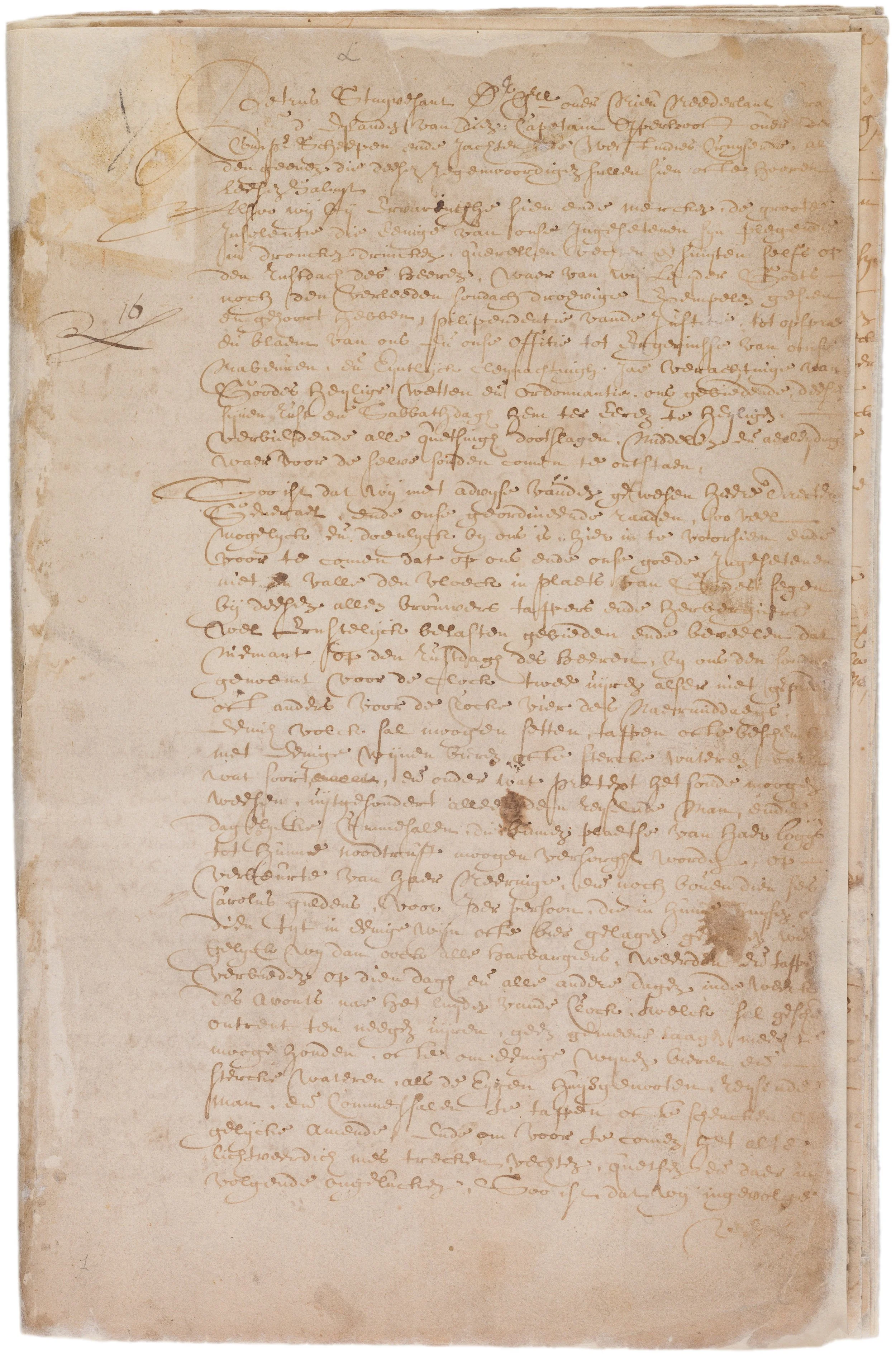
MSS0040_1_1_01: The first ordinance Director General Petrus Stuyvesant issued a week after his May 1647 arrival was a law prohibiting the sale of alcohol on Sunday. Page 1 of the Ordinances of New Amsterdam, 1647-1661. Original Dutch records of New Amsterdam, NYC Municipal Archives.
Question 2: Do the Municipal Archives hold anything on the 1838 Halls of Justice, the Tombs, built over the filled-in Collect Pond?
Answer (Michael): We have a glass lantern slide of the Tombs from the DeGregario collection. You can see how it got its name; it really looks like an Egyptian temple or tomb. The name stuck through all the later iterations even though they did not look like a tomb.
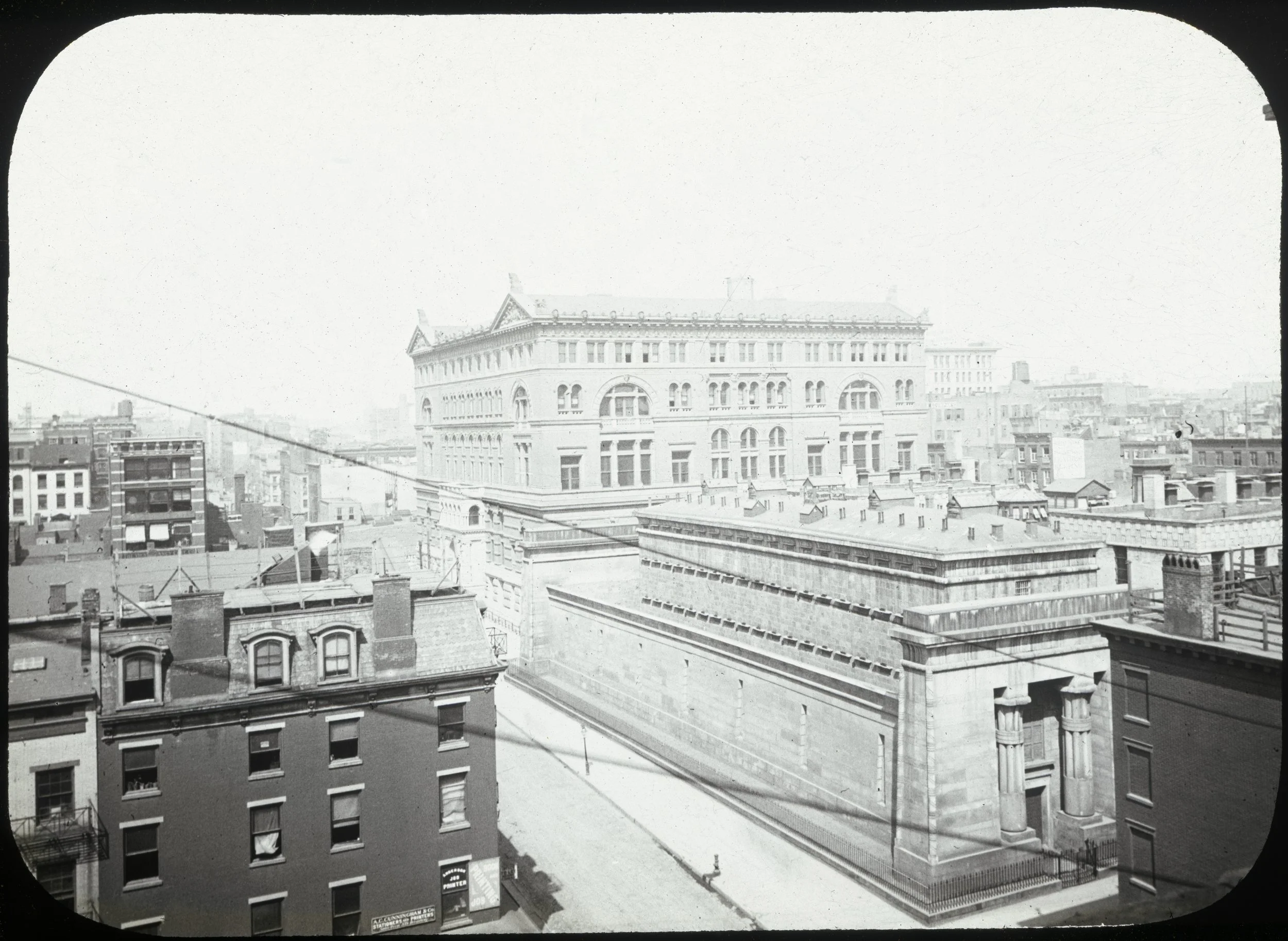
MSS0001_01_51: The Tombs [before 1897], DeGregario Lantern Slide collection, NYC Municipal Archives.
(Amy): We do not have any building plans for the first iteration of “the Tombs,” only plans for the 1941 Manhattan New York City Criminal Courts Building and City Prison, a later prison building also often referred to as “the Tombs.”
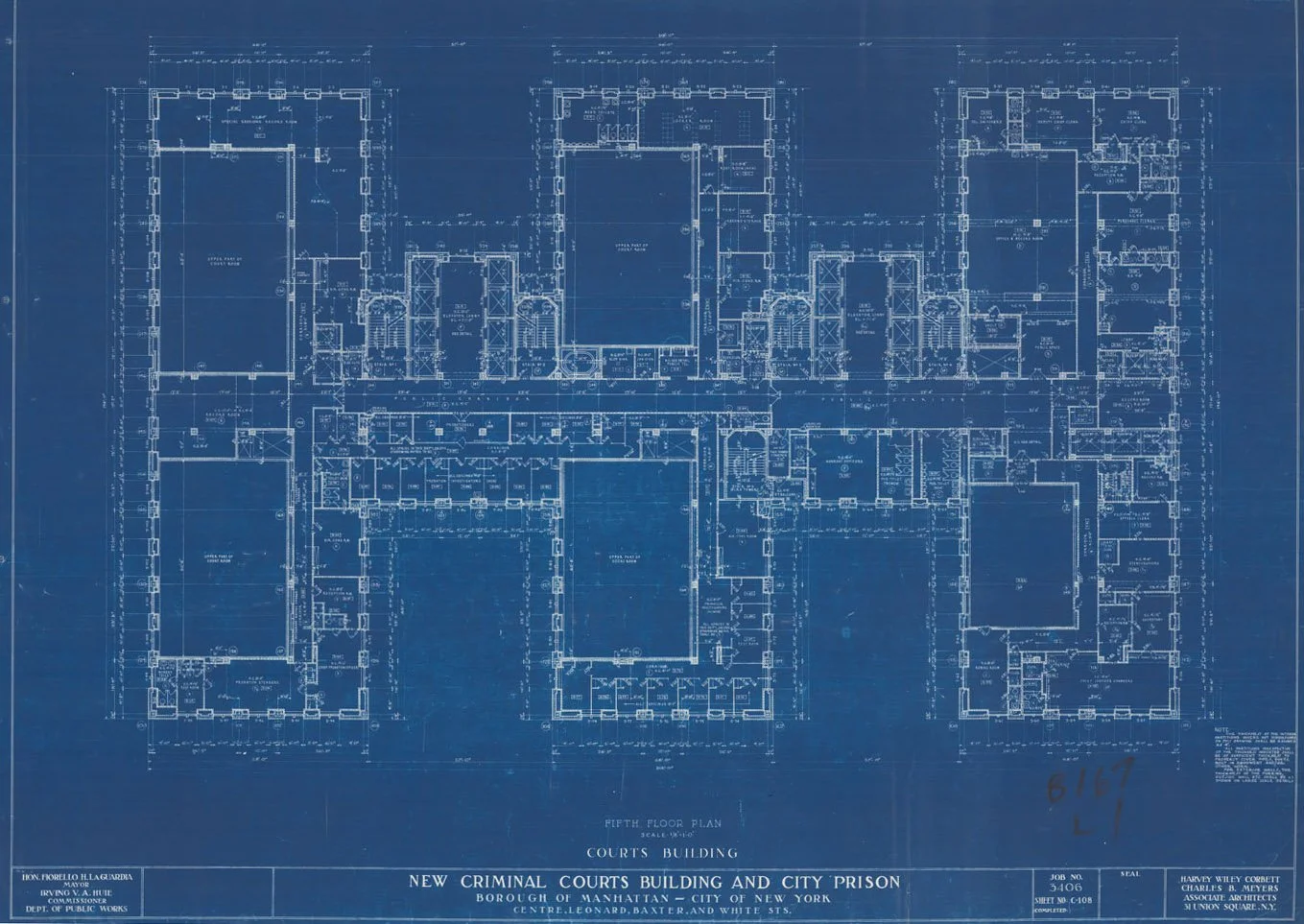
REC0074_0167_001_0033: New Criminal Courts Building and City Prison, Fifth Floor Plan, ca. 1941. Manhattan Building Plans collection, NYC Municipal Archives.
(Michael): The four buildings, known as “The Tombs” were:
1838–1902, New York City Halls of Justice and House of Detention
1902–1941, City Prison
1941–2023, Manhattan House of Detention (Manhattan Detention Complex South Tower after 1983)
1990–2023, Manhattan Detention Complex North Tower
We also have photos of the 2nd one, which was demoed in 1941.
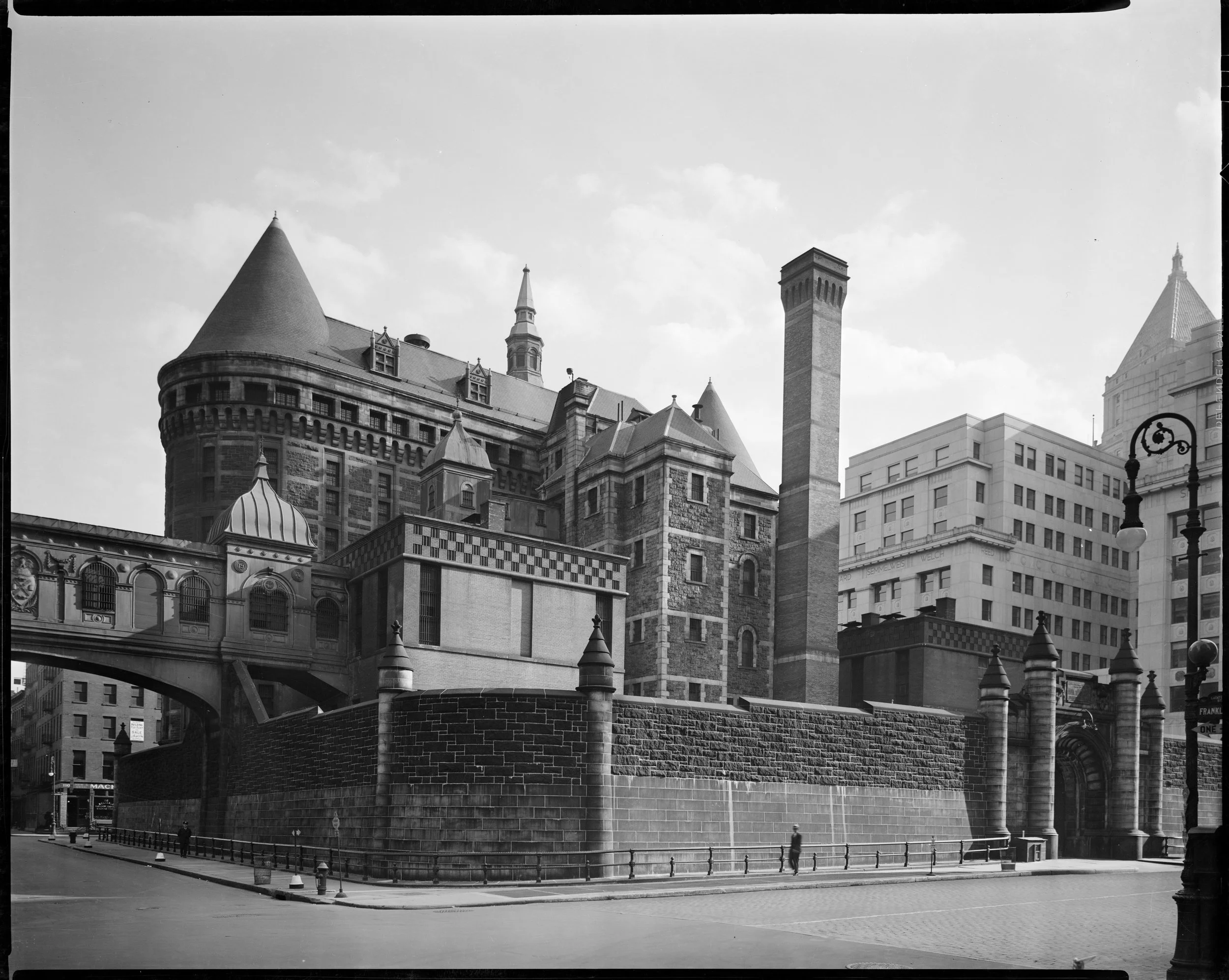
MSS0041_0056: “The Tombs” and “the Bridge of Sighs,” ca. 1937. WPA Federal Writers’ Project collection, NYC Municipal Archives.
Question 3: How are the NYC Municipal Library & Archives’ digital collections curated, created, and maintained?
Answer (Matt): I can answer the creation part. We have a really wide range of materials, from books and volumes, to oversize maps, to photographs and A/V materials. This means that we employ different digitization methods for varied objects. Many of our collections, especially the most fragile ones, are photographed with overhead digital cameras specially made for this purpose. These cameras cost tens or even hundreds of thousands of dollars and allow us to maintain the highest archival standards. For other items, we have other purpose-built devices, such as oversize scanners for maps and drawings, a microfilm scanner, a book scanner, and various setups for digitizing A/V. Archival digitization is often delicate and time-consuming, and requires a lot of troubleshooting, as well as training and experience with different materials, equipment, and software. And that’s just the capture part. After that, we do extensive quality control, and handling the digital files is a whole other matter.

Conservation and digital programs staff moving the mounted Greensward Plan into position.
(Michael): For the Record has published several blogs on the processes we use and the lengths we go to digitize records:
Question 4: Would your archives have records of police arrests and case files of murders? I am researching two murders, one in Manhattan in 1904 and one in the Bronx in 1907. The police records and court case files would be something I would like to research further, but not sure these files would exist, but if they do exist, where would I be able to access them?
Answer (Katie): Our court records are very extensive, with the most extensive being for Manhattan. It would help to know what court, if any, the accused, appeared before. Historical newspapers could help with that. We have a variety of court indexes available on microfilm in our Manhattan reading room. We have indictment indexes for Manhattan available digitally here: https://nycrecords.access.preservica.com/uncategorized/SO_80f4fdbf-d52f-4f01-ad57-02afcb64b032/
We do not have similar indexes for the other boroughs though. I would recommend emailing us with the details you have about the cases.
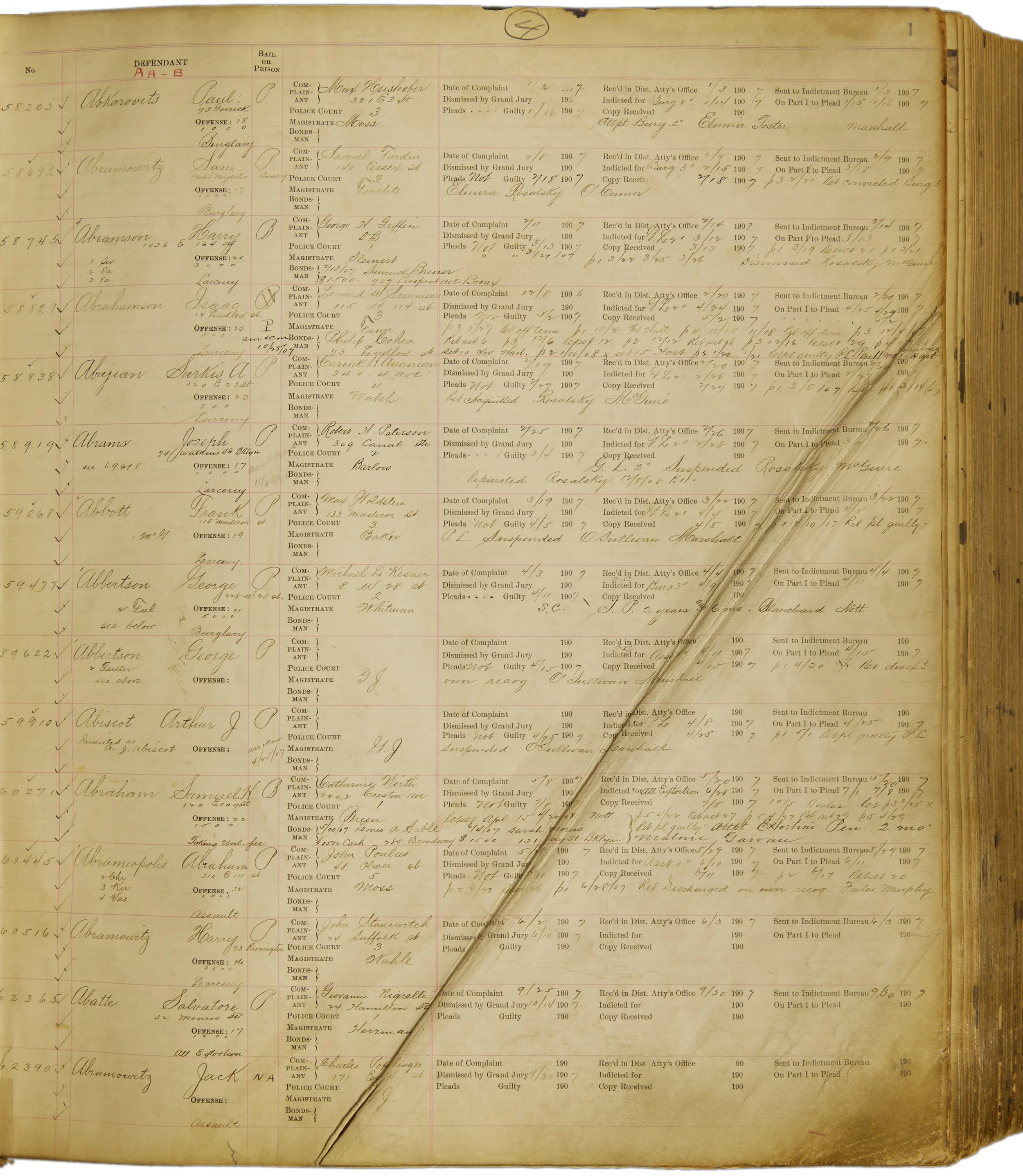
REC0059_010_1907-1908_A-K: New York County District Attorney record of cases,1907-1908, A-K. NYC Municipal Archives.
(Rossy): We have magistrate court dockets for Manhattan and Bronx in this time period. If a Grand Jury voted to indict, we may also have indictment records for the Manhattan case. We do not have any Bronx District Attorney cases for these years. We also recommend checking the mayoral departmental correspondence with the courts as an additional resource since notable investigations are often mentioned there.
Question 5: For families tracing Italian immigrant grandparents in Manhattan around 1900–1920, what's the best place to start in your collections? And any tips for when a surname shows up spelled three different ways by three different clerks?
Answer (Ken): I have found the geographic birth index to be useful when searching families that have multiple name spellings. The trick is to know the family’s address—from census, or other vital records.
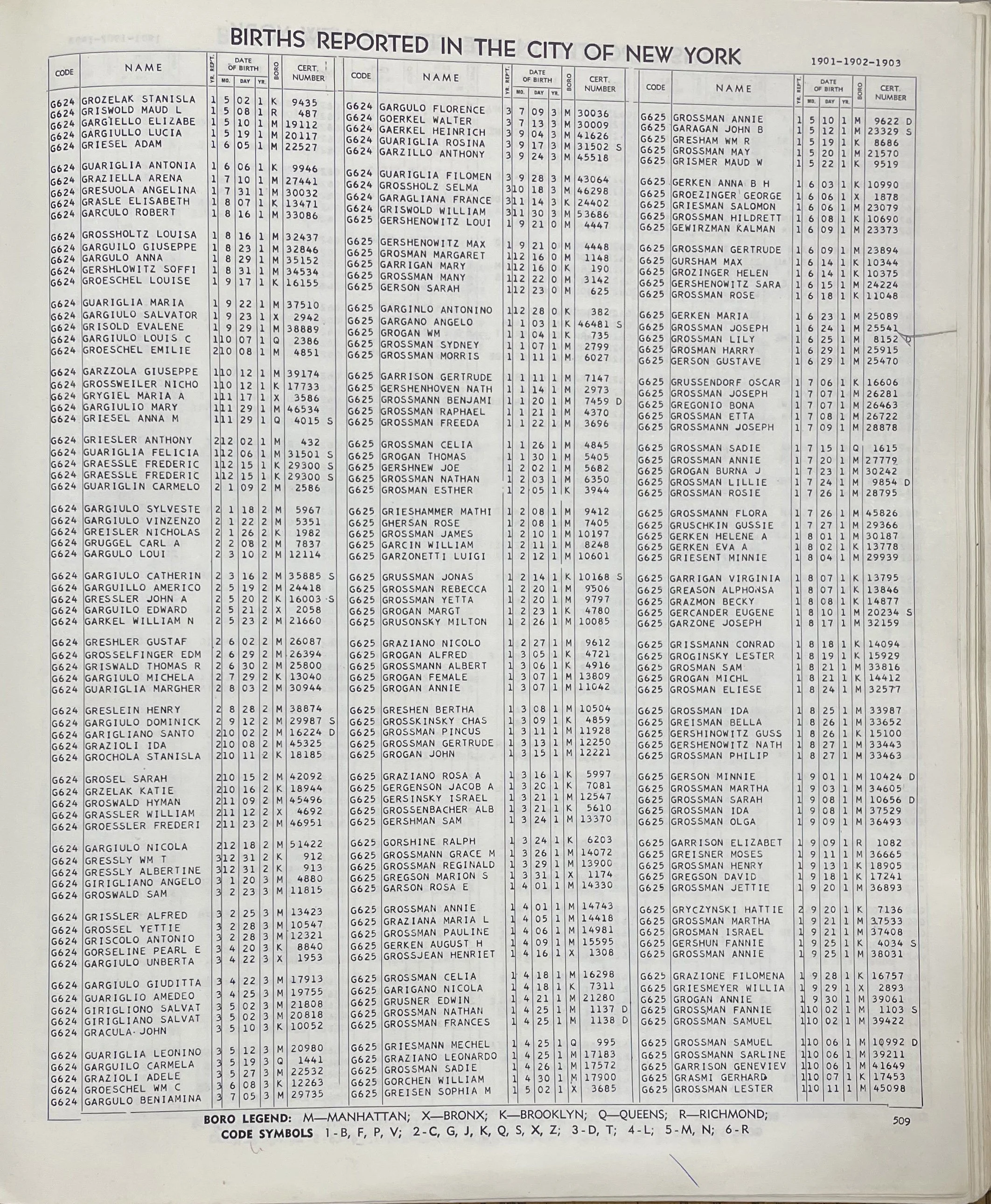
Births Reported in the City of New York, 1901-1903. NYC Municipal Archives.
(Sylvia): Italiangen.org is a good resource. Also stevemorse.org allows for searching that includes first and last names that “start with” or “contain” delimiters. NYC Open Data is also a great way to search broadly on variations of names because you can download a specific data set (vital type/year) download spreadsheets of the indexed digitized records, and search name variations. https://data.cityofnewyork.us/browse?q=historical+vital+records&required=&sortBy=relevance&page=1&pageSize=20
(Marcia): Before they start in our collections, they need to confirm that they were in Manhattan at the assumed time. To do that, check immigration records, the 1900 census is great, the 1915 NY State Census. Also, NY City Directories (NYPL.org). Then check germangenealogygroup.com (free) which allows you to search the GLOBAL SEARCH to search all databases. Then they can search for the vital records on the Historical Vital Records app online.
Question 6: What’s one collection you wish more New Yorkers knew existed?
Answer (Katie): I’d like to say the NYPD Intelligence records even though it’s very popular. Handschu in particular.
This is the finding aid: https://a860-collectionguides.nyc.gov/repositories/2/resources/82
And an online exhibit from years ago: https://www.archives.nyc/unlikely-historians-1
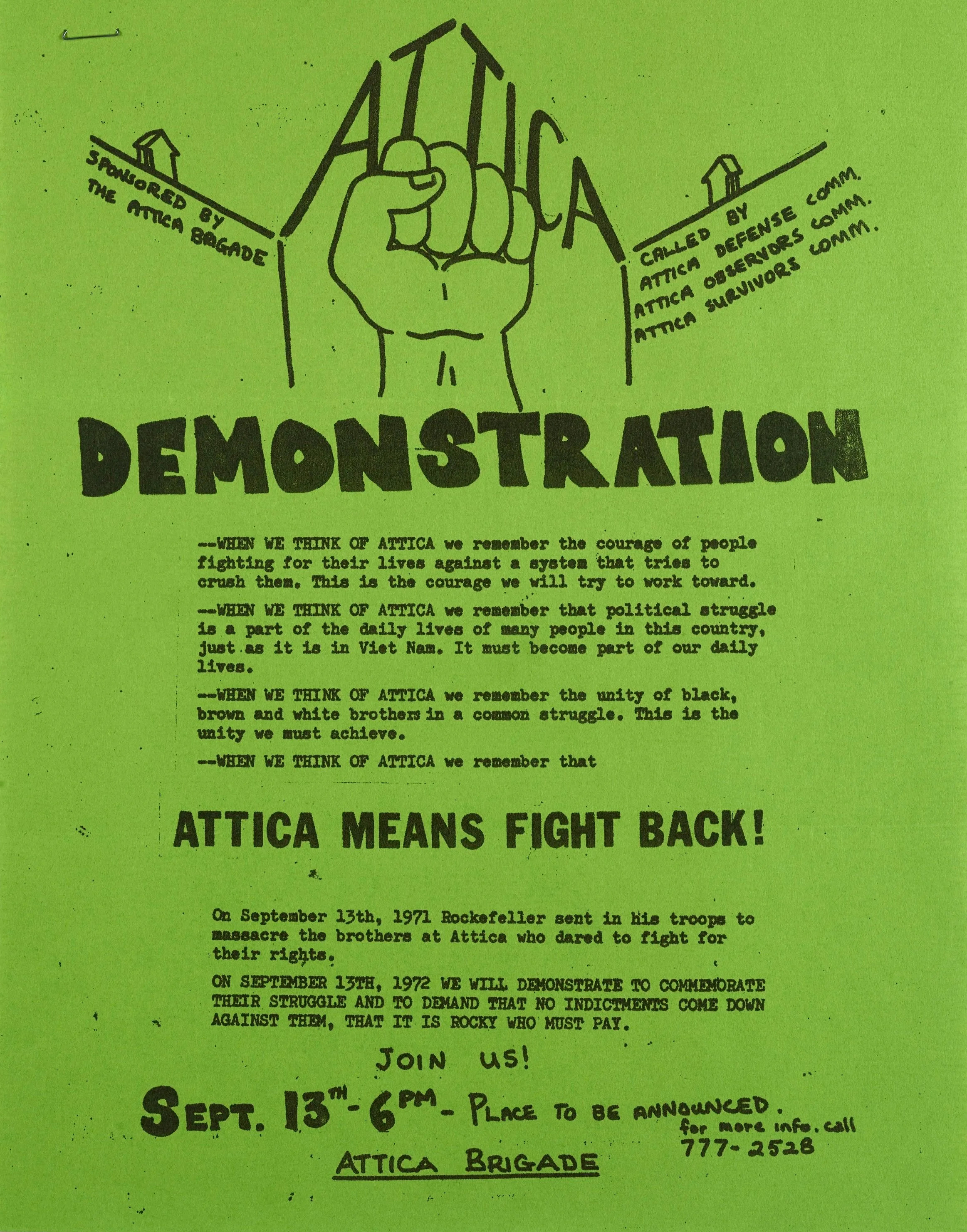
Anniversary demonstration for Attica, September 13, 1972. Handschu Collection, NYC Municipal Archives.