NYC Municipal Archives

Ask An Archivist - The Answers

October 14th was Ask An Archivist Day, and our staff answered many queries. Here are some of the most interesting exchanges.

Question 1: Do the Municipal Archives still hold the original Dutch minutes for that session, or only later translations? 

Answer (Rossy): Yes, we hold the original Dutch records, and you can view them in our digital collections’ portal!
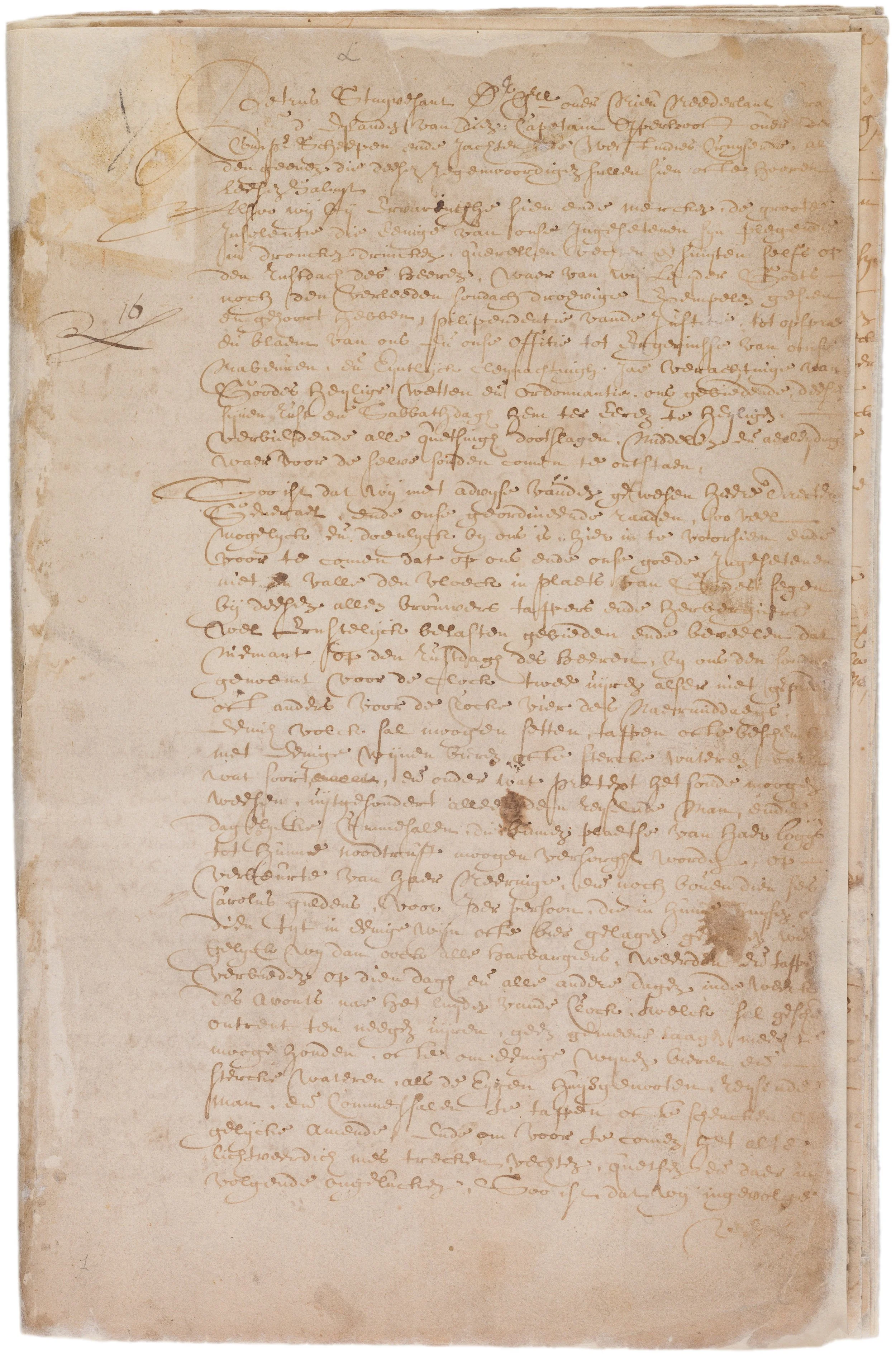
MSS0040_1_1_01: The first ordinance Director General Petrus Stuyvesant issued a week after his May 1647 arrival was a law prohibiting the sale of alcohol on Sunday. Page 1 of the Ordinances of New Amsterdam, 1647-1661. Original Dutch records of New Amsterdam, NYC Municipal Archives.


Question 2: Do the Municipal Archives hold anything on the 1838 Halls of Justice, the Tombs, built over the filled-in Collect Pond? 

Answer (Michael): We have a glass lantern slide of the Tombs from the DeGregario collection. You can see how it got its name; it really looks like an Egyptian temple or tomb. The name stuck through all the later iterations even though they did not look like a tomb.
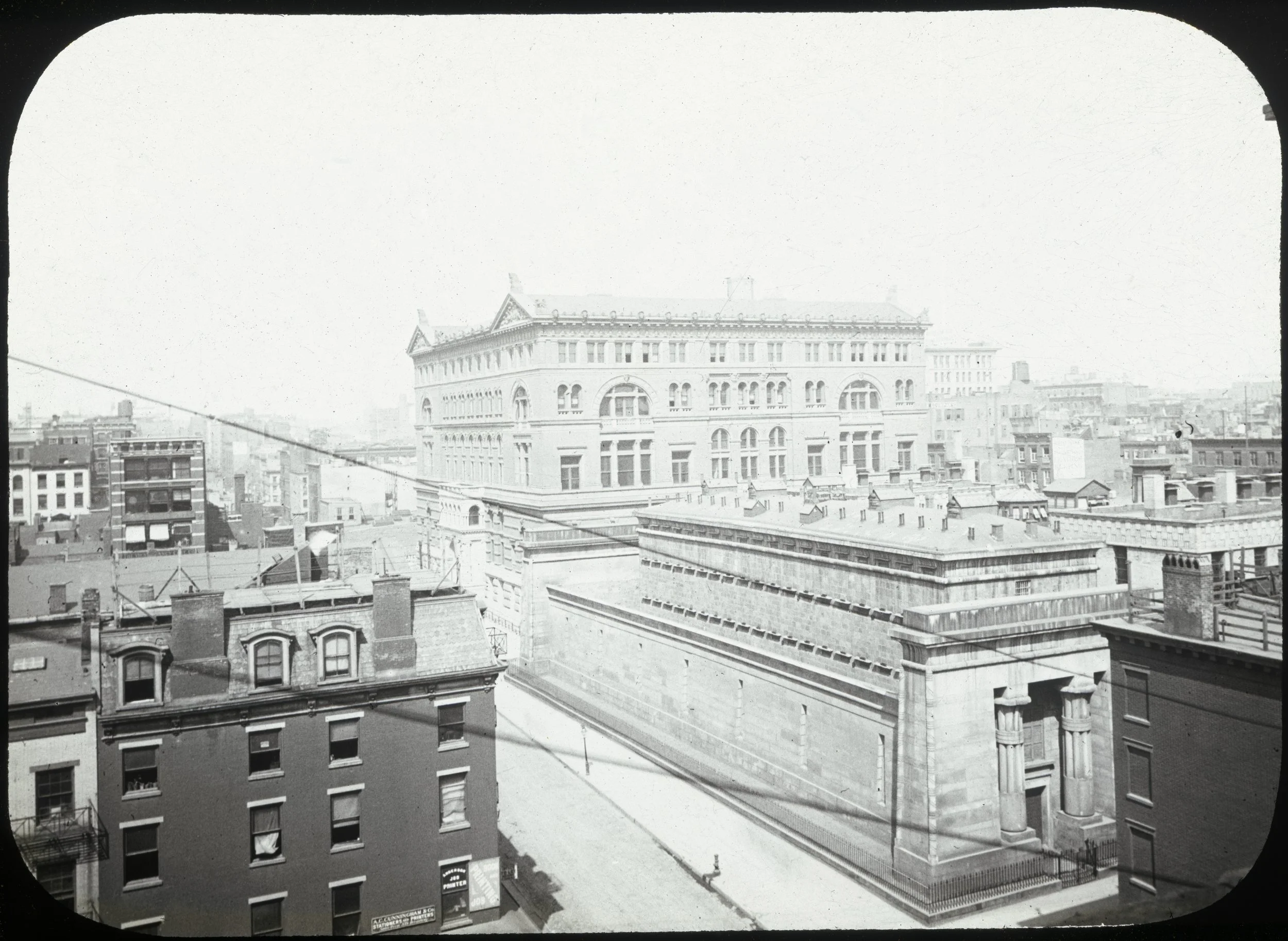
MSS0001_01_51: The Tombs [before 1897], DeGregario Lantern Slide collection, NYC Municipal Archives.

(Amy): We do not have any building plans for the first iteration of “the Tombs,” only plans for the 1941 Manhattan New York City Criminal Courts Building and City Prison, a later prison building also often referred to as “the Tombs.”
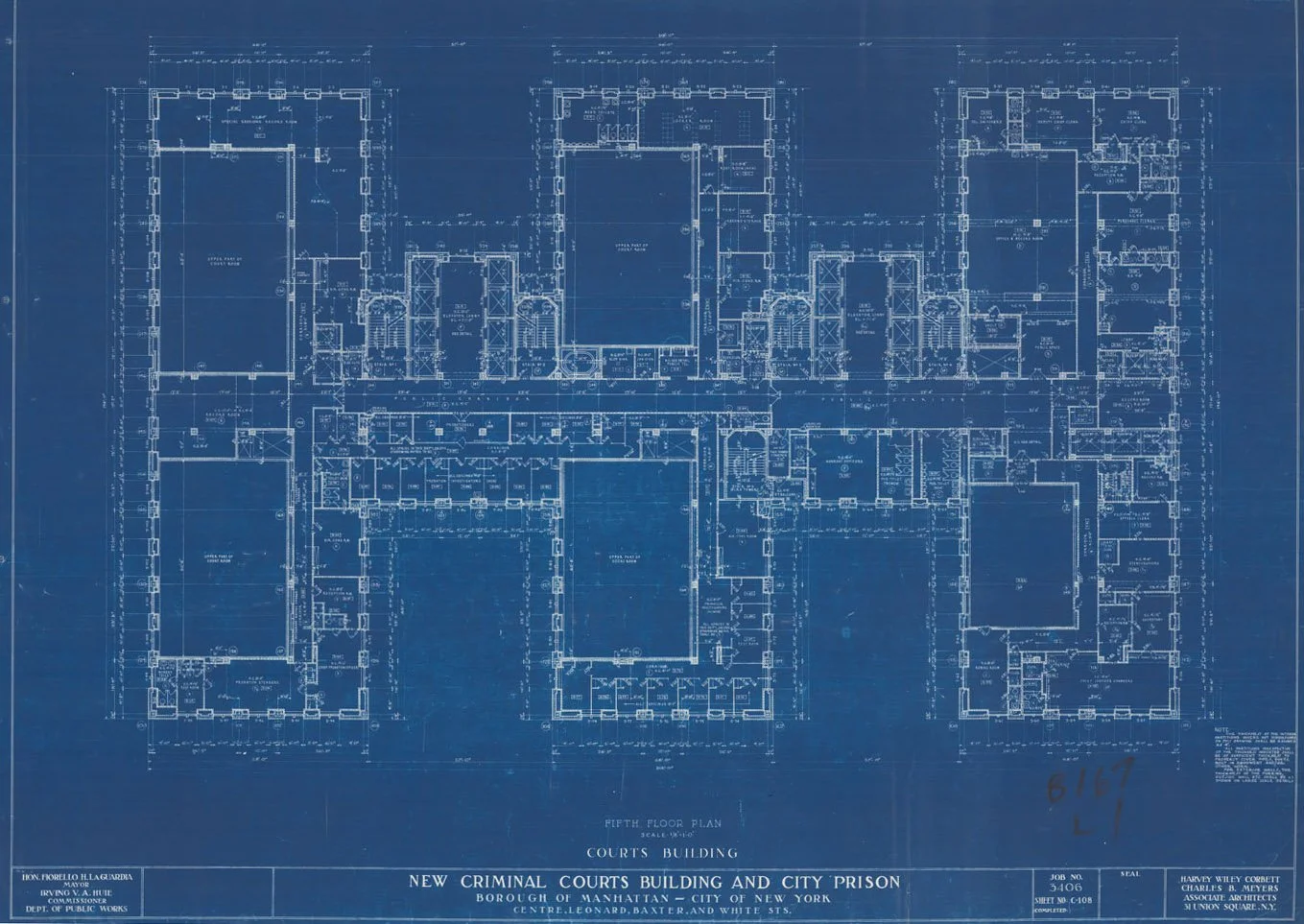
REC0074_0167_001_0033: New Criminal Courts Building and City Prison, Fifth Floor Plan, ca. 1941. Manhattan Building Plans collection, NYC Municipal Archives.

(Michael): The four buildings, known as “The Tombs” were: 

  • 1838–1902, New York City Halls of Justice and House of Detention 

  • 1902–1941, City Prison 

  • 1941–2023, Manhattan House of Detention (Manhattan Detention Complex South Tower after 1983) 

  • 1990–2023, Manhattan Detention Complex North Tower 

We also have photos of the 2nd one, which was demoed in 1941. 
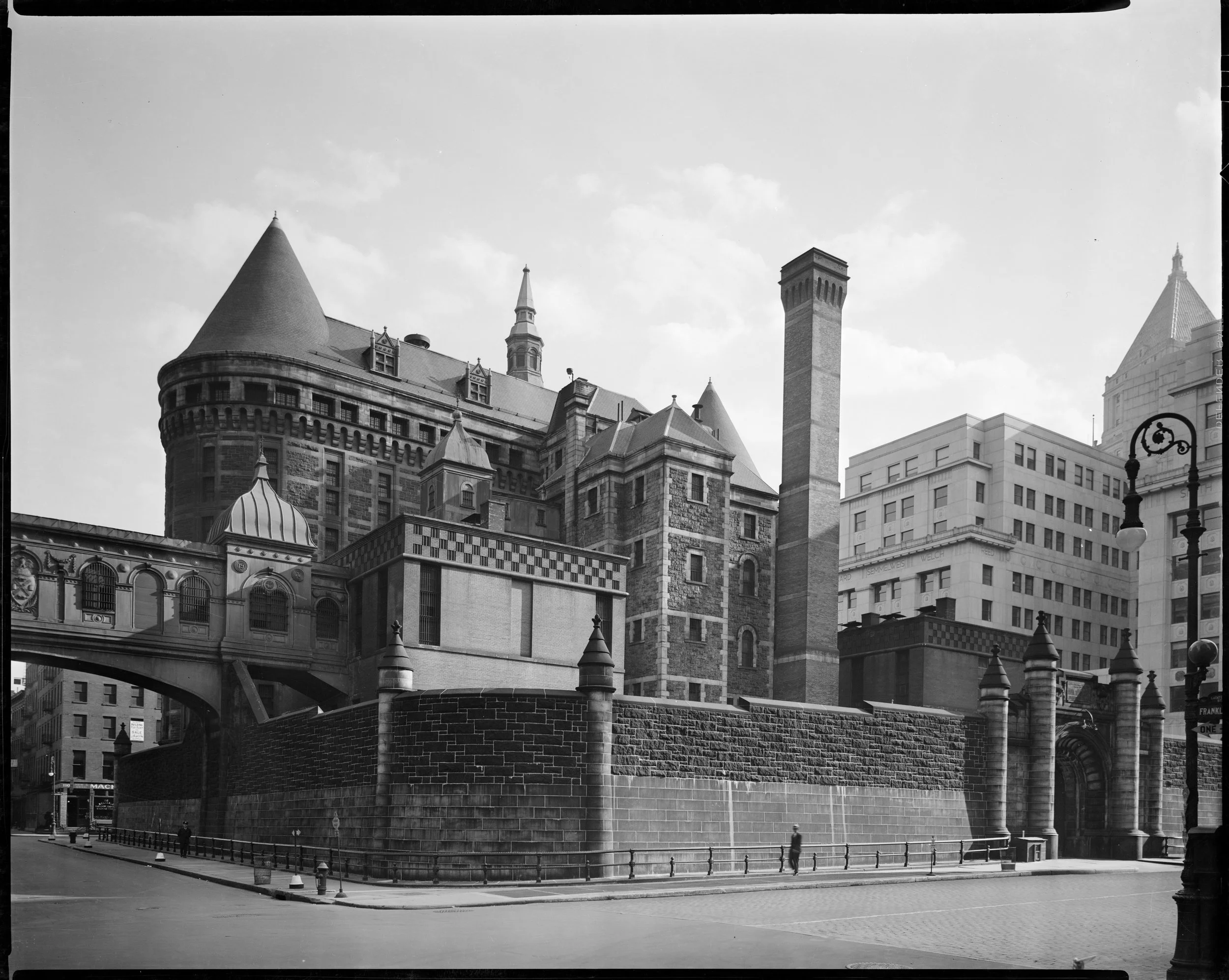
MSS0041_0056: “The Tombs” and “the Bridge of Sighs,” ca. 1937. WPA Federal Writers’ Project collection, NYC Municipal Archives.


Question 3: How are the NYC Municipal Library & Archives’ digital collections curated, created, and maintained? 

Answer (Matt): I can answer the creation part. We have a really wide range of materials, from books and volumes, to oversize maps, to photographs and A/V materials. This means that we employ different digitization methods for varied objects. Many of our collections, especially the most fragile ones, are photographed with overhead digital cameras specially made for this purpose. These cameras cost tens or even hundreds of thousands of dollars and allow us to maintain the highest archival standards. For other items, we have other purpose-built devices, such as oversize scanners for maps and drawings, a microfilm scanner, a book scanner, and various setups for digitizing A/V. Archival digitization is often delicate and time-consuming, and requires a lot of troubleshooting, as well as training and experience with different materials, equipment, and software. And that’s just the capture part. After that, we do extensive quality control, and handling the digital files is a whole other matter.

Conservation and digital programs staff moving the mounted Greensward Plan into position.


Question 4: Would your archives have records of police arrests and case files of murders? I am researching two murders, one in Manhattan in 1904 and one in the Bronx in 1907. The police records and court case files would be something I would like to research further, but not sure these files would exist, but if they do exist, where would I be able to access them? 

Answer (Katie): Our court records are very extensive, with the most extensive being for Manhattan. It would help to know what court, if any, the accused, appeared before. Historical newspapers could help with that. We have a variety of court indexes available on microfilm in our Manhattan reading room. We have indictment indexes for Manhattan available digitally here: https://nycrecords.access.preservica.com/uncategorized/SO_80f4fdbf-d52f-4f01-ad57-02afcb64b032/ 

We do not have similar indexes for the other boroughs though. I would recommend emailing us with the details you have about the cases.
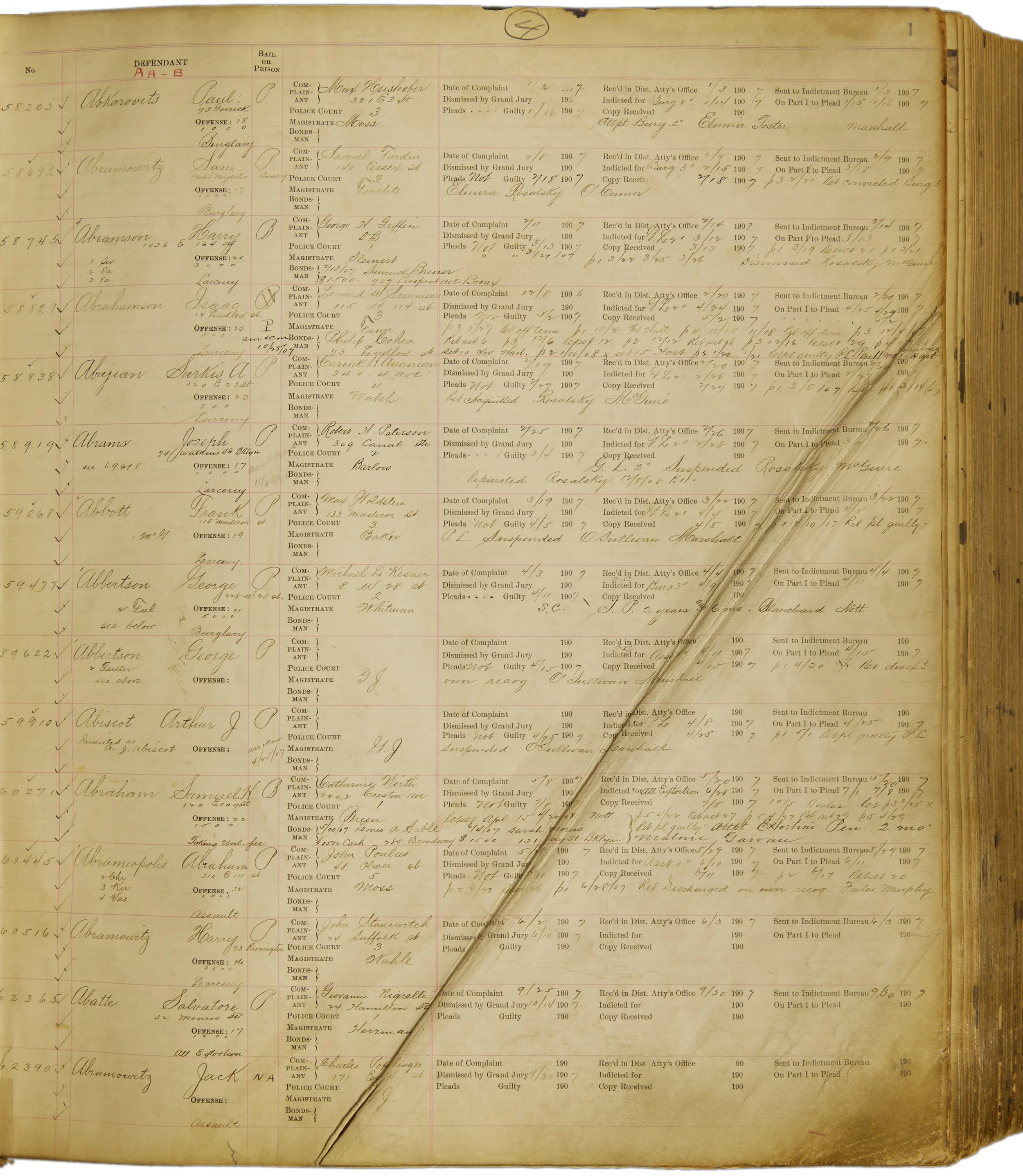
REC0059_010_1907-1908_A-K: New York County District Attorney record of cases,1907-1908, A-K. NYC Municipal Archives. 

(Rossy): We have magistrate court dockets for Manhattan and Bronx in this time period. If a Grand Jury voted to indict, we may also have indictment records for the Manhattan case. We do not have any Bronx District Attorney cases for these years. We also recommend checking the mayoral departmental correspondence with the courts as an additional resource since notable investigations are often mentioned there. 


Question 5: For families tracing Italian immigrant grandparents in Manhattan around 1900–1920, what's the best place to start in your collections? And any tips for when a surname shows up spelled three different ways by three different clerks? 

Answer (Ken): I have found the geographic birth index to be useful when searching families that have multiple name spellings. The trick is to know the family’s address—from census, or other vital records.
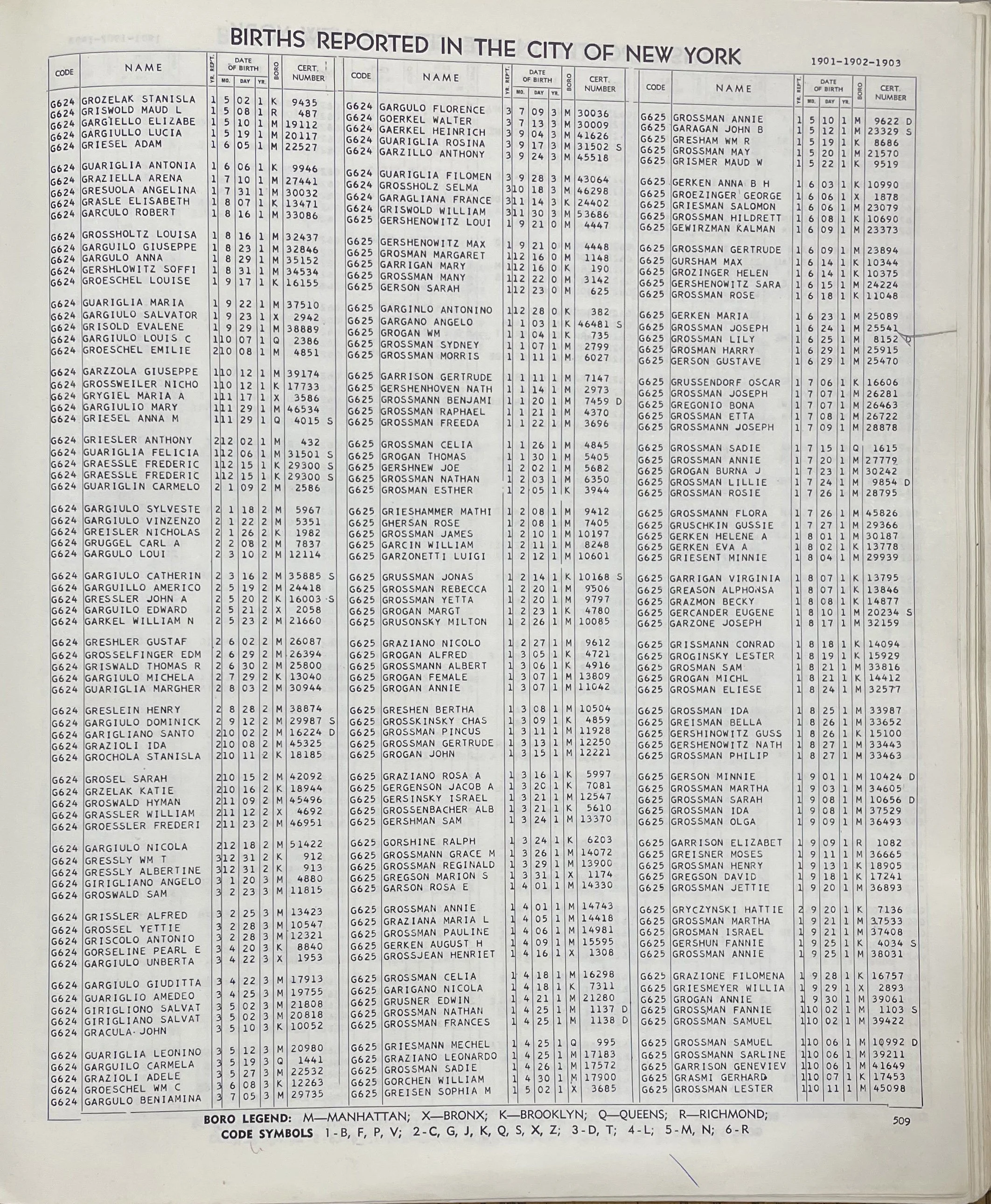
Births Reported in the City of New York, 1901-1903. NYC Municipal Archives.

(Sylvia): Italiangen.org is a good resource.  Also stevemorse.org allows for searching that includes first and last names that “start with” or “contain” delimiters. NYC Open Data is also a great way to search broadly on variations of names because you can download a specific data set (vital type/year) download spreadsheets of the indexed digitized records, and search name variations. https://data.cityofnewyork.us/browse?q=historical+vital+records&required=&sortBy=relevance&page=1&pageSize=20 

(Marcia): Before they start in our collections, they need to confirm that they were in Manhattan at the assumed time. To do that, check immigration records, the 1900 census is great, the 1915 NY State Census. Also, NY City Directories (NYPL.org). Then check germangenealogygroup.com (free) which allows you to search the GLOBAL SEARCH to search all databases. Then they can search for the vital records on the Historical Vital Records app online. 


Question 6: What’s one collection you wish more New Yorkers knew existed? 

Answer (Katie): I’d like to say the NYPD Intelligence records even though it’s very popular. Handschu in particular.

This is the finding aid: https://a860-collectionguides.nyc.gov/repositories/2/resources/82 

And an online exhibit from years ago: https://www.archives.nyc/unlikely-historians-1
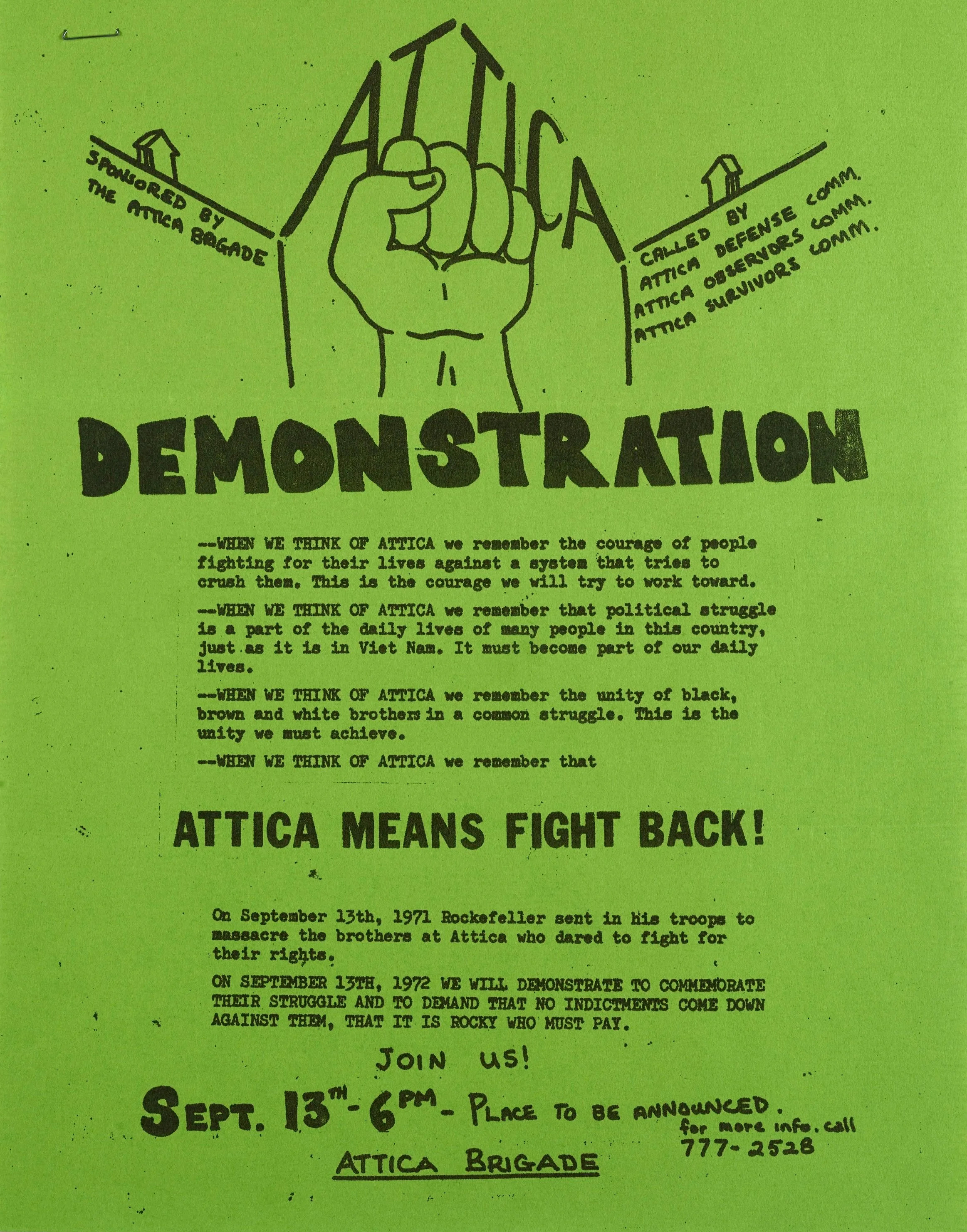
Anniversary demonstration for Attica, September 13, 1972. Handschu Collection, NYC Municipal Archives. 
Ask An Archivist, Celebrating American Archives Month

October is American Archives Month, and October 14th is Ask An Archivist Day, promoted by the Society of American Archivists.  https://www2.archivists.org/initiatives/askanarchivist-day

Archivists employed by the Department of Records & Information Services perform a variety of tasks. They appraise New York City government records for historical or other significance; they transfer records designated as archival from the creating agency to the Municipal Archives; they catalog and describe the records; and they store them in appropriate conditions to ensure permanent preservation. All toward the goal of providing public access. The archivists regularly publish finding aids and collection guides and digitize selected materials to further facilitate access. Today, there are more than 11.3 million historical photographs, documents, maps, films, audio files, etc. digitized and available on the Archives’ Digital Collections site and through the Historical Vital Records Project. Most recently, the Archives processed and made available records of the New York City Commission on Human Rights. 

DORIS archivists have seen a lot, and on Ask An Archivist Day the public is invited to send questions to our social media accounts (@nycrecords on Facebook and X, @nycarchives on Instagram), which the archivists will try to answer. 

Also, save the date for Wednesday, October 21, when NYC Department of Records will celebrate Archives Week with a full day of programming at the historic Hall of Records! 

https://www.eventbrite.com/cc/reflecting-on-nyc-history-a-community-forum-4859061/ 

Join us in person at 11am to learn about Neighborhood Stories, a unique storytelling initiative that gathers and permanently preserves oral history-style interviews with New York City residents, connecting local history with the records of City government maintained in the collections of the Municipal Archives and Library. Learn how the project began, how to get involved, and how your story can help preserve New York City history for future generations.

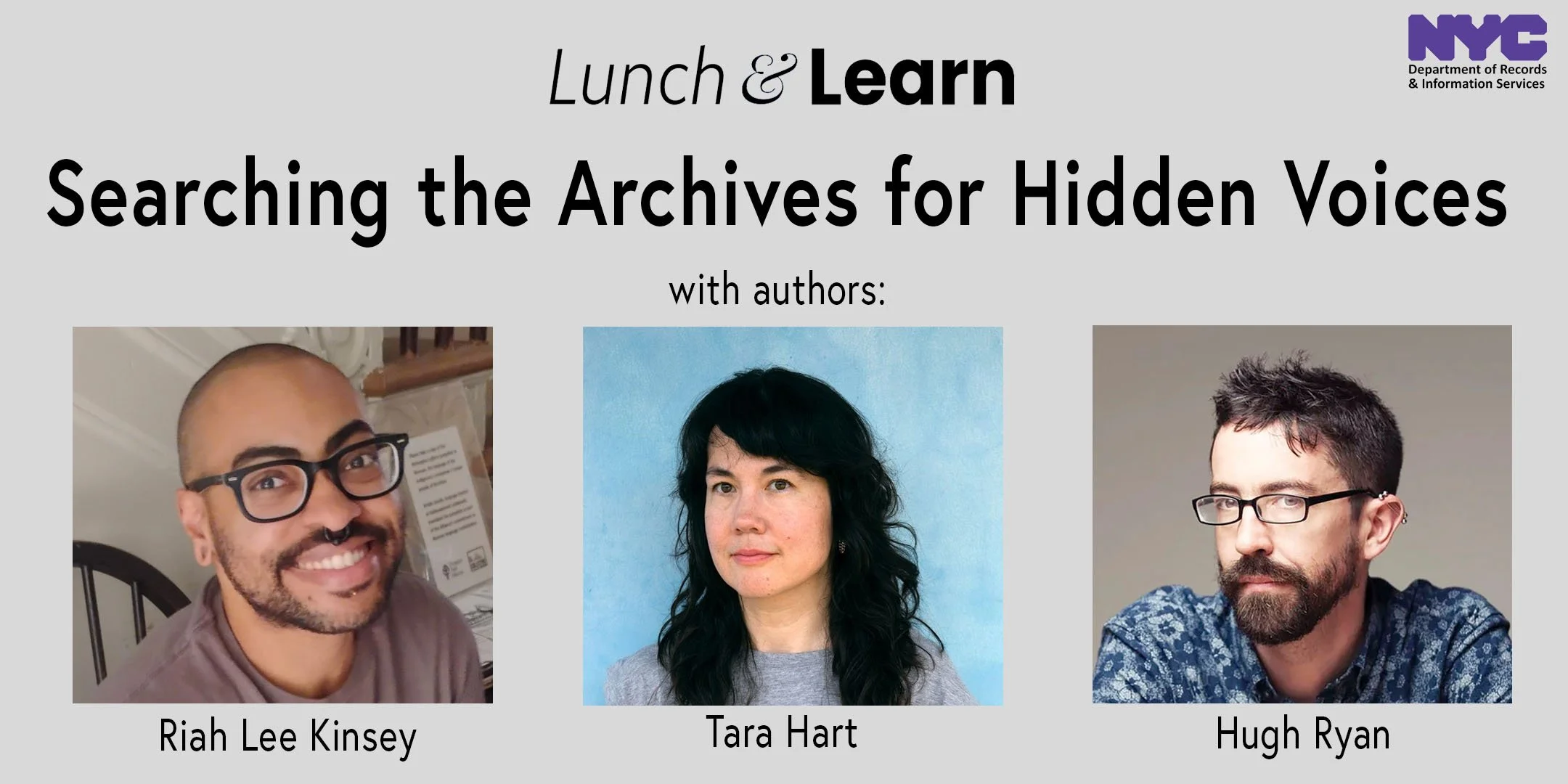
At 1:00 pm, our Lunch & Learn series brings a Zoom conversation with author Hugh Ryan and archivist Riah Lee Kinsey. The speakers will discuss their experiences conducting archival research at a range of institutions, with a particular focus on their work at the Municipal Archives and Library. 

At 3:00 pm we have an in-person cross-departmental panel discussion with DORIS staff on how AI is affecting Municipal Archives services.

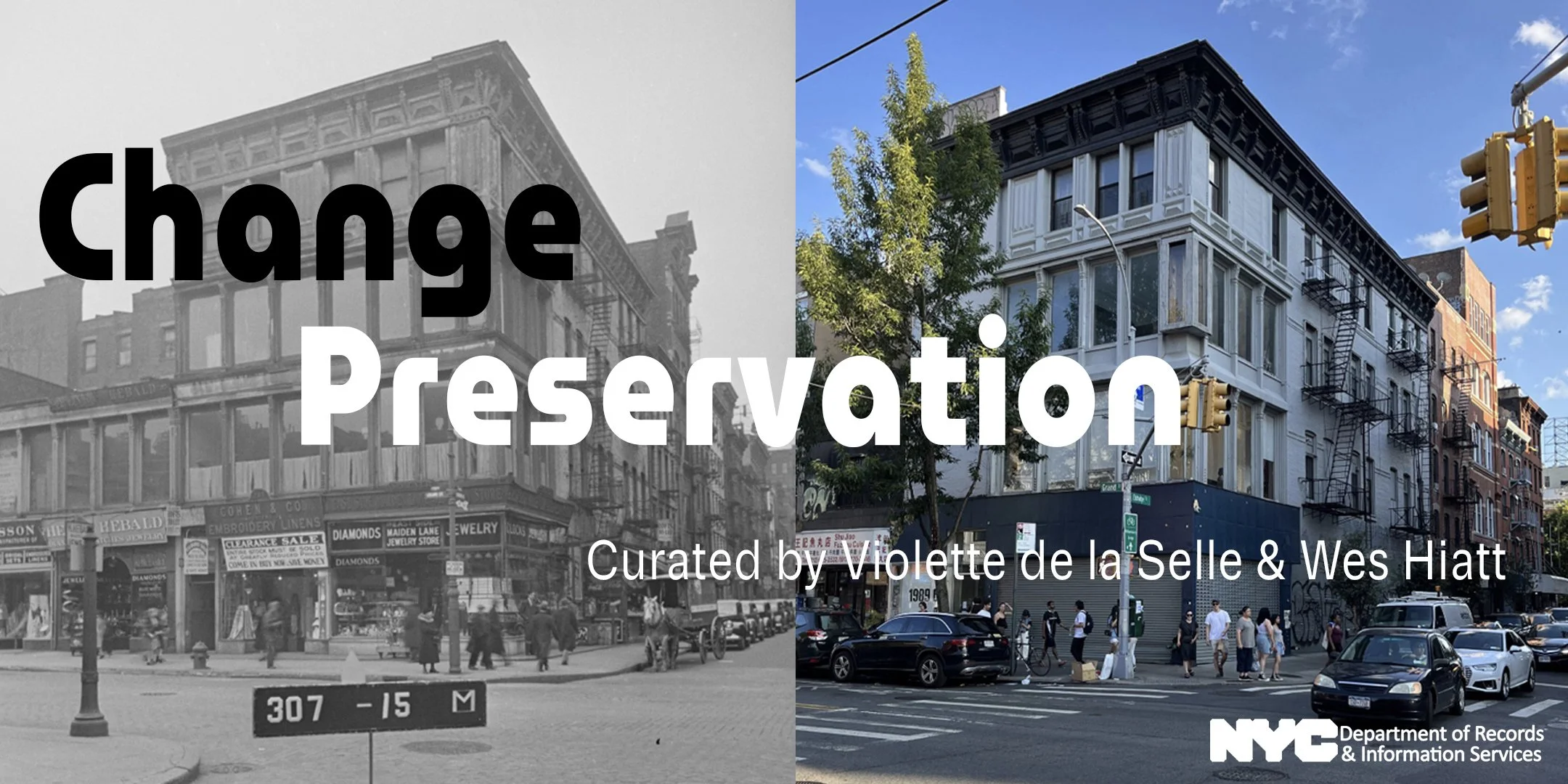
At 6:00 pm is the opening of “Change Preservation” a new exhibit located in the first-floor alcove of 31 Chambers Street. Curated by architects Wes Hiatt and Violette de la Selle, the exhibition brings together the material of Changing Change, a research project shown in two chapters at Citygroup in 2024 and 2025 on how buildings in Manhattan's Lower East Side and Chinatown endure through constant alteration. 

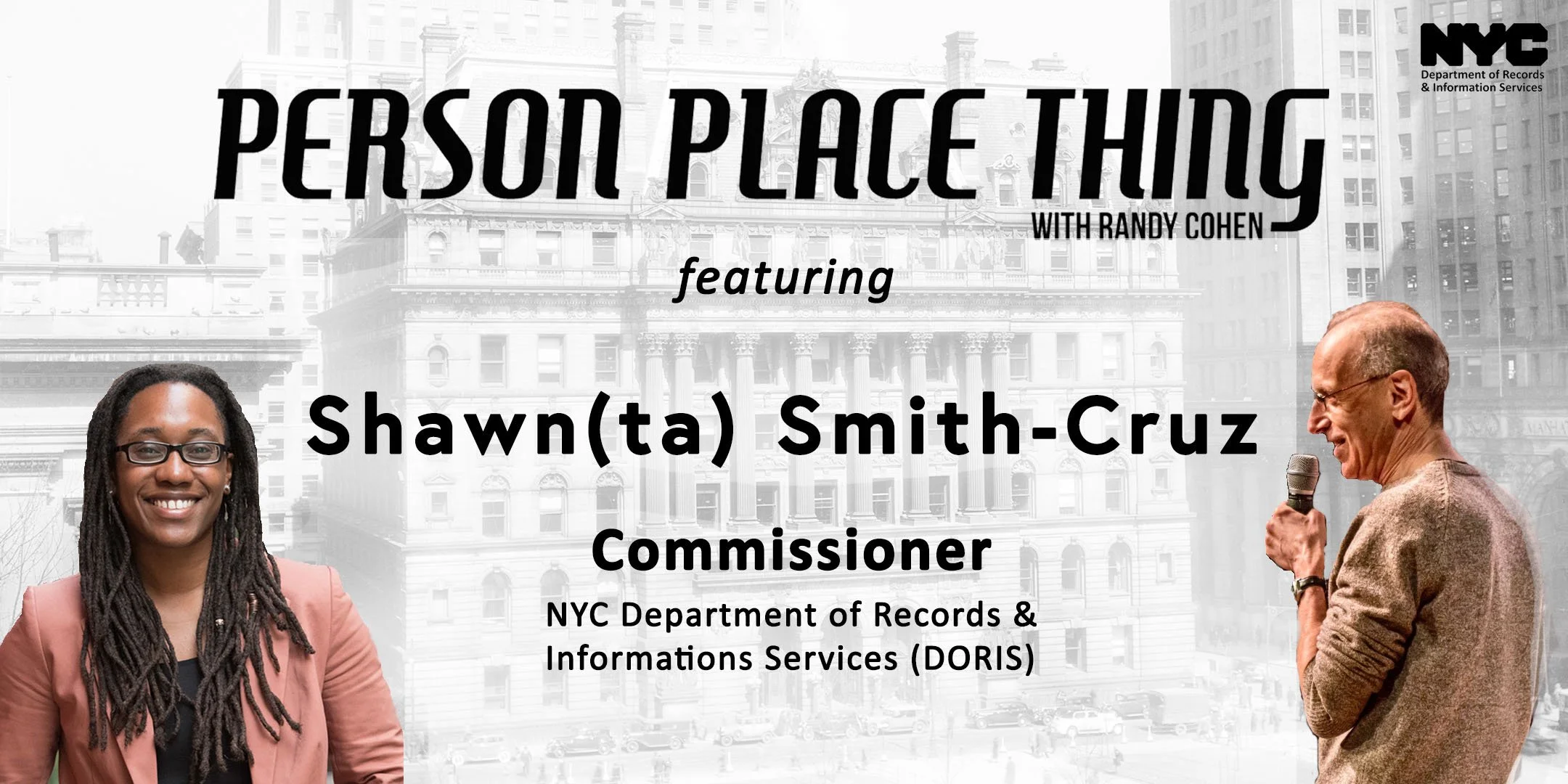
And finally, at 7:00 pm our day’s events conclude with a live taping of Person Place Thing, with Randy Cohen and DORIS Commissioner Shawn(ta) Smith-Cruz. 

Space is limited for these events please sign up in advance.

https://www.eventbrite.com/cc/reflecting-on-nyc-history-a-community-forum-4859061/ 

New Yorkers Love Books!

Book Sale in the Atrium at 31 Chambers Street, November 7, 2025.

Staff at the Municipal Archives and Library weeded surplus books from our collections for the purpose of holding a two-day book sale of items that might be of interest to the general public.

The sale was scheduled for two days, Friday, November 7, and Saturday, November 8.  Because of the overwhelming response by New Yorkers, almost everything was sold on Friday and the Saturday sale is cancelled.

The turnout was unprecedented. Our prior sale of similar deaccessioned books in 2016 had much lower participation. Today, by contrast, people were lined up by 9:00 a.m. to get in. Twice, admission had to be paused because the number of people in the lobby was close to the limit under the fire / safety rules.

New Yorkers love books and bargains! Both of which they got today.

If you missed the sale and are interested in an online auction of exceptional items, please check out our online auction https://on.nyc.gov/auction where twelve volumes are on the auction block until Friday November 14. In addition, we still have a limited number of original redeemed vintage bonds and stock certificates dating from the 1920s to the 1980s offered for sale on our support page: https://www.archives.nyc/support

Book Sale in the Atrium at 31 Chambers Street, November 7, 2025.

Indexing the Dutch Records of Kings County

Nena Huizinga, a 4th year student at the Reinwardt Academie in Amsterdam, the Netherlands, has spent the last four months at the Municipal Archives indexing Dutch colonial-era Kings County town ledgers.

Manhattan’s Dutch heritage has been long-recognized and the records of New Amsterdam have been transcribed, indexed and published. Less well-known is the Dutch origin of the towns and villages in Kings, Queens, Richmond and Westchester Counties. The Municipal Archives collection includes records of many of these communities dating to the Dutch colonial era and we have begun preserving and making them available.

This past summer, Harmen Snel and Hans Visser of the Stadsarchief, Amsterdam, visited the Municipal Archives. They examined the Kings County Dutch ledgers and took notes for an index that will greatly enhance the records value to historians.

Nena Huizinga, a 4th year student at the Reinwardt Academie in Amsterdam, the Netherlands, has spent the last four months at the Municipal Archives indexing Dutch colonial-era Kings County town ledgers. Photograph by Matthew Minor.

Kenneth Cobb recently spoke with Ms. Huizinga about her project:

KRC: Tell me about your background and how you found out about the Municipal Archives.

NH: I had originally intended to major in Cultural Heritage at the Academie. In the third year we must choose a minor, and I chose Archival Studies which was partly taught at the Hogeschool van Amsterdam (HvA) and the Reinwardt Academie. I now plan to graduate this summer with a dual degree. My work at the Municipal Archives is to fulfill my internship requirement. I had been studying about Dutch settlements and influence around the world—in Australia, Canada and the U.S. and through Mr. Snel I learned about the indexing project at the Archives.

Town of Bushwick records entry from 1663. NYC Municipal Archives.

KRC: I understand that there are two parts to your assignment—indexing the Kings County Town ledgers, and mapping a plan for future collaboration between the various institutions in New York and the Netherlands that house Dutch colonial records. Let’s start with the first part of your work here. Tell me more about your assignment and what has been the biggest challenge?

NH: I am creating an index to nine ledgers in the Archives’ collection—three from the Town of Flatbush; two each from the town of Flatlands and New Utrecht; and one from Bushwick. They date from 1646 to 1849. The biggest challenge for me is reading the old Dutch language.

KRC: Is it true that the “old” Dutch language written in these ledgers is very different from modern Dutch and difficult to read?

NH: Yes, it is very difficult to read! Even the letters are different. This past summer, before coming to the States, I took a special course to learn how to read the old Dutch. I felt like a 5-year old learning to read again!

KRC: Are there entries or passages in the ledgers that stand out?

NH: For me, the references to Native-Americans are the most interesting. There are many mentions of Native-Americans in the books, but they are usually referred to as ‘savages’ or something negative like that, but every once in a while they would write out their names and I found that very moving.

KRC: What were the interactions between Native-Americans and the colonists about?

NH: Mostly about property—usually a dispute of some kind.

Names of the Native Americans are among others given in the Flatlands book page 19: “In dato juny anno sesthien hondert sesendaertich is ten overstaen van directeur en raden van Nieuw Nederlant vercocht en getransporteert door de indianen met namen: Tenkirau, Ketamun, Arrikan, Awachkouw, Warinckekinck, Wappittawaekenis, Ghettin.” Roughly translated: “In June sixteen hundredth and thirty-six in attendance of the director and councils of New Netherland sold and transported by the Indians with the following names: Tenkirau, Ketamun, Arrikan, Awachkouw, Warinckekinck, Wappittawaekenis, Ghettin.”

KRC: How do you go about indexing the ledgers?

NH: First, I read the text to determine what sort of document it is, such as deed, or will, or petition. Then I write down the names, interesting topics and geographical places, such as Middelwout (Midwout), Schoenmakersbrug (Shoemakers bridge) and Vlackebos (Flatbush). I try to add as much as possible, but in some cases the writing is hard to read or the pages are much too faded to make any sense of it. The index will be in alphabetical order and followed by the page numbers, using the surnames first, like so: van Ekelen, Johannes, 235.

KRC: And the second part of your assignment – the collaboration plan?

NH: Yes, I am also working on a report about all the Dutch colonial records that are located in various libraries and archives in this area. Here in New York City, I have visited the New-York Historical Society and Collegiate Church which both have Dutch records. And I traveled to Albany, where they have the records of New Netherlands. I also visited Historic Hudson Valley in Tarrytown, Westchester County.

My goal is to identify areas of interest and overlap between the repositories and conduct research on how to fund and set up a collaborative network like two in Europe: Netwerk Oorlogsbronnen and Europeana. I want to draw attention to the benefits that cooperation can bring. Who is it important to? What are the advantages and disadvantages of cooperation? And I will also discuss the importance of multiple perspectives and how that can be enhanced when working together with not only repositories that have Dutch colonial records, but, for example, to try and involve people from the Native American and the African American communities to show their perspectives in the records.

KRC: What part of the Netherlands are you from?

Records of slave births in the town of Bushwick, 1814. NYC Municipal Archives.

NH: I am from a small town in Friesland, a region in the north, by the North Sea—there are only 2,000 people in the town. It is a farming area where they grow potatoes, onions and sugar beets. I moved to Haarlem for school, where I’ve lived the past three years.

KRC: We have a “Harlem” here too. What are your accommodations in NYC?

NH: I am staying in a kind of student apartment on West 46th Street, in Hell’s Kitchen. As it turns out, most of the other students in the house are also Dutch.

KRC: Had you ever visited NYC before?

NH: No. This is my first time here. I only knew New York from television and movies.

KRC: How has the reality differed from what you imagined?

NH: Well, it is less glamorous than I thought. I was a bit shocked by all the homeless people. And the streets, especially in my neighborhood, are not so clean. But all the people and the architecture of the buildings is great. And I love the museums—I’ve been to the Morgan Library, Museum of Modern Art, the Met, the Museum of the American Indian, and the Museum of Natural History.

KRC: Have you seen much evidence of our Dutch heritage in the City?

NH: Not in Manhattan, but out in Brooklyn where I recently walked around, I saw it everywhere in the street and place names. I also visited Greenwood Cemetery to look for the Dutch families I found in the ledgers, and yes, there they were!

Ms. Huizinga’s index project has included Dutch-language portion of the following Town ledgers:

-         Flatbush 1007, 1679-1819

-         Flatbush liber A 1000, 1670-1708

-         Flatlands 4000, 1674-1831

-         Flatlands Bergen, 1677-1849

-         Bushwick deeds, 1660-1825

-         New Utrecht 2001, liber A, 1659-1831

-         New Utrecht Deeds, 1646-1653

-         Flatbush 1001 Liber AA, 1676-1682

-         Flatbush No.1, 1652-1708

Look for digital copies of the ledgers to be added to the on-line gallery soon and we hope to continue the indexing project after Ms. Huizinga returns home to the Netherlands.