Geneaology

A Few of Our Favorite Things, part 2

Today’s For the Record is another installment of a new series we are calling “These are a Few of Our Favorite Things.” The staff at the Department of Records has the lucky task of working directly with the historic materials held in the country’s largest archive, and every now and then they come upon a real gem. Usually, they snap a picture on their phone, maybe share with a colleague or two and then the image lingers in the cloud with all their other quick pics. “Our Favorite Things” aims to end that and share some of these little treasures with you. We hope to highlight some of our lesser-known collections and share the passion and dedication that our archivists and records professionals have as they work to preserve the history of New York City.

We hope you enjoy!


Patricia Glowinski

One of my favorite things about being an archivist at the NYC Municipal Archives is that there are no boring days on the job. I am surrounded by millions of stories documented and preserved in the records stewarded here. One of my favorite things about living in New York City is the people. Every New Yorker has a story. Dig a little deeper into these stories and you’ll find connections.

My favorite part of the New York City Historical Vital Records are the Maritime birth, death, and marriage records, 1901-1948. They document people who were born, married, or died at sea. Though there are very few of these records in the Archives, they are revealing.

REC0051_05_01_M-01: Lortel-Schweitzer Marriage Certificate, 1931. NYC Municipal Archives. Lucille was actually 30 in 1931. Like many actresses of the era, she was known to lie about her age.

On March 23, 1931, Lucille L. Wadler and Louis Schweitzer were married at sea aboard the S.S. Leviathan at Latitude 42-35N and Longitude 56-05W. I came across their marriage certificate when I was preparing the collection guide. When I searched for their names on the Internet, I found two incredible New Yorkers.
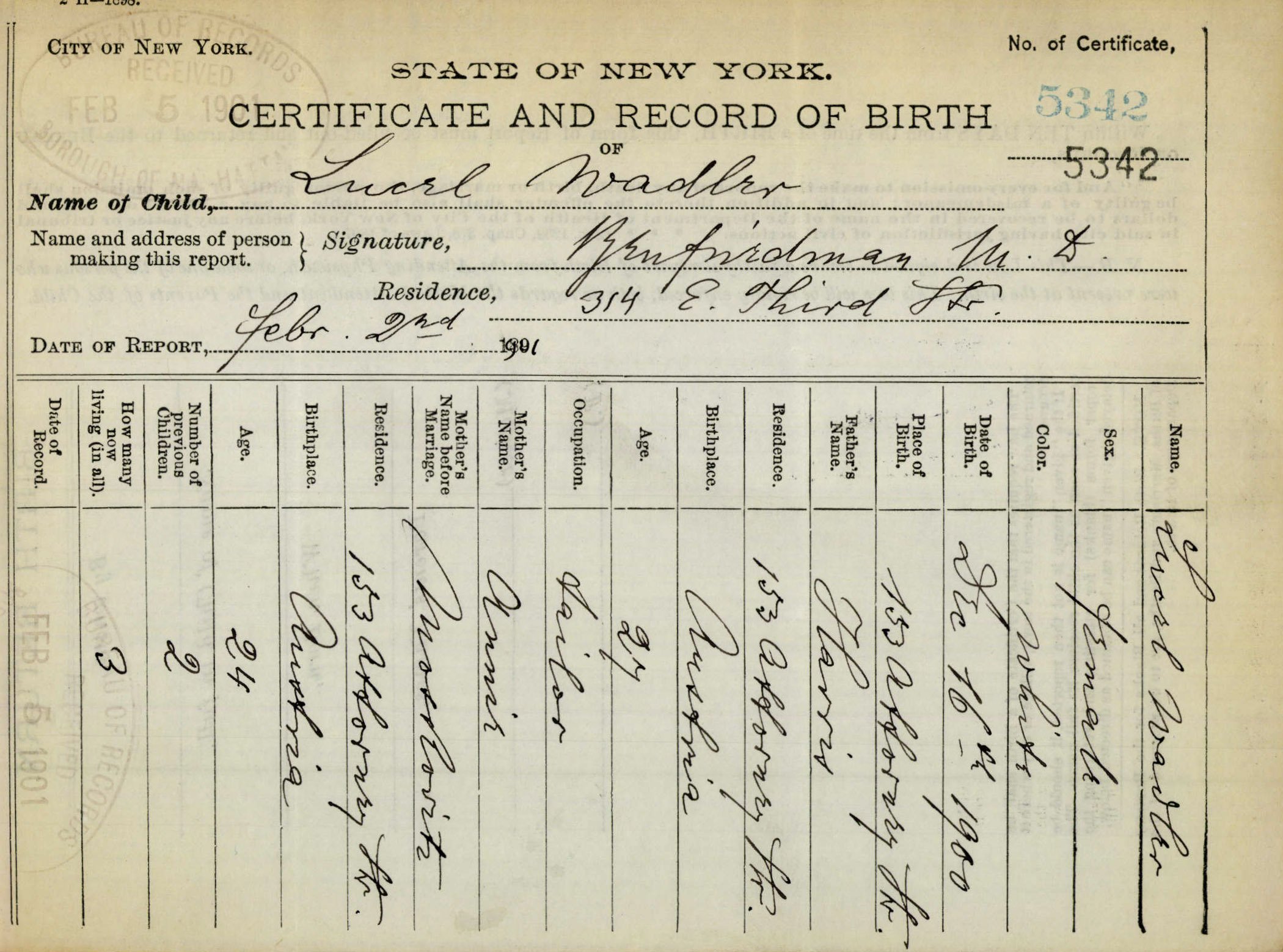
B-M-1901-0005342: Luciel Wadler Birth Certificate, 1901. NYC Municipal Archives. Lucille was born on December 16, 1900, but her birth was not registered until February 2nd, 1901. Not unusual for home births.

Their occupations are listed on their marriage certificate as “actress” and “motion picture business,” respectively. Lucille’s stage name was Lucille Lortel. Her Broadway debut was in 1925. She gave up acting in 1939 and founded a theatre in Connecticut and then took over another in Greenwich Village, the Theatre De Lys (now the Lucille Lortel Theatre) at 121 Christopher Street. Focusing on experimental theatre, the production of The Threepenny Opera was the first to win a Tony Award for an Off-Broadway production.

121 Christopher Street, ca. 1939. Dept of Finance Tax Photo Collection, NYC Municipal Archives.

Born in Russia, Louis came into money from his family’s paper company. Like myself, he was a lover of radio, and he purchased WBAI in 1957. If you’re a fan of local, listener-supported, news, art, and music radio, then you probably know WBAI. Louis also founded the Vera Foundation (now the Vera Institute of Justice) in 1961 to “end the overcriminalization and mass incarceration of people of color, immigrants, and people experiencing poverty.”

Depending on which location I work at (the Archives are stored in Manhattan or Brooklyn), I walk past the Lucille Lortel Theatre in the Village and the Vera Institute of Justice in Sunset Park on a regular basis. With just a simple dive into the archives, I feel more connected to the past and present city I live in.
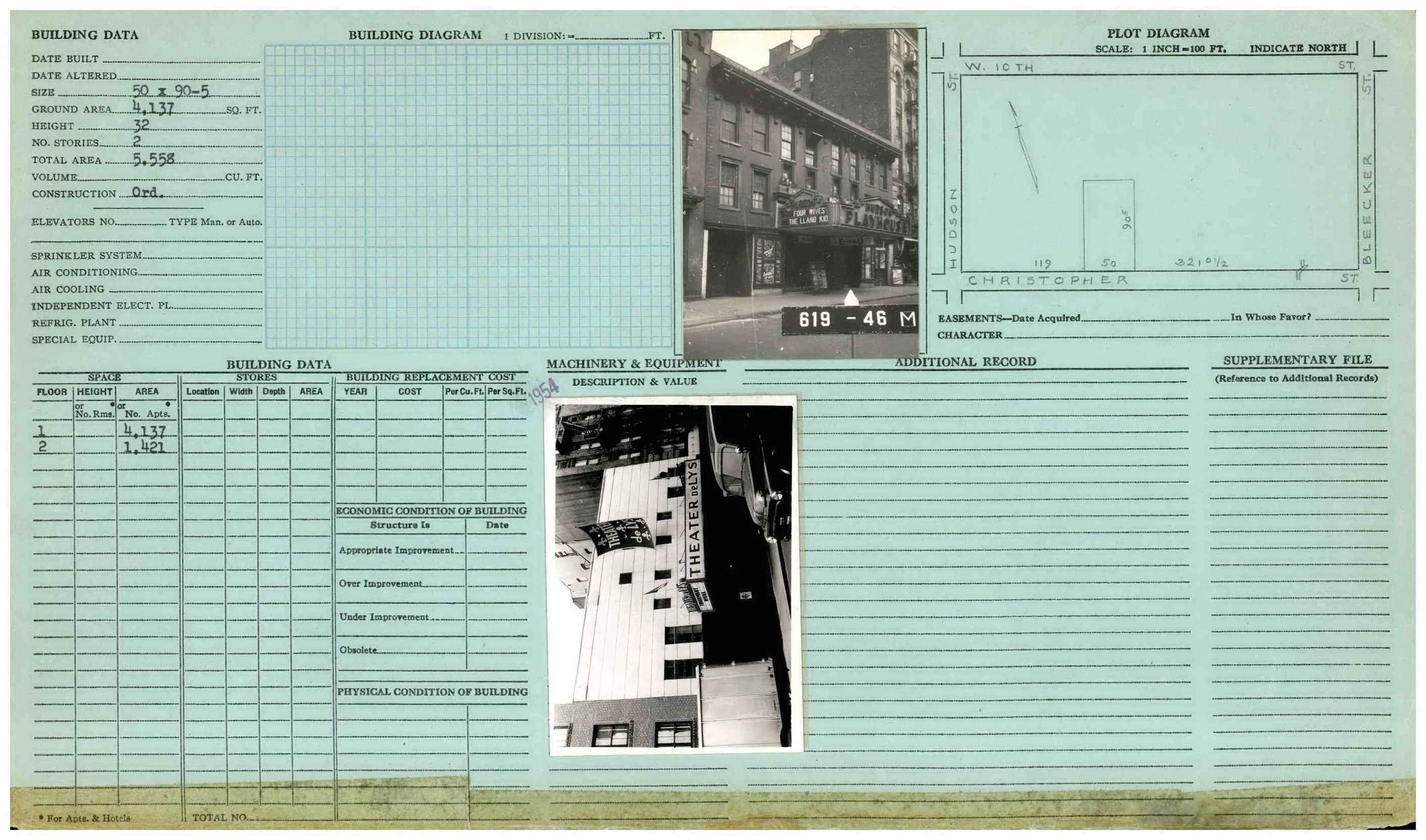
121 Christopher Street. Department of Finance Property Card, NYC Municipal Archives.
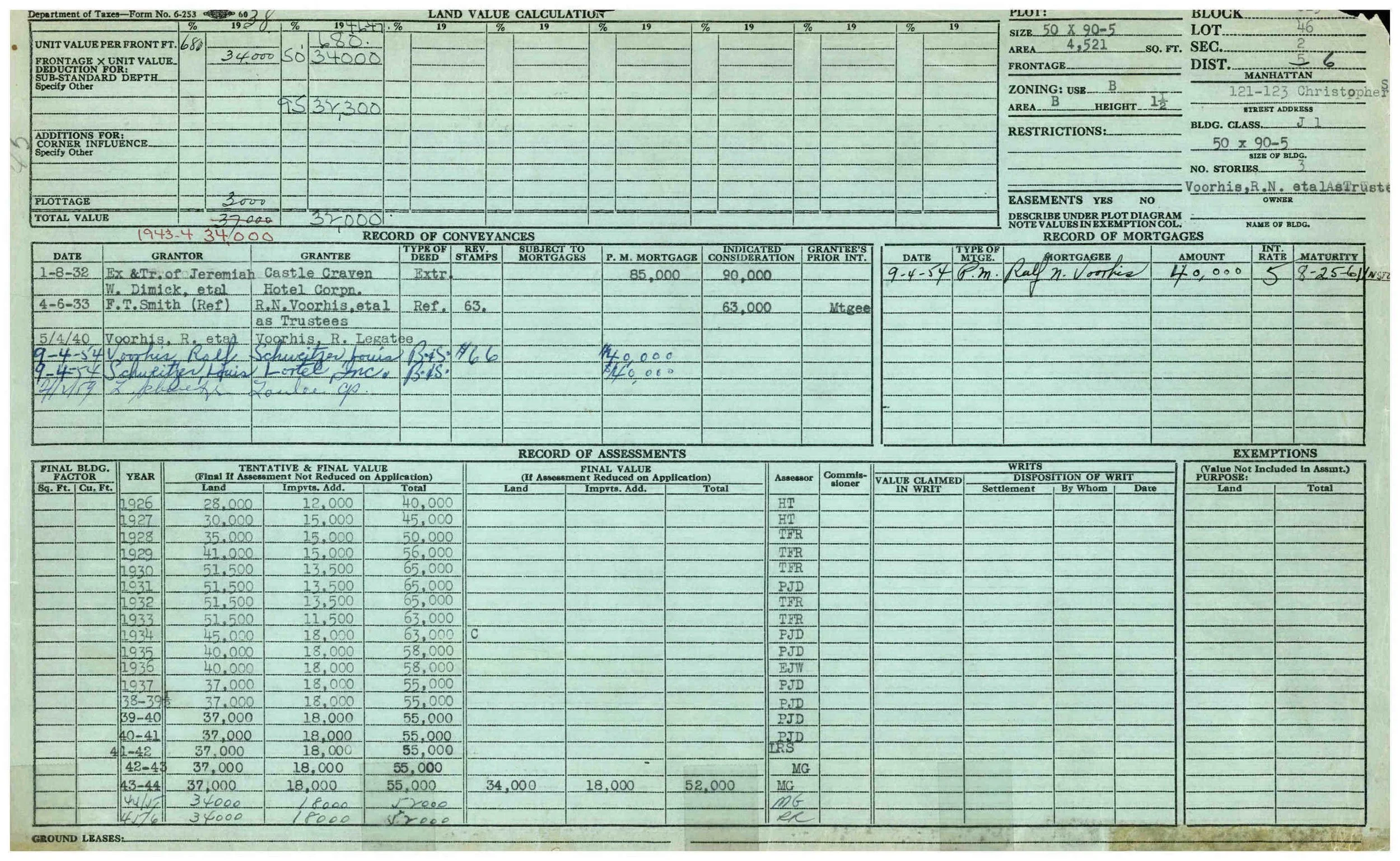
121 Christopher Street. Department of Finance Property Card, NYC Municipal Archives.


Matthew Minor 

REC0044_01_02_067_040_014: NYPD Intelligence Records, NYC Municipal Archives.

Working in digitization, I see items from all sorts of collections; and at a place like the Municipal Archives, the variety is unbelievable. For the last several months, I've been working on the NYPD Intelligence records with our digitization technician, Raquel Phipps. For decades the City’s police kept tabs on all sorts of groups and individuals. The records include police paperwork, correspondence from federal agencies and other police departments, and even materials from the subject organizations themselves.

The folders from the mid-1960s show this diversity. Among the groups the NYPD was watching were American religious groups, such as the Full Gospel Business Men’s Fellowship International, which held its Northeastern Regional Convention in the City in October 1963. While the group sounds like any of a number of Evangelical groups today, their convention materials promote the idea of “the whole gospel for the whole world” with a cover image of a giant Jesus knocking on the United Nations building like a door.

Inside the brochure, the introduction strikes a darker tone, saying that:

“WITHOUT A SHADOW of doubt, I believe that the world is set in a pattern that will bring about the close of this dispensation... You and I are in the generation that is seeing the culmination of all prophecies...because enough energy has been harnessed, which when released could burn up the world. Our main line churches have strayed so far from God they are vulnerable. Bible standards have been by-passed for a liberal, social, and political status.”

While groups like this were anticipating the end of the world, others were feeling optimistic. In 1964, the Esperanto Information Center sent Mayor Wagner a letter praising him for promoting “peace, harmony, and happiness,” and suggesting that adopting Esperanto as an international language could be in an important step towards those ideals. The author of the letter, Vojslav Pytloun, thanked Wagner for not treating this idea “lightly,” as perhaps many others had.

REC0044_01_02_075_005_002: NYPD Intelligence Records, NYC Municipal Archives.

Then as now, everyone had ideas about the future of the world, and somehow those ideas and the people who support them always find their way through New York.
Ask An Archivist - The Answers

October 14th was Ask An Archivist Day, and our staff answered many queries. Here are some of the most interesting exchanges.

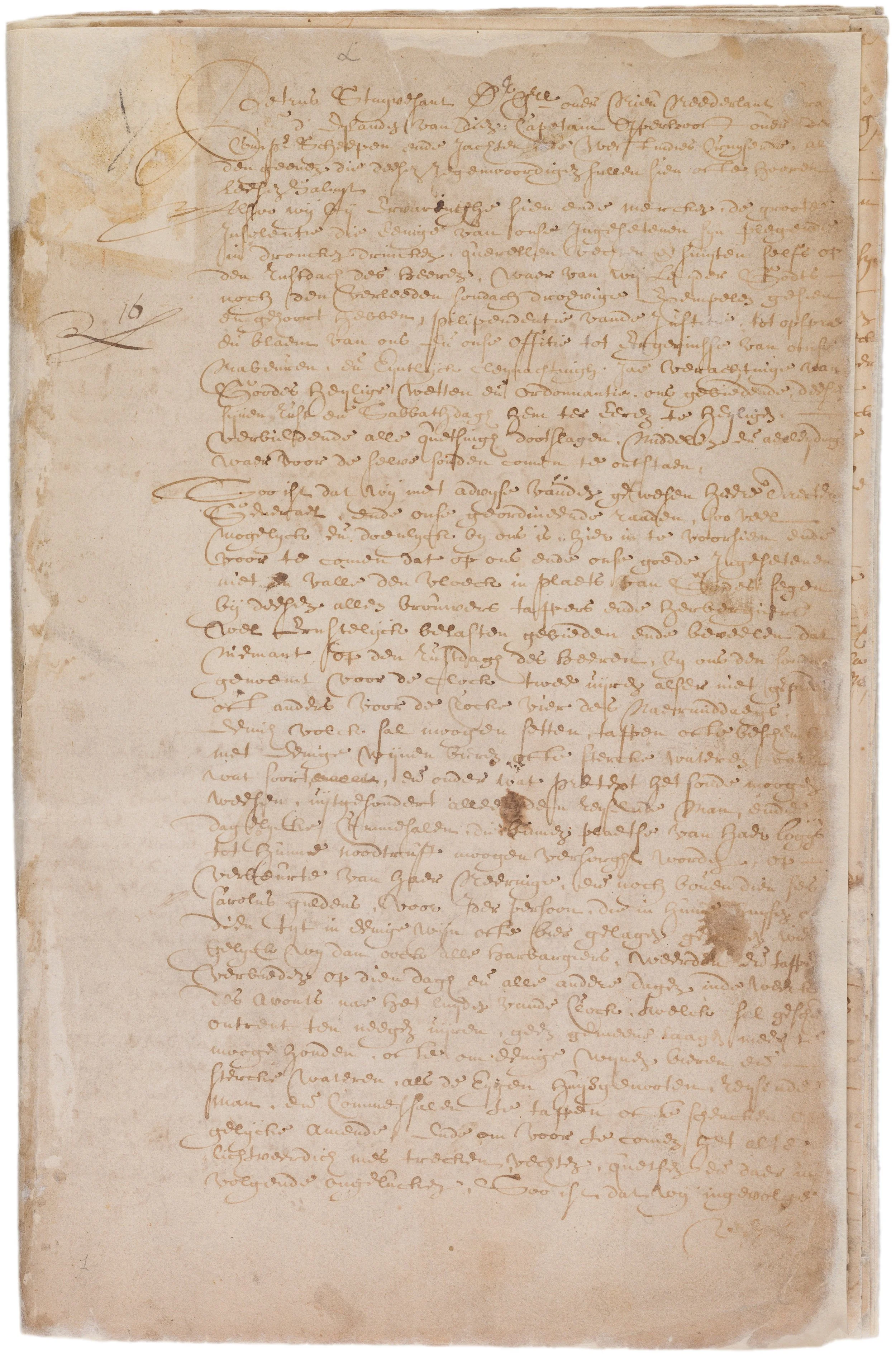
Question 1: Do the Municipal Archives still hold the original Dutch minutes for that session, or only later translations? 

Answer (Rossy): Yes, we hold the original Dutch records, and you can view them in our digital collections’ portal!

MSS0040_1_1_01: The first ordinance Director General Petrus Stuyvesant issued a week after his May 1647 arrival was a law prohibiting the sale of alcohol on Sunday. Page 1 of the Ordinances of New Amsterdam, 1647-1661. Original Dutch records of New Amsterdam, NYC Municipal Archives.


Question 2: Do the Municipal Archives hold anything on the 1838 Halls of Justice, the Tombs, built over the filled-in Collect Pond? 

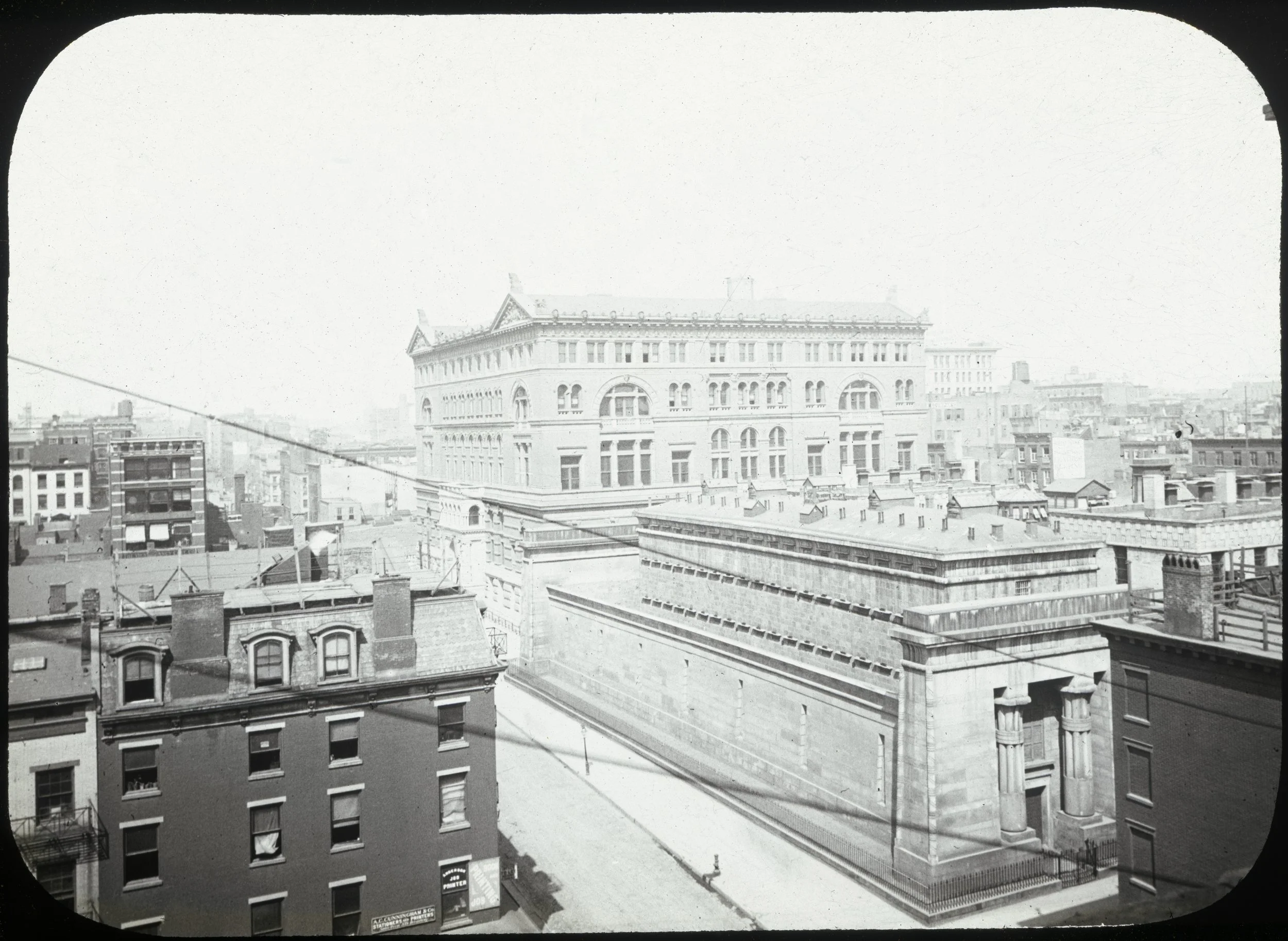
Answer (Michael): We have a glass lantern slide of the Tombs from the DeGregario collection. You can see how it got its name; it really looks like an Egyptian temple or tomb. The name stuck through all the later iterations even though they did not look like a tomb.

MSS0001_01_51: The Tombs [before 1897], DeGregario Lantern Slide collection, NYC Municipal Archives.

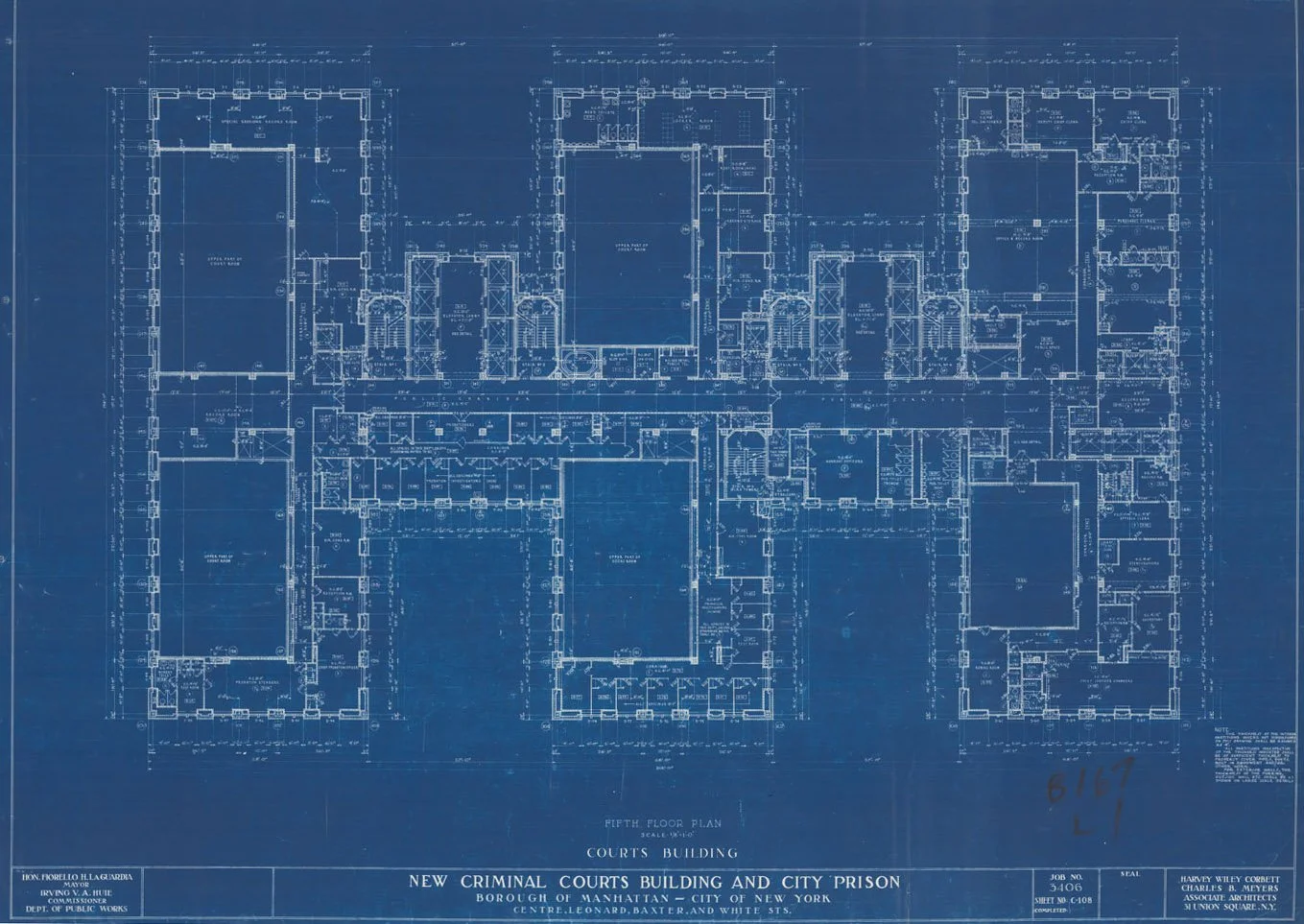
(Amy): We do not have any building plans for the first iteration of “the Tombs,” only plans for the 1941 Manhattan New York City Criminal Courts Building and City Prison, a later prison building also often referred to as “the Tombs.”

REC0074_0167_001_0033: New Criminal Courts Building and City Prison, Fifth Floor Plan, ca. 1941. Manhattan Building Plans collection, NYC Municipal Archives.

(Michael): The four buildings, known as “The Tombs” were: 

  • 1838–1902, New York City Halls of Justice and House of Detention 

  • 1902–1941, City Prison 

  • 1941–2023, Manhattan House of Detention (Manhattan Detention Complex South Tower after 1983) 

  • 1990–2023, Manhattan Detention Complex North Tower 

We also have photos of the 2nd one, which was demoed in 1941. 

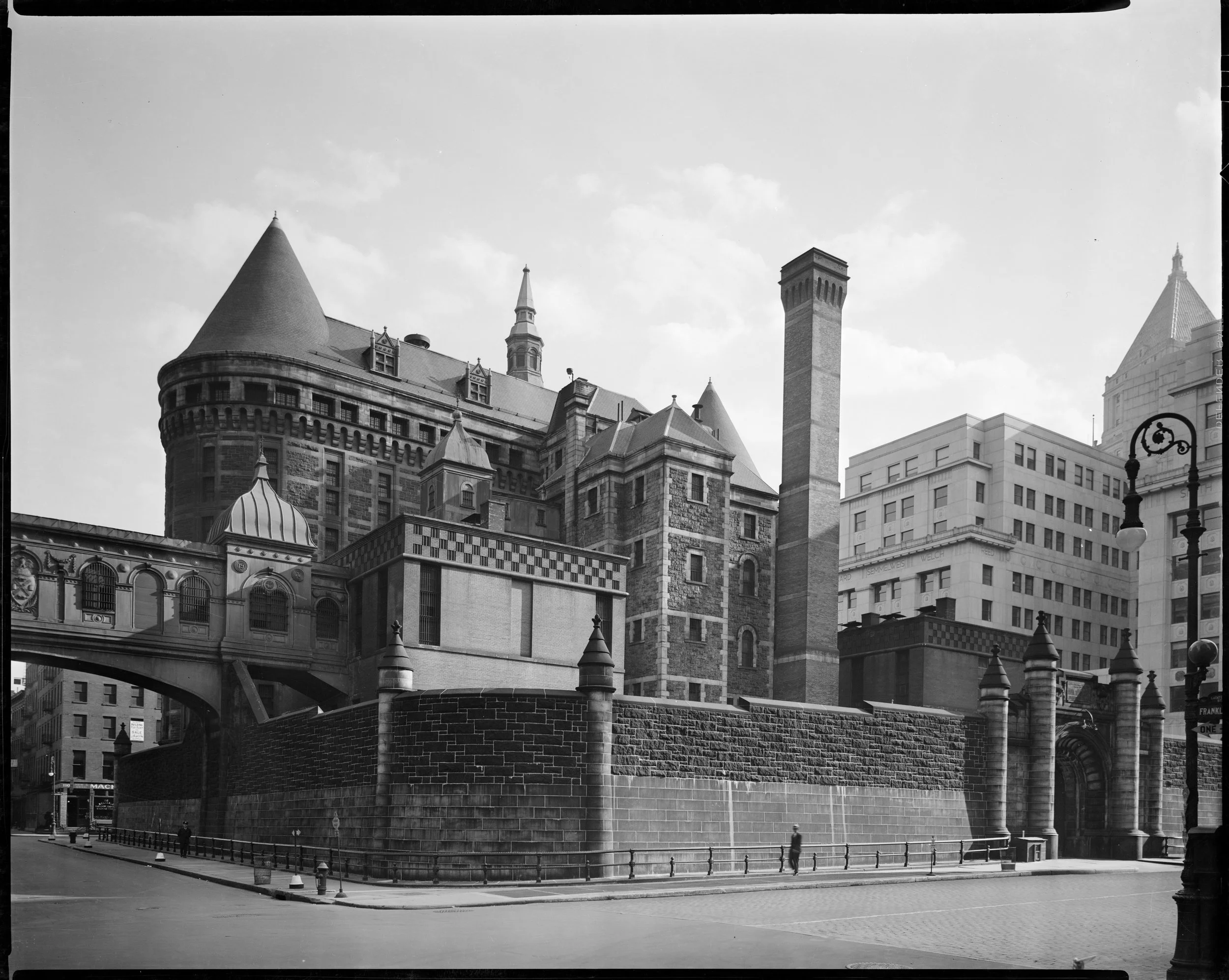
MSS0041_0056: “The Tombs” and “the Bridge of Sighs,” ca. 1937. WPA Federal Writers’ Project collection, NYC Municipal Archives.


Question 3: How are the NYC Municipal Library & Archives’ digital collections curated, created, and maintained? 

Answer (Matt): I can answer the creation part. We have a really wide range of materials, from books and volumes, to oversize maps, to photographs and A/V materials. This means that we employ different digitization methods for varied objects. Many of our collections, especially the most fragile ones, are photographed with overhead digital cameras specially made for this purpose. These cameras cost tens or even hundreds of thousands of dollars and allow us to maintain the highest archival standards. For other items, we have other purpose-built devices, such as oversize scanners for maps and drawings, a microfilm scanner, a book scanner, and various setups for digitizing A/V. Archival digitization is often delicate and time-consuming, and requires a lot of troubleshooting, as well as training and experience with different materials, equipment, and software. And that’s just the capture part. After that, we do extensive quality control, and handling the digital files is a whole other matter.

Conservation and digital programs staff moving the mounted Greensward Plan into position.


Question 4: Would your archives have records of police arrests and case files of murders? I am researching two murders, one in Manhattan in 1904 and one in the Bronx in 1907. The police records and court case files would be something I would like to research further, but not sure these files would exist, but if they do exist, where would I be able to access them? 

Answer (Katie): Our court records are very extensive, with the most extensive being for Manhattan. It would help to know what court, if any, the accused, appeared before. Historical newspapers could help with that. We have a variety of court indexes available on microfilm in our Manhattan reading room. We have indictment indexes for Manhattan available digitally here: https://nycrecords.access.preservica.com/uncategorized/SO_80f4fdbf-d52f-4f01-ad57-02afcb64b032/ 

We do not have similar indexes for the other boroughs though. I would recommend emailing us with the details you have about the cases.

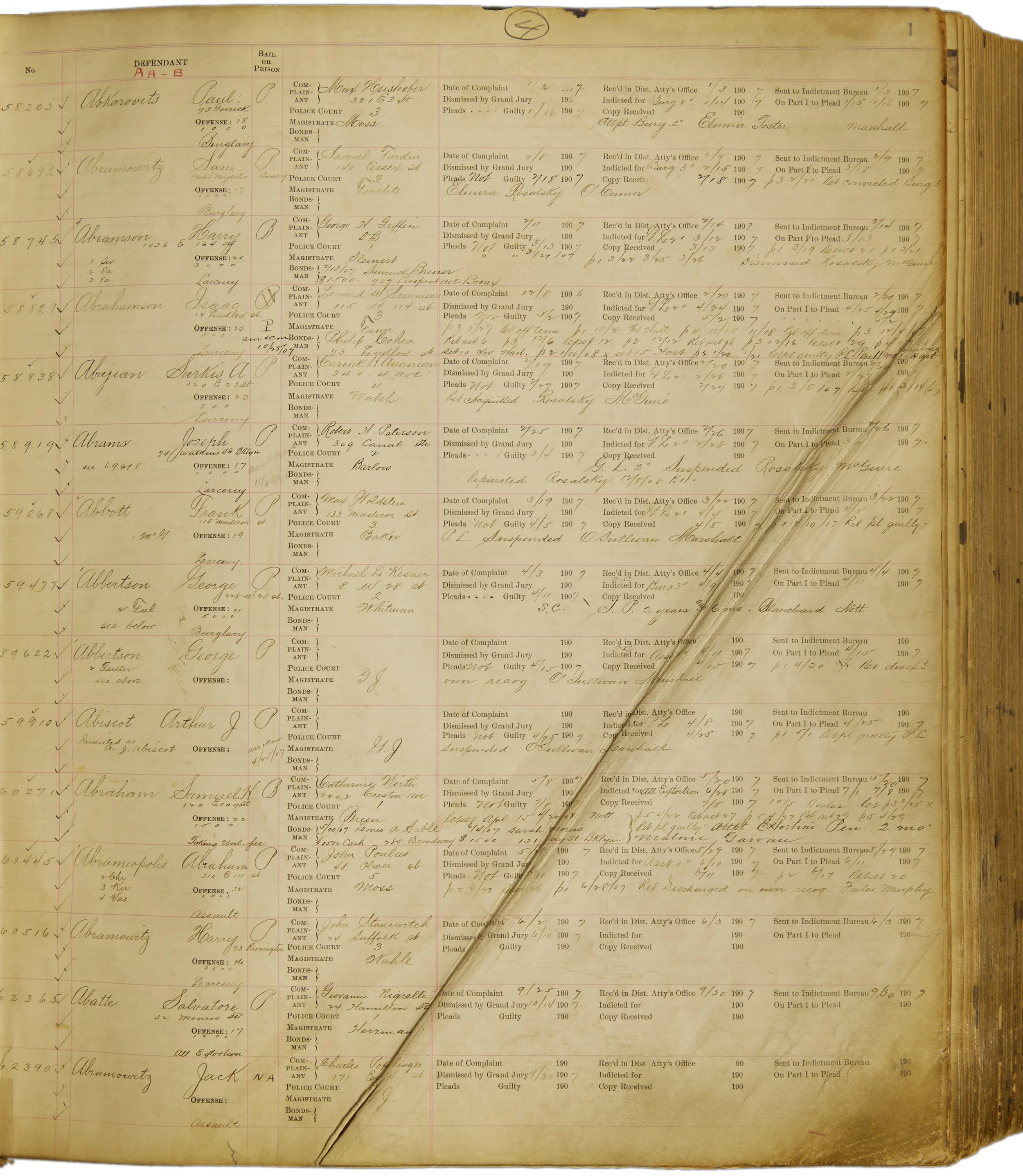
REC0059_010_1907-1908_A-K: New York County District Attorney record of cases,1907-1908, A-K. NYC Municipal Archives. 

(Rossy): We have magistrate court dockets for Manhattan and Bronx in this time period. If a Grand Jury voted to indict, we may also have indictment records for the Manhattan case. We do not have any Bronx District Attorney cases for these years. We also recommend checking the mayoral departmental correspondence with the courts as an additional resource since notable investigations are often mentioned there. 


Question 5: For families tracing Italian immigrant grandparents in Manhattan around 1900–1920, what's the best place to start in your collections? And any tips for when a surname shows up spelled three different ways by three different clerks? 

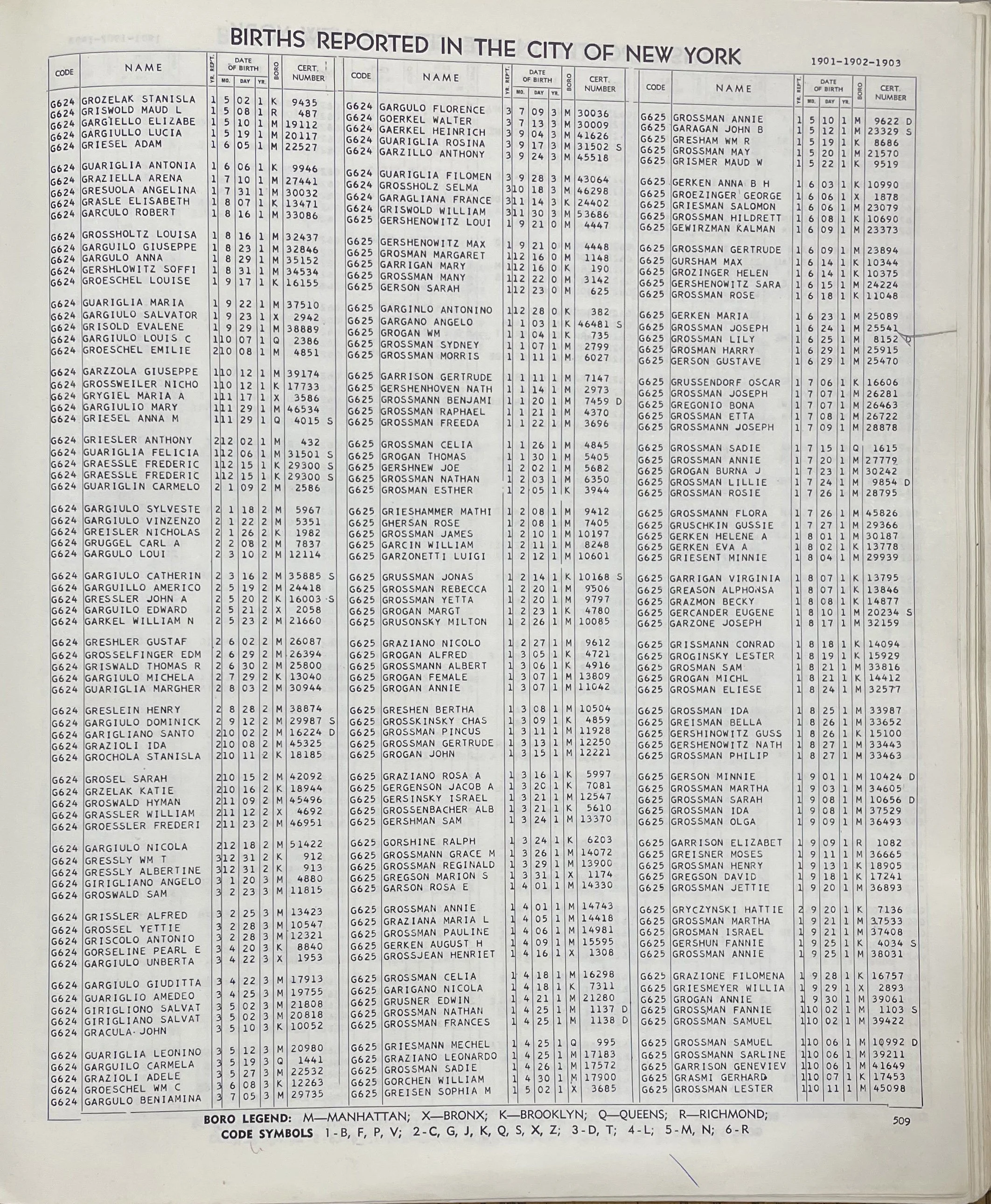
Answer (Ken): I have found the geographic birth index to be useful when searching families that have multiple name spellings. The trick is to know the family’s address—from census, or other vital records.

Births Reported in the City of New York, 1901-1903. NYC Municipal Archives.

(Sylvia): Italiangen.org is a good resource.  Also stevemorse.org allows for searching that includes first and last names that “start with” or “contain” delimiters. NYC Open Data is also a great way to search broadly on variations of names because you can download a specific data set (vital type/year) download spreadsheets of the indexed digitized records, and search name variations. https://data.cityofnewyork.us/browse?q=historical+vital+records&required=&sortBy=relevance&page=1&pageSize=20 

(Marcia): Before they start in our collections, they need to confirm that they were in Manhattan at the assumed time. To do that, check immigration records, the 1900 census is great, the 1915 NY State Census. Also, NY City Directories (NYPL.org). Then check germangenealogygroup.com (free) which allows you to search the GLOBAL SEARCH to search all databases. Then they can search for the vital records on the Historical Vital Records app online. 


Question 6: What’s one collection you wish more New Yorkers knew existed? 

Answer (Katie): I’d like to say the NYPD Intelligence records even though it’s very popular. Handschu in particular.

This is the finding aid: https://a860-collectionguides.nyc.gov/repositories/2/resources/82 

And an online exhibit from years ago: https://www.archives.nyc/unlikely-historians-1

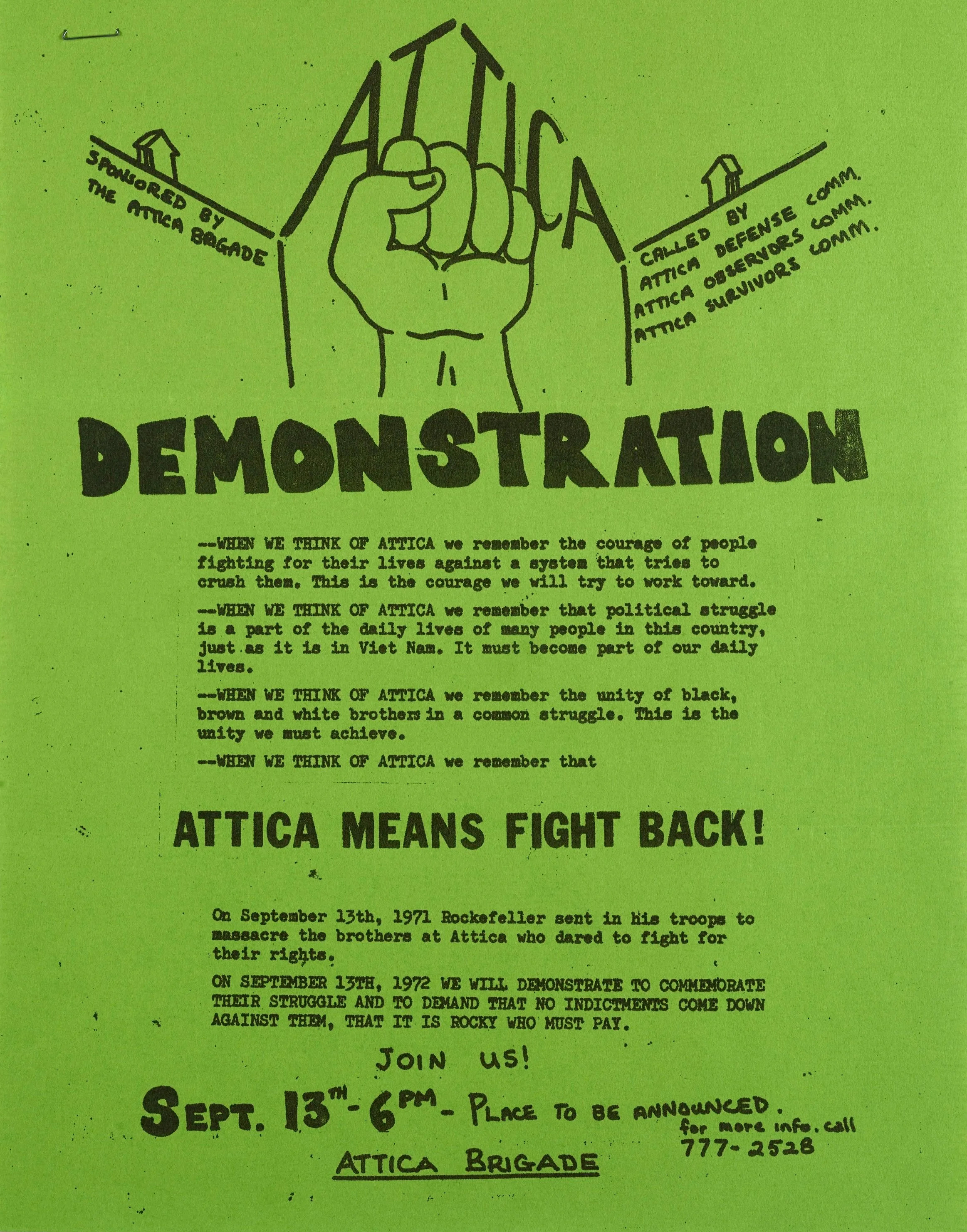
Anniversary demonstration for Attica, September 13, 1972. Handschu Collection, NYC Municipal Archives. 

A Conversation between Barbara Hibbert, Reference Room Director and Ken Cobb, Assistant Commissioner, January 17, 2018

KRC:  Barbara, will we see you on Saturday morning?

BH: I’ll be here on the 20th, for our first Saturday—after that, once in a while. I think you’ll see some of our other archivists at the desk on Saturdays going forward.

KRC:  How long have you been doing this?

BH:  Former Commissioner Idilio Gracia-Pena hired me in February 1982, to design forms. I was finishing up at the New York School of Printing [a vocational high school]. I think they called it a work-study program—I would go to school until 1 p.m. and then head down to the Tweed Courthouse. When we moved to 31 Chambers, I also helped out in the darkroom printing pictures. I was hired full-time in 1984. One day around then I went into the reference room to help Carol with the genealogy work. And that was it. I never left.